Nearly 60 percent of teens have used generative AI tools such as ChatGPT for schoolwork, according to recent surveys from Pew Research. A growing percentage admit they have used it to complete assignments without telling their teachers. The question echoing in kitchens and carpools is simple: Is this cheating?
AI and parenting now sit at the center of American family life. Artificial intelligence is no longer a distant concept reserved for Silicon Valley engineers. It is embedded in homework, friendships, creativity, and identity formation for Gen Alpha, the cohort born between 2010 and 2025. Parents feel the shift. Many are unsure how to respond.
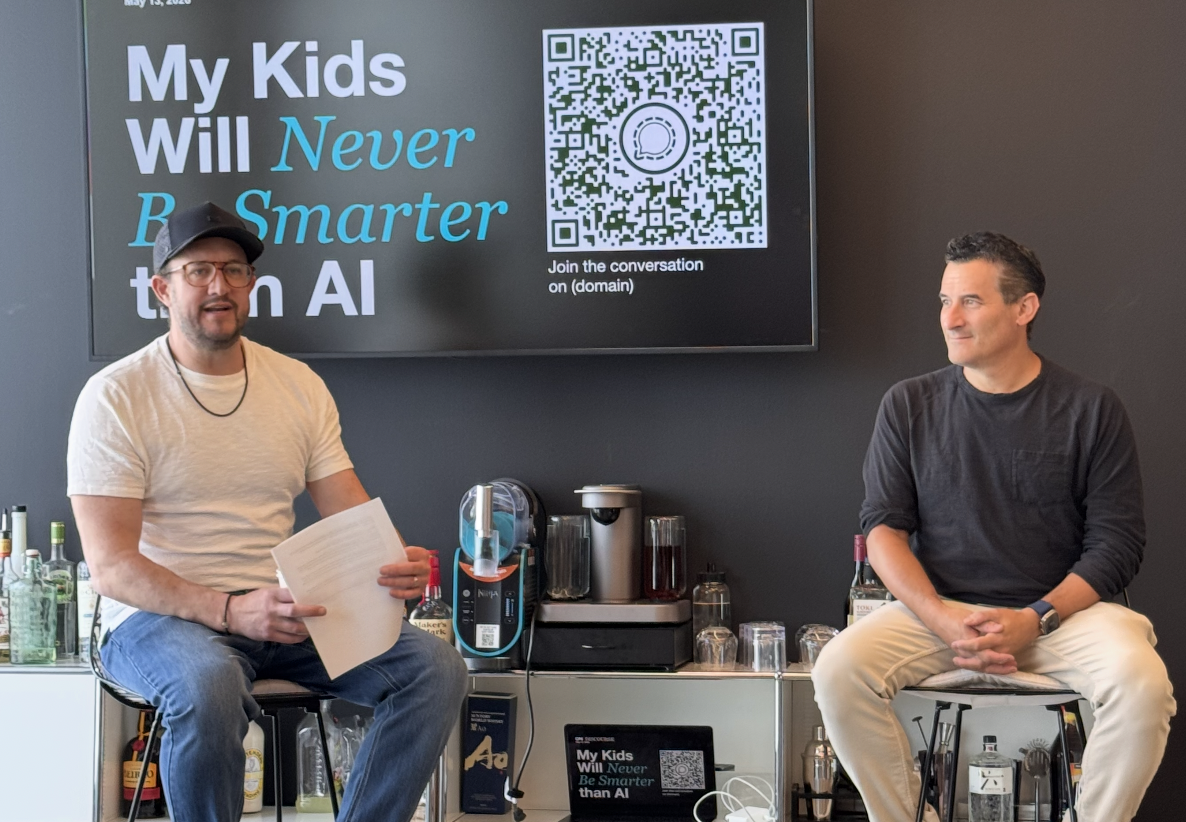
Matt Britton stepped directly into that tension during a live appearance on CW7 Phoenix’s The Daily Mix Morning Show. As the bestselling author of Generation AI, CEO of Suzy, and a keynote speaker who has delivered more than 500 talks globally, Britton approaches the topic with both strategic clarity and parental pragmatism. He does not traffic in hype. He frames AI as a foundational shift in how young people will think, learn, and relate to the world.
Britton’s message was measured but urgent. Teens are using AI. Schools are lagging. Parents cannot afford to ignore what is happening inside their children’s screens. The opportunity is immense. So is the risk.
The conversation moved quickly from homework hacks to human development, from five paragraph essays to AI powered friendships. What emerged was a blueprint for navigating AI and parenting with intention. Not fear. Not blind optimism. Informed leadership.
Is Using ChatGPT for Homework Cheating?
Using ChatGPT for homework can be cheating, but the deeper issue is how it reshapes learning. The distinction matters.
Britton shared a familiar scenario. A 15 year old uses ChatGPT to summarize all five acts of Romeo and Juliet before a quiz. The student saves time. The summary is accurate. The teacher never knows. Many parents recognize the pattern.
The ethical line depends on intent and context. If a student passes off AI generated work as their own thinking, schools classify that as academic dishonesty. Yet the broader disruption runs deeper than policy violations. Generative AI compresses hours of reading, synthesis, and writing into seconds. It eliminates friction. Friction often produces growth.
Research from Stanford’s Graduate School of Education suggests that productive struggle strengthens long term retention and critical thinking. Remove the struggle and comprehension can erode. Britton underscored that point on air. Young people still need to write. They need to wrestle with ideas. They need to organize arguments and confront ambiguity. Those cognitive reps build neural pathways that no chatbot can install.
At the same time, AI can function as a tutor. Students can ask for clarification on Shakespearean language. They can request practice questions before a test. They can generate outlines to overcome writer’s block. Used transparently and strategically, AI becomes a scaffold.
Britton encouraged parents to shift from surveillance to dialogue. Ask how your child used ChatGPT. Did it help them understand the material? Or did it replace understanding altogether? The answer reveals whether AI is amplifying learning or short circuiting it.
The cheating debate often misses the larger transformation underway. Knowledge is ubiquitous. Interpretation and judgment are scarce. Schools will need new frameworks for evaluation. Families need new conversations about integrity in an AI saturated world.
Why Writing Skills Matter in the Age of AI
Writing skills matter more in the age of AI because clear thinking drives effective prompting. Artificial intelligence responds to the quality of the input it receives.
The five paragraph essay has become a cultural punchline. Students question its relevance. Parents see it as busywork. Britton offered a defense that surprised some viewers. Structured writing trains the brain to organize ideas logically. Introduction. Argument. Evidence. Conclusion. That architecture builds cognitive discipline.
Even as an adult executive, Britton has spoken about how writing Generation AI sharpened his own communication. Crafting arguments forced clarity. Editing demanded precision. Those habits transfer to boardrooms and strategy sessions.
In a world where ChatGPT can draft a competent essay in seconds, the temptation is to outsource composition entirely. Yet prompting an AI system requires language mastery. A vague prompt yields generic output. A detailed, nuanced prompt produces insight. The student who understands how to frame a question wins.
Data from the National Assessment of Educational Progress shows that writing proficiency among U.S. students has declined over the past decade. Layer generative AI on top of that trend and the stakes intensify. Weak writers may lean heavily on AI. Strong writers will use it as leverage.
Britton describes prompting as a core literacy. It blends reading comprehension, critical thinking, and rhetorical skill. If a teenager cannot articulate what they want, they cannot guide an AI system effectively. The machine mirrors the mind behind it.
For parents, the mandate is practical. Preserve foundational skills. Encourage handwritten drafts before digital refinement. Review AI generated output together. Ask your child to explain why the argument works or fails. Writing remains a proxy for thinking. Thinking remains the competitive edge.
AI Literacy and Parenting Gen Alpha
AI literacy is becoming as essential as digital literacy was a decade ago. Gen Alpha will grow up with conversational AI as a default interface.
Britton has labeled this cohort the first true AI native generation. They will not remember a world without voice assistants, recommendation algorithms, or generative tools. According to McKinsey, generative AI could add up to $4.4 trillion annually to the global economy. The children in elementary school today will inherit that economy.
AI changes how young people interact with technology. It speaks in natural language. It offers emotional tone. Some platforms simulate empathy. Children may build attachments to AI agents that feel personal. That prospect raises new developmental questions.
Psychologists already track increased screen time and its correlation with anxiety and social isolation. Now layer in AI companions that respond instantly and without judgment. The appeal is obvious. The long term impact remains uncertain.
Britton has warned that parents need to understand the relational dimension of AI. Kids might seek advice from a chatbot before a parent. They might rehearse conversations with AI before speaking to peers. They might confide in systems trained on vast datasets rather than human intuition.
The solution is not prohibition. It is fluency. Parents should experiment with the same tools their children use. Explore image generation. Test music creation platforms such as Suno AI. Ask ChatGPT to explain a complex concept. Shared exploration reduces mystery and builds trust.
Transparency also matters. Establish clear rules about when AI is appropriate and when original effort is required. Discuss privacy. Many AI systems collect data. Children need to understand digital footprints.
Britton’s broader thesis in Generation AI is that parenting now includes technology strategy. Families need intentional frameworks. Without them, AI will shape values by default.
How Schools Must Adapt to Artificial Intelligence
Schools must evolve from memorization factories to creativity incubators. Artificial intelligence accelerates the urgency.
Traditional education models reward recall. Standardized tests measure factual knowledge. Generative AI can retrieve and summarize information instantly. The economic value of memorization is declining. The value of synthesis and originality is rising.
The World Economic Forum lists analytical thinking, resilience, and creativity among the top skills for the future workforce. Those competencies align poorly with rote learning. Britton has argued that classrooms should emphasize project based learning, collaboration, and ethical reasoning about technology.
Some districts have begun to integrate AI literacy into curricula. Students learn how algorithms work. They analyze bias in training data. They debate intellectual property issues surrounding AI generated art. These efforts remain uneven.
Teachers face practical challenges. How do you grade an essay if AI may have written it? Some schools require in class writing to verify authorship. Others use AI detection tools, which are imperfect and controversial.
Britton’s position is pragmatic. Education leaders need to redesign assessment. Oral defenses of written work. Iterative drafts that show process. Assignments that require personal reflection or local context. These approaches reduce the incentive to outsource thinking.
The stakes extend beyond academics. The students who learn to collaborate with AI will enter the workforce with leverage. The ones who rely on it blindly may struggle to differentiate themselves.
On his The Speed of Culture podcast, Britton frequently interviews executives navigating technological disruption. A consistent theme emerges. Adaptation favors those who embrace change early and thoughtfully. Education systems that cling to outdated models risk irrelevance.
Parents can advocate locally. Ask schools how they are addressing AI. Encourage pilot programs. Support teacher training. Institutional change moves slowly. Family level leadership can move faster.
The Upside of AI for Families
AI can strengthen family creativity when used intentionally. The technology is not solely a source of risk.
Britton highlighted simple, accessible use cases. Families can turn vacation photos into custom coloring books using image generation tools. They can create personalized songs about birthdays through platforms such as Suno AI. These activities blend imagination with technical fluency.
Shared projects demystify AI. Children see that the tool responds to human direction. They learn cause and effect. They practice descriptive language to achieve desired outcomes.
Entrepreneurial families are going further. Teenagers use AI to prototype app ideas, design merchandise, or draft business plans. According to Junior Achievement surveys, a majority of teens express interest in starting a business. Generative AI lowers the barrier to entry.
Yet enthusiasm requires guardrails. Excessive reliance on AI for entertainment or validation can crowd out offline experiences. Britton advises balance. Encourage sports, reading, and face to face friendships alongside digital exploration.
Dependency represents another risk. If a child consults AI for every decision, problem solving muscles atrophy. Parents should sometimes withhold the shortcut. Ask the child to attempt a solution first. Then compare it to AI output.
Britton’s vantage point as CEO of Suzy, a leading consumer intelligence platform, reinforces his perspective. He studies generational behavior professionally. He sees how quickly technology adoption curves steepen. Early norms harden into long term habits.
Families are setting those norms now. The choices made in elementary and middle school will echo into adulthood.
Key Takeaways for Business Leaders
- Invest in AI literacy initiatives. Support programs that teach employees and communities how to use generative AI responsibly. The future workforce is being shaped in today’s classrooms and living rooms.
- Redesign talent development around creativity. Prioritize critical thinking, communication, and adaptability in hiring and training. AI handles routine tasks efficiently; human differentiation comes from insight and judgment.
- Engage parents and educators as stakeholders. Offer workshops or partnerships that address AI and parenting concerns. Brands that demonstrate social leadership build long term trust.
- Experiment with responsible AI integration. Pilot internal tools that enhance productivity while maintaining ethical standards. Transparency and governance will distinguish credible organizations from reckless adopters.
- Monitor Gen Alpha behaviors through data. Platforms like Suzy provide real time consumer intelligence. Understanding how AI natives think and decide offers competitive advantage.
Frequently Asked Questions
Is AI bad for kids’ development?
AI is neither inherently harmful nor inherently beneficial. Research shows that excessive passive screen time can affect attention and social skills, but active, guided use can support learning. Outcomes depend on context, supervision, and balance. Parents who stay involved and set boundaries reduce risk significantly.
How should parents talk to their kids about ChatGPT?
Experts recommend open, nonjudgmental conversations about how ChatGPT is used. Ask children to demonstrate their prompts and explain the outputs. Discuss academic integrity and privacy. Framing AI as a tool that requires responsibility encourages honesty and critical thinking.
What skills will Gen Alpha need in an AI driven economy?
Gen Alpha will need analytical thinking, creativity, emotional intelligence, and strong communication skills. The World Economic Forum consistently ranks these competencies among the most valuable for future jobs. Technical fluency with AI systems will complement, not replace, foundational human skills.
How can schools adapt to artificial intelligence?
Schools can integrate AI literacy into curricula, redesign assessments to emphasize process and originality, and train teachers on emerging tools. Project based learning and oral evaluations help ensure authentic understanding. Early adoption of thoughtful policies positions institutions for long term relevance.
The Leadership Moment for Parents and Executives
AI and parenting now intersect with business strategy, education reform, and cultural evolution. The families experimenting with ChatGPT at the kitchen table are shaping tomorrow’s workforce. The executives building AI driven products are shaping those families.
Matt Britton operates at that intersection. Through Generation AI, his keynotes available via Speaker HQ, and insights shared on The Speed of Culture podcast, he translates technological acceleration into actionable guidance. His work at Suzy keeps him grounded in real time consumer behavior. The perspective is both macro and personal.
The question is no longer whether children will use AI. They already are. The imperative is how adults will respond. Leadership begins at home, extends into classrooms, and scales across organizations.
For speaking inquiries, media appearances, or strategic guidance, contact his team. The conversation around AI and parenting is just beginning. The decisions made now will define a generation.
Related Posts
The Great Brokerage Consolidation: Real Estate's Multi-Model Platform War

Netflix's Tentpole Playbook: Why Owning Sports Moments Beats Owning Full Seasons

When AI Becomes the Default Teacher: A Reckoning for Parents and Business Leaders