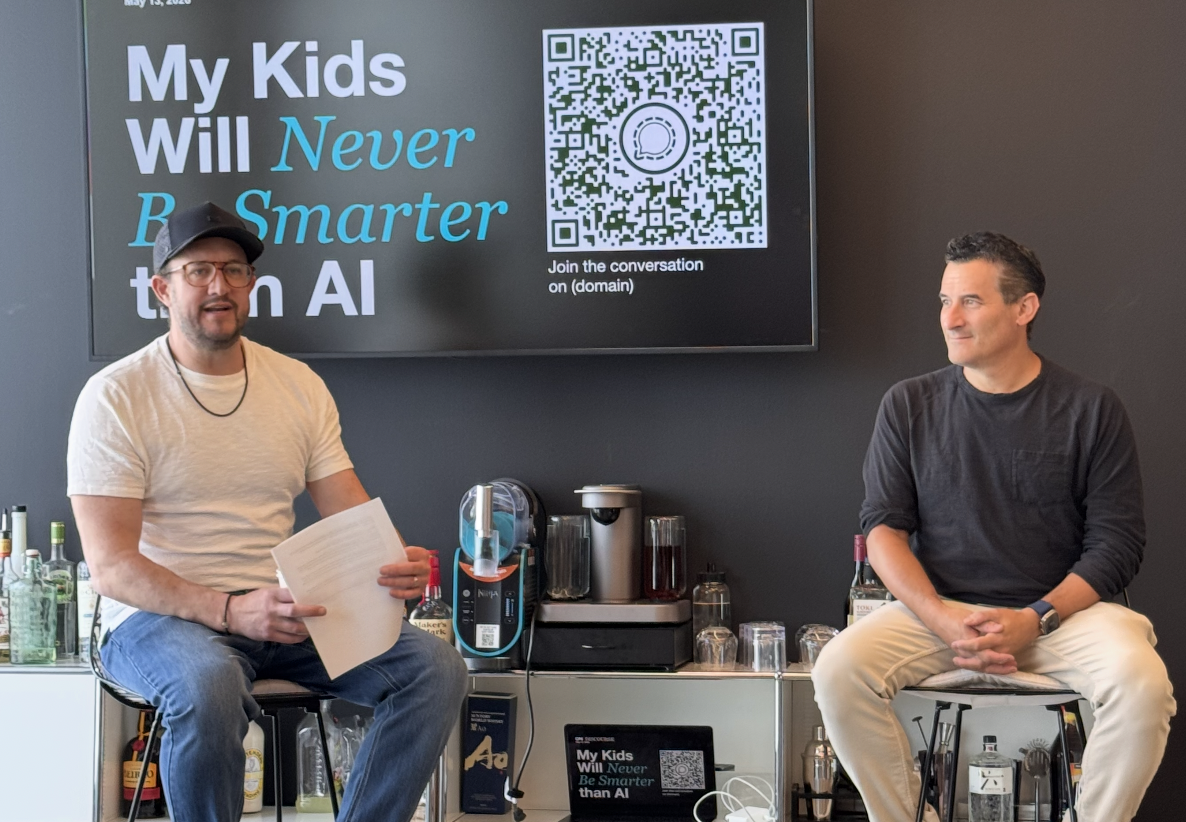
Artificial intelligence has crossed the chasm into everyday life. In 2024, over 70 percent of U.S. adults reported using an AI-powered tool each month, and adoption among teens has surged even faster. Artificial intelligence is no longer a niche topic for technologists. It is shaping homework, hiring, healthcare, and household routines in real time.
Matt Britton has spent the past 18 months immersed in this shift as an AI futurist, CEO, parent of four, and bestselling author of Generation AI. From more than 500 keynotes delivered globally to daily conversations with Fortune 500 executives and millennial parents, he sees the same pattern everywhere: curiosity mixed with anxiety, opportunity colliding with uncertainty.
Artificial intelligence now shows up in PTA meetings and boardroom strategy sessions. Parents ask how to raise children who collaborate with machines before mastering foundational skills. Executives ask how to future-proof teams as AI automates knowledge work once considered untouchable. Marketers ask how to remain relevant when algorithms increasingly influence what consumers see and buy.
The cultural conversation around artificial intelligence is only beginning. The deeper challenge lies ahead. Leaders, educators, and families must decide how to adapt their values, workflows, and expectations for a world where AI acts as collaborator, filter, and gatekeeper. The next decade will not be defined by whether AI advances. It will be defined by how humans respond.
Will Artificial Intelligence Take My Job or Transform It?
Artificial intelligence will automate a significant share of current job tasks. According to McKinsey, up to 30 percent of hours worked globally could be automated by 2030. White-collar roles once considered insulated are already feeling pressure. Legal research, financial modeling, content creation, and even software development are increasingly supported or partially executed by generative AI.
Yet the broader story centers on job transformation. Roles are evolving from task execution to creative orchestration. Writing, designing, and coding remain valuable, but they are becoming commoditized skills. The differentiator is judgment, context, and strategic thinking.
Matt Britton consistently advises executives that human leverage will define career durability. If a responsibility can be reduced to a prompt, it will likely be automated. If it requires synthesis across disciplines, emotional nuance, or ethical trade-offs, it becomes more valuable in an AI-enabled workplace.
At Suzy, the consumer intelligence platform Britton leads, internal AI tools have reduced administrative workload across sales and marketing teams. Proposal drafting, data summarization, and meeting recaps now happen in minutes. Employees were not displaced. They redirected energy toward client strategy and innovation. Productivity rose while headcount remained stable.
For younger workers, the imperative is clear: learn how to learn with AI. Treat it as a copilot that accelerates research and iteration. Develop skills that machines struggle to replicate—storytelling, leadership, adaptability under ambiguity. Artificial intelligence rewards those who can guide it effectively.
The future of work will favor professionals who combine domain expertise with AI fluency. Companies that invest in reskilling now will build competitive advantages that compound over time.
How to Raise Kids in the Age of Artificial Intelligence
Children are forming relationships with AI earlier than any generation in history. Surveys show that nearly half of Gen Alpha parents report their child uses a voice assistant weekly. Many elementary students use chatbots to brainstorm essays or solve math problems. Artificial intelligence is embedded in daily routines before children fully grasp how it works.
Matt Britton observes this shift firsthand at home. When his daughter encounters a challenging homework question, her instinct is to consult a chatbot before asking a parent. That behavior signals a structural change in how knowledge is accessed. Information no longer requires searching through books or even browsing websites. It arrives conversationally, instantly, and often authoritatively.
Parents face new questions. How do you build resilience when answers are immediate? How do you cultivate empathy when children interact daily with responsive but non-human entities? How do you encourage critical thinking when AI delivers polished explanations on demand?
Artificial intelligence in the home demands conscious parenting. Establishing boundaries around usage matters. Encouraging children to explain their reasoning before checking a chatbot strengthens cognitive muscles. Discussing how AI generates responses fosters media literacy at an early age.
The upside is substantial. Personalized tutoring powered by AI can close learning gaps. Adaptive platforms adjust difficulty in real time, providing feedback that traditional classrooms struggle to deliver. Health tracking devices can flag patterns in sleep or activity that improve wellbeing.
The risks also deserve attention. Overreliance on AI for decision-making may weaken independent judgment. Emotional attachment to conversational agents may influence social development. Parents must remain actively involved, framing AI as a tool rather than an authority.
Britton’s book Generation AI explores these dynamics in depth, offering families a cultural guide to raising children in an era where artificial intelligence is intimate, interactive, and always on.
Artificial Intelligence and the Future of Education
Artificial intelligence is transforming education at every level. Adaptive learning platforms now analyze student performance in real time and customize lesson plans accordingly. According to HolonIQ, global spending on AI in education is projected to exceed $20 billion by 2027. Schools and edtech companies are racing to integrate intelligent systems into classrooms.
For Generation Alpha, AI-enhanced learning will feel native. Homework assistance, language translation, and personalized study plans will operate seamlessly in the background. Students will interact with AI tutors that adjust tone and pace based on emotional cues and performance metrics.
Educators face a recalibration of their role. Knowledge transmission becomes less central when students can access instant explanations. Facilitation, mentorship, and critical thinking guidance become more valuable. Teachers who integrate AI effectively can focus on fostering collaboration and creativity.
Matt Britton often highlights that AI literacy will join reading and math as a foundational competency. Students must understand how algorithms shape outputs, where biases can emerge, and how to validate information independently. Schools that incorporate AI ethics and prompt engineering into curricula will equip graduates for a transformed workforce.
Equity also enters the conversation. AI-powered tools can democratize access to high-quality tutoring for underserved communities. At the same time, disparities in technology access risk widening achievement gaps. Policymakers and school leaders must prioritize inclusive deployment.
Artificial intelligence in education offers powerful acceleration. It also requires thoughtful guardrails. The institutions that balance innovation with human mentorship will shape the next generation of thinkers and leaders.
Artificial Intelligence in Marketing and Commerce
Artificial intelligence is rewriting the rules of marketing and commerce. According to Salesforce, over 60 percent of consumers are open to AI-driven product recommendations. Shopping journeys increasingly begin with algorithms rather than search bars. Soon, AI-powered agents will transact on behalf of consumers, comparing prices and filtering options automatically.
Brands now compete for visibility not only with human audiences but with digital intermediaries. If an AI assistant curates a shortlist of products, only a few brands make the cut. Traditional advertising loses influence when purchase decisions are shaped by machine logic.
Matt Britton emphasizes that marketers must understand Generation Alpha’s expectations early. These consumers will grow up trusting personalized feeds and intelligent recommendations. They will expect frictionless experiences, hyper-relevant content, and transparent data practices.
Creator-led commerce is accelerating this shift. Influencers armed with AI tools can analyze audience data, optimize content in real time, and launch micro-brands rapidly. Authenticity and transparency drive trust more effectively than polished taglines.
Through The Speed of Culture podcast, Britton frequently interviews executives navigating this terrain. Leaders who thrive share common traits. They invest in first-party data. They experiment with AI-driven creative testing. They prioritize ethical data use to maintain consumer trust.
Brands must also prepare for AI as gatekeeper. Product information must be structured and accessible so that algorithms can evaluate and recommend accurately. Reputation signals such as reviews and sustainability metrics will feed into automated decision systems.
Artificial intelligence compresses feedback loops between brands and consumers. Companies that adapt quickly will gain disproportionate share. Those that cling to legacy playbooks risk fading from algorithmic consideration.
Why Generation AI Signals a Cultural Shift
Artificial intelligence represents a cultural inflection point, not merely a technological upgrade. Generation Alpha will mature in a world where AI mediates relationships, entertainment, education, and identity formation. That immersion will shape expectations about speed, personalization, and agency.
Matt Britton wrote Generation AI to provide a framework for navigating these shifts across parenting, work, media, commerce, health, and identity. The book positions AI as a societal force that influences values and norms. Technology design choices today will echo across decades.
Consider identity. AI-driven avatars and digital personas already blur lines between physical and virtual presence. Young users experiment with self-expression through filters, synthetic voices, and generative art. The boundary between authentic and augmented identity becomes fluid.
Health is another frontier. Wearables integrated with AI can detect anomalies earlier and personalize recommendations continuously. Data-driven insights empower proactive wellness strategies. Privacy considerations intensify alongside these benefits.
Corporate leaders cannot treat artificial intelligence as a side initiative. Strategy, culture, and governance must align around responsible deployment. Transparent communication with employees builds trust during transformation.
Britton’s perspective, shaped by leading Suzy and advising global brands through Speaker HQ engagements, underscores a central point. Organizations that embed AI thoughtfully into their core operations will define competitive standards. Those that hesitate may struggle to catch up.
Generation AI is already here. The choices made now will determine whether artificial intelligence amplifies human potential or fragments it.
Key Takeaways for Business Leaders
- Audit your workforce for AI readiness. Identify tasks that can be automated and roles that require reskilling. Invest in training that builds AI fluency alongside critical thinking and leadership capabilities.
- Redesign workflows around augmentation. Integrate AI tools that reduce administrative burden and accelerate analysis. Free teams to focus on strategy, creativity, and relationship building.
- Engage transparently with employees and customers. Communicate how artificial intelligence is used, what data is collected, and how decisions are made. Trust compounds when stakeholders understand the process.
- Prepare for AI-driven commerce. Structure product data for algorithmic discovery and recommendation. Strengthen reputation signals such as reviews and sustainability metrics that influence automated decision systems.
- Model responsible AI values. Establish governance frameworks that address bias, privacy, and accountability. Leadership behavior sets the tone for ethical deployment across the organization.
Frequently Asked Questions
Will artificial intelligence eliminate most white-collar jobs?
Artificial intelligence will automate specific tasks within white-collar roles, not eliminate entire professions wholesale. Research from McKinsey and other institutions shows significant task automation potential, yet new roles will emerge around AI management, strategy, and oversight. Professionals who develop complementary human skills and AI fluency remain well positioned.
How should parents manage AI use at home?
Parents should treat artificial intelligence as a tool that requires guidance and boundaries. Encourage children to attempt problem-solving independently before consulting AI. Discuss how algorithms generate responses and reinforce critical thinking. Active engagement helps children build resilience and media literacy.
How will artificial intelligence change marketing strategies?
Artificial intelligence will increasingly mediate product discovery and purchase decisions. Brands must optimize for algorithmic recommendation systems, invest in first-party data, and maintain transparency. Personalized experiences and ethical data practices will drive competitive advantage in AI-driven commerce.
What skills will matter most in an AI-powered economy?
Human-centered skills will gain importance as automation expands. Creativity, emotional intelligence, strategic thinking, adaptability, and ethical judgment differentiate professionals in an AI-powered economy. Technical literacy in AI tools enhances these capabilities and increases leverage.
The Choice Ahead
Artificial intelligence is now embedded in daily life. Families, educators, executives, and marketers share responsibility for shaping how it evolves. The decisions made in homes and boardrooms will influence how Generation Alpha experiences work, identity, and connection.
Matt Britton continues to explore these themes through Generation AI, his keynote presentations via Speaker HQ, and conversations on The Speed of Culture podcast. As CEO of Suzy, he applies these insights directly to consumer intelligence and business strategy. Organizations seeking guidance can contact his team to explore tailored engagements.
Artificial intelligence will define the coming decade. Leadership will determine whether it strengthens human potential or diminishes it.
Related Posts
Netflix's Tentpole Playbook: Why Owning Sports Moments Beats Owning Full Seasons

When AI Becomes the Default Teacher: A Reckoning for Parents and Business Leaders

The $2 Billion Permission Slip: What PepsiCo's Poppi Success Reveals About Buying Culture