Artificial intelligence in finance has shifted from pilot programs to full deployment in less than five years. According to McKinsey, AI could deliver up to $1 trillion in additional value annually for the global banking industry. Goldman Sachs estimates that generative AI alone may automate tasks that account for 25 percent of work hours across financial services. The transformation is active, measurable, and accelerating.
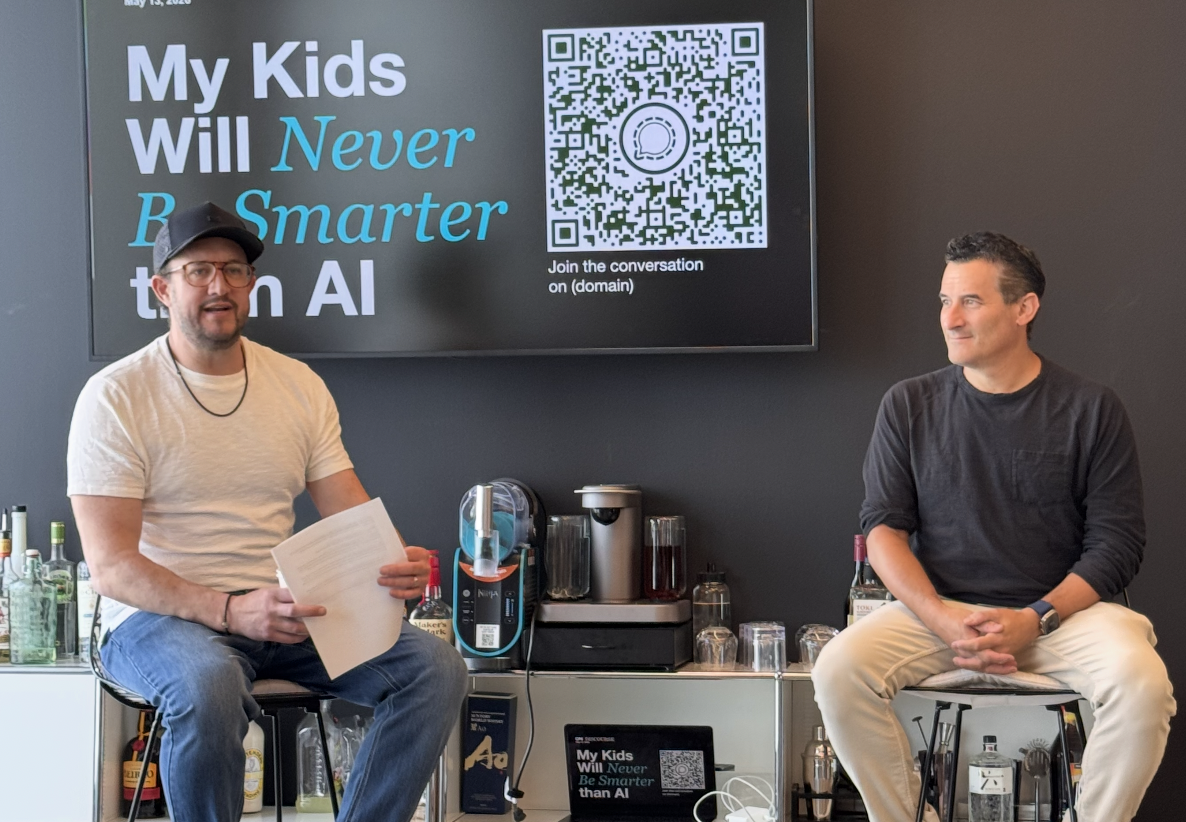
Matt Britton, AI futurist and author of Generation AI, argues that the financial sector is approaching a structural reset. AI no longer functions as a back-office efficiency tool. It now informs investment decisions, personalizes retail banking, flags fraud in milliseconds, and reshapes how institutions compete. In conversations across boardrooms and on The Speed of Culture podcast, Britton emphasizes a clear point: the institutions that operationalize AI at scale will define the next era of finance.
For decades, finance has relied on human judgment layered on top of data. Analysts built models. Advisors interpreted trends. Executives relied on instinct shaped by experience. Artificial intelligence introduces a new layer. Systems can process massive datasets, detect anomalies, and simulate outcomes in seconds. The advantage compounds daily.
Financial institutions face a strategic fork in the road. One path treats AI as a feature. The other treats it as infrastructure. Only one leads to sustained relevance.
AI in Wealth Management and Portfolio Optimization
Artificial intelligence is redefining wealth management by automating analysis, enhancing portfolio optimization, and reducing human bias.
Traditional wealth management depends on teams of analysts, quarterly reports, and client meetings that translate macroeconomic signals into investment moves. Large language models and machine learning systems now synthesize earnings reports, geopolitical developments, social sentiment, and historical data in real time. What once required days now takes seconds.
Robo-advisors already manage more than $1 trillion in global assets, according to Statista. Platforms such as Betterment and Wealthfront use algorithms to allocate portfolios, rebalance assets, and harvest tax losses automatically. Institutional players are integrating similar capabilities internally. JPMorgan’s AI-powered Contract Intelligence platform reviews commercial loan agreements in seconds, work that previously consumed 360,000 hours annually.
Matt Britton notes that AI platforms can match or exceed the analytical rigor of many traditional advisors. Algorithms do not react to headlines or personal bias. They weigh probabilities, stress-test scenarios, and adjust allocations based on defined objectives. That rational layer matters in markets driven by volatility and emotion.
Human advisors retain value in relationship management and complex planning. Yet the core analytical engine increasingly runs on code. Firms that resist algorithmic augmentation risk slower response times and higher operating costs. Wealth management margins already face compression. AI accelerates that pressure.
The competitive advantage shifts toward hybrid models. Advisors equipped with AI tools can deliver hyper-personalized strategies at scale. Firms without that integration struggle to justify higher fees. Clients notice performance differentials quickly.
AI-Powered Personal Banking and Hyper-Personalized Finance
AI-powered personal banking delivers real-time financial guidance tailored to individual behavior, demographics, and goals.
Retail banking has historically centered on transactions. Deposits, withdrawals, loans, credit lines. Artificial intelligence transforms banks into active financial coaches. AI systems analyze spending patterns, income flows, subscription creep, and peer benchmarks to recommend changes instantly.
Consider a 22-year-old customer overspending on dining and delivery. An AI-driven banking app can compare that behavior against anonymized peers in the same income bracket and city. It can project long-term savings impact and suggest reallocations toward investments or debt reduction. Nudges become precise and contextual.
According to Accenture, 73 percent of consumers are open to AI-generated financial advice if it improves outcomes. Banks see the opportunity. Capital One and Bank of America deploy virtual assistants that handle millions of customer interactions daily. Erica, Bank of America’s AI assistant, has surpassed 1.5 billion client interactions since launch.
Britton often highlights the emotional dimension of money. Spending decisions reflect identity, stress, and social influence. Artificial intelligence introduces disciplined oversight. It flags patterns before they become problems. It suggests micro-adjustments that compound into long-term gains.
For banks, personalization increases retention and cross-sell potential. For consumers, it reduces financial anxiety and improves literacy. Data becomes a service layer rather than a passive archive.
The next phase integrates predictive modeling. AI will anticipate cash flow shortfalls, recommend refinancing before rate hikes, and tailor credit offers dynamically. Static banking interfaces give way to adaptive financial ecosystems.
AI in Financial Fraud Detection and Cybersecurity
AI in financial fraud detection identifies threats in milliseconds and adapts faster than traditional rule-based systems.
Cybercrime costs are projected to reach $10.5 trillion annually by 2025, according to Cybersecurity Ventures. Financial institutions sit at the center of that risk. Generative AI adds complexity by enabling deepfake voices, synthetic identities, and automated phishing at scale.
Voice cloning scams already target parents and executives. Fraudsters mimic a family member in distress and demand urgent wire transfers. Deepfake video impersonations have infiltrated corporate finance departments, leading to multimillion-dollar losses. The sophistication escalates monthly.
Banks are responding with defensive AI. Machine learning systems analyze transaction patterns, geolocation inconsistencies, typing cadence, and behavioral biometrics. Anomalies trigger automated interventions before funds move. Mastercard reports that its AI-driven fraud detection has improved accuracy by up to 300 percent in certain use cases.
Matt Britton describes the environment as a continuous cat-and-mouse game. Offensive and defensive capabilities evolve simultaneously. Institutions that delay AI investment widen their exposure window. Fraud erodes trust quickly and trust remains the core currency of finance.
Regulators are increasing scrutiny. Explainable AI models and audit trails are becoming mandatory. Financial firms must balance speed with transparency. Black-box systems create compliance risks.
Cybersecurity budgets are rising across the sector. Yet technology alone does not solve the challenge. Employee training, customer education, and cross-industry collaboration matter equally. AI strengthens the shield, but governance fortifies it.
Enterprise AI Adoption in Financial Services
Enterprise AI adoption in financial services requires reskilling, cultural change, and leadership commitment.
Wall Street rewards AI narratives. Internally, implementation often stalls. Licensing a generative AI platform does not create an AI-first organization. Value emerges when workflows, incentives, and talent align around new capabilities.
A 2025 Deloitte survey found that 61 percent of financial services executives view AI as critical to their strategy, yet only 28 percent report enterprise-wide deployment. The gap reflects skills shortages and organizational inertia.
Britton frequently addresses this divide in keynote sessions through Speaker HQ engagements. Leaders express urgency. Teams lack fluency. Analysts trained in Excel must learn prompt engineering and data interpretation within AI environments. Compliance teams must understand model risk. Marketing departments must integrate predictive insights into campaign planning.
Reskilling becomes a board-level priority. Firms that invest in training programs accelerate adoption. Those that rely solely on external vendors lose institutional knowledge. AI fluency spreads unevenly, creating internal power imbalances.
Operational risk grows when experimentation outpaces governance. Clear frameworks for data privacy, model validation, and human oversight are essential. Financial institutions operate under intense regulatory pressure. AI deployment must reflect that reality.
The institutions that succeed treat AI as a transformation initiative rather than a technology upgrade. They embed it into credit underwriting, customer service, risk modeling, and strategic forecasting. Culture shifts from cautious observation to disciplined experimentation.
Big Tech, Google, and the AI Arms Race in Finance
Big Tech’s AI infrastructure gives companies like Google strategic leverage in financial services innovation.
The AI arms race extends beyond banks. Technology giants control distribution, cloud infrastructure, and consumer data ecosystems. Google integrates AI across Search, Gmail, YouTube, and its cloud services. Financial firms building on Google Cloud gain access to advanced machine learning tools and scalable compute power.
Despite public debate about search disruption, Google continues to invest heavily in AI research and product development. Its text-to-video tool VEO and generative search enhancements demonstrate rapid iteration. The company’s global reach provides testing grounds unmatched by most financial institutions.
Matt Britton remains attentive to Google’s positioning. Distribution scale matters. Data density matters. Innovation velocity matters. Financial services increasingly rely on cloud partnerships with firms such as Google, Microsoft, and Amazon.
Fintech startups also benefit from AI-native architectures. Without legacy systems, they deploy features quickly. Traditional banks must modernize core infrastructure to compete effectively.
Strategic alliances will shape the next decade. Banks that align with powerful AI ecosystems gain speed and scalability. Those that attempt to build everything internally face cost and time disadvantages.
Key Takeaways for Business Leaders
- Embed AI into core strategy. Treat artificial intelligence in finance as infrastructure, not an add-on. Align executive incentives, budgets, and KPIs with measurable AI integration across departments.
- Invest aggressively in reskilling. Equip teams with prompt engineering, data literacy, and model governance skills. Internal capability compounds over time and reduces reliance on external vendors.
- Strengthen AI-driven cybersecurity. Deploy machine learning systems for fraud detection and anomaly monitoring. Pair technology with employee training and customer awareness initiatives.
- Leverage personalization as a growth engine. Use AI-powered personal banking tools to deepen engagement and improve retention. Hyper-relevant insights drive cross-sell and lifetime value.
- Choose ecosystem partners wisely. Align with cloud and AI providers that offer scale, security, and continuous innovation. Strategic partnerships accelerate deployment timelines.
Frequently Asked Questions
How is AI used in finance today?
AI is used in finance for portfolio management, fraud detection, credit scoring, customer service automation, and personalized banking insights. Major banks deploy machine learning to analyze transactions in real time and flag anomalies. Robo-advisors manage over $1 trillion in assets globally, demonstrating widespread adoption across retail and institutional segments.
Will artificial intelligence replace financial advisors?
Artificial intelligence automates data analysis and portfolio optimization, reducing reliance on manual research. Human advisors continue to provide relationship management and complex planning guidance. Hybrid models that combine AI precision with human judgment are gaining traction across wealth management firms.
How does AI improve fraud detection in banking?
AI improves fraud detection by analyzing behavioral biometrics, transaction history, and geolocation patterns instantly. Machine learning systems detect anomalies that rule-based systems often miss. Financial institutions report significant increases in fraud detection accuracy after implementing AI-driven monitoring tools.
What are the risks of AI in financial services?
AI introduces risks related to data privacy, model bias, regulatory compliance, and cybercrime escalation. Deepfake scams and synthetic identity fraud are rising concerns. Strong governance frameworks, explainable models, and continuous oversight mitigate these risks.
The Future of Artificial Intelligence in Finance
Artificial intelligence in finance is advancing from experimentation to expectation. Boards discuss AI alongside capital allocation and regulatory exposure. Investors evaluate institutions based on technological maturity. Customers compare digital experiences with the best platforms in any industry, not just banking.
Matt Britton continues to explore these dynamics in Generation AI, on The Speed of Culture podcast, and through his work at Suzy, the consumer intelligence platform he leads as CEO. His message to executives remains direct. AI adoption determines competitive position.
Financial leaders seeking strategic guidance can connect through Speaker HQ or contact his team to explore advisory and keynote opportunities. The next era of banking belongs to organizations that operationalize intelligence at scale. The window for hesitation narrows each quarter.
Related Posts
The Great Brokerage Consolidation: Real Estate's Multi-Model Platform War

Netflix's Tentpole Playbook: Why Owning Sports Moments Beats Owning Full Seasons

When AI Becomes the Default Teacher: A Reckoning for Parents and Business Leaders