Generation AI: Preparing for the AI-Driven Future
Artificial intelligence is projected to contribute $15.7 trillion to the global economy by 2030, according to PwC. McKinsey estimates that generative AI alone could add up to $4.4 trillion annually in productivity gains. The acceleration is measurable. The implications are cultural. The competitive stakes are immediate.
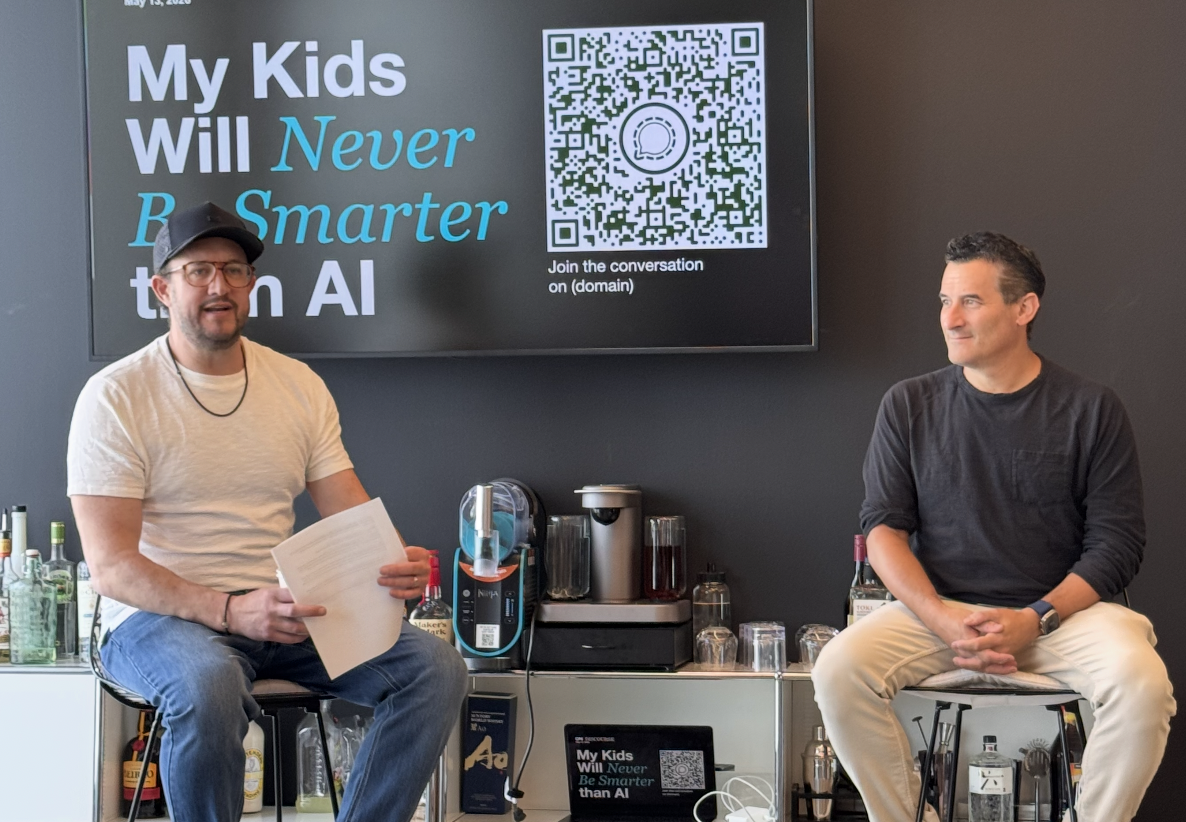
At the launch event for Generation AI, the conversation centered on a defining question for business leaders: how do you prepare for an AI-driven future before it reshapes your workforce, your customers, and your value proposition?
Matt Britton, CEO of Suzy, AI futurist, and bestselling author of Generation AI, framed the moment with urgency. Over the past two decades, he has guided Fortune 500 brands through the rise of the internet, social media, mobile, and the creator economy. Each wave felt transformative. None match the velocity and depth of artificial intelligence.
In dialogue with Michael Kassan, Founder and CEO of 3C Ventures, Britton outlined what separates organizations that will thrive from those that will struggle. The answer centers on AI literacy, consumer intelligence, and cultural agility. It also centers on Gen Alpha, children aged 0 to 15, who will grow up immersed in AI from birth.
The launch discussion delivered a clear message. AI will not wait for institutions to catch up. Companies and individuals who embrace AI as a strategic capability will build disproportionate advantage. Those who hesitate will compete against peers who think, create, and execute faster.
Why AI Literacy Is the New Competitive Advantage
AI will not replace your job. The person who understands AI will.
AI literacy is becoming a baseline requirement for professional relevance. Jensen Huang, CEO of Nvidia, captured it succinctly with that insight, which anchored the discussion around Generation AI and reflects the new reality inside corporate America.
A 2024 IBM survey found that 42 percent of enterprise companies are already actively deploying AI in their operations. Another 40 percent are experimenting. Adoption is no longer theoretical. It is operational.
Marketing teams use AI to generate content variations at scale. Finance departments deploy AI models to detect fraud in real time. HR leaders rely on AI tools to screen resumes and forecast workforce needs.
Matt Britton argues that AI literacy extends beyond knowing how to prompt a chatbot. It involves understanding how models are trained, where bias can emerge, and how to integrate AI into workflows that drive measurable outcomes. Executives who grasp these fundamentals can allocate capital intelligently.
Managers who understand them can redesign processes. Individual contributors who develop fluency can multiply their productivity.
Britton’s own journey underscores the point. Encountering resistance from his engineering team, he built a personalized AI model to solve a specific challenge: synthesizing 20 years of health data into actionable insights. The experiment revealed a core principle. AI delivers value when applied to defined problems with clear objectives.
Professionals who treat AI as a curiosity will lag. Those who treat it as infrastructure will lead. That shift in mindset marks the dividing line in the AI-driven future.
Generation Alpha and the Rise of AI-Native Consumers
Gen Alpha will be the first AI-native generation. That demographic reality carries profound implications for brands, educators, and employers. Children born after 2010 are growing up with voice assistants, recommendation algorithms, and generative tools embedded into daily life.
By 2029, Gen Alpha is expected to number more than 2 billion globally. For these consumers, AI will feel ambient. Personalized learning platforms will adapt in real time. Entertainment will be co-created with algorithms.
Shopping experiences will anticipate needs before they are articulated. Expectations around speed, customization, and interactivity will rise accordingly.
Matt Britton has long analyzed generational shifts, advising global brands on Millennial and Gen Z behavior. With Generation AI, he extends that lens to Gen Alpha. He contends that companies must prepare for a consumer base that assumes intelligence in every interface.
Static experiences will frustrate them. Generic messaging will fall flat.
Education offers a revealing case study. Britton recently addressed 700 professors on behalf of Pearson, challenging institutions to rethink curriculum design. Many classrooms still rely on textbooks updated every few years.
AI models update continuously. Students already use generative AI to brainstorm essays, debug code, and explore complex topics. Schools that cling to memorization risk irrelevance.
The distinction between knowledge and intelligence becomes critical. Knowledge is access to information. Intelligence is the ability to interpret, question, and apply it.
In a world where AI provides instant answers, human advantage shifts toward critical thinking, creativity, and ethical judgment. Organizations that align with AI-native expectations will capture loyalty early. Those that underestimate Gen Alpha will struggle to regain relevance later.
How Businesses Can Integrate AI Into Core Strategy
AI integration must move from experimentation to enterprise strategy. Pilot programs generate headlines. Structural adoption drives performance.
According to McKinsey, companies that fully absorb AI into their operations can see productivity increases of 20 to 40 percent in targeted functions.
Several brands illustrate the shift. Adobe has embedded generative AI into Creative Cloud, enabling designers to iterate concepts in seconds. Canva empowers non-designers to produce professional visuals with AI-assisted tools. Shopify equips merchants with AI features that generate product descriptions, optimize pricing, and forecast demand.
Startups often move faster than incumbents. Lean teams face fewer regulatory and legal bottlenecks. They build AI into their foundation rather than layering it onto legacy systems.
Established enterprises frequently hesitate, citing compliance risks or data security concerns. Caution has merit. Paralysis has cost.
Matt Britton advises a problem-centric approach. Leaders should identify friction points in their organization, whether in customer service response times, supply chain forecasting, or creative production. Then deploy AI incrementally. Test. Measure. Refine. Expand.
Suzy, the consumer intelligence platform Britton leads, demonstrates how AI can accelerate insight generation. Brands can gather real-time feedback from targeted audiences and analyze responses instantly, compressing research timelines from weeks to hours. The result is faster decision-making anchored in data.
AI should be treated as a co-pilot embedded across departments. Marketing, operations, finance, and HR each present distinct use cases. The common denominator is strategic intent.
Companies that align AI investments with business objectives will see compounding returns.
Education, Workforce Disruption, and the Skills That Matter
AI will disrupt roles across industries, particularly in knowledge-based sectors. Goldman Sachs estimates that up to 300 million full-time jobs globally could be exposed to automation. Exposure does not equal elimination. It signals transformation.
Short-term turbulence is likely. Routine tasks in law, accounting, customer support, and media production are increasingly automated. Generative AI drafts contracts, summarizes case law, and produces first-pass marketing copy.
Efficiency rises. Headcount models evolve.
Matt Britton emphasizes specialization as a hedge against displacement. Deep expertise in creative disciplines such as storytelling, brand strategy, and design remains valuable when paired with AI tools. Advanced technical skills in data science, machine learning, and engineering also command premium demand.
Generalists who rely on repeatable tasks face greater vulnerability.
Continuous learning becomes a career imperative. Online platforms report surging enrollment in AI-related courses. Coursera noted a 60 percent increase in generative AI course enrollments within months of major model releases.
Employees who proactively reskill strengthen their leverage.
Education systems face structural pressure. Curricula must pivot toward interdisciplinary thinking, ethics, collaboration, and adaptability. Professors and administrators require upskilling as urgently as students.
Institutions that integrate AI into pedagogy will graduate talent prepared for modern workplaces. The workforce of the AI-driven future will blend human judgment with machine intelligence. Organizations that cultivate this hybrid capability will outperform peers anchored in outdated models.
Personal Branding and Influence in the Age of AI
AI will reshape personal branding and the creator economy. As generative tools lower barriers to content production, differentiation will hinge on identity, trust, and community. Technology will power creation. Humans will power connection.
Matt Britton predicts a growing convergence between celebrities, influencers, and technology platforms. As AI tools become commoditized, brand equity will drive preference. A generative design app endorsed and shaped by a high-profile creator may command loyalty over a technically similar competitor.
The creator economy already exceeds $100 billion globally. AI accelerates its growth by enabling individuals to produce music, video, art, and written content at scale. Virtual influencers and AI-generated personas further blur boundaries.
Audiences increasingly engage with digital entities that feel authentic, even if algorithmically constructed.
For executives and entrepreneurs, personal branding evolves from optional to strategic. Thought leadership on platforms such as LinkedIn, podcasts, and live events builds credibility in crowded markets.
Matt Britton leverages The Speed of Culture podcast to explore how innovation and consumer behavior intersect, reinforcing his position at the forefront of AI and generational insight.
AI tools can amplify personal brands through automated editing, content repurposing, and audience analytics. The strategic layer remains human. Vision, voice, and values differentiate leaders in a sea of algorithmically generated noise.
Professionals who cultivate recognizable expertise will command attention. In an AI-saturated environment, trust becomes currency.
Key Takeaways for Business Leaders
- Invest in AI literacy across the organization. Provide training that covers practical application, data governance, and ethical considerations. Equip teams to integrate AI into daily workflows rather than isolating it within innovation labs.
- Adopt a problem-first AI strategy. Identify high-impact operational bottlenecks and deploy targeted AI solutions. Measure performance improvements and scale successful pilots across departments.
- Prepare for AI-native consumers. Design products and experiences that assume personalization, speed, and interactivity. Study Gen Alpha behaviors to anticipate long-term demand shifts.
- Redesign talent models around hybrid skills. Encourage specialization in creative or technical domains while embedding AI fluency. Support continuous learning through internal programs and external partnerships.
- Strengthen executive visibility and brand authority. Leverage platforms such as The Speed of Culture podcast and live speaking engagements through Speaker HQ to position leadership at the forefront of AI discourse.
Frequently Asked Questions
How will AI impact jobs over the next decade?
AI will automate specific tasks while elevating the importance of strategic and creative skills. Research from Goldman Sachs suggests significant exposure of roles to automation, yet new categories of work will emerge in AI development, oversight, and integration. Professionals who build AI literacy and specialized expertise will expand their opportunities.
What does Generation AI mean for businesses?
Generation AI refers to the cohort growing up immersed in artificial intelligence from birth. These consumers will expect hyper-personalized, intelligent experiences across products and services. Companies that align offerings with AI-native expectations will build early loyalty and sustained relevance.
How can executives start integrating AI into their organizations?
Executives should begin with clearly defined business problems and pilot AI solutions that address measurable objectives. Cross-functional teams can test tools, evaluate ROI, and refine processes before broader rollout. Partnering with platforms such as Suzy can accelerate insight gathering and decision-making.
Why is AI literacy important for leaders?
AI literacy enables leaders to allocate resources effectively, manage risk, and identify competitive opportunities. Understanding how AI models function and where they add value strengthens strategic planning and organizational agility.
The Imperative to Lead in the AI-Driven Future
Artificial intelligence is redefining how businesses operate, how consumers engage, and how careers unfold. The AI-driven future rewards curiosity, speed, and informed experimentation. It favors leaders who treat technology as a catalyst for reinvention.
Matt Britton has positioned himself at the center of that conversation through Generation AI, his keynote presentations via Speaker HQ, and ongoing insights on The Speed of Culture podcast. As CEO of Suzy, he continues to help brands translate cultural intelligence into strategic action.
Organizations seeking guidance on navigating the AI-driven future can explore Generation AI, engage with his content, or contact his team for advisory and speaking opportunities. The window for passive observation has closed. The next era belongs to those prepared to build with intelligence at the core.
Related Posts
The Great Brokerage Consolidation: Real Estate's Multi-Model Platform War

Netflix's Tentpole Playbook: Why Owning Sports Moments Beats Owning Full Seasons

When AI Becomes the Default Teacher: A Reckoning for Parents and Business Leaders