Opening: The Evolution of Sports Hydration Marketing in the Age of AI
The sports hydration market stands at an inflection point. For decades, Gatorade maintained its ironclad grip on the category with a 63.5% market share, but the emergence of challenger brands like BODYARMOR has fundamentally altered the competitive landscape.
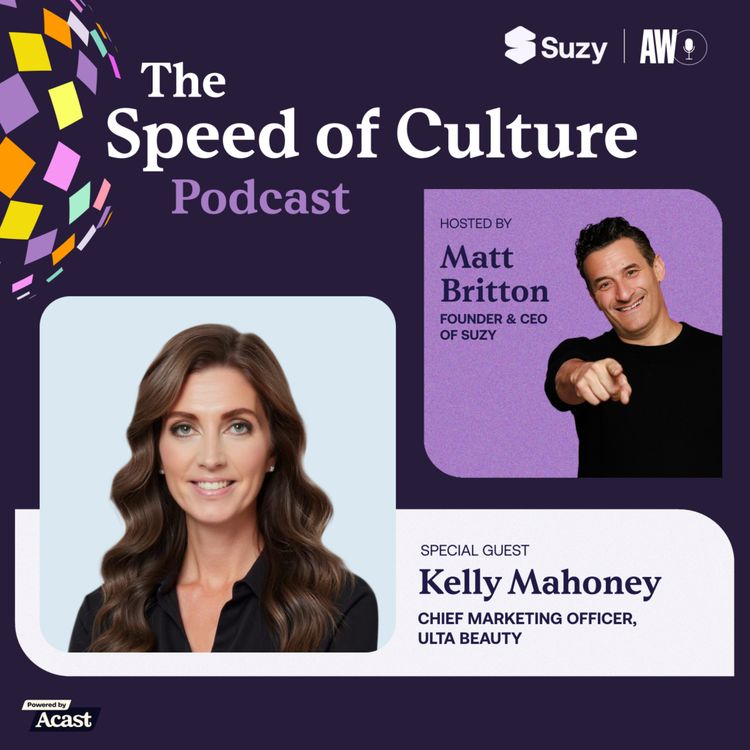
In Episode 134 of the Speed of Culture Podcast, Matt Britton, founder and CEO of Suzy, the AI-powered consumer intelligence platform, sits down with Tom Gargiulo, Chief Marketing Officer at BODYARMOR Sports Nutrition, to explore how a challenger brand navigates the crowded hydration space, leverages artificial intelligence in marketing strategy, and builds authentic athlete partnerships that resonate with modern consumers.
Tom Gargiulo's journey to the CMO role at BODYARMOR reflects a career spent mastering the art of brand transformation and strategic growth. Before joining BODYARMOR in 2023, Gargiulo served as Chief Marketing Officer at Danone, where he activated the launch of Two Good and Oikos Triple Zero yogurts—products that challenged established market leaders through innovation and authentic consumer connection.
Prior to that, he held the position of Senior Vice President at KIND, where he spearheaded high-profile partnerships with Delta Air Lines and Starbucks that revolutionized how a snack brand could integrate into daily consumer touchpoints. His diverse background in food-tech startups, premium nutrition brands, and category innovation positions him uniquely to lead BODYARMOR's ambitious growth agenda in an increasingly competitive marketplace.
What makes this conversation particularly timely is its focus on the intersection of three critical marketing forces: the strategic use of artificial intelligence to understand consumer preferences and behavior, the continued importance of authentic athlete partnerships in driving brand credibility, and the innovation imperative that forces established players to evolve or lose market share.
BODYARMOR's rise from a niche premium sports drink to a multi-billion-dollar Coca-Cola-owned brand demonstrates that in the modern marketplace, understanding your consumer through data, connecting with them through trusted athlete voices, and continuously innovating around their needs isn't just nice to have—it's essential.
As consumers become increasingly sophisticated in their beverage choices, making decisions based on ingredient transparency, sustainability, performance science, and brand values, the marketing approaches that powered growth in previous decades no longer suffice. The brands that win in sports hydration—and arguably in all of consumer goods—are those that combine data-driven personalization with genuine human connection, leverage technology to enhance (not replace) storytelling, and recognize that modern athletes and consumers demand authenticity alongside innovation.
How BODYARMOR Positioned Itself as a Challenger in a Duopoly-Dominated Market
When BODYARMOR entered the sports hydration space in 2011, it faced an entrenched duopoly. Gatorade and Powerade had spent decades conditioning consumers to see sports drinks as performance necessities, leveraging massive advertising budgets, ubiquitous distribution networks, and decades of brand equity.
The conventional wisdom suggested the category was saturated. Yet BODYARMOR saw an opportunity where others saw a wall.
The brand's fundamental differentiator was positioning: premium quality, transparent ingredients, and a commitment to what the product didn't contain as much as what it did. While Gatorade built its empire on performance science and lifestyle aspiration, and Powerade focused on competitive sports association, BODYARMOR carved out a position centered on clean ingredients, electrolyte science, and authentic athlete partnership.
The brand used coconut water, potassium, B-vitamins, and antioxidants—ingredients that resonated with health-conscious consumers—rather than the artificial colors and sweeteners that competitors relied upon.
This positioning strategy proved prescient. By the time Coca-Cola acquired BODYARMOR for $5.6 billion in November 2021, the brand had already surpassed Powerade in sales volume, validating the challenger strategy.
Under Tom Gargiulo's leadership as CMO, BODYARMOR doubled down on this positioning while aggressively pursuing growth initiatives that traditional market leaders couldn't execute at the same speed or authenticity.
The competitive landscape has intensified since 2021. Gatorade responded to BODYARMOR's challenge with a portfolio expansion strategy, launching Gatorade Zero Sugar, Gatorlyte, Gatorade Fit, and even an unflavored alkaline water.
Meanwhile, emerging competitors like PRIME Hydration and BioSteel have seized on the market disruption to build followings through influencer and athlete partnerships. Gatorade now commands approximately 61.6% of the market, with Powerade at 14.5% and BODYARMOR at 11.8%—meaning the top three brands collectively control nearly 88% of the category.
Yet BODYARMOR's trajectory remains bullish. The brand's #2 position is hard-won and defensible, built not on legacy advantage but on continuous innovation and authentic athlete connection.
In 2024, BODYARMOR introduced Bodyarmor Zero Sugar and Bodyarmor Flash I.V., reflecting a brand philosophy that treats innovation as an ongoing conversation with consumers rather than an episodic marketing event.
Tom Gargiulo's leadership has also accelerated BODYARMOR's international expansion and major sports partnerships. The brand secured a multi-year deal to become the Official Sports Drink of the NHL and NHLPA in 2024, joining an athlete roster that includes Connor McDavid, Sabrina Ionescu, Joe Burrow, CeeDee Lamb, Alex Morgan, and Ronald Acuña.
These aren't generic sponsorships; they're carefully curated partnerships with athletes who are simultaneously entering or at the prime of their careers—moments when their influence peaks and their connection to consumers is most authentic.
The Strategic Role of AI and Consumer Intelligence in Modern Sports Marketing
One of the most significant shifts in sports marketing over the past three to five years has been the integration of artificial intelligence and advanced analytics into brand strategy.
Matt Britton's Suzy platform exemplifies this shift. Built on the principle that consumer intelligence should be democratic and rapid, Suzy enables brands to access real-time insights into consumer preferences, sentiment, and behavior patterns without waiting months for traditional market research studies.
For brands like BODYARMOR, this capability is transformative. Rather than launching a product and hoping consumers respond positively, marketing teams can validate hypotheses with actual consumer input in real-time, test messaging variations before investing in production, and identify emerging consumer preferences before they become mainstream.
The application of AI in sports marketing extends far beyond basic consumer research. Hyper-personalization—powered by machine learning algorithms that analyze consumer behavior, purchase history, social media engagement, and contextual factors—is reshaping how brands interact with audiences.
The economic impact is substantial. Studies show that AI-driven personalization can boost ticket sales by 35% or more, and brands that deploy dynamic pricing strategies see revenue increases averaging 20%.
AI also enhances content creation and distribution efficiency, enabling BODYARMOR to maintain a constant presence across social platforms without proportionally increasing the size of its marketing organization.
However, Tom Gargiulo's strategic approach to AI in marketing reflects an important nuance: technology is an enabler, not a replacement for human creativity and strategic thinking.
The AI provides the intelligence; human creatives and strategists provide the imagination and emotional resonance that converts insights into memorable brand experiences.
The global AI in sports market is projected to reach $19.9 billion by 2032, growing at a compound annual growth rate of 30.1%. Brands that master AI-powered consumer intelligence will operate with a significant advantage over competitors who rely on traditional research methodologies.
Athlete Partnerships as Authentic Marketing: From Endorsements to Brand Ambassadors
While technology and data drive modern sports marketing, the human element remains irreplaceable. Athlete partnerships represent one of the most powerful levers available to sports brands, yet their execution has evolved dramatically.
The transactional endorsement model has given way to more authentic partnership models where athletes become genuine brand ambassadors and, in some cases, product collaborators.
BODYARMOR's athlete strategy exemplifies this evolution. The brand targets athletes with high engagement rates, growing influence, and audiences that overlap significantly with the brand's target consumers.
Social media engagement metrics have become central in determining endorsement potential, sometimes equaling the weight of on-field performance.
The brand's 2024 Super Bowl commercial “Field of Fake” featuring Joe Burrow, CeeDee Lamb, Ronald Acuña, Christian McCaffrey, Connor McDavid, and Alex Morgan succeeded because it told a coherent story about competition, performance, and the moments when athletes trust BODYARMOR.
Looking forward, the athlete partnership model will likely continue to evolve toward more transparency and reciprocity, with deeper involvement in product development and long-term value creation.
Innovation and Product Development: Staying Ahead in a Fast-Changing Category
Sports beverage innovation has accelerated dramatically over the past five years, driven by shifting consumer preferences and emerging competitive threats.
BODYARMOR's launch of Bodyarmor Zero Sugar addressed demand for zero-sugar options without artificial flavors, sweeteners, or dyes. The launch of Bodyarmor Flash I.V. addressed the gap between hydration during exercise and recovery after it.
The broader innovation landscape shows increasing segmentation and specialization, reflecting the sophistication of modern consumers.
BODYARMOR's recent rebrand—the brand's first major visual identity refresh in nearly 15 years—signals transformation and differentiation.
International expansion represents another critical growth vector. BODYARMOR entered the Canadian market in 2024 and is planning expansion into Mexico later in the year.
The future of sports beverage innovation will likely be shaped by sustainability, personalization, plant-based ingredients, and expanded functionality beyond simple hydration.
The Future of Sports Hydration: Market Trends, Consumer Evolution, and Competitive Outlook
The sports hydration market is undergoing a fundamental transformation in positioning and use occasion. The shift from “sports drink” to everyday wellness hydration dramatically expands the addressable market.
Emerging competitors like PRIME Hydration and BioSteel validate this market expansion, with PRIME’s sales growing 95.4% according to market data.
Younger consumers are increasingly skeptical of artificial ingredients and heavily advertised mainstream brands. They prioritize ingredient transparency, authentic partnerships, and values alignment.
Sustainability is becoming an increasingly important purchasing factor, pushing brands toward eco-friendly packaging and transparent supply chains.
The competitive outlook suggests intensifying competition, faster innovation cycles, and continued market share fragmentation. Success requires continuous innovation, authentic athlete partnerships, AI-powered marketing optimization, and flawless international execution.
Key Takeaways
- AI-powered consumer intelligence has become a strategic necessity in sports marketing. Brands leveraging real-time consumer data and advanced analytics operate with a significant competitive advantage.
- Authentic athlete partnerships matter more than celebrity status. Engagement, audience fit, and genuine product alignment generate better ROI than raw follower counts.
- Continuous innovation is essential. Launches like Bodyarmor Zero Sugar and Flash I.V. demonstrate the need to proactively address consumer needs.
- Market segmentation and use-occasion expansion drive growth. Positioning hydration products for everyday wellness expands the addressable market.
- Ingredient transparency increasingly determines purchasing decisions. Clean-label positioning creates structural advantages in a skeptical marketplace.
Frequently Asked Questions
What makes BODYARMOR different from Gatorade and Powerade?
BODYARMOR differentiates itself through premium positioning based on ingredient quality, transparency, and clean labeling. While Gatorade and Powerade traditionally relied on artificial colors and sweeteners, BODYARMOR emphasizes natural ingredients, coconut water, potassium, B-vitamins, and antioxidants. Additionally, BODYARMOR prioritizes authentic athlete partnerships and continuous innovation to address emerging consumer preferences.
How does AI influence sports marketing strategy at brands like BODYARMOR?
AI enables data-driven decisions across consumer targeting, athlete selection, product validation, and campaign optimization. Platforms like Suzy allow marketers to validate hypotheses with real-time consumer input, identify emerging trends, and personalize messaging at scale.
Why do athlete partnerships matter in sports beverage marketing?
Athlete partnerships provide credibility and authenticity that corporate messaging cannot achieve. They generate trusted content through athlete social platforms and create associations with performance and aspiration that resonate deeply with consumers.
What is the competitive outlook for the sports hydration market?
The market is fragmenting, with share migrating from legacy leaders toward challengers and new entrants. Competitive intensity will increase as brands accelerate innovation, expand athlete partnerships, and deploy more data-driven marketing strategies.
Looking Ahead
The conversation between Matt Britton and Tom Gargiulo in Episode 134 of the Speed of Culture Podcast addresses critical questions about the future of sports marketing, brand strategy, and consumer behavior in increasingly data-driven and athlete-centric markets.
Their discussion illuminates how challenger brands can compete against entrenched market leaders, how artificial intelligence reshapes marketing decision-making, and how authentic athlete partnerships create value in modern consumer categories.
For marketing leaders, the episode provides concrete insights in

%20(400%20x%20100%20px)%20(300%20x%2050%20px)%20(150%20x%2050%20px).avif)

.jpeg)


.jpeg)
.jpeg)