Opening
The advertising industry stands at an inflection point. Over the past four decades, marketing has transformed from a creative craft rooted in intuition to a sophisticated blend of art and science, data and creativity. Yet despite revolutionary technological advances—from the internet to social media to artificial intelligence—the fundamental principles that drive advertising success remain surprisingly consistent.
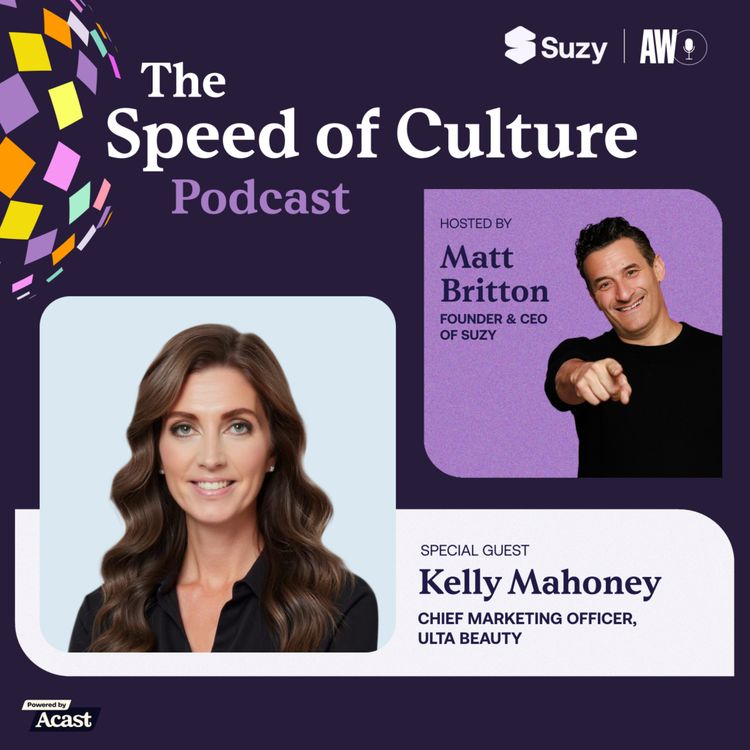
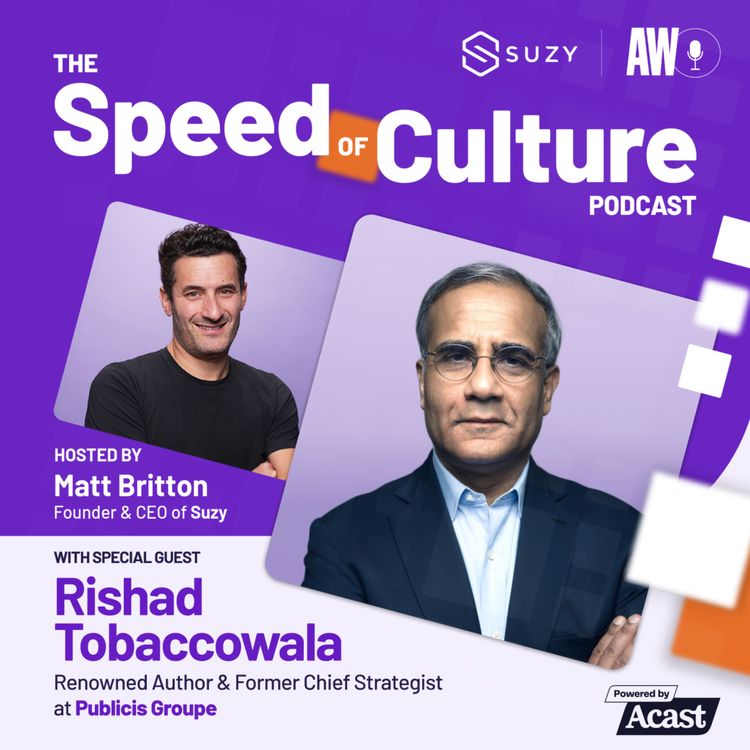
Matt Britton, founder and CEO of Suzy, the AI-powered consumer intelligence platform, recently sat down with Rishad Tobaccowala, renowned author and former Chief Strategist at Publicis Groupe, to explore this paradox on The Speed of Culture podcast. Their conversation reveals why the next decade may indeed be the best for the advertising industry—not despite the emergence of AI, but because of how human talent can leverage it.
Tobaccowala brings four decades of industry leadership to this discussion. As the former Chief Growth Officer and Chief Strategist of Publicis Groupe, a 100,000-employee firm comprising companies like Epsilon, Sapient, Digitas, Leo Burnett, Saatchi and Saatchi, Starcom, and Zenith, he has witnessed and shaped nearly every major transformation in advertising and marketing. His bestselling book, Restoring the Soul of Business: Staying Human in the Age of Data, offers a roadmap for organizations seeking to balance technological innovation with human creativity and intuition.
This episode, published in August 2023, arrives at a critical moment. As AI capabilities double every six months—limited only by GPU availability—Tobaccowala's insights on maintaining humanity in a machine-driven future become essential reading for marketing leaders, agency professionals, and brand strategists. The conversation addresses not just how advertising will change, but how to preserve what makes it effective: human judgment, emotional intelligence, and the ability to connect with consumers on a meaningful level.
The Four Unchanging Pillars of Advertising Success
Despite four decades of industry evolution, Tobaccowala identifies four fundamental aspects of advertising that have remained constant—and likely always will. Understanding these pillars provides the foundation for navigating future industry changes.
Talent Remains Paramount
The most successful advertising organizations, regardless of era or technology, have built their competitive advantages on exceptional people. From the creative directors who pioneered the industry's Golden Age to the data scientists architecting modern personalization engines, great talent has always been the differentiator. This hasn't changed and won't change.
In fact, as AI tools become more sophisticated, the demand for talented professionals who understand how to collaborate with artificial intelligence—rather than be replaced by it—will only increase.
Innovation and Risk-Taking Define Growth
The advertising industry has always been built on experimentation. Whether it was testing new media channels, innovative creative formats, or unconventional client approaches, the willingness to take calculated risks has distinguished industry leaders from followers. The agencies and brands that dominated their eras were those willing to challenge conventional wisdom.
As AI introduces new possibilities for customer targeting, content personalization, and campaign optimization, the organizations that will thrive are those willing to experiment with these tools while maintaining their creative integrity.
Client Relationships Remain Essential
Effective advertising has always depended on deep, trust-based relationships between agencies and clients. These relationships facilitate better insights into client business objectives, enable more strategic problem-solving, and create the psychological safety necessary for breakthrough creative work.
In an age of automated ad buying and algorithmic optimization, the human connection between agency strategists and client leaders will become even more valuable. It's in these conversations that the most meaningful business transformations occur.
Change Itself Is the Only Constant
Tobaccowala emphasizes that the one thing that has never stopped changing in advertising is change itself. The media landscape, consumer behavior, technology capabilities, and competitive dynamics are in perpetual flux. The organizations that have thrived—and will continue to thrive—are those with the cultural agility to adapt quickly, learn continuously, and reinvent themselves without losing their core purpose.
These four pillars—talent, innovation, relationships, and adaptability—form the bedrock upon which sustainable advertising success is built.
The SAVE Formula: A Consumer-Centric Framework for the Modern Age
One of the most practical insights from Tobaccowala's work is the SAVE formula, a framework designed to help organizations bridge the gap between innovation and consumer needs. In an age of rapid technological advancement, it's easy for companies to fall in love with what's possible rather than what's valuable to consumers.
S: Solving a Consumer Problem
The starting point for any marketing initiative should be identifying a real problem that consumers face. This isn't about creating demand for solutions that don't address genuine needs; it's about starting with empathy and consumer insight.
Before investing in AI-driven personalization, advanced analytics, or cutting-edge creative formats, marketers must ask: What problem are we actually solving for our target audience?
A: Accessibility and User-Friendliness
Great solutions mean nothing if consumers can't easily access or understand them. In the context of modern advertising, accessibility encompasses digital accessibility, cognitive accessibility, and emotional accessibility.
AI can enhance accessibility by personalizing content to individual preferences and capabilities, but only if the underlying approach is built on accessibility-first thinking.
V: Value Delivery
Every touchpoint in a marketing campaign should deliver some form of value to the consumer. This might be functional, emotional, social, or economic value. The most effective campaigns are those where every interaction reinforces the value proposition.
AI tools can help identify which types of value resonate most with different consumer segments, enabling more targeted and effective value communication.
E: Exceptional Experience
Beyond solving problems and delivering value, modern consumers expect experiences that are seamless, personalized, and memorable. This is where AI particularly shines—by analyzing consumer behavior patterns and preferences, AI systems can create experiences that feel tailored to individual needs.
However, the human insight required to craft emotionally resonant experiences that build lasting brand relationships cannot be fully automated. The best experiences are co-created: AI handles the personalization and optimization, while human creativity ensures emotional relevance and authenticity.
AI in Advertising: Doubling Capabilities, Redefining Talent Requirements
The AI impact on the advertising industry is not speculative—it's already here and accelerating rapidly. The global AI in advertising market was valued at $6.7 billion in 2023 and is projected to reach $28.4 billion by 2033, representing a 28.4% compound annual growth rate. These numbers reflect not just technology investment, but a fundamental reshaping of how advertising is created, deployed, and optimized.
The Acceleration Curve
Tobaccowala emphasizes a critical reality: AI capabilities are doubling every six months, constrained primarily by GPU availability rather than algorithmic innovation. This exponential growth means that what seems cutting-edge today will be table stakes within a year or two.
For marketing leaders and agency executives, this creates both opportunity and urgency. The decisions made today about AI adoption will significantly impact competitive positioning over the next three to five years.
AI-Driven Personalization and Targeting
The most immediate impact of AI in advertising has been in programmatic advertising, real-time bidding, and personalized content delivery. Targeted advertising represented 31.1% of the AI advertising market in 2023, reflecting the significant value of AI-powered audience segmentation and message personalization.
Studies demonstrate that personalized campaigns deliver 5–8 times the ROI on marketing spend compared to non-personalized approaches—a stunning differential that explains the rush to adopt AI-driven personalization tools.
Content Creation and Automation
AI is revolutionizing the speed at which advertising content can be produced. AI-powered tools for creative development are linked to a 30% reduction in production time, enabling agencies and brands to test more creative variations, respond more quickly to market opportunities, and scale campaigns with greater efficiency.
However, speed and efficiency mean nothing if the content lacks authenticity or fails to resonate emotionally with audiences. This is where human creativity remains irreplaceable.
The Talent Amplification Model
Rather than viewing AI as a replacement for human talent, Tobaccowala advocates for a talent amplification model. When combined with a skilled individual, AI surpasses what machine learning models can achieve alone.
The best work happens at the intersection of machine intelligence—which excels at pattern recognition, optimization, and scale—and human judgment, which excels at strategy, creativity, and understanding nuanced human motivation. An exceptional strategist equipped with powerful AI tools will outperform both the strategist working without those tools and the AI system working without human direction.
Staying Ahead: Continuous Learning and Hands-On Engagement in the AI Era
As AI transforms advertising, maintaining competitive advantage requires a different approach to professional development and organizational learning.
- Dedicate Time to Daily Learning. Professionals should set aside at least an hour each day to learn about AI, consumer behavior, technology trends, and industry developments.
- Challenge Your Own Assumptions. Organizations must question which marketing assumptions may be outdated and which metrics no longer matter.
- Practice Hands-On Creation. Conceptual understanding isn’t enough—leaders should actively experiment with AI tools to understand their capabilities and limitations.
- The Unbundled Distributed Work Model. Advertising work is shifting from centralized hubs to flexible combinations of home offices, third places, and periodic in-person collaboration.
The Four-Decade Industry Evolution: From Interruption to Connection
Over the past forty years, advertising has evolved through distinct eras, each defined by changing assumptions about consumer behavior and marketing effectiveness.
- The Interruption Era (1980s–1990s). Success was measured by reach and frequency across mass media channels.
- The Engagement Era (2000s–2010s). The rise of digital and social media shifted focus toward dialogue, participation, and community.
- The Personalization Era (2010s–2020s). Data and analytics enabled tailored messaging, with success measured by relevance and customer lifetime value.
- The Authenticity Era (2020s–Present). Consumers increasingly expect transparency, trust, and values alignment from brands.
The industry now stands at the threshold of its most exciting era—not because technology enables better interruption, but because it enables authentic, value-driven connections at unprecedented scale.
Key Takeaways: The Future of Advertising Through a Human Lens
- The Four Pillars Remain Stable. Talent, innovation, relationships, and adaptability continue to define success.
- The SAVE Framework Bridges Innovation and Consumer Need. Solving problems, ensuring accessibility, delivering value, and creating exceptional experiences keep strategy consumer-centric.
- AI Amplifies Human Talent Rather Than Replacing It. The future is human-plus-machine, not human-versus-machine.
- Continuous Learning Is Non-Negotiable. In an environment where capabilities double every six months, standing still means falling behind.
- The Next Decade Is Positioned to Be the Best. The convergence of talent, technology, and evolving consumer expectations creates unprecedented opportunity.
FAQ: Common Questions About Advertising Evolution and AI
Will AI eliminate advertising jobs?
While AI will change the nature of advertising work, it is more likely to eliminate specific roles than the profession itself. Jobs centered purely on tactical execution may decline, while roles requiring strategy, creativity, relationships, and judgment will grow in importance.
How should agencies approach AI adoption?
Agencies should prioritize experimentation and measurable pilots over wholesale transformation. Identifying workflows where AI delivers clear value and building a culture that views AI as an amplifier—not a threat—is essential.
What is the most important skill for advertising professionals to develop now?
The ability to deeply understand consumer needs and translate them into actionable strategies. AI can execute at speed and scale, but humans must define the strategy and identify the problems worth solving.
How will AI change the creative process in advertising?
AI will democratize production and optimization, freeing creative professionals to focus on higher-order questions: storytelling, brand values, and emotional resonance. Execution becomes faster; strategy becomes more important.
Looking Ahead: Resources and Next Steps
For marketing leaders exploring these themes, Matt Britton’s AI keynote speaker engagements examine how AI is reshaping business and culture. Organizations seeking to strengthen their consumer intelligence capabilities can explore Suzy, the AI-powered platform enabling brands to make better decisions faster.
The Speed of Culture podcast continues to spotlight leaders at the intersection of technology, culture, and business. For broader insight into how AI is transforming consumer behavior and strategy, explore Generation AI.
For speaking engagements, consultation, or keynote opportunities, visit Speaker HQ or contact Matt’s team.
Conclusion: Human-Centered AI as the Competitive Advantage
Rishad Tobaccowala's conversation on The Speed of Culture arrives at a moment of unprecedented technological change. Yet the core message is pragmatic and reassuring: the future of advertising isn’t determined by technology alone, but by how human talent uses it to create authentic value.
Over four decades, technological revolutions have reshaped the industry. Still, the fundamental drivers of success—great talent, creative innovation, strong relationships, and adaptability—have remained consistent.
The AI revolution is different in degree, not in kind. The capabilities are more powerful and the pace faster, but the challenge is unchanged: creating meaningful connections between brands and consumers that drive business results.
The next decade in advertising promises to be the best—not because of AI, but because of how human talent will learn to harness it.

%20(400%20x%20100%20px)%20(300%20x%2050%20px)%20(150%20x%2050%20px).avif)

.jpeg)


.jpeg)
.jpeg)