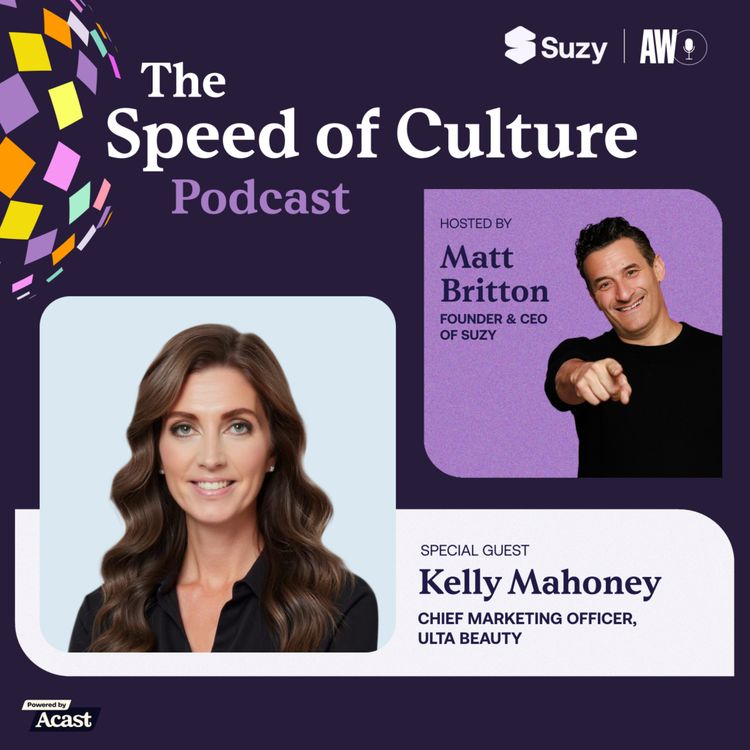
The No-Middle-Ground Publishing Philosophy
Building a media company that survives three decades of industry disruption requires more than good content—it demands a fundamental understanding of how culture moves and a willingness to evolve every aspect of the business to stay ahead of it.
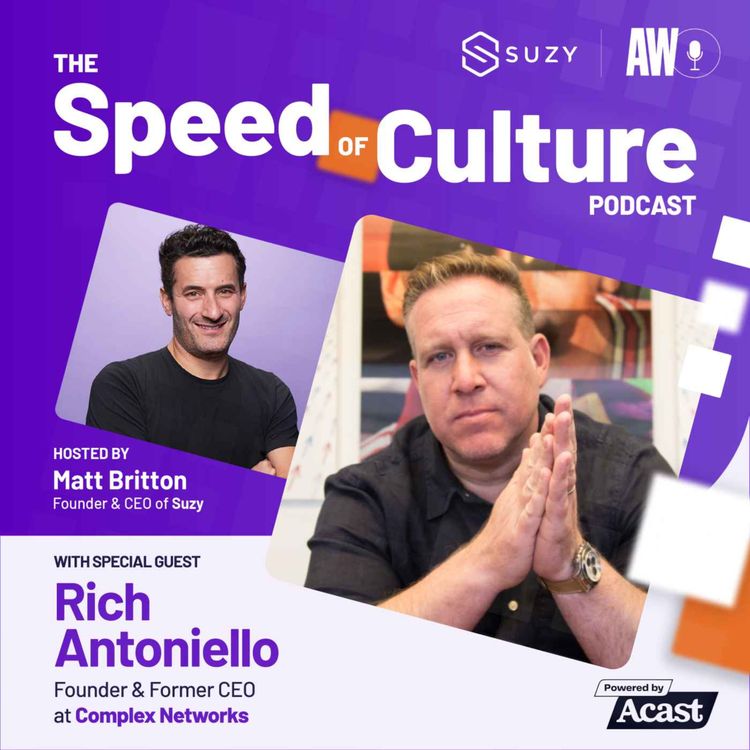
Rich Antoniello, who co-founded Complex with fashion designer Marc Ecko in 2002, did not set out to build one of the most influential media brands in youth culture. Yet the company he grew from a hip-hop lifestyle magazine into a 360-degree digital media powerhouse generating 750 million monthly views offers a masterclass in how content businesses can survive and thrive through transformation.
Matt Britton, founder and CEO of Suzy, the AI-powered consumer intelligence platform, has long argued that the brands winning in today's environment are those that understand culture at a depth their competitors cannot match. On The Speed of Culture podcast, Britton spoke with Antoniello about building Complex Networks across three decades of media disruption—from print magazine to digital media to branded entertainment empire.
Antoniello's journey reveals critical insights for every business leader navigating an era where content, commerce, and community have converged into a single competitive battlefield. His observation that there is no middle ground in publishing—you are either a specialized publisher with verticalized audiences or you are the Amazon of media—challenges conventional thinking about media strategy and brand building.
There is no middle ground in publishing—you are either a specialized publisher with verticalized audiences or you are the Amazon of media.
Antoniello's most provocative insight is his assertion that modern publishing offers no viable middle ground. Successful media businesses must choose between deep verticalization with specialty audiences or massive-scale aggregation. Attempting to occupy the space between these poles produces businesses that are neither distinctive enough to command premium engagement nor large enough to compete on reach.
Complex's success came from choosing the verticalized path with a twist: rather than covering a single vertical like sneakers or music, Complex mixed multiple passion categories—hip-hop, fashion, sneakers, music, design, and lifestyle—together under a unified cultural lens. The insight was that the audience connecting these verticals was the same: young people who defined their identity through the intersection of these cultural touchpoints rather than through any single category.
This strategy required conviction. When Complex launched in 2002, the prevailing magazine model was rigid vertical specialization. Antoniello bet that subcultures—hip-hop, streetwear, sneaker collecting—would move from the cultural periphery into the mainstream.
That bet proved spectacularly correct. The cultural interests that Complex covered from its earliest days now represent some of the largest consumer categories in the global economy. For business leaders evaluating media brand building strategies, the lesson is to identify cultural convergences before they become obvious.
The brands that position themselves at the intersection of emerging cultural forces—rather than chasing established categories—create defensible competitive advantages that late entrants cannot easily replicate.
From Print to Digital to Entertainment: Evolving the Business Model
Complex's evolution across three decades illustrates a business model flexibility that most media companies fail to achieve. The company launched as a print magazine in 2002, shifted to digital-first in 2007, adopted sponsored content models in 2008, moved into video production in 2012, and diversified into commerce, events, and licensing in subsequent years.
Each transition required Antoniello to abandon revenue streams that were still producing income in favor of models with greater long-term potential. The decision to stop calling Complex a "media brand" and start calling it a "youth culture brand" was more than semantic repositioning. It was a strategic unlock that liberated the company from the constraints of advertising-dependent media economics.
While traditional media companies derive 90% or more of their revenue from advertising, Complex diversified to the point where advertising represented roughly 48% of revenue—with the remainder coming from e-commerce, long-form intellectual property, licensing, and merchandising.
The First We Feast brand and its flagship show Hot Ones exemplify this diversification. Only 15% of First We Feast's revenue comes from advertising. The remaining 85% comes from content licensing, syndication, and commerce—including a hot sauce merchandising line that became an eight-figure revenue business.
As Britton has observed through his work with Fortune 500 companies on consumer strategy, the brands that build multiple revenue streams around authentic cultural engagement are far more resilient than those dependent on single monetization models. Complex's diversification created a business that could weather advertising downturns, platform algorithm changes, and competitive shifts without existential risk.
Surviving Crisis: Brand Plus Brains Plus Balance Sheet
Antoniello developed a three-pillar framework for surviving media crises: brand plus brains plus balance sheet. Strong brand identity provides audience loyalty that persists through disruption. Intellectual capital—the talent, creativity, and strategic capability within the organization—enables adaptive responses. And financial reserves provide the runway to execute strategy rather than making desperate, short-term decisions under cash pressure.
This framework was tested during both the 2008 financial crisis and the 2020 pandemic. Antoniello drew a sharp distinction between the two: 2008 was primarily a financial crisis with relatively predictable recovery patterns, while 2020 compounded financial uncertainty with unknown virus timelines, unclear return-to-office timelines, and unpredictable economic ripple effects.
In both cases, Antoniello prioritized minimizing layoffs over preserving short-term profitability. His reasoning was practical rather than sentimental: heavy layoffs destroy organizational capability, create internal friction, and eliminate the talent required to capitalize on recovery when it arrives.
By maintaining team integrity through crisis, Complex emerged from both disruptions with its capabilities intact while competitors who had gutted their organizations struggled to rebuild. This approach created an unexpected competitive advantage.
Teams that survived crisis together developed heightened focus, efficiency, and unity of purpose that became differentiators in post-crisis markets. For business leaders managing through uncertainty, the lesson is that crisis management decisions about talent have long-term strategic consequences that extend far beyond the immediate financial calculus.
Content as Culture: The Sub-Brand Strategy
Complex's sub-brand architecture—First We Feast, Pigeons & Planes, Sole Collector, and ComplexCon—demonstrates how media companies can build diversified brand portfolios that serve different audience segments while sharing cultural DNA. Each sub-brand targets a specific passion community while benefiting from the broader Complex brand's cultural credibility and operational infrastructure.
The success of this strategy depends on a question Antoniello believes every publisher should ask: what does the brand mean to its community? The answer should not be defined by distribution platform—because platforms will be many and will change—or by number of products—because successful brands will need many.
The answer should be rooted in the cultural meaning the brand holds for its audience. Hot Ones, the interview show where celebrities eat progressively spicier chicken wings, became a cultural phenomenon not because of production budget or celebrity access—plenty of shows have both—but because it created a format so distinctive that it became a cultural reference point.
When consumers share clips, reference the show in conversation, or purchase Hot Ones branded products, they are participating in a cultural community that Complex built. This cultural infrastructure creates business value that traditional media metrics fail to capture.
The monetization potential of a culturally embedded brand extends far beyond advertising to encompass merchandise, events, licensing, partnerships, and community-driven commerce. As Britton explores in Generation AI, the generations now entering their peak consumption years evaluate brands based on cultural authenticity and community belonging—precisely the assets that Complex has built over two decades.
What the Complex Playbook Means for Every Industry
While Complex operates in media and entertainment, Antoniello's principles apply broadly to any industry where cultural relevance drives commercial outcomes. The observation that subcultures move to the mainstream is not limited to hip-hop and streetwear—it applies to gaming, wellness, sustainability, creator commerce, and dozens of other cultural movements currently making the same transition.
Businesses that identify these cultural transitions early, build authentic relationships with the communities driving them, and create business models flexible enough to evolve alongside cultural change will capture disproportionate value. Those that wait for cultural movements to become mainstream before engaging will find that the authentic relationships and community trust required for meaningful participation have already been claimed by earlier entrants.
The practical implications for marketing and brand strategy are significant. Consumer intelligence—gathered through platforms like Suzy—enables organizations to identify emerging cultural movements, understand the communities driving them, and develop engagement strategies while movements are still nascent.
The cost of building authentic cultural relationships is dramatically lower during early stages than during mainstream saturation, making early cultural intelligence investment one of the highest-ROI strategies available to brand builders.
Key Takeaways for Business Leaders
- Choose a clear positioning in content strategy—either specialized verticalization with deep audience engagement or massive-scale aggregation—avoiding the unviable middle ground that produces neither distinction nor reach.
- Diversify revenue beyond advertising dependence by building commerce, licensing, events, and intellectual property assets around authentic cultural engagement and community trust.
- Apply the "brand plus brains plus balance sheet" framework for crisis resilience, maintaining organizational talent through downturns to preserve the capabilities needed for post-crisis recovery.
- Build sub-brand architectures that serve specific passion communities while sharing operational infrastructure and cultural DNA, creating diversified brand portfolios with compounding value.
- Identify cultural movements during their early stages and build authentic community relationships before mainstream adoption drives up the cost and reduces the authenticity of brand participation.
Frequently Asked Questions
How did Complex Networks evolve from a magazine to a media empire?
Complex launched in 2002 as a print magazine covering hip-hop, sneakers, and lifestyle culture. The company transitioned to digital-first in 2007, adopted sponsored content in 2008, expanded to video in 2012, and diversified into commerce, events, and licensing. By redefining itself as a "youth culture brand" rather than a media company, Complex unlocked revenue streams beyond advertising, including merchandising, content licensing, and experiential events.
What is the "no middle ground" philosophy in publishing?
Rich Antoniello argues that modern publishers must either be specialized brands with deeply engaged vertical audiences or operate at massive scale. Attempting to occupy the middle ground produces businesses that are neither distinctive enough for premium engagement nor large enough for competitive reach. The winners combine qualitative cultural expertise with operational excellence within a focused cultural identity.
How can brands survive media industry crises?
Antoniello's three-pillar framework—brand plus brains plus balance sheet—provides a resilience model. Strong brand identity maintains audience loyalty, intellectual capital enables adaptive responses, and financial reserves provide strategic runway. Critically, minimizing talent layoffs during crises preserves organizational capability needed for recovery while building team cohesion that becomes a competitive advantage.
Why is cultural intelligence important for brand building?
Cultural intelligence enables brands to identify emerging movements before they reach mainstream saturation, when building authentic community relationships is both easier and more cost-effective. Brands that engage with cultural communities during early stages develop genuine credibility that late entrants cannot replicate, creating defensible competitive positions in culturally driven markets.
Looking Ahead
Rich Antoniello's two-decade journey building Complex Networks demonstrates that media businesses—and by extension, any business dependent on cultural relevance—must evolve continuously or face extinction. The principles that guided Complex from print to digital to entertainment platform offer a roadmap for business leaders in every industry navigating cultural disruption.
Explore more conversations with the leaders shaping the future of media, marketing, and culture on The Speed of Culture podcast. To bring these insights to your next leadership event, visit Matt Britton's speaking platform.

%20(400%20x%20100%20px)%20(300%20x%2050%20px)%20(150%20x%2050%20px).avif)

.jpeg)


.jpeg)
.jpeg)