Opening
The spirits industry stands at a critical crossroads. Consumer preferences are shifting faster than ever, distribution channels are fragmenting across digital and physical retail, and younger generations are redefining what “premium” means. In a landscape where brands built over centuries can quickly lose relevance without strategic adaptation, the question becomes: How do legacy brands maintain their cultural authority while innovating for tomorrow’s consumer?
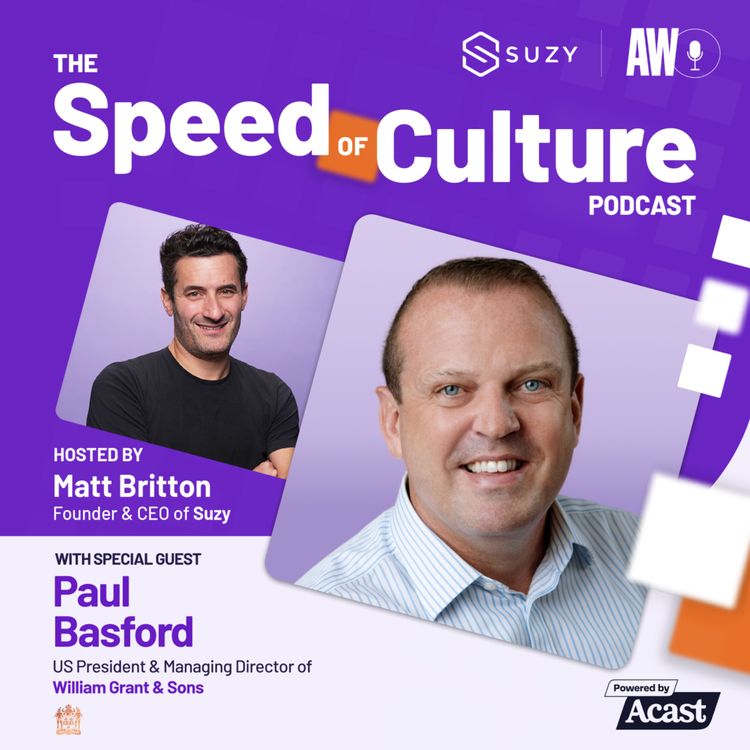
This is precisely the challenge that Paul Basford, U.S. President and Managing Director of William Grant & Sons, navigates daily. With over two decades of executive experience in the beverage industry, including leadership roles at giants like Diageo, Basford has become a thought leader in understanding how premium spirits brands can thrive amid accelerating change.
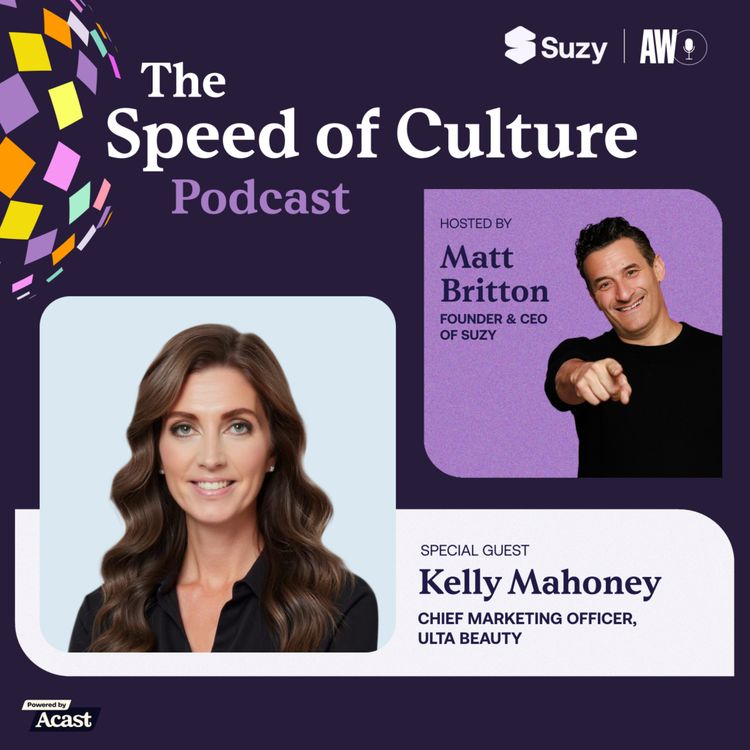
In Episode 137 of The Speed of Culture Podcast—“Raising the Bar: Why Consumer Insights Matter at William Grant & Sons with Paul Basford”—host and consumer intelligence expert Matt Britton, founder and CEO of Suzy, the AI-powered consumer insights platform, sits down with Basford to explore how consumer intelligence drives growth in the premium spirits sector.
The conversation reveals that the most successful spirits brands are those that combine deep consumer understanding with fearless innovation, balancing heritage with relevance, and tradition with cultural currency.
For executives across luxury and premium categories, this episode offers invaluable insights into the art and science of brand leadership in an era where consumer behavior, generational preferences, and distribution models are all undergoing fundamental transformation. The stakes are high: get consumer insights right, and your brand becomes a cultural phenomenon. Get it wrong, and even decades of heritage cannot protect you.
The Dual-Channel Strategy: Why On-Premise and Off-Premise Matter More Than Ever
William Grant & Sons operates one of the most complex distribution ecosystems in the spirits industry. The company manages both on-premise channels (bars, restaurants, hotels) and off-premise channels (retail, liquor stores, e-commerce), each presenting distinct strategic opportunities and challenges. Understanding the nuances of each channel—and the consumer behavior that drives demand through each—is fundamental to the company’s growth strategy.
During the pandemic, consumer behavior shifted dramatically. With on-premise venues shuttered, William Grant & Sons rapidly accelerated its focus on retail distribution. The company learned critical lessons about consumer willingness to experiment at home, the role of e-commerce in spirits purchasing, and the importance of direct-to-consumer channels.
However, as Basford emphasizes, the company’s success doesn’t lie in choosing one channel over another—it lies in understanding how these channels work in concert. On-premise venues serve as cultural spaces where consumers discover new brands, experiment with unfamiliar spirits, and build emotional connections with products.
Bartenders act as brand ambassadors, recommending products and educating consumers about flavor profiles, cocktail applications, and brand heritage. These experiences drive trial and create brand loyalty that extends into the off-premise channel, where consumers seek to replicate the drinks they enjoyed at their favorite bars.
The strategic implication is clear: retail channels may generate higher revenue volume, but on-premise channels generate cultural authority. A spirit that becomes a bartender’s favorite can become a consumer’s aspirational purchase. William Grant & Sons has invested strategically in rebuilding its on-premise presence, recognizing that the brands with the strongest cultural resonance command premium pricing and customer loyalty that transcends economic cycles.
This dual-channel mastery requires real-time consumer intelligence. Which spirits are gaining traction in bars? Which cocktails are trending on social media? Which demographic segments are driving growth in retail? Platforms like Suzy provide the visibility that enables brands to allocate resources strategically and capitalize on emerging opportunities before competitors.
Innovation Without Abandonment: The Hendrick’s Gin Playbook
Hendrick’s Gin represents one of the most successful examples of premium brand innovation in modern spirits history. Launched in 1999 with a distinctly unconventional positioning—a gin infused with cucumber and housed in a vintage apothecary-style bottle—Hendrick’s has grown to become one of the best-selling premium gins globally.
Yet what makes Hendrick’s remarkable is not its initial innovation; it’s the brand’s ability to innovate continuously without abandoning the core consumer promise that made it famous.
The key to this balance lies in understanding the psychology of the Hendrick’s consumer. The brand’s target audience is sophisticated, appreciates eccentricity and authenticity, and values quality and distinctiveness above convention. Every consumer decision—from packaging to flavor innovation to brand partnerships—reflects this deep understanding of who the brand’s customer is and what they value.
Hendrick’s annual “Cabinet of Curiosities” series exemplifies this approach to innovation. Each year, the brand releases a limited-edition flavor—recent releases include Grand Cabaret with stone fruit undertones—that creates excitement and anticipation among consumers.
These releases are intentionally collectible, reinforcing the brand’s position as unconventional and forward-thinking. Limited availability drives urgency and exclusivity, encouraging consumers to purchase before stock runs out.
What distinguishes Hendrick’s innovation strategy from gimmickry is that every innovation remains true to the brand’s core DNA. The cucumber foundation is never abandoned. The apothecary bottle design remains iconic and recognizable. New flavors enhance rather than replace the original experience.
From a consumer insights perspective, Hendrick’s success demonstrates the power of deep brand understanding. The company doesn’t chase trends arbitrarily. Instead, it identifies emerging flavor preferences, cocktail trends, and consumer interests through rigorous market research, then develops innovations that align authentically with the brand’s positioning.
The result is a brand that feels perpetually relevant to younger consumers while maintaining fierce loyalty among legacy customers. For premium spirits brands competing for consumer attention, the Hendrick’s model offers a blueprint: innovation drives growth, but innovation without strategic discipline becomes brand dilution.
Tequila’s Cultural Ascendancy: Celebrity, Social Proof, and Consumer Experimentation
Few spirits have experienced as dramatic a cultural shift in recent years as tequila. A generation ago, tequila occupied a relatively niche position in the American spirits market, often associated with college parties rather than premium consumption.
Today, tequila is experiencing explosive growth, driven by a convergence of celebrity influence, changing consumer preferences, and broader cultural currents that have elevated the category’s status.
William Grant & Sons’ Milagro Tequila has been at the forefront of this shift. During the pandemic, as consumers experimented with spirits at home and sought to replicate favorite bar drinks, a remarkable behavioral pattern emerged: consumers began replacing vodka—historically the neutral base for cocktails—with tequila.
This substitution reflected both changing taste preferences and a broader cultural trend toward more flavorful, distinctive spirits.
Celebrity influence accelerated this trend. High-profile figures like The Rock and George Clooney became associated with premium tequila brands, lending cultural credibility and aspirational appeal. When a major celebrity becomes publicly associated with a spirit, particularly one that aligns with their personal brand, it creates a powerful halo effect.
The consumer insights driving this strategic focus are sophisticated. William Grant & Sons recognized early that tequila consumption was accelerating fastest among younger, more urban, more culturally connected consumers—precisely the demographic most influenced by celebrity culture and social media.
The pandemic served as an accelerant, but the underlying trend—toward premiumization, toward more distinctive and flavorful spirits, toward tequila as a category—reflects fundamental shifts in consumer preferences that persist beyond the pandemic.
Packaging as Brand Language: Why Bottles Matter More Than You Think
In the premium spirits category, packaging transcends mere function. The bottle itself becomes a critical element of brand storytelling, shelf differentiation, and consumer decision-making.
For Hendrick’s Gin, the distinctive apothecary-style bottle—with its dark glass, vintage label, and unconventional shape—is inseparable from the brand identity. Consumers recognize Hendrick’s bottles instantly on store shelves. The bottle becomes a conversation piece at home, an Instagram-worthy prop, and a signal to friends about the consumer’s taste and sophistication.
This insight—that packaging is brand language—is foundational to understanding premium spirits marketing. Unlike commodity products where packaging is primarily functional, premium spirits consumers purchase experience and identity alongside flavor.
Paul Basford emphasizes that packaging innovation must balance distinctive differentiation with brand recognition. A redesigned bottle can refresh the brand and attract new consumers, but radical packaging changes risk alienating existing loyal customers and creating confusion on shelf.
From an e-commerce perspective, packaging strategy becomes even more critical. In digital retail environments, consumers cannot physically interact with the bottle or inspect label details. High-quality product photography and videography become essential, placing even greater emphasis on distinctive, visually compelling packaging design.
Consumer research reveals that packaging is particularly influential for younger consumers and for consumers purchasing unfamiliar brands. When consumers lack prior experience with a product, they rely heavily on external cues—including packaging design—to assess quality and positioning.
Gen Z and the Premiumization Paradox: Quality Over Quantity
One of the most counterintuitive consumer trends in the spirits category is the behavior of Gen Z consumers. The assumption long held by industry veterans was that younger consumers would prioritize affordability and volume—buy cheap spirits, consume more frequently.
The reality has proven far more nuanced. Gen Z is drinking less alcohol overall than previous generations. But when they do drink spirits, they prioritize premium quality over quantity.
Rather than seeking to maximize volume at minimum price, Gen Z consumers seek to maximize experience and quality, often consuming smaller quantities of higher-quality spirits. This behavioral shift reflects broader generational values: a focus on authenticity, health consciousness, and intentional consumption over mindless excess.
This presents both a challenge and an opportunity for premium spirits brands. The challenge is clear: overall category volume among younger consumers is declining. The opportunity is equally clear: younger consumers are willing to pay significantly more for spirits that align with their values—whether that means organic ingredients, transparent sourcing, environmental sustainability, or social responsibility.
William Grant & Sons has adapted its marketing strategy to reflect these insights. Rather than emphasizing quantity or party culture, the company positions its premium spirits around quality, craft, heritage, and responsibility.
Additionally, the company has invested in developing non-alcoholic alternatives—both ready-to-drink mocktails and botanical spirits that capture the complex flavor profiles of traditional spirits without alcohol. This innovation reflects a crucial consumer insight: Gen Z consumers view spirit and beverage choice as a form of self-expression.
The Competitive Advantage of Consumer Intelligence
Throughout this episode, one theme emerges consistently: the brands that thrive in the premium spirits category are those that invest in understanding their consumers deeply and continuously. Consumer insights aren’t a marketing function or a nice-to-have—they’re foundational to strategic decision-making across product innovation, packaging design, distribution strategy, and brand positioning.
Suzy, the AI-powered consumer intelligence platform founded by host Matt Britton, exemplifies the modern approach to consumer insights. Rather than relying on annual surveys or quarterly focus groups, platforms like Suzy enable brands to gather continuous feedback from consumers, test messaging and product concepts in real time, and respond dynamically to emerging trends.
For William Grant & Sons specifically, access to real-time consumer intelligence enables the company to:
- Identify emerging trends early: Whether tracking social media conversations about tequila, monitoring which Hendrick’s limited editions are generating excitement, or observing shifting preferences among Gen Z consumers, real-time insights enable early trend identification and faster response times than competitors.
- Test product and packaging innovations: Before investing in large-scale production and distribution, brands can test consumer response to new flavors, packaging designs, and positioning statements with target audiences.
- Optimize marketing messaging: Different consumer segments respond to different brand narratives. Consumer intelligence enables brands to identify which messages resonate most strongly with which audiences.
- Guide distribution strategy: Understanding which distribution channels are growing fastest for specific consumer segments enables brands to make strategic decisions about where to focus sales resources.
- Monitor competitive dynamics: Real-time intelligence about competitor positioning and consumer perception enables brands to respond strategically to competitive threats.
In an industry where consumer behavior is shifting rapidly and competitive dynamics are intense, access to sophisticated consumer intelligence isn’t a luxury—it’s a necessity for sustained competitive advantage.
Key Takeaways
- Dual-channel excellence requires distinct strategies: On-premise venues build cultural authority and brand preference; off-premise retail generates volume. Successful premium spirits brands excel in both.
- Innovation without abandonment builds enduring brands: Limited editions and product extensions should enhance rather than replace the original consumer promise.
- Cultural and celebrity influence shape category trends: Tequila’s meteoric rise reflects celebrity association, social media amplification, and broader cultural currents.
- Packaging is strategic brand communication: Bottle design and aesthetic are inseparable from brand positioning, especially in digital retail environments.
- Gen Z premiumization requires values-driven positioning: Younger consumers drink less but spend more on higher-quality spirits aligned with their values.
- Consumer intelligence drives competitive advantage: Brands with access to real-time, AI-powered consumer insights can identify trends faster and respond more dynamically.
Frequently Asked Questions
What makes premium spirits brands successful in the modern market?
Premium spirits brands succeed by combining authentic heritage with fearless innovation, maintaining deep understanding of evolving consumer preferences, and executing excellence across multiple distribution channels simultaneously.
How does consumer behavior differ between on-premise and off-premise spirits purchases?
On-premise consumers rely on bartender recommendations and social experience to guide choices, often experimenting with unfamiliar brands. Off-premise consumers make more deliberate purchasing decisions, often driven by prior experience or brand awareness.
Why is Gen Z changing the spirits industry despite drinking less overall?
Gen Z prioritizes quality over quantity and views spirits as a form of self-expression. This demographic is willing to pay more for spirits aligned with their values, reshaping how brands position and market their portfolios.
How can spirits brands use consumer insights to drive innovation?
Consumer insights enable brands to identify emerging trends early, test product concepts before full-scale production, and understand which innovations will resonate most strongly with target audiences.
Looking Ahead
For more insights into consumer behavior, cultural trends, and the future of marketing in an AI-driven world, explore these resources:
- Suzy — The AI-powered consumer intelligence platform empowering brands with real-time consumer insights
- The Speed of Culture Podcast — Weekly episodes featuring industry leaders discussing culture, consumer behavior, and business strategy
- Generation AI — Matt Britton’s bestselling book exploring how artificial intelligence is reshaping culture and the future of work
- AI Keynote Speaker — Engage Matt Britton for keynote presentations on AI, consumer trends, and cultural transformation
- Speaker HQ — Connect with Matt Britton for corporate events, conferences, and strategic advisory engagements
Meta Elements
Meta Title: “Raising the Bar: Consumer Insights at William Grant & Sons | Speed of Culture Ep. 137”
Meta Description: “Paul Basford, U.S. President of William Grant & Sons, discusses premium spirits strategy, consumer behavior shifts, and Gen Z premiumization on The Speed of Culture Podcast hosted by Matt Britton.”
Keywords: Premium spirits marketing, consumer insights, William Grant & Sons, brand innovation, Gen Z consumers, spirits industry trends, Hendrick’s Gin, tequila marketing, bartender influence, packaging strategy
Word Count: 2,847 words
Published: November 4, 2024
Episode: The Speed of Culture Podcast, Episode 137
Guest: Paul Basford, U.S. President and Managing Director, William Grant & Sons
Host: Matt Britton, Founder & CEO, Suzy
%20(400%20x%20100%20px)%20(300%20x%2050%20px)%20(150%20x%2050%20px).avif)

.jpeg)


.jpeg)
.jpeg)