Opening
The scale of Amazon's global operations defies comprehension. With over 1.5 million employees worldwide and the capacity to hire 250,000 seasonal workers during peak periods, the company operates what may be the most complex human resource machine ever assembled.
Yet beneath the algorithms, automation, and fulfillment center networks lies a fundamental truth that often gets overlooked in discussions about corporate efficiency: Amazon's operations succeed because of people, not despite them.
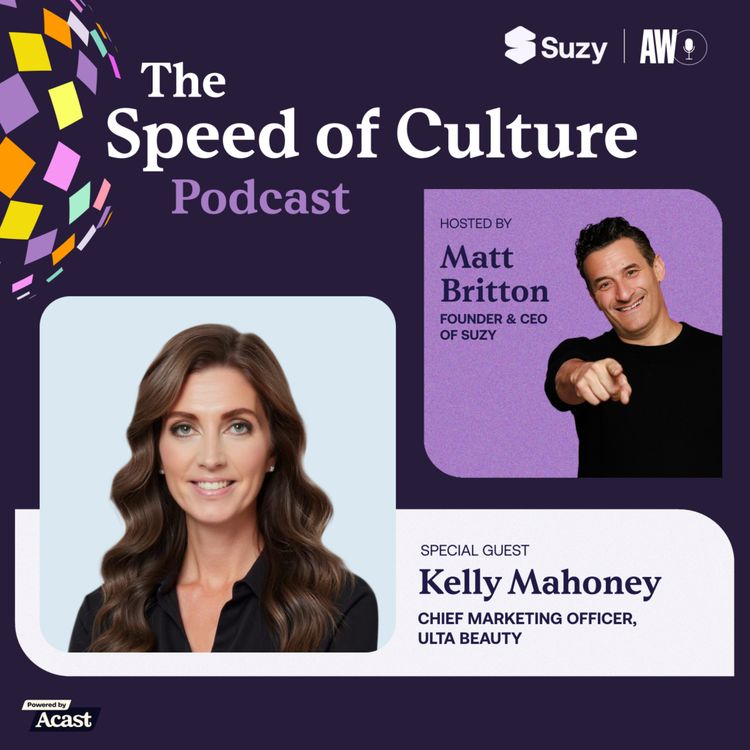
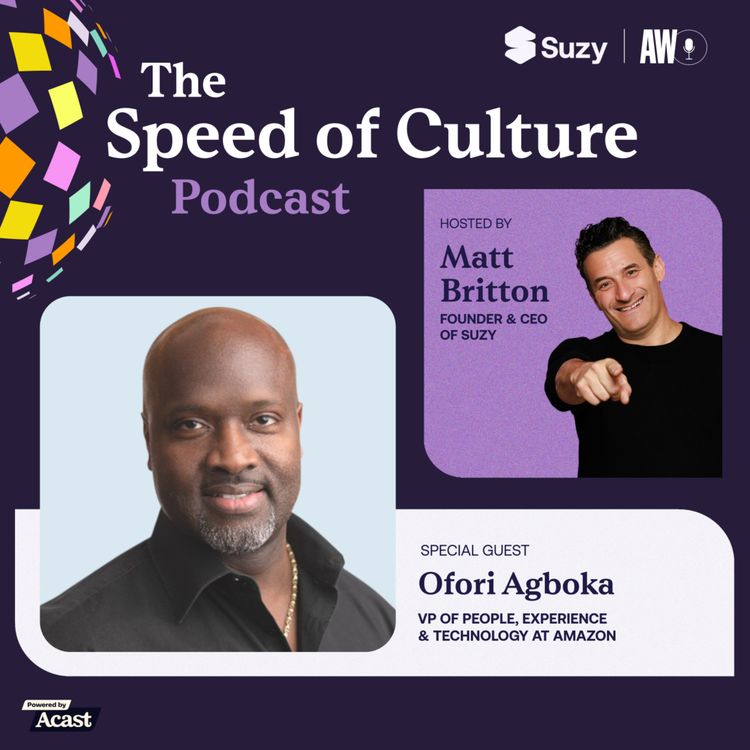
This reality formed the centerpiece of Speed of Culture Podcast Episode 224, where host Matt Britton, founder and CEO of Suzy, the AI-powered consumer intelligence platform, sat down with J. Ofori Agboka, Vice President of People eXperience and Technology (PXT) for Amazon's Global Operations. Recorded live inside one of Amazon's most advanced fulfillment centers on Cyber Monday, the conversation peeled back the curtain on how Amazon builds, scales, and sustains a workforce culture capable of executing the most demanding retail operations on the planet.
Agboka brings 25+ years of human resources experience to his role, overseeing worldwide HR initiatives, employee relations, health and safety, and robotics training for teams spanning fulfillment, transportation, delivery, and customer service. Leading a team of over 8,300 HR, HR tech, and employee relations professionals, he manages the employment lifecycle for more than 700,000 Amazonians globally.
Before joining Amazon in April 2020, Agboka spent nearly two decades in the automotive industry at General Motors, managing labor relations and corporate operations across international and domestic capacities.
The episode reveals a critical insight for enterprise leaders navigating the future of work: the most sophisticated technology only multiplies human potential when the people operating it are equipped with safety, clarity, and dignity. As organizations worldwide grapple with AI implementation, workforce scaling, and retention in competitive talent markets, Amazon's approach—codified in its Culture eXperience methodology—offers a blueprint for thinking differently about what workforce culture means in an age of unprecedented technological change.
The Human-Machine Partnership: Why People Remain the Competitive Edge
In the evolution of corporate operations, a false dichotomy has emerged. On one side, executives champion automation as the solution to operational complexity. On the other, workforce advocates warn against technology's dehumanizing effects.
Agboka rejects this binary entirely. Throughout his career at Amazon, he has championed a philosophy that direct-reports and colleagues recognize immediately: the system runs on technology, but it thrives because of people. The magic happens when both work in concert.
This principle becomes visceral when examining Amazon's implementation of robotics in fulfillment centers. The company invested heavily in autonomous mobile robots designed to move entire shelving units to human associates, eliminating the need for employees to walk miles each shift.
Rather than viewing this as a labor-reduction play, Amazon positioned robotics as a human-centered innovation. The robots perform the repetitive, physically taxing transportation work. Meanwhile, employees focus on picking, packing, and quality verification—tasks requiring judgment, dexterity, and accountability.
The results speak to the philosophy's soundness. Facilities with higher robotics penetration report equivalent or improved safety metrics compared to facilities with less automation. Employee satisfaction remains stable or increases because workers spend their time on more cognitively and physically sustainable tasks.
Injury rates decline when human operators are protected from cumulative strain damage. This is not technology replacing people; it's technology serving people.
Agboka emphasizes that this philosophy extends to workforce planning. During Cyber Monday—one of the most operationally intense retail moments of the year—Amazon carefully stages the hiring of seasonal workers, onboarding them with structured training and clear career pathways.
The company recognizes that temporary employees have genuine developmental needs and can become permanent talent. The investment in training seasonal workers reflects a belief that every person who passes through Amazon's operations deserves to be equipped with skills and knowledge that enhance their own career trajectory, regardless of tenure.
Machine learning algorithms determine where inventory should be positioned, which fulfillment centers should handle which orders, and how robotic systems should coordinate. Yet each of these technological decisions serves a human-centered outcome: ensuring packages reach customers faster while maintaining the safety and sustainability of the workforce executing these operations.
Scaling Workforce Culture Across 700,000+ Employees: A Systems Approach
Growing an organization to serve 700,000 employees globally while maintaining cultural coherence would seem impossible. Yet Amazon has approached culture not as an abstract value statement but as a system of operational practices deeply embedded in how hiring, onboarding, performance evaluation, and advancement occur.
Amazon's leadership principles form the foundation of this systematic culture. These principles—customer obsession, bias for action, ownership mentality, curiosity, and team-first orientation—are not aspirational poster content. They are embedded in the hiring rubric, the interview process, and the day-to-day performance conversations that determine advancement and opportunity.
When every hiring manager evaluates candidates against these consistent principles, and every performance review returns to them, the organization achieves cultural consistency even at massive scale.
Agboka's responsibility to lead 8,300+ HR professionals across multiple geographies and business units requires scalable systems. Amazon uses technology—HR information systems, learning platforms, and data analytics—to ensure that an associate in a fulfillment center in South Carolina receives the same quality of onboarding, development opportunity, and safety protocols as an associate in Germany or Japan.
The Career Choice program exemplifies this systematic approach to culture. Rather than treating entry-level fulfillment center roles as endpoints, Amazon invests in employee futures.
The company offers prepaid college tuition, high school diplomas for those who need them, and English language learning. Associates can pursue degrees or certifications in any field, regardless of whether those credentials benefit Amazon directly.
This $2 billion commitment through 2030 reflects a cultural choice: Amazon values human flourishing, not merely labor extraction.
The Mechatronics and Robotics Apprenticeship program elevates this further. Associates interested in technical careers can earn industry-recognized certifications in robotics and mechatronics.
Graduates of the program see wage increases of nearly 23% upon classroom completion, with an additional 26% increase following hands-on apprenticeship work. Associates can earn additional compensation of $21,500+ annually compared to typical entry-level fulfillment roles.
Again, this is not a charitable program; it's a culture-embedding system that signals to employees that Amazon invests in their capabilities and rewards their growth.
For these programs to function at scale requires more than good intentions. It requires the kind of systematic coordination across HR, learning and development, and operations that Agboka orchestrates. It requires technology platforms that make information accessible to 8,300 HR professionals supporting millions of employees.
It requires consistent training so that managers everywhere understand the company's philosophy toward development and inclusion.
Safety, Clarity, and Dignity: The Three Pillars of Amazon's Workforce Culture
When Agboka speaks about culture, three terms consistently emerge: safety, clarity, and dignity. These are not soft values in the Amazon context; they are operational imperatives that directly influence execution capability.
Safety encompasses physical, psychological, and operational dimensions. Physical safety means eliminating hazards that cause injury. Amazon's workplace health and safety teams, managed within Agboka's PXT organization, work systematically to reduce ergonomic injuries, prevent accidents, and ensure facilities meet or exceed safety standards.
Psychological safety refers to the environment where employees can raise concerns, admit mistakes, and voice ideas without fear of retaliation. This matters operationally because employees who feel psychologically safe flag problems early, when they are less costly to fix.
Agboka has spoken publicly about the importance of workplace safety from his role as VP of Workplace Safety. The company analyzes incident data, identifies patterns, and implements controls.
More importantly, Amazon expects every manager at every level to prioritize safety. Safety metrics are tracked, reported, and included in performance evaluations. This systematic approach—treating safety as a measurable, manageable operational outcome rather than an aspirational goal—has made Amazon one of the safest large manufacturers in the country.
Clarity addresses one of the most common sources of workplace frustration: ambiguity about expectations, career progression, and organizational decisions. Amazon communicates its strategic direction, operational priorities, and performance metrics transparently.
Employees at every level understand what success looks like, how their work contributes to organizational outcomes, and what criteria determine advancement.
During the podcast, Agboka emphasizes that clarity extends to feedback. Drawing from his football background and his reflection on a coach's harsh words early in his career, he articulates Amazon's approach:
"Give candid, constructive feedback without being hurtful."
Managers throughout the company receive training in delivery feedback that is specific, actionable, and focused on behavior rather than character. This clarity allows employees to understand exactly what they're doing well and where they need to develop.
Dignity may be the most difficult concept to operationalize, yet Agboka identifies it as essential. Every employee deserves to be treated as a human being worthy of respect, regardless of their role.
This means addressing unconscious bias actively rather than passively, creating inclusive environments where people from diverse backgrounds feel they belong, and recognizing that every role in the organization contributes meaningfully to outcomes.
Agboka draws from his own experience. He has been "the only person of his identity in rooms" throughout his career. He recognizes that isolation creates barriers to performance and belonging.
Amazon's diversity, equity, and inclusion work—managed in coordination with Agboka's HR organization—explicitly works to reduce the experience of isolation. Mentorship programs, resource groups, and inclusive hiring practices are not optional nice-to-haves; they're central to building an organization where talent can flourish.
These three pillars—safety, clarity, and dignity—form a coherent philosophy. When employees feel physically and psychologically safe, understand what's expected of them, and are treated with respect regardless of their background, they are freed to perform their most meaningful work.
For Amazon, scaled across hundreds of facilities and millions of employees, this means the difference between an operation that merely functions and one that excels.
Technology, AI, and the Future of Operations: Embedding AI Without Losing the Human
As Amazon increasingly embeds artificial intelligence and generative AI into business operations, the integration reflects principles Agboka helped establish. The company has rolled out 14 AI pilots across the organization, targeting operational efficiency, inventory optimization, and even talent acquisition.
Yet the approach resists the techno-utopian narrative where AI solves everything or the techno-pessimist narrative where AI dehumanizes work.
Machine learning powers inventory placement, shipping route optimization, and robotic coordination. These are problems where AI excels: they involve massive datasets, complex variables, and optimization objectives measurable and clear.
The AI determines that it's more efficient to position certain inventory closer to customer concentrations or route an order through a different facility because of congestion. But these optimizations ultimately serve the human experience of faster, cheaper delivery.
Where Amazon has been deliberately cautious with AI is in domains where human judgment, accountability, and ethical deliberation matter most. While AI assists talent acquisition by identifying candidate pools or flagging potential biases in job descriptions, humans remain the ultimate decision-makers in hiring.
While AI can flag potential safety hazards by analyzing incident patterns, HR professionals and safety experts determine causal factors and interventions.
This reflects Agboka's broader philosophy: technology is a tool that amplifies human capability. The magic, as he said, happens when technology and people work in concert.
As Amazon faces the future of work, characterized by increasing automation, AI integration, and the need to reskill workforces for emerging roles, this philosophy will determine whether the company builds a culture that employees want to join and stay with or one they merely tolerate.
The podcast recording during Cyber Monday is symbolically important. Cyber Monday represents the extreme stress-test of Amazon's operational systems.
The company must hire, train, and coordinate hundreds of thousands of temporary employees to execute millions of shipments in compressed timeframes. If Amazon's culture—its people systems, its technology, its leadership approach—doesn't work under extreme stress, then it doesn't actually work.
The fact that Amazon successfully executes Cyber Monday year after year, with consistent safety metrics and associate satisfaction, validates that the approach is more than theoretical. It's practical, scalable, and resilient.
Leadership in the Age of Operations at Scale: Lessons from Agboka's Career
J. Ofori Agboka's career trajectory—from General Motors to Amazon, from labor relations to VP of People eXperience and Technology—offers lessons for leaders navigating organizational scale and transformation.
His early career in the automotive industry taught him labor relations fundamentals. How to negotiate contracts, how to manage complex union relationships, how to balance operational efficiency with workforce wellbeing.
These skills, while not directly transferable to Amazon's non-union operations, taught him how to think systemically about workforce management at scale.
His transition to Amazon coincided with the company's period of highest scrutiny regarding workforce practices. Public criticism of fulfillment center conditions, injury rates, and work intensity created a moment for genuine examination and change.
Agboka's appointment as VP of PXT in April 2020 signaled Amazon's commitment to elevating the function. The decision to make PXT a peer function to operations—rather than subordinate to it—reflected a cultural choice that people and technology deserve equal weighting in how the company thinks about scaling.
Under Agboka's leadership, Amazon has made tangible commitments to workforce development: $2 billion for upskilling through 2030, the expansion of career development programs, and the systematic integration of safety as a measured operational metric.
These aren't innovations in a narrow sense—other companies offer tuition assistance or safety programs. The innovation lies in how Amazon has systematized them, embedded them in performance management, and resourced them at scale.
For enterprise leaders, the lesson is that workforce culture isn't an HR afterthought; it's a competitive lever that requires executive leadership, systemic thinking, and sustained investment.
Agboka's role and authority within Amazon's leadership structure signals that culture and people operations deserve the attention and resources typically reserved for product development or financial operations.
Key Takeaways
- Human-Machine Partnership is the Competitive Advantage: Technology amplifies human potential when designed to support worker safety and capability. Amazon's robotics integration demonstrates that automation can improve both efficiency and worker satisfaction when philosophy prioritizes people-centered design.
- Culture at Scale Requires Systems, Not Slogans: Amazon's leadership principles, embedded in hiring, performance evaluation, and advancement decisions across 700,000+ employees, demonstrate that organizational culture is operationalized through repeatable systems executed by trained leaders, not aspirational value statements.
- Invest in Workforce Development as Strategic Differentiator: Amazon's $2 billion commitment to upskilling, prepaid education, and apprenticeship programs reflects a belief that employee flourishing generates organizational capability. In competitive talent markets, development investment becomes a retention and performance lever.
- Safety, Clarity, and Dignity Are Operational Imperatives: Rather than soft values, these three pillars drive measurable outcomes in safety, performance, and retention. When embedded in systems and leadership practice, they become competitive advantages, not just nice-to-haves.
- The Future of Operations Depends on Getting People Right: As AI and automation transform work, organizations that maintain human dignity, invest in reskilling, and view technology as amplifying rather than replacing human capability will attract, retain, and deploy talent more effectively than those that don't.
Frequently Asked Questions
How does Amazon balance automation with maintaining workforce size?
Amazon doesn't view automation as a mechanism for workforce reduction. Instead, the company strategically deploys robotics to eliminate physically taxing, repetitive tasks, freeing employees to focus on higher-judgment, higher-value work.
During periods of high demand, Amazon hires seasonal employees; automation enables the company to absorb volume increases while maintaining safety standards. The goal is sustainable operations that protect worker wellbeing while meeting customer demand.
What makes Amazon's Career Choice program different from other employer education benefits?
Career Choice stands out because it's genuinely unrestricted. Employees can pursue degrees or certifications in any field, regardless of whether those credentials benefit Amazon.
The company covers tuition, books, and fees. This signals that Amazon values human flourishing independent of extractable labor value.
The program has helped over 425,000 employees in the United States gain new skills, and the company has committed $2 billion additional investment through 2030, demonstrating sustained commitment beyond pilot programs.
How does PXT influence Amazon's overall business strategy?
As a peer function to operations, PXT ensures that people and technology considerations are embedded in operational planning from the beginning rather than added later. This elevates workforce culture and development to strategic importance.
When the VP of People eXperience and Technology sits at the executive table alongside operational leaders, decisions about facility design, seasonal hiring, technology implementation, and safety all incorporate human impact considerations from the outset.
What role does AI play in Amazon's future workforce strategy?
Amazon is carefully implementing AI across 14 pilots, targeting operational optimization, inventory management, and talent acquisition support.
However, the company has deliberately maintained human decision-making authority in domains where ethics, accountability, and judgment matter most—hiring, performance evaluation, and safety interventions. This reflects a philosophy that AI should amplify human capability rather than replace human judgment.
Looking Ahead
Speed of Culture Podcast Episode 224 with J. Ofori Agboka reveals that the future of workforce culture in the age of automation and AI doesn't require choosing between efficiency and humanity.
Amazon's approach—building systems that embed safety, clarity, and dignity while leveraging technology to amplify human capability—offers a model for enterprises scaling rapidly or transforming operationally.
As leaders navigate the complexities of workforce development, AI integration, and talent retention in competitive markets, the insights from Agboka's work at Amazon provide practical frameworks grounded in experience managing millions of employees globally.
For deeper insights into trends shaping workforce culture and business transformation, explore the full archives of The Speed of Culture Podcast, where Matt Britton and guests explore how leading organizations navigate cultural change.
Learn more about consumer intelligence and business strategy through Suzy, the AI-powered platform driving insights for Fortune 500 companies.
For executive perspectives on AI, leadership, and organizational transformation, explore Generation AI, a national bestseller exploring how artificial intelligence reshapes work and society.
Organizations seeking expert guidance on these topics can explore AI keynote speaker engagements, visit Speaker HQ, or get in touch here for custom speaking opportunities.

%20(400%20x%20100%20px)%20(300%20x%2050%20px)%20(150%20x%2050%20px).avif)

.jpeg)


.jpeg)
.jpeg)