Opening: Building Brands That Matter in a Connected World
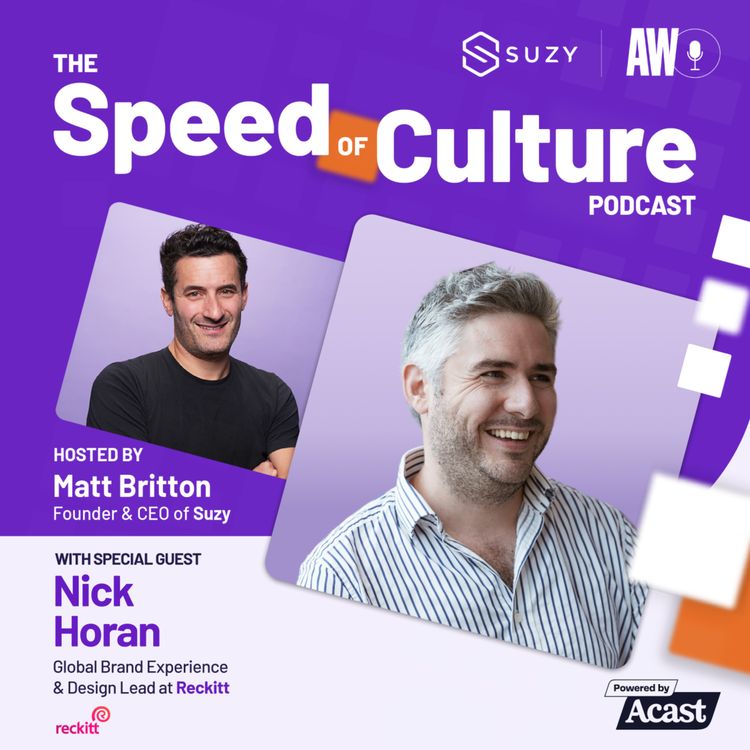
In an era where consumer expectations shift faster than ever before, brands face a critical challenge: how to remain globally relevant while honoring local cultural nuances. This is precisely the mission that Nick Horan, Global Brand Experience Lead at Reckitt, navigates every single day. On Episode 155 of The Speed of Culture Podcast, Matt Britton, founder and CEO of Suzy, the AI-powered consumer intelligence platform, sits down with Horan to explore how one of the world's leading consumer health companies is building brands that protect, heal, and nurture across more than 70 countries.
For brands operating in the consumer packaged goods (CPG) space, the stakes have never been higher. As consumers increasingly demand products that align with their values—whether that's health, wellness, sustainability, or cultural authenticity—companies like Reckitt are rethinking how they approach brand experience design. Rather than adopting a one-size-fits-all approach, modern CPG leaders are learning to balance global brand equity with localized relevance, ensuring their products and messaging resonate across diverse markets and demographics.
Nick Horan's role exemplifies this shift. As the architect of the brand experience for Vanish, a powerhouse brand in Reckitt's portfolio that ranks in the top 4% globally, Horan oversees the orchestration of every consumer touchpoint—from e-commerce platforms to in-store displays, from influencer partnerships to user-generated content campaigns. The result is staggering: Vanish achieves 12 consumer interactions per second worldwide, a testament to the power of intentional, data-driven brand experience design.
In this episode, Britton and Horan dive into the practical strategies that enable global health and wellness brands to thrive in an increasingly fragmented media landscape. They discuss how design serves as a strategic tool for building brand loyalty, how companies can leverage creator culture and Gen Z insights to maintain relevance, and how omnichannel marketing excellence drives both brand affinity and commercial success. The conversation underscores a fundamental truth: in the modern marketplace, the brand experience is the brand itself.
The Evolution of Global Brand Experience in Health and Wellness
Building a global brand in health and wellness requires more than innovative products—it demands a sophisticated understanding of how consumers interact with brands across different countries, cultures, and digital ecosystems. Reckitt's approach to brand experience represents a fundamental departure from traditional CPG marketing paradigms that relied heavily on mass media advertising and retail dominance.
Historically, consumer packaged goods companies operated within a traditional hierarchical structure: companies manufactured products, retailers distributed them, and consumers purchased them. The brand's voice was primarily controlled through television advertisements, print media, and point-of-sale materials. Today, the architecture has inverted. Consumers are creators, influencers, and brand advocates.
They discover products through social platforms, evaluate them through peer reviews, and share their experiences with millions of potential customers in real-time. This democratization of brand influence has forced companies like Reckitt to fundamentally rethink their brand experience strategy.
Rather than viewing the customer journey as a series of isolated touchpoints, modern brand leaders like Nick Horan conceptualize it as an interconnected ecosystem where every interaction—whether it's a TikTok video featuring a product, a sustainability report, an e-commerce product page, or an in-store display—contributes to overall brand perception and purchasing decisions.
“Protecting, healing, and nurturing in the pursuit of a cleaner, healthier world.”
Reckitt's commitment to this mission isn't merely a corporate statement; it's a brand promise that must be delivered consistently across every market and channel. In markets ranging from Western Europe to Southeast Asia, from North America to emerging markets in Africa and Latin America, consumers have different expectations about what health and wellness mean.
In some regions, wellness is primarily about hygiene and cleaning products; in others, it encompasses sexual wellness, nutritional health, and preventative medicine. The complexity intensifies when considering that Reckitt manages a diverse portfolio that includes flagship brands like Nurofen, Strepsils, Gaviscon, Durex, Veet, Finish, and Vanish.
Each brand operates in different categories—over-the-counter medicines, intimate wellness, household care, and fabric care—yet all must maintain consistent brand architecture while adapting to local market dynamics. This balancing act requires both strategic vision and tactical flexibility.
The episode highlights how this is accomplished. Nick Horan reveals that the Reckitt approach centers on what he calls “holistic brand experience design”—a methodology that integrates creativity, consumer data, design thinking, and innovation to craft experiences that drive both cultural resonance and commercial impact.
This isn't a marketing initiative confined to the communications department; it's an enterprise-wide philosophy that influences product development, packaging design, pricing strategy, distribution, and customer service.
Mastering Omnichannel Touchpoints: Where Data Meets Design
One of the most striking insights from Episode 155 is the scale at which Vanish operates. Achieving 12 consumer interactions per second worldwide is not a result of luck or serendipity—it's a consequence of meticulous orchestration across multiple channels and formats. This mastery of omnichannel execution represents perhaps the most critical competitive advantage for modern CPG brands.
The omnichannel landscape has become extraordinarily complex. A consumer might discover a cleaning product through a social media influencer, research it on the brand's website or a retailer's marketplace, read reviews on independent platforms, compare prices across multiple e-commerce sites, and ultimately make a purchase decision based on availability, price, convenience, social proof, and brand trust.
Each of these touchpoints presents an opportunity to either reinforce or undermine the brand promise. Reckitt's approach reflects broader industry trends: online marketplaces, brand.com sites, and health platforms are now treated as first-class product channels rather than secondary distribution mechanisms.
E-commerce Optimization
The brand maintains strong presences on major e-commerce platforms, with optimized product pages, customer reviews, and competitive pricing strategies. The e-commerce environment is not simply a digital replica of a retail shelf; it's an entirely different ecosystem with its own rules, algorithms, and consumer behaviors.
Content-Driven Engagement
Rather than relying solely on traditional advertising, Reckitt leverages user-generated content, influencer partnerships, and social media marketing to drive engagement. By enabling consumers to create content featuring Vanish—through product demonstrations, before-and-after results, or creative storytelling—the brand accumulates authentic endorsements that carry more persuasive weight than paid ads.
Retail Execution
While e-commerce has grown dramatically, physical retail remains crucial for CPG success. Reckitt invests in sophisticated point-of-sale execution, shelf placement optimization, and in-store marketing materials designed to create emotional connections and reinforce brand positioning.
Customer Data Integration
The most sophisticated CPG brands integrate customer data across channels to create personalized experiences. Targeted digital ads, personalized email campaigns, and loyalty incentives all reflect an understanding that consumer decision-making happens in micro-moments throughout the customer journey.
The brand that succeeds is not the one with the loudest advertising budget, but the one that shows up most relevantly, authentically, and helpfully at each critical decision point.
This approach is supported by advanced consumer research and data analytics. Suzy, Matt Britton's AI-powered consumer intelligence platform, exemplifies the shift toward rapid, iterative research that helps brands understand not just what consumers prefer, but why—and how those preferences vary across segments and geographies.
Navigating Cultural Nuances: Global Strategy Meets Local Relevance
Perhaps the most complex aspect of managing global CPG brands is the tension between standardization and localization. Standardization creates efficiency and scale; localization creates relevance and emotional connection. The most successful global brands honor both simultaneously.
Reckitt must ensure that core brand values remain consistent globally while allowing individual brands to adapt to local expectations. What works in Scandinavia may not resonate in India. Visual imagery that appeals to Australian consumers might alienate audiences in the Middle East.
Successful global brands invest heavily in understanding local consumer behavior, preferences, and values. This goes beyond demographic analysis to deeper cultural insights: what does health mean to this community? Who makes purchasing decisions? What factors influence those decisions?
Leading CPG brands embed cultural sensitivity throughout the organization—from product development and packaging to supply chain and customer service. Cultural insensitivity can result in significant brand damage and consumer alienation.
Nick Horan emphasizes that the “global brand experience” is not a monolithic entity. Rather, it's a dynamic ecosystem of interconnected local experiences, all anchored to consistent brand values but expressed through locally relevant language, imagery, creators, and channels.
Creator Culture, Gen Z, and the Future of CPG Marketing
One of the most transformative trends in CPG marketing is the rise of creator culture and the increasing influence of Gen Z consumers. This cohort has grown up immersed in digital media, accustomed to creating and sharing content, and deeply skeptical of traditional advertising.
Research consistently shows that Gen Z consumers trust peer recommendations more than brand marketing, prefer authentic user-generated content over polished campaigns, and expect companies to demonstrate genuine commitment to social responsibility and sustainability.
For CPG brands, this represents both challenge and opportunity. Reckitt's strategy embraces creator culture by encouraging consumers and influencers to incorporate products into their own narratives—whether through cleaning transformations, lifestyle routines, or home organization content.
This shift requires brands to move from controlling messaging to enabling participation. Authentic creator content often drives higher engagement, better conversion metrics, and stronger brand loyalty compared to traditional advertising.
The long-term implication is clear: successful CPG marketing will increasingly look less like advertising and more like partnership, platform, and community building.
Innovation, Technology, and the Acceleration of CPG Marketing Excellence
Behind contemporary CPG brand success lies a sophisticated technological infrastructure enabling rapid iteration and optimization. Reckitt has embraced artificial intelligence and generative AI tools to accelerate marketing processes.
By using GenAI, teams can reduce concept development time by up to 60% while improving quality. The company has also achieved approximately a 30% reduction in the time needed to adapt and localize ads.
This acceleration is critical in competitive environments where cultural moments can emerge and dissipate within days. Brands that can identify trends, develop creative responses, and activate them quickly gain significant advantage.
At the same time, platforms like Suzy ensure that speed does not replace consumer understanding. The emerging operating model combines GenAI-powered creative acceleration with real-time, iterative consumer research.
Key Takeaways: Building Brands That Matter at Speed
- Global brands must achieve scale through consistency and relevance through localization, particularly in diverse health and wellness categories.
- Omnichannel mastery is now table stakes, requiring orchestration of e-commerce, social, creators, retail, and data integration.
- Creator culture and Gen Z influence demand participatory brand communication, not centralized control.
- Consumer research must be continuous and real-time, enabling rapid identification of cultural moments and optimization.
- AI and advanced marketing technologies accelerate development cycles, rewarding organizations with superior agility and data capabilities.
Frequently Asked Questions
How do CPG brands balance global consistency with local market relevance?
Successful CPG companies embrace “glocalization”—maintaining consistent brand values and visual identity globally while enabling regional teams to adapt execution to local contexts. This requires decentralized decision-making with centralized governance guardrails.
What makes Vanish's 12 consumer interactions per second possible at a global scale?
It requires orchestration across optimized e-commerce platforms, strong retail execution, creator partnerships, owned media, and paid digital channels—ensuring every touchpoint reinforces the brand promise.
Why is creator culture becoming so important for CPG brands targeting younger consumers?
Gen Z and millennials prefer peer recommendations and creator content over traditional advertising. Authentic partnerships allow brands to integrate into the conversations and platforms where younger consumers already spend time.
How are companies like Reckitt using AI to accelerate marketing while maintaining quality?
They use generative AI to reduce concept development time by up to 60% and accelerate localization by 30%, while complementing speed with advanced consumer research platforms for real-time feedback and optimization.
Looking Ahead: The Future of Health and Wellness Marketing
The convergence of global brand experience strategy, creator culture, consumer research innovation, and AI-enabled acceleration creates unprecedented opportunities for health and wellness companies.
For leaders seeking deeper expertise, explore Suzy's AI-powered consumer intelligence platform, listen to The Speed of Culture Podcast, and read Generation AI: Why Generation Alpha & The Age of AI Will Change Everything.
For organizations looking to bring these insights to their teams, explore Matt Britton's AI keynote speaking or visit Speaker HQ for additional resources. To inquire about booking or collaboration, visit the contact page.
The brands that thrive in the coming years will embrace the philosophy Nick Horan articulates: brand experience design is not a function of marketing communications—it is a fundamental organizational commitment to delivering consistent, relevant, culturally-aware engagement across every consumer touchpoint.

%20(400%20x%20100%20px)%20(300%20x%2050%20px)%20(150%20x%2050%20px).avif)

.jpeg)


.jpeg)
.jpeg)