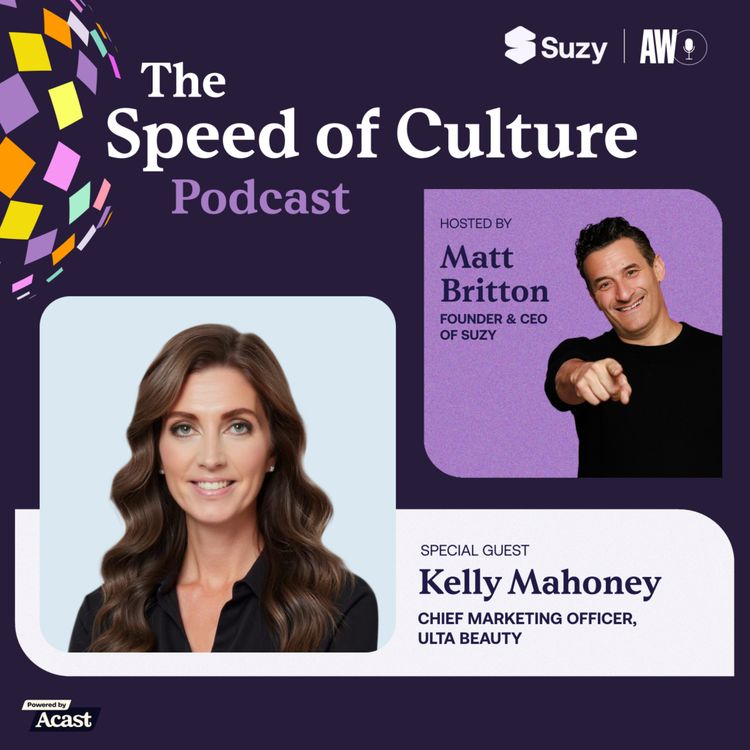
Episode 145 | Speed of Culture Podcast | December 5, 2024
Opening
In the rapidly evolving beauty industry, success requires more than compelling products. It demands a sophisticated understanding of consumer behavior, seamless omnichannel experiences, and a relentless commitment to guest-centricity. On Episode 145 of the Speed of Culture Podcast, host Matt Britton engages with Michelle Crossan-Matos, Chief Marketing Officer of Ulta Beauty, to explore how the beauty retailer is reshaping the industry through innovation and strategic customer engagement.
Ulta Beauty stands as North America's largest beauty retailer, serving millions of customers across physical stores and digital platforms. Under Crossan-Matos' leadership, the company is demonstrating how legacy brands can leverage omnichannel strategies, data-driven personalization, and guest-centric marketing to maintain competitive advantage in a market disrupted by direct-to-consumer brands and changing consumer preferences.
Matt Britton, founder and CEO of Suzy, an AI-powered consumer intelligence platform, brings his expertise in understanding the modern consumer to this conversation. Together, they discuss the intersection of marketing innovation, technology adoption, and authentic customer relationships—insights critical for executives navigating the post-pandemic retail landscape where guest expectations have fundamentally shifted.
This episode represents a masterclass in how traditional retail can evolve without losing its soul. Crossan-Matos shares strategic frameworks for integrating online and offline touchpoints, the role of artificial intelligence in personalization, and how beauty brands can cultivate lasting loyalty in an age of infinite choice. Whether you're in retail, marketing, or brand management, this conversation offers actionable intelligence for building guest-centric organizations that thrive at the speed of culture.
The Beauty Retail Evolution: Understanding Today's Guest Expectations
The beauty retail landscape has undergone profound transformation in the past five years. The intersection of pandemic-accelerated digital adoption, the rise of influencer-driven discovery, and shifting demographic preferences has fundamentally altered how consumers interact with beauty brands. Ulta Beauty, with over 1,300 stores across North America, finds itself at the epicenter of this transformation.
Michelle Crossan-Matos' strategy begins with a foundational insight: today's beauty consumers expect seamless experiences across channels. They research products on social media, purchase through Instagram or TikTok, receive recommendations from beauty influencers and creators, and still value the hands-on experience of testing products in physical stores. The traditional retail model—where online and offline operated as separate entities—no longer suffices.
Ulta's response has been to embrace genuine omnichannel integration. Rather than viewing digital and physical as competing channels, the company has architected systems where data flows bidirectionally. A customer might discover a trending makeup look on TikTok, research products on Ulta.com, reserve items for in-store testing, complete the purchase via mobile, and pick up at their local store.
This guest-centric approach is not merely customer service excellence—it represents a fundamental shift in competitive strategy. Companies that fail to integrate channels lose relevance, while those that execute seamlessly create switching costs rooted in convenience and personalization. Crossan-Matos emphasizes that every decision in the company, from marketing spend allocation to store layout to app development, flows from understanding what guests actually want.
The beauty industry's younger demographics further inform this evolution. Gen Z consumers, who represent a rapidly growing portion of Ulta's customer base, expect brands to demonstrate authenticity, transparency, and social responsibility. They research company values, expect inclusive product ranges, and prefer discovering products through peer recommendations and user-generated content rather than traditional advertising.
Omnichannel Strategy: Unifying the Beauty Retail Experience
Omnichannel retail sounds straightforward in theory but remains devilishly complex in execution. The primary challenge isn't technology—countless platforms enable multi-channel inventory management and customer data integration. The real barrier is organizational transformation, and Crossan-Matos addresses this reality head-on in her approach to building Ulta's omnichannel capability.
Effective omnichannel strategy at Ulta Beauty begins with unified customer data. The company has invested significantly in systems that track customer behavior across channels with appropriate privacy safeguards. When a customer browses Ulta.com but purchases in-store, or visits the beauty bar for a consultation and buys online days later, the company understands the complete journey.
The inventory management implications are substantial. Ulta maintains sophisticated systems that balance centralized fulfillment with local store inventory, enabling customers to purchase online and pick up in-store within hours. The company can also fulfill online orders directly from nearby stores when warehouse stock is limited, reducing shipping times and improving unit economics.
The guest experience in physical stores reflects omnichannel thinking. In-store technology enables associates to access customer data, wish lists, and purchase history. Virtual try-on technology powered by augmented reality lets customers visualize makeup looks before purchase, while mobile payment systems eliminate checkout friction.
Crossan-Matos recognizes that omnichannel execution requires moving beyond transactional metrics. Rather than measuring success by channel-specific sales, progressive retailers evaluate customer lifetime value, repeat purchase rates, and share of wallet across categories. True omnichannel success means optimizing for total relationship value, not channel-specific revenue.
With complete customer behavior visibility, Ulta can segment audiences with precision. Marketing spend targets defined customer cohorts with tailored messaging rather than broad demographic blasts. This data-driven segmentation enables significant marketing efficiency improvements—brands obsessed with relevance achieve higher engagement, conversion, and retention at lower cost.
Beauty Innovation and the Role of Technology in Modern Marketing
Innovation in beauty retail extends far beyond new product launches. While Ulta carries thousands of products from dozens of brands, Crossan-Matos understands that competitive advantage increasingly derives from how the company helps customers navigate that abundance and discover products aligned with their unique needs.
Artificial intelligence and machine learning play expanding roles in this innovation agenda. Recommendation engines increase average order value while improving satisfaction. Predictive analytics identify which products will trend before demand peaks, and natural language processing analyzes customer reviews and social media mentions to identify emerging preferences.
The beauty industry's reliance on user-generated content and influencer recommendations creates unique opportunities for technology-enabled insights. Ulta monitors trends across platforms like TikTok, Instagram, and YouTube to identify emerging products and categories before they reach mainstream awareness.
Augmented reality represents another frontier. Virtual try-on technology enables customers to visualize makeup looks, test hair colors, or preview skincare effects online, reducing purchase risk and increasing confidence.
The loyalty program unifies technology, personalization, and guest-centric philosophy. Ulta's Rewards program creates a flywheel where participation generates data, enabling personalization that increases engagement and spend. Rather than just discounts, members receive early access to limited-edition products, invitations to exclusive events, and personalized recommendations.
Data governance and privacy remain essential. Transparent policies, robust security measures, and genuine value exchange ensure long-term trust. As regulatory scrutiny increases, brands that anticipate and exceed standards gain competitive advantage.
Guest-Centric Marketing: Shifting from Broadcast to Dialogue
The marketing paradigm shift from broadcast to dialogue represents one of the most fundamental changes in modern retail. Traditional beauty marketing relied heavily on aspirational imagery and mass media reach. Today, guest-centric marketing begins with listening rather than broadcasting.
Ulta treats platforms like Instagram and TikTok as places where genuine beauty conversations occur. User-generated content provides authentic testimonials more persuasive than traditional advertising. The company amplifies customer creativity, recognizing that authenticity matters more than polish.
Crossan-Matos' team partners with creators whose values align with the brand and whose audiences trust their recommendations. A makeup artist with 50,000 engaged followers who authentically loves a product can drive more relevant sales than a celebrity endorsement reaching millions with untargeted messaging.
Community building extends beyond digital. Ulta hosts in-store events where beauty enthusiasts gather, learn from professionals, and connect with like-minded people. Digital platforms extend this community, creating spaces for advice, discovery, and shared beauty journeys.
Personalization technologies enable guest-centric marketing at scale. Website experiences, email communications, and app notifications adapt based on purchase history and preferences. Feedback loops—from surveys to reviews to social listening—inform continuous improvement and strengthen advocacy.
Building Competitive Advantage Through Brand Partnerships and Curation
Ulta's relationship with beauty brands extends far beyond simple consignment arrangements. Crossan-Matos' strategic approach to brand partnerships creates mutual value that strengthens both Ulta's competitive position and partner brand growth.
Direct-to-consumer growth has become increasingly expensive as customer acquisition costs rise. Strategic partnerships with retailers like Ulta offer access to existing customer bases and physical spaces where discovery happens. For emerging brands, this partnership can dramatically accelerate growth.
Ulta curates its assortment across multiple price tiers—from luxury premium brands to accessible mass-market options and emerging indie labels. This curation reflects deep understanding of customer segments and encourages cross-shopping across categories.
Exclusive product launches create urgency and destination appeal. Data sharing between Ulta and brand partners informs product development and marketing strategies, while smaller indie brands benefit from Ulta's reach and infrastructure.
Looking Ahead: The Future of Beauty Retail and Consumer Intelligence
The beauty retail landscape continues evolving rapidly. Sustainability and ethical sourcing increasingly influence purchasing decisions, particularly among younger demographics. Brands that communicate environmental and social responsibility transparently build long-term competitive advantage.
Global expansion represents significant opportunity, though different regions require localized strategies rather than replication of North American playbooks. Technology adoption—from augmented reality to AI-powered personalization—will soon become baseline expectations rather than differentiators.
The role of data and artificial intelligence in marketing will only intensify. Platforms like Suzy enable brands to understand consumer preferences, trends, and competitive dynamics with unprecedented precision. Marketing leaders increasingly rely on AI-powered insights to inform strategy.
For beauty brands and retailers, the fundamental imperative remains unchanged: understand your customers deeply, deliver value at every touchpoint, and build relationships rather than merely transactions.
Key Takeaways
- Omnichannel integration is now table stakes. Companies failing to seamlessly unify online and offline experiences lose competitive relevance.
- Guest-centric philosophy drives differentiation. Personalization, community building, and authentic engagement outperform traditional broadcast approaches.
- Data-driven personalization improves outcomes at lower cost. Sophisticated segmentation outperforms mass-market messaging.
- Beauty advisors and expertise represent defensible competitive advantage. The human element drives loyalty in an increasingly digital world.
- Innovation extends far beyond product development. Technology, loyalty design, partnerships, and experience architecture all contribute to advantage.
Frequently Asked Questions
How does Ulta maintain competitive advantage against direct-to-consumer beauty brands?
Ulta's physical footprint and omnichannel integration create discovery opportunities and convenience that pure DTC brands struggle to replicate. Its loyalty program and massive customer base generate network effects benefiting both Ulta and brand partners.
What role does artificial intelligence play in Ulta's customer experience strategy?
AI powers recommendation engines, predictive analytics for inventory and promotions, natural language processing for trend identification, and augmented reality for virtual try-on. Together, these tools create more personalized and efficient experiences.
How does Ulta balance brand curation across price tiers and brand types?
Ulta stocks luxury, mass-market, and emerging indie brands to serve diverse customer segments. This broad assortment attracts varied shoppers while encouraging cross-category discovery.
What marketing approaches prove most effective in the beauty industry today?
Guest-centric approaches—including user-generated content, authentic creator partnerships, community building, and personalized communication—outperform traditional broadcast marketing.
Looking Ahead
Speed of Culture Podcast Episode 145 with Michelle Crossan-Matos offers essential insights for marketing leaders, retail executives, and brand strategists navigating the evolving beauty industry.
To dive deeper into topics discussed in this episode, explore these resources:
- Suzy — The AI-powered consumer intelligence platform that enables brands to understand their customers with unprecedented precision
- The Speed of Culture Podcast — Full episode library featuring conversations with leading CMOs and brand strategists
- Generation AI: The Book — Matt Britton's comprehensive guide to understanding the modern consumer
- AI Keynote Speaker — Explore Matt Britton's speaking engagements on consumer trends and AI's role in marketing
- Speaker HQ — Additional resources and speaking opportunities
This article represents industry insights derived from Episode 145 of the Speed of Culture Podcast, featuring Michelle Crossan-Matos, Chief Marketing Officer of Ulta Beauty, in conversation with Matt Britton, founder and CEO of Suzy, the AI-powered consumer intelligence platform.

%20(400%20x%20100%20px)%20(300%20x%2050%20px)%20(150%20x%2050%20px).avif)

.jpeg)


.jpeg)
.jpeg)