Opening
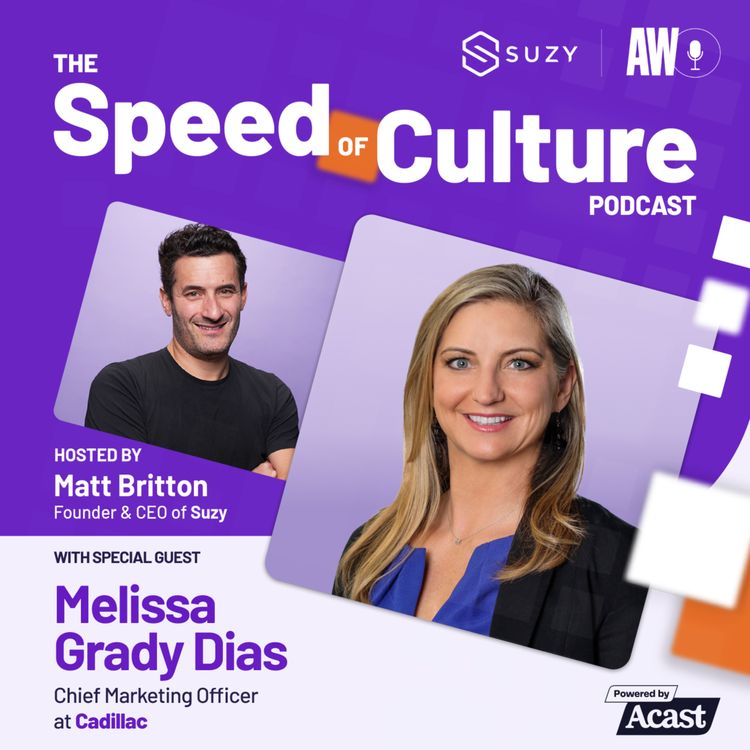
Matt Britton, founder and CEO of Suzy, the AI-powered consumer intelligence platform, hosts conversations with marketing leaders, innovators, and cultural influencers on the Speed of Culture podcast. In Episode 25, recorded on November 29, 2022, Britton spoke with Melissa Grady Dias, Chief Marketing Officer at Cadillac, about one of the automotive industry's most ambitious brand transformations.
As General Motors' luxury division pivots from its storied legacy to an all-electric future, Cadillac faces a uniquely complex marketing challenge: maintaining brand prestige while pioneering a technological revolution.
Dias brings two decades of automotive and luxury brand marketing experience to Cadillac's helm at a critical inflection point. Her strategic approach addresses the fundamental tension between heritage and innovation—how an iconic American brand known for elegance and craftsmanship can become synonymous with cutting-edge electric vehicle technology, sustainable luxury, and aspirational design.
This conversation explores the data-driven strategies, cultural insights, and consumer intelligence frameworks that Cadillac is deploying to win at brand marketing in an era of profound disruption.
The stakes have never been higher for automotive brands. Consumers are increasingly making vehicle decisions based not only on performance and price but on brand values, sustainability commitments, and technological sophistication.
Cadillac's marketing transformation demonstrates how legacy brands can leverage their heritage as a competitive advantage while simultaneously embracing tomorrow's technology. The lessons from Cadillac's approach—centering on data intelligence, aspirational positioning, and authentic brand storytelling—offer insights for any organization navigating legacy business models into digital and sustainable futures.
Building Iconic Brands in the Age of Disruption
Cadillac has occupied a unique position in American culture for over a century. The brand symbolizes luxury, innovation, and aspirational achievement—the car that marked success, prestige, and arrival.
From its founding in 1902 through the post-war boom, Cadillac represented the pinnacle of American automotive engineering and design. However, like many legacy luxury brands, Cadillac faced a perception challenge in the 21st century: how to maintain iconic status while building credibility in an increasingly technology-focused, sustainability-conscious consumer landscape.
Dias emphasizes that the path forward isn't about rejecting Cadillac's heritage but reinterpreting it. The brand's legendary pursuit of innovation—what the company positions as "The Standard of the World"—becomes the throughline connecting yesterday's achievements to tomorrow's possibilities.
When Cadillac launched the Lyriq in 2022 as its first mass-market electric SUV, the marketing strategy didn't frame electrification as a departure from brand values but as their natural evolution.
This positioning reflects deep consumer intelligence. Using platforms like Suzy, modern marketers can access real-time consumer sentiment, preference data, and attitudinal insights at scale.
For Cadillac, understanding how luxury consumers perceive electric vehicles—their concerns about range, their desires for cutting-edge technology, their values around sustainability—became central to messaging architecture. The Lyriq marketing campaign emphasized range, performance, design sophistication, and access to the Ultium platform technology, all dimensions that appeal to affluent consumers making high-stakes purchase decisions.
The lesson for brand leaders is clear: iconic brands don't fade because of legacy; they fade when they stop listening to consumers and stop innovating how they communicate. Cadillac's approach demonstrates that heritage and disruption aren't opposing forces—they're complementary when the brand maintains strategic clarity about its core equities while relentlessly evolving how it delivers on them.
Data-Driven Marketing: From Intuition to Intelligence
Melissa Grady Dias' career trajectory reflects a broader shift in automotive marketing from intuition-based creative campaigns to consumer intelligence-driven strategy. Where previous marketing leaders might have relied primarily on market research reports and agency recommendations, today's CMOs are increasingly embedding real-time consumer data into decision-making architecture.
Cadillac's marketing transformation illustrates this evolution. The brand's approach to the Lyriq launch required understanding multiple consumer segments simultaneously: affluent early adopters excited about electric technology, luxury consumers concerned about practical limitations, younger consumers motivated by sustainability, and existing Cadillac customers seeking confirmation that their brand loyalty was justified.
These audiences have divergent concerns, values, and information needs. A single advertising campaign couldn't address all of them effectively.
Instead, Cadillac deployed targeted messaging strategies informed by granular consumer data. Campaigns emphasized AI-driven personalization, bespoke experiences, and customization options—aligning with the Celestiq flagship, an ultra-luxury, hand-built electric sedan positioned as the "innovation flagship" of the portfolio.
The Celestiq campaign focused on "by inquiry only" positioning, emphasizing craftsmanship, technology, and exclusivity. For the Lyriq, messaging centered on accessible luxury, practicality, performance, and the pioneering position of leading Cadillac's electric transformation.
This segmented, data-informed approach reflects how modern consumer intelligence platforms enable brands to move beyond demographic targeting to psychographic and behavioral precision. Understanding not just who consumers are but what they believe, value, and prioritize allows marketers to craft messages that resonate authentically.
For automotive brands competing for market share in a crowded EV landscape, this precision is becoming table stakes.
The organizational implication is significant: CMOs increasingly need to build data literacy into their teams and establish frameworks for rapid translation of consumer insights into messaging and creative strategy. Cadillac's success suggests that the future belongs to brands that can close the loop between consumer intelligence and marketing execution faster than competitors.
Navigating the Electric Vehicle Perception Challenge
The automotive industry's transition to electric vehicles represents the most significant transformation in consumer perception since the shift from horse-drawn carriages to internal combustion engines. Unlike that historical transition, the EV shift is compressed into a decade, and consumer sentiment is volatile, influenced by infrastructure development, pricing, regulatory policy, and global energy dynamics.
For a luxury brand like Cadillac, the challenges are compounded. Luxury consumers have specific expectations: performance, range, design distinctiveness, and the tangible assurance that their significant investment is justified.
Early EV concerns—range anxiety, charging infrastructure, vehicle reliability—hit differently in the luxury segment. A customer who has invested $60,000+ in a vehicle expects certainty, not pioneering frontier consciousness.
Cadillac's marketing messaging directly addresses these perceptions. The Lyriq's positioning emphasizes its 300-mile EPA-estimated range, positioning it as practical for everyday luxury driving while acknowledging the emerging charging infrastructure.
The Celestiq, by contrast, targets a different concern: exclusivity and innovation. Hand-built in a specialized facility, the Celestiq positions electric transformation not as a compromise but as an advantage, enabling new design possibilities, revolutionary performance, and technological sophistication unattainable with internal combustion engines.
This dual-product strategy—mass-market EV (Lyriq) and ultra-premium EV (Celestiq)—reflects sophisticated brand portfolio thinking. The Lyriq proves Cadillac's commitment to mainstream electrification; the Celestiq proves the brand's capacity for innovation and luxury at the highest level.
Together, they communicate that Cadillac isn't chasing EV trends; the brand is leading them while maintaining its luxury positioning.
The broader insight for marketing leaders is that perception challenges aren't solved through advertising volume but through strategic product positioning and authentic brand storytelling. Cadillac's marketing works because the brand has invested in making vehicles that genuinely justify the marketing claims: the Lyriq is genuinely practical; the Celestiq is genuinely revolutionary.
Messaging amplifies and clarifies these truths but doesn't create them from nothing.
Brand Equity as a Competitive Moat
One of Melissa Grady Dias' most significant advantages as Cadillac's CMO is the massive brand equity Cadillac brings to its electric transformation. Unlike new EV-first brands building from zero, Cadillac enters the market with 120 years of luxury heritage, cultural resonance, and consumer trust.
This equity acts as a competitive moat—it makes consumers more receptive to Cadillac's EV offerings than they might be to lesser-known entrants.
However, brand equity is also a liability if not managed carefully. Consumers expect Cadillac to deliver on the promise of heritage; a Cadillac that fails to innovate or that dilutes its luxury positioning will disappoint more severely than a failure from a brand with less accumulated reputation.
This is why Cadillac's marketing maintains strategic clarity: the brand is evolving, not abandoning, its positioning.
The Lyriq and Celestiq launches exemplify this balance. The Lyriq occupies the "aspirational luxury" tier—achievable for successful professionals and wealthy customers seeking to transition to electric luxury.
The Celestiq occupies the "ultra-exclusive" tier—hand-built, customizable, and priced at $300,000+. Together, they communicate that Cadillac is serving multiple segments within the luxury market while maintaining consistent brand values around innovation, craftsmanship, and excellence.
Marketing tactics reinforce this equity management. Cadillac's campaigns emphasize continuity with brand heritage (innovation, design leadership, technological sophistication) while positioning electric vehicles as the natural expression of these values.
Advertising features sophisticated, affluent consumers in contemporary settings, signaling that Cadillac remains culturally current and desirable. Digital-first channels and personalized targeting ensure that messaging reaches high-intent audiences efficiently.
For marketing leaders managing legacy brands, the lesson is clear: brand equity is a precious asset that requires stewardship. Strategic clarity, consistent communication, and authentic innovation—backed by real consumer intelligence and product investment—allow leaders like Dias to leverage heritage while building the future.
Creating Aspirational Experiences in a Digital-First World
Modern luxury marketing increasingly relies on creating aspirational experiences rather than simply promoting product features. Cadillac's marketing strategy reflects this shift, particularly in how the brand positions the Celestiq and the broader EV transition as cultural moments rather than mere product launches.
The "by inquiry only" positioning for the Celestiq creates a sense of exclusivity and privilege. Potential customers don't browse a digital catalog; they initiate a dialogue with Cadillac, positioning themselves as members of an exclusive club.
This approach—which combines digital accessibility with carefully curated gatekeeping—exemplifies how luxury brands create perception of scarcity and exclusivity in an era of infinite digital abundance.
Cadillac's marketing also leverages experiential elements. Lyriq preview events, digital showcases, and influencer partnerships communicate the vehicle's capabilities and design innovation to aspirational audiences.
These experiences are designed to be shareable, generating social media visibility and peer-to-peer marketing effects. A customer sharing their Cadillac Lyriq experience on social media becomes a brand ambassador, influencing wider networks in ways traditional advertising cannot.
The psychological underpinning is sophisticated. Luxury consumers purchase not just vehicles but identities and affiliations.
They want to feel that their choice reflects their values and positions them within a community of similarly minded individuals. By creating aspirational experiences around the Cadillac EV transition—positioning it as pioneering, innovative, and culturally significant—Dias' marketing team transforms vehicle purchase decisions into expressions of personal values and identity.
For marketers in any industry, this approach offers crucial insights: aspiration in the digital age isn't about inaccessibility but about creating meaningful experiences that resonate emotionally and connect consumers to communities of shared values.
Brands that can generate authentic aspiration—backed by genuine product innovation and consumer-centric design—are winning the attention and loyalty wars in crowded markets.
Key Takeaways for Business Leaders
- Brand Heritage Is a Competitive Asset, Not a Liability: Legacy brands can leverage decades of accumulated equity, consumer trust, and cultural resonance as advantages in transforming to serve new market demands. Cadillac's success demonstrates that authentically evolving brand positioning—maintaining core values while embracing innovation—allows heritage brands to compete with newer entrants while maintaining pricing power and brand loyalty.
- Consumer Intelligence Drives Strategic Clarity: Modern marketing success depends on understanding consumer perceptions, values, and purchase drivers at granular levels. Platforms like Suzy enable CMOs to access real-time insights about how target audiences perceive brand positioning, product features, and competitive alternatives. This intelligence should inform messaging architecture, product positioning, and go-to-market strategies, not merely optimize campaign performance.
- Dual Product Positioning Addresses Perception Challenges: Cadillac's strategy of offering both the Lyriq (accessible luxury EV) and Celestiq (ultra-premium EV) addresses diverse consumer concerns simultaneously while communicating brand commitment across the luxury spectrum. Product portfolio strategy and marketing strategy must be aligned and coordinated to communicate coherent brand narratives.
- Aspirational Marketing in Digital Channels Requires Authenticity: Creating perception of exclusivity, innovation, and desirability in a digital-first world requires authentic backing—real product innovation, genuine commitment to values, and authentic representation of brand culture. Messaging without substance will fail; substance amplified through strategic marketing can move markets and build brand equity.
- Data-Driven Segmentation Enables Precision Messaging: Rather than developing single campaigns aimed at broad audiences, successful brands use consumer intelligence to develop targeted messaging for distinct audience segments. This approach requires more sophisticated marketing operations but delivers significantly higher engagement, conversion, and brand affinity outcomes than traditional mass-market approaches.
Frequently Asked Questions
How is Cadillac positioning its electric vehicles to compete with Tesla and other EV-first brands?
Cadillac's differentiation strategy emphasizes luxury positioning, heritage innovation, and brand equity rather than attempting to compete on Tesla's terms. The Lyriq positions as a luxury SUV that delivers practical range, performance, and design sophistication appealing to affluent consumers transitioning from internal combustion engines.
The Celestiq targets ultra-premium positioning, emphasizing hand-built craftsmanship, customization, and technological innovation. Rather than competing on price or mass-market adoption, Cadillac is competing on luxury perception, brand equity, and aspirational positioning—dimensions where heritage brands maintain competitive advantages.
What role does consumer intelligence play in Cadillac's marketing strategy?
Consumer intelligence platforms enable Cadillac's marketing team to understand in real-time how target audiences perceive the brand, electric vehicles, and competitors. This intelligence informs messaging architecture—which pain points to address, which aspirations to amplify, which audiences to target with precision.
Rather than relying solely on traditional market research or agency recommendations, modern CMOs like Melissa Grady Dias embed consumer intelligence into decision-making processes, enabling faster iteration, more precise targeting, and more authentic messaging that resonates with actual audience values and concerns.
How does Cadillac maintain brand prestige while transforming from internal combustion to all-electric?
Cadillac's strategy centers on positioning electric transformation as an expression of brand heritage rather than a departure from it. The brand's founding value—innovation and "The Standard of the World"—becomes the connective tissue between legacy achievements and electric future.
Marketing emphasizes technological sophistication, design leadership, and innovation capacity enabled by electrification. Product design, positioning, and marketing messaging are aligned to communicate that Cadillac's EV transition isn't forced compromise but authentic brand evolution driven by commitment to excellence and innovation.
What marketing lessons can legacy brands learn from Cadillac's EV transition?
Cadillac's success offers several lessons for legacy brands navigating disruption:
- Maintain strategic clarity about core brand values and equities.
- Invest in understanding consumer perceptions and concerns with data-driven intelligence.
- Develop product portfolios that address diverse consumer segments while maintaining brand coherence.
- Use heritage and innovation as complementary rather than competing positioning elements.
- Align product strategy and marketing strategy so messaging authentically reflects product reality.
- Create aspirational experiences that generate peer-to-peer marketing and social sharing.
- Develop agile marketing operations that can iterate based on consumer feedback and market dynamics.
Looking Ahead
Cadillac's transformation from iconic American luxury brand to electric future pioneer offers crucial lessons for any organization navigating legacy business models into digital and sustainable futures. As the automotive industry continues its acceleration toward electrification, consumer preferences evolve, and competitive dynamics shift, Cadillac's marketing strategy demonstrates that heritage, innovation, and consumer intelligence can be integrated into winning strategies.
The Speed of Culture podcast, hosted by Matt Britton, continues to explore how forward-thinking leaders are navigating cultural shifts, consumer behavior change, and competitive disruption.
For marketers interested in exploring consumer intelligence strategies, brand transformation, and leadership perspectives on the future of marketing, visit the Speed of Culture podcast.
For organizations looking to develop more sophisticated consumer intelligence capabilities, explore how AI-powered platforms are transforming marketing decision-making. Learn more about Suzy, the consumer intelligence platform powering next-generation marketing strategies.
To access more resources on AI, consumer behavior, and the future of marketing leadership, visit Generation AI and explore Speaker HQ for insights from thought leaders across industries.
%20(400%20x%20100%20px)%20(300%20x%2050%20px)%20(150%20x%2050%20px).png)