Opening
The home improvement retail landscape has undergone a fundamental transformation in recent years. What once centered exclusively on the transactional—a broken pipe, a cracked wall, a missing tile—has evolved into something far more strategic. The pandemic permanently reshaped how people view their homes, shifting the emotional calculus from safety and basic function to lifestyle, growth, and long-term living.
Today, retailers who understand this shift and capitalize on it are redefining their entire business models.
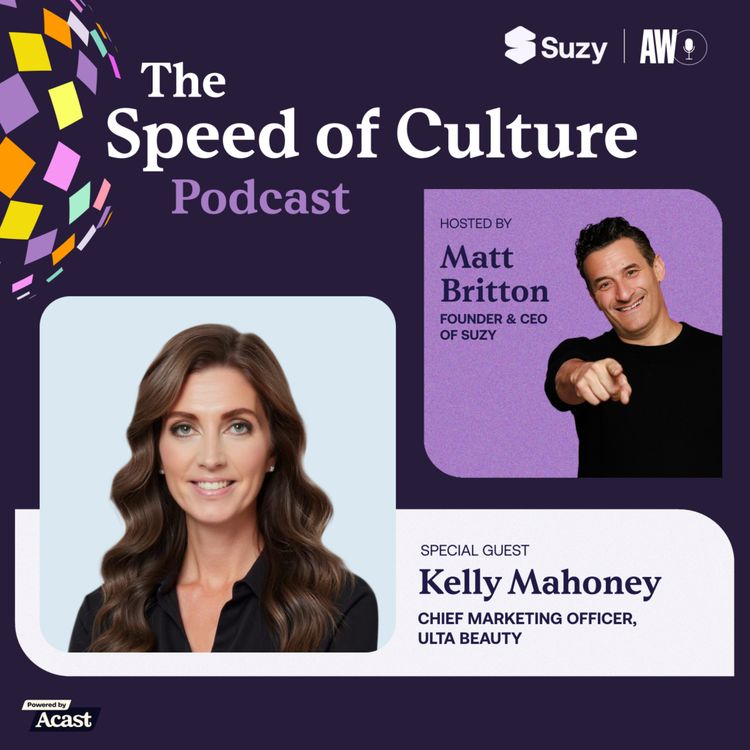
In Episode 233 of The Speed of Culture Podcast, host Matt Britton, founder and CEO of Suzy, the AI-powered consumer intelligence platform, sits down with Jennifer Wilson, Senior VP of Enterprise Brand and Marketing at Lowe's, to explore how one of America's largest home improvement retailers is executing a modern marketing strategy rooted in culture, experience, and long-term relevance.
The conversation reveals a company in the midst of a sophisticated brand evolution—one that leverages artificial intelligence not as a replacement for human expertise, but as a confidence-building tool that removes friction from the customer journey while preserving the human element that makes retail meaningful.
This transformation isn't happening in isolation. It's part of a broader strategic initiative that positions Lowe's as a culture-driven lifestyle brand rather than a construction-supply destination. Through expanded creator partnerships, AI-powered customer experience tools, and a reimagined retail media network, Lowe's is demonstrating how traditional retailers can stay culturally relevant while deploying cutting-edge technology.
The episode provides a masterclass in balancing innovation with authenticity—a challenge that increasingly defines competitive advantage in the retail sector.
The Pandemic Changed Everything: Why Home Became Lifestyle
The COVID-19 pandemic fundamentally altered consumer psychology around the home. What began as emergency lockdowns evolved into something deeper: extended time spent in personal spaces forced millions to confront the gap between how their homes currently functioned and how they wanted to live.
This shift from viewing home as a collection of utilitarian systems to viewing it as an extension of personal identity has become the anchoring principle of Lowe's contemporary marketing strategy.
Jennifer Wilson emphasizes this point throughout her discussion with Matt Britton. Home is no longer simply about shelter or basic maintenance. Today, it's about growth, self-expression, and intentional living across different life stages.
A young professional working remotely needs a home office that inspires creativity. A growing family requires spaces that adapt to their changing needs. Empty nesters seek to redesign their environments to reflect new phases of life. These are not merely construction projects—they're lifestyle investments.
This philosophical shift has profound implications for retail strategy. Traditional home improvement marketing operated on a problem-solution model: "Your roof leaks. We have shingles." The modern approach operates on an inspiration-enablement model: "Here's how people like you are creating their dream living spaces. Here are the tools, products, and expertise to make it happen."
This transition requires retailers to think less like suppliers and more like lifestyle partners.
For Lowe's, this understanding has driven expansion well beyond the "sticks and bricks" category. The company has broadened its marketplace offerings to include décor, furnishings, and lifestyle products. In-store experiences now encourage imagination alongside practical problem-solving.
Product assortment reflects not just what needs repair, but what enables personal expression. This isn't a minor merchandising adjustment—it's a fundamental repositioning that acknowledges the expanded role home plays in modern life.
The implications for customer acquisition, loyalty, and lifetime value are substantial. When Lowe's positions itself as a partner across multiple life stages rather than a vendor appearing only when something breaks, it shifts from transactional relationships to ongoing engagement.
This strategic insight underlies not just the marketing messaging, but the entire operational transformation the company is undertaking.
Leveraging Creator Economy Partnerships: 26,000 Voices Building Authentic Reach
In the crowded digital landscape, authentic storytelling has become a primary currency. Lowe's recognized this reality and made a bold strategic decision: instead of relying solely on corporate messaging to reach younger demographics and culturally-engaged audiences, the company would mobilize the creator economy itself.
The result is a network of more than 26,000 creators—ranging from mega-influencers to micro-creators with highly engaged niche audiences—who contribute to Lowe's brand storytelling and reach.
This approach is fundamentally different from traditional influencer marketing. Rather than hiring creators to promote products as external advertisements, Lowe's built a creator ecosystem with structural incentives aligned to mutual success.
Creators receive commissions, product samples, training resources, and access to customizable storefronts linked directly to Lowes.com. The company is working toward an ambition of 50,000 active creators, recognizing that diverse voices and authentic storytelling resonate more powerfully than any monolithic corporate narrative.
The strategy has already produced tangible results. A Black Friday campaign featuring a viral bucket moment generated extraordinary organic reach and engagement.
Home improvement creators—whether they're documenting full renovations, sharing quick DIY hacks, or inspiring lifestyle transformations—found in Lowe's a brand willing to support their creative endeavors rather than simply extract value from their audiences. This represents a fundamental respect for creator agency and audience authenticity.
From a marketing efficiency perspective, this approach offers significant advantages. Creator content reaches audiences who have self-selected into communities built on trusted voices and shared interests.
A follower of a home design creator has already demonstrated interest in home improvement as a category—and more importantly, they've chosen to receive information from a specific creator they trust. This pre-qualified audience attention is far more valuable than undirected digital advertising.
The creator network also provides Lowe's with invaluable consumer insight. What are creators talking about? Which products are gaining momentum in social conversation? What aesthetic trends and lifestyle aspirations are emerging in creator communities?
This first-party data, translated through authentic creator voices, provides market intelligence that traditional research methodologies struggle to capture.
Jennifer Wilson's discussion of the creator strategy reveals a sophisticated understanding of modern consumer behavior. The company recognized that younger generations and digitally-native consumers don't just want products—they want permission to imagine and stories that make transformation feel possible.
Creators provide both.
AI as Confidence-Builder: Removing Friction Without Removing People
Artificial intelligence often provokes anxiety in retail environments. Will technology replace human workers? Will customer service become impersonal? Will the human expertise that distinguishes specialty retail disappear?
Lowe's has approached AI deployment with a different framing entirely: not as a replacement technology, but as a confidence-building tool that enhances the human experience.
This philosophy manifests in two complementary products: Mylow, a customer-facing virtual advisor, and Mylow Companion, an associate-focused tool. Both are built on technology developed in partnership with OpenAI and represent the first major deployment of conversational AI at scale in home improvement retail.
For customers, Mylow functions as a knowledgeable advisor available instantly on Lowes.com. Rather than conducting keyword searches that yield imperfect results, customers can ask open-ended questions: "What do I need to paint my bedroom?" or "How do I create a midcentury modern kitchen?"
Mylow responds with step-by-step guidance, product recommendations, and links to how-to resources. Critically, it reduces decision paralysis and anxiety—the customer gains confidence they're making informed choices.
The impact is quantifiable: when customers engage with Mylow online, conversion rates more than double. The tool isn't replacing human expertise; it's enabling human purchase decisions.
For retail associates, Mylow Companion provides fast access to product details, project advice, and real-time inventory information. New employees—historically a challenge in retail environments—can now confidently engage customers with natural, conversational prompts that surface relevant expertise instantly.
Associates can use voice-to-text for hands-free operation while assisting customers on the sales floor. Customer experience metrics show measurable improvements in stores where associates are using the tool.
The philosophical underpinning here deserves emphasis. Jennifer Wilson and Lowe's leadership explicitly acknowledge that AI cannot perform actual trades work. A customer cannot ask Mylow to rewire their house.
Technology cannot replace the skilled labor that distinguishes professional contractors from amateurs. Instead, AI functions upstream in the decision and confidence-building process.
It helps customers understand what they need, why they need it, and how to approach their projects. It helps associates rapidly access the expertise they need to have confident conversations. It removes friction points that generate frustration.
This approach has profound implications for the future of retail. As AI deployment becomes inevitable across industries, retailers will differentiate based on how thoughtfully they integrate technology.
Lowe's demonstrates that the most effective integration treats AI as complementary to human expertise, not competitive with it. The result is a customer experience that feels both high-touch and technologically sophisticated.
The Retail Media Network: Redefining Vendor Relationships and Customer Value
Beyond consumer-facing transformations, Lowe's is reimagining the relationship between retailers and their vendor partners through the evolution of its retail media network.
Rebranded and expanded in recent years, Lowe's Media Network now offers vendors access to four distinct channels: email, in-store audio, paid search, and direct mail for install services. For vendors, this represents an opportunity to reach Lowe's 38+ million loyalty members with precision targeting previously unavailable to traditional retail partners.
The significance of this evolution extends beyond incremental revenue opportunities. Retail media networks represent a structural shift in how retailers monetize their customer relationships and data assets.
Rather than deriving revenue solely from product margins, retailers increasingly operate as media companies, leveraging their customer data, traffic, and attention to create advertising and marketing opportunities for their vendor partners.
For Lowe's, the creator network integration with the retail media network opens additional strategic possibilities. Top-tier vendors can access creator partnerships as part of their media packages.
As this integration matures across the entire network, creators will become another distribution and marketing channel for vendor partners. This creates a feedback loop: vendors gain access to creator audiences; creators gain monetization opportunities; Lowe's customer experience remains protected because the network prioritizes usefulness over intrusiveness.
The strategic sophistication here deserves recognition. By positioning the retail media network as useful rather than disruptive, Lowe's protects the customer experience while creating new revenue streams and vendor value.
This requires disciplined thinking about which marketing messages appear in which contexts—an in-store audio message needs different characteristics than a targeted email to a specific customer segment. Executed well, the retail media network enhances rather than detracts from the customer journey.
The Total Home Strategy: Transcending Category Limitations
Underpinning all these tactical innovations is a comprehensive strategic framework: Lowe's Total Home Strategy. Originally developed to address market fragmentation and expand Lowe's competitive positioning, the Total Home concept has evolved into a comprehensive vision for how Lowe's serves customer needs across the entire spectrum of home improvement and home living.
The Total Home Strategy encompasses five key growth initiatives:
- Pro Penetration (deepening relationships with professional contractors)
- Online Sales
- Home Services
- Loyalty Ecosystem
- Space Productivity
Rather than viewing these as separate business segments, Lowe's treats them as interconnected elements of a comprehensive customer value proposition.
A homeowner's journey might begin with DIY inspiration accessed through creator content, progress to online product discovery enabled by Mylow, include in-store consultation with an associate powered by Mylow Companion, and potentially extend to professional installation services. Each touchpoint reinforces Lowe's positioning as a comprehensive home improvement partner.
The strategic expansion into new market segments and geographies supports this vision. Lowe's plans to open 10-15 stores annually in fast-growing markets.
The company is extending rural assortments to 150 additional stores with expanded offerings in pet supplies, workwear, automotive, and utility vehicles—categories that reflect how rural customers think about their homes and property.
The marketplace expansion brings multiple vendors and product catalogs into the Lowe's ecosystem, offering customers choice across price points and aesthetic preferences.
What emerges from this comprehensive strategy is a company deliberately transcending its historical identity as a construction-supply vendor. Lowe's is positioning itself as the comprehensive partner for how people want to live.
The messaging shift, creator partnerships, AI deployment, and retail media network evolution all serve this overarching strategic vision.
Key Takeaways
- Home has fundamentally transformed from problem-solving to lifestyle investment. The pandemic permanently shifted consumer psychology, elevating home from a collection of repair projects to an expression of identity and intentional living. Retailers who recognize this shift and align their strategies accordingly will capture disproportionate customer loyalty and lifetime value.
- Creator economy partnerships deliver authentic reach that traditional marketing cannot replicate. By empowering 26,000+ creators with commissions, resources, and platform access, Lowe's reaches culturally-engaged audiences through trusted voices. This approach generates superior engagement while providing invaluable consumer intelligence about emerging trends and preferences.
- AI's greatest retail value lies in confidence-building rather than replacement. Mylow and Mylow Companion demonstrate that conversational AI removes friction points in customer and associate experiences without eliminating human expertise. Retailers deploying AI most effectively treat it as complementary to human judgment, not competitive with it.
- Retail media networks represent a fundamental shift in how retailers monetize customer relationships. Beyond margin-based economics, retailers now generate value through data, targeting precision, and audience access. When executed with discipline and customer focus, these networks enhance rather than degrade the customer experience.
- Transcending historical category limitations requires comprehensive strategic reimagining. The Total Home Strategy positions Lowe's not as a construction supplier but as a comprehensive home improvement and home living partner. This positioning creates multiple avenues for customer engagement and business growth across professional, DIY, and design segments.
Frequently Asked Questions
How does AI actually improve customer conversion rates in home improvement retail?
Mylow reduces decision paralysis by enabling customers to ask open-ended questions and receive step-by-step guidance, product recommendations, and resource links. Rather than conducting keyword searches that yield imperfect results, customers gain confidence they're making informed choices.
The doubling of conversion rates when customers engage with Mylow demonstrates that removing anxiety and decision friction translates directly to purchase behavior.
Why do creator partnerships outperform traditional influencer marketing for Lowe's?
Creator partnerships create structural alignment between Lowe's success and creator success through commissions, product access, and platform support. Rather than treating creators as external vendors hired to advertise, Lowe's invites them into an ecosystem where their success is mutually beneficial.
This approach generates authentic storytelling that resonates with audiences who have chosen to follow specific creators they trust, resulting in higher engagement and more qualified customer attention.
How does Lowe's balance retail media network monetization with customer experience?
Lowe's prioritizes usefulness over intrusiveness, deploying vendor messages through channels and contexts where they provide genuine value. An email message reaches customers who have opted in and may benefit from targeted vendor offers.
In-store audio provides relevant product information without feeling aggressive. By maintaining discipline about which messages appear where, Lowe's protects the customer experience while creating new revenue opportunities.
What does "Total Home Strategy" actually mean in practical terms?
Rather than viewing professional services, DIY products, home services, and lifestyle offerings as separate business segments, Lowe's treats them as interconnected elements serving comprehensive customer needs.
A homeowner might begin with inspiration from creator content, progress to online discovery powered by AI, include in-store consultation, and potentially extend to professional installation. Each touchpoint reinforces Lowe's positioning as a comprehensive home improvement partner across multiple customer segments and life stages.
Looking Ahead
Jennifer Wilson's conversation with Matt Britton on The Speed of Culture Podcast reveals a company navigating profound strategic transformation with sophistication and purpose.
As consumer expectations around retail experience continue to evolve, Lowe's demonstrates that competitive advantage emerges not from any single innovation but from coherent strategic alignment across brand positioning, technology deployment, creator partnerships, and operational execution.
The future of retail will belong to companies that recognize home's expanded role in modern life and position themselves as partners in how people want to live. It will belong to companies that deploy artificial intelligence thoughtfully, treating it as a tool that enhances human expertise rather than replacing it.
And it will belong to companies that understand creator economy dynamics and build authentic partnerships rather than transactional relationships.
For deeper insights into consumer intelligence and AI-driven strategy, explore Suzy, the platform enabling research and decision-making for global leaders. Learn more about marketing's evolution in today's cultural landscape through The Speed of Culture Podcast.
For comprehensive exploration of AI's implications for business and society, discover Generation AI by Matt Britton. And for expert perspectives on future-focused business strategy, connect with AI Keynote Speaker services or explore Speaker HQ for additional resources.

%20(400%20x%20100%20px)%20(300%20x%2050%20px)%20(150%20x%2050%20px).avif)

.jpeg)


.jpeg)
.jpeg)