The Future of the Consumer in 2023: Economic Shifts, Gen Z Dynamics, and the Post-Pandemic Landscape
The consumer landscape underwent a seismic transformation between 2020 and 2023. Disruptions that once seemed temporary became structural. Innovations that gained traction during lockdowns evolved into permanent behavioral shifts.
As the world navigated the reset following the global pandemic and confronted continued economic uncertainty, business leaders faced a critical question: what emerging trends would define consumer behavior in 2023, and how should organizations adapt?
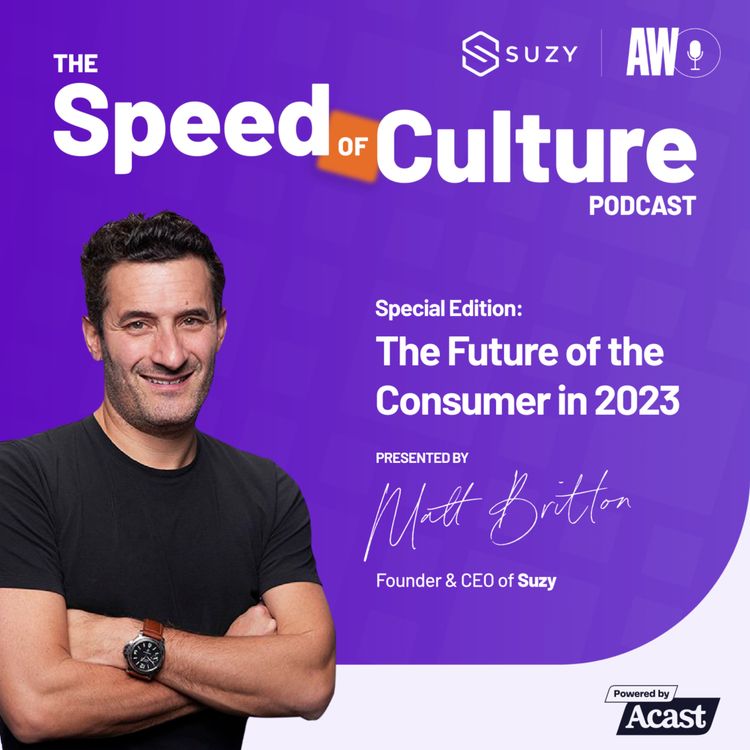
In a special edition of the Speed of Culture Podcast, Matt Britton, founder and CEO of Suzy, the AI-powered consumer intelligence platform, sat down to address these questions directly. Drawing on nearly two decades of consulting with Fortune 500 companies and his deep expertise in consumer behavior and emerging market trends, Britton provided forward-looking analysis of the macro and micro shifts reshaping consumer expectations and purchasing decisions.
This analysis examines Britton's key perspectives on the future of the consumer, offering executives, marketers, and business strategists a framework for understanding 2023's consumer environment and positioning their organizations for success in an era of rapid change.
The Economic Reality Check: Why Consumer Power Remains Constrained
The economic backdrop of early 2023 contradicted the optimism many expected following the post-pandemic recovery. While conventional wisdom suggested that pent-up consumer demand would fuel a roaring 2023, Matt Britton identified a more complex reality: economic headwinds were actively dampening consumer confidence and spending power.
The numbers told the story. After the unexpected 2021 economic boom—when consumers embarked on a historic buying spree, investing in new homes, stocks like GameStop, and discretionary purchases—inflation emerged as a brutal economic reality. Supply chain disruptions meant that demand outpaced inventory, driving prices upward in unprecedented ways.
By late 2022, inflationary pressures had fundamentally shifted consumer psychology. Savings accounts that had been plump just months earlier were being depleted. Credit card debt reached all-time highs. Conversations around dinner tables and in break rooms had shifted from excitement about new opportunities to anxiety about economic stability.
For brands and business leaders, this meant acknowledging a hard truth: the enthusiastic, free-spending consumer of 2021 was no longer the dominant force in the market. In 2023, consumers were making trade-off decisions with unprecedented care. They were choosing between essential purchases and discretionary ones, switching brands for better deals, and extending product lifecycles rather than upgrading.
Britton emphasized that brands needed to move beyond assuming consumer eagerness and instead focus on demonstrating value, affordability, and genuine utility. The luxury of capturing mindshare through novelty alone had diminished. Winning brands would be those that acknowledged economic realities and provided solutions that consumers could justify to themselves and their families.
Macroeconomic Headwinds: The Labor Market's False Floor
While headlines focused on inflation and consumer spending, Britton pointed to a deeper macroeconomic concern: the fragility of the labor market's apparent strength. Throughout 2022 and into early 2023, the U.S. labor market appeared robust on the surface. There were more open jobs than unemployed workers, unemployment rates remained historically low, and wage growth showed improvement for some segments.
But this surface-level strength masked vulnerability. The labor market was holding up the economy—but only barely. If interest rates, which the Federal Reserve had been raising to combat inflation, continued climbing, unemployment would likely follow.
Companies facing margin pressures from inflation would need to eventually make difficult staffing decisions. The combination of near all-time-high consumer debt levels and minimal savings buffers meant that even a modest uptick in unemployment could trigger a consumer retrenchment.
This reality had immediate implications for 2023. Consumers weren't just reacting to current economic conditions; they were bracing for potential deterioration. This defensive mindset manifested in reduced discretionary spending, more careful evaluation of subscriptions, and a return to value-conscious shopping patterns.
For executives, Britton's analysis suggested that assuming continued economic expansion in 2023 was unwise. Instead, prudent strategy involved building flexibility into operations, reconsidering pricing architecture, and preparing for scenarios where consumer caution extended well beyond conventional forecasts.
Focusing on Gen Z: The Future's Most Influential Cohort
If the macroeconomic environment presented challenges, demographic realities offered both complexity and opportunity. Gen Z had officially become a massive consumer force—nearly 86 million people in the United States alone—representing the most voluminous and diverse population cohort in the country.
This generation came of age alongside digital technology and was profoundly shaped by the pandemic. They experienced workplace disruptions, remote learning, and social isolation at critical developmental stages. Their career trajectories were influenced by economic uncertainty, and their consumption patterns reflected values—authenticity, health, environmental impact, diversity, equity, and inclusion—that were often non-negotiable.
The quiet quitting phenomenon exemplified Gen Z's different approach to work and life. When job markets offered options, Gen Z workers were willing to switch companies for better cultural fit, more purposeful work, or improved work-life balance. They expected offices to evolve, embraced deglobalization when aligned with their values, and questioned established brands.
For brands, this meant several shifts. Messaging needed to emphasize authenticity over aspirational fantasy. Social and environmental impact had to be integral to positioning, not relegated to sustainability reports. Diversity, equity, and inclusion needed to be embedded in hiring, leadership, product development, and marketing.
Gen Z consumers also demonstrated greater willingness to switch brands than previous generations. If values felt misaligned, they would abandon a company quickly—even if the product was superior. Conversely, brands that authentically embodied their values could develop deep loyalty.
Emerging Behavioral Patterns: What Sticks and What Fades
As Britton analyzed 2023's consumer landscape, he identified which pandemic-era behaviors would become permanent fixtures and which would fade. This distinction was crucial for resource allocation and strategic planning.
Some behaviors clearly persisted. E-commerce adoption had reached a new plateau. Omnichannel strategies—seamlessly integrating physical and digital retail—were no longer competitive advantages; they were baseline requirements.
Remote and hybrid work arrangements also stabilized at levels far exceeding pre-pandemic norms. This shift drove sustained demand for home office equipment, home furnishings, and services supporting remote productivity. Geographic arbitrage altered where consumers lived and what they purchased locally.
Conversely, some behaviors faded. Hoarding gave way to normalized purchasing patterns. Tolerance for inferior digital experiences declined. The streaming surge plateaued, and the home improvement boom cooled significantly.
For brands, distinguishing between persistent and temporary behavioral shifts required continuous consumer research and agility. Investing in temporary behaviors was wasteful; failing to invest in structural shifts was strategically negligent.
Building Resilient Brands for Uncertain Times
A unifying theme emerged from Britton's analysis: 2023 required resilience and flexibility. The consumer landscape was increasingly bifurcated. Some consumers maintained economic strength and remained willing to spend on premium offerings. Many more were constrained and focused on value.
Resilient brands shared several characteristics. They were clear-eyed about economic realities and avoided assuming growth that didn't exist. They invested in understanding their specific target audiences rather than relying on broad generational stereotypes. They adjusted pricing, messaging, and positioning as conditions evolved.
They built communities around shared values rather than transactional relationships and maintained long-term perspective amid short-term volatility. Technology played an enabling role in this resilience.
Platforms like Suzy, which aggregate consumer insights through AI-powered intelligence, allowed brands to move beyond guesswork to evidence-based decision-making. By understanding what consumers actually wanted, organizations could allocate resources more effectively and craft more compelling offerings.
Key Takeaways for Business Leaders
- Economic constraints are structural, not cyclical: The combination of inflation, high debt, and minimal savings means consumer spending power is genuinely constrained. Brands should prioritize demonstrating value and affordability in positioning and pricing.
- The labor market's fragility should inform contingency planning: Despite low unemployment, vulnerability to interest rate increases suggests preparing for potential deterioration rather than assuming expansion.
- Gen Z is the demographic imperative: With nearly 86 million Gen Z consumers in the U.S., understanding this generation's values around authenticity, impact, and alignment is non-negotiable.
- Distinguish between persistent and temporary behavioral changes: Continuous consumer research is essential to determine which shifts warrant ongoing investment.
- Build resilience through flexibility: Markets characterized by uncertainty reward brands that adjust quickly and build genuine communities around shared values.
Frequently Asked Questions
What does Matt Britton's analysis suggest about consumer spending in 2023?
Britton suggests that despite pockets of economic strength, consumer spending power is genuinely constrained. Inflation, high debt levels, and depleted savings mean consumers are making more careful trade-off decisions, switching brands for better deals, and reducing discretionary purchases.
How should brands approach Gen Z consumers in 2023?
Authenticity, transparency, and alignment with values are critical. Brands should embed social and environmental impact into their core positioning, demonstrate genuine commitment to diversity and inclusion, and maintain transparency about practices and challenges.
Which pandemic-era consumer behaviors are likely to persist beyond 2023?
E-commerce adoption, remote and hybrid work, and expectations for omnichannel retail experiences appear to be structural shifts. Behaviors like hoarding, tolerance for inferior digital interfaces, and the home improvement surge have faded.
Why is understanding the labor market important for consumer behavior analysis?
The labor market is a leading indicator of consumer confidence and spending power. Its vulnerability to interest rate increases means that even modest unemployment gains could significantly impact consumer behavior.
What role does consumer intelligence technology play in navigating uncertainty?
AI-powered consumer intelligence platforms such as Suzy allow brands to move beyond assumptions to evidence-based decisions. This enables more effective resource allocation and more compelling positioning in uncertain environments.
Looking Ahead
The future of the consumer in 2023 emerged as both challenging and full of opportunity. Economic constraints were real, demographic shifts were powerful, and behavioral patterns remained in flux.
Brands that built on evidence-based understanding, maintained flexibility, and aligned with authentic values stood to thrive even in a cautious and bifurcated market.
For deeper insights into consumer behavior and market trends, explore Matt Britton's Generation AI book and follow his work through Speed of Culture. For speaking engagements and consulting on consumer strategy, visit Speaker HQ or learn more about AI keynote speaking opportunities.

%20(400%20x%20100%20px)%20(300%20x%2050%20px)%20(150%20x%2050%20px).avif)

.jpeg)


.jpeg)
.jpeg)