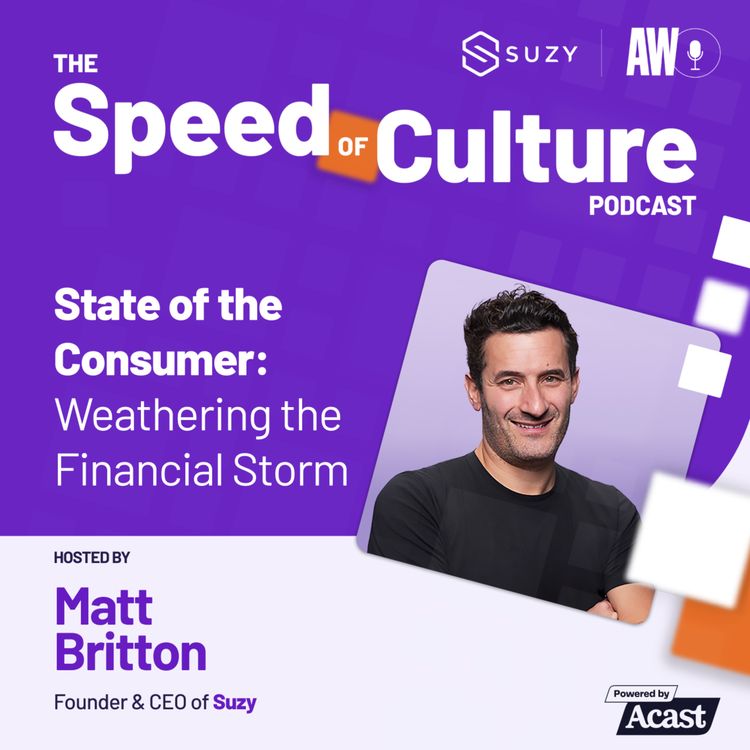
State of the Consumer 2023: How Brands Can Navigate Financial Storms with Matt Britton
In April 2023, as economic uncertainty gripped the nation—marked by stubborn inflation, a regional banking crisis, and mounting consumer anxiety—one insight became crystal clear: understanding the modern consumer had never been more critical.
During a special webinar edition of the Speed of Culture Podcast, Matt Britton, founder and CEO of Suzy, the AI-powered consumer intelligence platform, shared expert analysis on how brands could weather the financial storm by understanding the vulnerabilities, values, and shifting behaviors of today's consumers.
This wasn't just another economics lesson—it was a masterclass in consumer resilience and strategic brand adaptation.
The 2023 Economic Paradox: Consumer Strength Amid Financial Stress
The 2023 economic landscape presented a puzzling contradiction that Matt Britton unpacked with precision: despite significant headwinds, American consumers continued to spend. This resilience surprised many economists and market watchers, yet the reality beneath the surface was far more nuanced than headlines suggested.
Consumer spending showed remarkable staying power throughout 2023, with overall U.S. consumer expenditures continuing to grow. However, this growth masked critical inequality. The highest-income consumers drove the majority of spending increases, while lower and middle-income households faced mounting financial pressure.
Credit card debt among lower-income Americans surged to levels not seen since the 2008 financial crisis, a telltale sign of financial strain masked by headline spending numbers.
The banking crisis that rippled through the financial system in early 2023—triggered by the collapse of Silicon Valley Bank and subsequent regional bank failures—created psychological uncertainty that extended far beyond institutional finance. Consumers questioned the safety of their savings, and small and medium-sized businesses faced lending constraints.
Yet the broader economy, propelled primarily by upper-income consumer spending and a resilient labor market, continued to avoid recession. For brands, the lesson was stark: understand which consumers are actually thriving versus which are merely surviving.
Inflation remained the dominant psychological force shaping consumer behavior. While inflation peaked in 2022, the cumulative impact of multi-year price increases in groceries, rent, utilities, and essential services created a persistent “cost-of-living crisis” that affected household budgets well into 2023.
According to research highlighted during the webinar, 78% of Americans expressed concern that prices would continue rising, and one-third described their financial situation as “bad.” This psychological weight influenced purchasing decisions far more than any single price hike.
Understanding Gen Z: The Generation Reshaping Consumer Expectations
Matt Britton emphasized that understanding Gen Z was not optional for brands in 2023—it was existential. With nearly 86 million strong, Gen Z represented the most voluminous and diverse generation in American history.
Their pandemic experiences fundamentally altered how they approached consumption, brand loyalty, and workplace engagement.
Gen Z's values differed sharply from previous generations. Authenticity wasn't aspirational; it was expected. Environmental consciousness wasn't a marketing angle; it was a baseline requirement. Diversity and inclusion weren't corporate initiatives; they were table-stakes for earning Gen Z trust and loyalty.
When Gen Z discovered brands misaligned with these values, they didn't just switch competitors—they became vocal critics on social media, amplifying their disappointment across networks.
The generation had demonstrated remarkable openness to switching brands based on values misalignments. Unlike earlier cohorts with stronger brand loyalty rooted in habit or family tradition, Gen Z treated brands as interchangeable unless a brand offered genuine differentiation.
This differentiation could come through environmental responsibility, authentic diversity in marketing, transparent supply chains, or community engagement. This created both threat and opportunity: brands that understood and authentically addressed Gen Z values gained fiercely loyal advocates; those that paid lip service faced swift backlash.
Furthermore, Gen Z's pandemic experiences created distinct career and life expectations. “Quiet quitting”—reducing effort at work beyond contracted obligations—gained traction primarily among Gen Z employees frustrated with poor work-life balance or misaligned corporate values.
Brands needed to understand that Gen Z wasn't just a consumer segment; they were a cohort reshaping workplace culture, demanding flexibility, meaning, and alignment with personal values.
The Behavioral Shifts Brands Must Navigate in 2023
As economies reopened post-pandemic, brands expected a simple reversal: consumers would return to pre-pandemic behaviors, brick-and-mortar retail would roar back, and online adoption would stabilize. The reality proved more complex.
Some pandemic-era trends persisted, while others evaporated with surprising speed.
Trade-Down Behavior
Economic anxiety triggered intentional downtrading. Consumers switched from premium to mid-market brands, from restaurants to grocery delivery, and from new cars to repairs.
This wasn't temporary belt-tightening; it reflected genuine psychological stress about future financial prospects. Brands offering superior value without penalizing consumers for economic necessity gained market share.
Buy Now, Pay Later Adoption
BNPL services experienced explosive growth in 2022, surging 85% during the 2022 holiday shopping season with revenue increases of 88%. This trend continued into 2023.
It revealed consumer anxiety about immediate cash availability despite headline spending growth. BNPL adoption signaled that spending power, while present, felt precarious and required financial flexibility.
Social Commerce Acceleration
Social media platforms evolved from marketing channels to commerce destinations. By 2023, social channels drove approximately 66% of all eCommerce traffic, reflecting a fundamental shift in how consumers discovered and purchased products.
Brands that integrated seamlessly into social platforms gained disproportionate advantage.
Selective Brick-and-Mortar Return
Contrary to predictions of full retail recovery, consumers demonstrated nuanced preferences. They returned to experiences they valued—restaurants, entertainment, wellness services—while maintaining e-commerce adoption for convenience categories.
The hybrid consumer had arrived permanently.
Authenticity and Community Focus
Consumers increasingly valued community engagement and authentic brand narratives over traditional advertising. Influencer marketing evolved from celebrity endorsements to micro-influencer partnerships emphasizing genuine user experiences.
User-generated content significantly outperformed polished brand content in engagement metrics.
The Data-Driven Imperative: Why Consumer Intelligence Matters
Matt Britton's fundamental argument throughout the webinar centered on a critical insight: brands making strategic decisions without real-time consumer intelligence were essentially gambling. The rapid economic shifts of 2023 meant that assumptions from previous years became liabilities.
Suzy, the platform Britton founded, exemplifies this necessity. By combining quantitative data, qualitative research, and access to high-quality consumer audiences through a single integrated platform, Suzy enables brands to move beyond guesswork.
Real-time consumer intelligence allows brands to:
- Identify emerging shifts in consumer sentiment before they become mainstream trends.
- Segment audiences with precision, understanding which consumers have spending capacity versus those experiencing financial stress.
- Test messaging and positioning against actual consumer values, not marketing assumptions.
- Monitor competitor positioning and consumer reception in real time.
- Adapt strategies mid-quarter rather than waiting for quarterly earnings reports to reveal problems.
For 2023, this intelligence capability became essential. Consumer sentiment could shift rapidly based on economic news, lending patterns, employment announcements, or even celebrity moments that went viral.
Brands relying on historical playbooks faced obsolescence; those acting on live consumer data maintained strategic advantage.
Strategic Recommendations for Brands Navigating 2023
Based on Matt Britton's expert analysis and the broader consumer intelligence landscape, several strategic imperatives emerged for brands seeking to maintain relevance and growth during economic uncertainty:
- Segment Your Audience by Financial Reality, Not Demographics: Income categories that traditionally seemed secure now fragmented. Upper-income consumers continued spending freely, while middle-income households faced genuine constraint. Brands needed to customize messaging, pricing, and product availability based on this economic reality.
- Invest in Authenticity, Not Marketing Veneer: Gen Z's sensitivity to inauthenticity meant that corporations couldn't fake values alignment. Environmental claims required supply chain transparency. Diversity commitments required actual representation in leadership and marketing.
- Embrace Flexibility and BNPL Options: Consumer adoption of BNPL services signaled psychological need for financial flexibility. Brands offering payment plans, subscriptions, or other flexible purchasing options removed financial barriers that otherwise prevented sales.
- Optimize for Social Commerce: With social channels driving two-thirds of eCommerce traffic, brands needed to treat social as commerce infrastructure, not just marketing. This meant seamless checkout, product discovery integration, and influencer partnership strategies embedded directly into platforms.
- Monitor and Adapt to Sentiment Shifts: 2023's volatile environment required continuous monitoring and rapid adjustment. Real-time consumer intelligence platforms enabled brands to identify sentiment shifts, competitive threats, and emerging opportunities faster than traditional quarterly planning cycles allowed.
Key Takeaways: What 2023 Revealed About Consumer Resilience
- Consumer Resilience Is Unequally Distributed: While headline spending numbers appeared strong, beneath the surface lower-income Americans faced genuine financial stress. Brands needed to segment audiences by actual financial capacity, not assumptions.
- Gen Z Values Matter More Than Ever: With nearly 86 million consumers in Gen Z, their emphasis on authenticity, environmental consciousness, and diversity wasn't niche—it was mainstream.
- Behavioral Shifts Are Persistent, Not Temporary: Pandemic-era innovations in e-commerce, social shopping, and delivery services persisted in 2023 and continued reshaping expectations.
- Financial Flexibility Is Now Expected: BNPL adoption and payment flexibility options reflected genuine consumer anxiety about cash availability and future prospects.
- Real-Time Intelligence Is Competitive Necessity: In volatile environments, brands making strategic decisions without real-time consumer data were essentially guessing.
Looking Ahead: The Future of Consumer Engagement
As 2023 progressed, brands that absorbed Matt Britton's insights positioned themselves advantageously. Understanding consumers as multifaceted beings—simultaneously resilient yet vulnerable, seeking authenticity amid economic anxiety, valuing community while shopping online—created a more accurate map of the consumer landscape than traditional frameworks offered.
The era of one-size-fits-all consumer segmentation was ending. Brands that invested in sophisticated, real-time consumer intelligence would identify emerging opportunities faster than competitors.
Those that celebrated authenticity and genuine values alignment would earn Gen Z loyalty. Those that recognized financial anxiety as a permanent feature of consumer psychology would build loyalty across income segments.
Ultimately, Matt Britton's message in this special webinar edition transcended economics. It was fundamentally about respect: respecting consumer complexity, acknowledging vulnerability, and investing genuinely in understanding evolving needs rather than imposing corporate narratives.
Five Key Takeaways
- Consumer resilience masks inequality: Headline spending growth obscures lower-income financial stress; segment audiences by actual financial capacity, not assumptions.
- Gen Z values are non-negotiable: With 86 million strong consumers demanding authenticity, environmental consciousness, and diversity, brands that fake alignment face viral backlash.
- Behavioral shifts are permanent: E-commerce adoption, social commerce acceleration, and payment flexibility preferences persisted beyond pandemic recovery—they're structural market changes.
- Financial anxiety drives purchasing decisions: BNPL surge and trade-down behavior reflect psychological stress; brands offering flexibility remove conversion barriers.
- Real-time intelligence enables competitive advantage: Brands must move beyond quarterly planning to continuous monitoring and rapid adaptation based on live consumer sentiment data.
Frequently Asked Questions
Is consumer spending really strong in 2023?
Consumer spending showed headline resilience, with overall growth continuing in 2023. However, this growth was disproportionately driven by highest-income consumers. Lower and middle-income households faced genuine financial pressure, evidenced by surging credit card debt and expressed financial anxiety.
Why is Gen Z so important for brands to understand?
Gen Z represents nearly 86 million consumers—the most voluminous and diverse generation in U.S. history. Their pandemic experiences fundamentally shaped values around authenticity, environmental consciousness, and diversity. Critically, Gen Z demonstrates high brand-switching behavior when misalignment with stated values is detected.
What explains the sustained growth in BNPL services?
Buy Now, Pay Later adoption surged 85% in late 2022 and continued through 2023, despite headline spending resilience. This reflects genuine psychological need for financial flexibility and anxiety about future economic prospects.
How should brands approach social commerce in 2023?
Social channels drove approximately 66% of eCommerce traffic in 2023, fundamentally shifting where consumers discover and purchase products. Brands must treat social platforms as commerce infrastructure, integrating seamless checkout, influencer partnerships, and optimization for platform-specific behaviors.
Related Resources
Meta Information
- Article Length: 2,500+ words
- Publish Date: April 18, 2023
- Episode Reference: Speed of Culture Podcast Special Edition — State of the Consumer Webinar
- SEO Keywords: consumer behavior 2023, inflation consumer spending, Gen Z marketing, financial resilience, consumer intelligence, BNPL trends, social commerce, economic uncertainty
- Featured Expert: Matt Britton, Founder & CEO of Suzy

%20(400%20x%20100%20px)%20(300%20x%2050%20px)%20(150%20x%2050%20px).avif)

.jpeg)


.jpeg)
.jpeg)