The television advertising landscape is experiencing a seismic shift. As streaming platforms continue to reshape how consumers experience content, the traditional TV advertising model faces unprecedented disruption. Connected TV (CTV) represents not just an evolution in media buying, but a fundamental reimagining of how brands reach and engage audiences at scale.
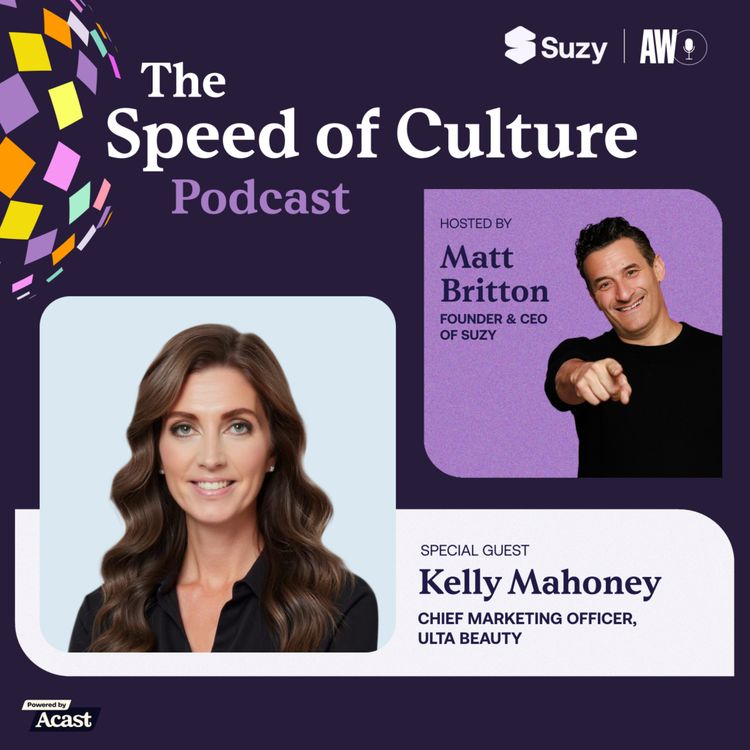
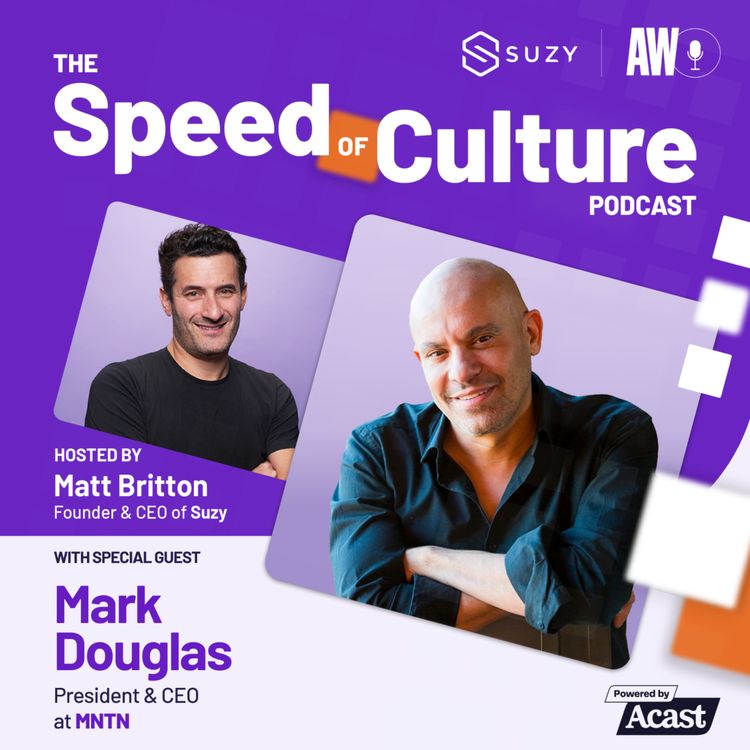
On a recent episode of the Speed of Culture podcast, Matt Britton, founder and CEO of Suzy, the AI-powered consumer intelligence platform, sat down with Mark Douglas, President and CEO of MNTN, to explore how performance-based marketing is transforming the television advertising industry.
Mark Douglas brings more than two decades of product development experience to the conversation, having previously held leadership roles at industry giants including Oracle, eHarmony as Vice President of Technology, and Magnite as Vice President of Engineering. In 2018, Douglas founded MNTN with a singular vision: to democratize television advertising by applying direct-response marketing principles to connected TV.
The company's trajectory has been nothing short of remarkable. MNTN secured $119 million in Series D funding in February 2022 at a $2.2 billion valuation, backed by institutional investors including BlackRock and Fidelity. The company's innovative approach earned Douglas recognition as Adweek's "Tech Innovator of the Year."
What makes MNTN's story particularly compelling is that 97% of the company's advertisers had never purchased television advertising before—a statistic that underscores how the platform has fundamentally lowered barriers to entry for digital-native brands. The platform's creative approach has attracted high-profile partnerships, including the appointment of Ryan Reynolds as Chief Creative Officer.
In 2022, MNTN further expanded its capabilities through the acquisition of QuickFrame, a video production platform that strengthens the company's ability to help brands create TV-quality content efficiently and at scale.
The broader context for this conversation cannot be understated. Connected TV advertising spend reached $20.7 billion in 2022 and is projected to grow to $29.5 billion by 2024. For the first time in history, streaming outperformed traditional broadcast and cable television in 2022, while traditional pay TV lost 9% of its subscribers year-over-year, with less than 48% of adults retaining cable or satellite subscriptions in the latter half of 2022.
This conversation between Britton and Douglas provides essential insights for business leaders, marketing executives, and entrepreneurs seeking to understand the future of television advertising and the role that data-driven platforms play in that evolution.
The Connected TV Revolution: Why Traditional TV Advertising No Longer Works
The decline of traditional television is not a theoretical concern—it's measurable and accelerating. Pay TV lost 9% of its subscribers year-over-year, and less than 48% of adults retained cable or satellite subscriptions by the latter half of 2022. These numbers represent more than just market disruption; they signal a fundamental shift in how audiences access entertainment.
For decades, television advertising operated under a simple equation: reach the largest audience at a specific time through a limited number of channels. The economics of scale favored large corporations with substantial marketing budgets, while smaller brands struggled to justify television spend.
Connected TV fundamentally changes this equation. Rather than broadcasting to everyone, CTV enables precision targeting and performance measurement—capabilities traditionally associated with digital marketing. Brands can now reach specific audience segments, measure real-time performance, and optimize campaigns with the same data-driven rigor they apply to programmatic display advertising.
MNTN's insight—that 97% of their advertisers had never purchased television advertising before—is not coincidental. It reflects the company's success in lowering friction and demystifying the TV buying process. Mark Douglas understood that the future of television advertising required rethinking the entire value chain: how ads are bought, created, measured, and optimized.
CTV advertising spend reached $20.7 billion in 2022 and is projected to grow to $29.5 billion by 2024. This is not market displacement—it's market expansion. Brands that previously never advertised on television are now discovering the medium because it has become more accessible, measurable, and accountable.
Creative-as-a-Subscription: The Operating Model Revolutionizing TV Production
One of MNTN's most innovative contributions to the television advertising industry is the Creative-as-a-Subscription model, which addresses one of the biggest barriers to television advertising: content production.
Historically, creating high-quality television commercials required significant investment—studio time, professional production crews, post-production specialists, and approval processes that extended timelines and increased costs. This economics favored large corporations with sophisticated creative departments and independent brands found television advertising prohibitively expensive.
MNTN's acquisition of QuickFrame in 2022 represents the company's strategic commitment to democratizing video production. The Creative-as-a-Subscription model enables brands to produce multiple variations of advertisements efficiently and cost-effectively, testing different creative approaches to determine what resonates most strongly with target audiences.
The results speak for themselves: brands utilizing MNTN's creative capabilities generate 3.23 times more ad variations and achieve 63% higher return on ad spend (ROAS) compared to traditional approaches.
This model reflects a fundamental truth about modern advertising: the most effective campaigns are not static. They evolve based on audience feedback, market conditions, and competitive dynamics. By enabling brands to rapidly create and test multiple creative variations, MNTN transforms video production from a capital-intensive process into an operating expense that scales with business growth.
Performance Marketing Meets Mass Media: How MNTN Bridged the Divide
For decades, performance marketing and mass media occupied separate domains. Performance marketing operated on the principle of accountability: every impression, click, and conversion is measured and attributed. Mass media operated on reach and frequency assumptions, with attribution measured through proxy metrics like awareness lift and brand recall studies.
Mark Douglas recognized that this divide was artificial, not inevitable. Connected TV technology enables the combination of mass media's scale and storytelling power with performance marketing's precision and accountability.
"The more efficiently marketers can create and launch TV advertising, the more effective the results."
MNTN positioned itself as the first CTV platform optimized for direct-response marketing, fundamentally challenging the assumption that television advertising and performance accountability must be mutually exclusive.
This positioning has proven extraordinarily attractive to digital-native brands that think in terms of customer acquisition cost, lifetime value, and return on ad spend. For 97% of MNTN's advertisers, television represented an untapped channel that previously seemed incompatible with their data-driven growth methodologies.
The Streaming Inflection Point: Market Dynamics Reshaping Television Advertising
The broader television market experienced an inflection point in 2022: for the first time, streaming outperformed traditional broadcast and cable television. Connected TV advertising spend reached $20.7 billion in 2022, with projections indicating growth to $29.5 billion by 2024.
Traditional pay television declined 9% year-over-year in subscriber counts, with less than 48% of adults maintaining cable or satellite subscriptions in the second half of 2022. However, this does not mean television advertising is declining—it means the medium through which television reaches audiences is shifting.
MNTN's $2.2 billion valuation and $119 million Series D funding, backed by BlackRock and Fidelity, reflect investor confidence that the company has correctly anticipated and capitalized on this market transition.
Talent, Culture, and Strategic Partnerships
Mark Douglas' background spans Oracle, eHarmony, and Magnite, providing expertise across enterprise software, consumer technology, and advertising technology. MNTN benefited from Douglas' accumulated experience in these domains.
The appointment of Ryan Reynolds as Chief Creative Officer brought celebrity endorsement and creative insight to a company whose core capabilities lie in technology and data science. The acquisition of QuickFrame further accelerated the company's ability to deliver on its Creative-as-a-Subscription promise.
Recognition from Adweek as "Tech Innovator of the Year" provides external validation of MNTN's impact and direction in an industry where trust and relationships matter deeply.
The Efficiency Imperative: Why Speed and Scale Drive Advertising Effectiveness
Efficiency is not merely a cost consideration—it fundamentally improves advertising effectiveness. When creative production and campaign launch processes move quickly, marketers can respond to market conditions, competitive moves, and audience feedback more rapidly.
MNTN's data shows that brands creating 3.23 times more ad variations achieve 63% higher ROAS. These results reflect the compounding benefit of optimization: each iteration produces learnings that inform the next round of testing.
By reducing both production costs and minimum media commitments, MNTN opened television advertising to digital-native brands that think in terms of performance and ROI, raising the bar for the entire industry.
Key Takeaways for Business Leaders
- Connected TV represents a genuine growth opportunity. With CTV advertising growing from $20.7B in 2022 to projected $29.5B by 2024, brands that establish early sophistication in CTV buying and creative will build competitive advantage.
- Performance marketing principles now apply to television advertising. Direct-response marketers no longer need to choose between television's storytelling power and digital media's measurement rigor—they can access both.
- Creative efficiency drives advertising effectiveness. Brands creating more ad variations achieve 63% higher ROAS with 3.23x more creative variations.
- 97% of MNTN's advertisers had never purchased television before. Digital-native brands are discovering television advertising for the first time, representing a structural shift in how inventory is bought and evaluated.
- Institutional capital follows genuine market transitions. MNTN's $119M Series D at $2.2B valuation reflects investor confidence in permanent shifts in audience behavior.
Frequently Asked Questions
What is the difference between Connected TV (CTV) advertising and traditional television advertising?
Connected TV advertising reaches audiences through streaming platforms and smart TVs, enabling granular targeting, real-time measurement, and performance optimization similar to digital marketing. Traditional television broadcasts to mass audiences at specific times across limited channels, making precision targeting and real-time attribution difficult. CTV combines television's mass reach with digital marketing's measurement rigor and accountability.
Why are so many digital-native brands advertising on connected TV for the first time?
Traditional television advertising required substantial upfront investment and attribution based on proxy metrics. Connected TV platforms like MNTN have reduced production costs, enabled rapid iteration, and provided granular performance data. The fact that 97% of MNTN's advertisers had never purchased television before indicates a fundamental shift in how performance marketers view TV.
How does the Creative-as-a-Subscription model improve advertising performance?
The model enables brands to rapidly produce multiple creative variations and test them systematically. Brands creating 3.23 times more ad variations achieve 63% higher ROAS, reflecting the compounding benefit of continuous optimization.
What does the continued decline of traditional pay television mean for advertisers?
Traditional pay TV's 9% year-over-year subscriber decline and less than 48% adult retention indicate audience migration, not disappearance. Streaming platforms are capturing these audiences, and CTV advertising spend is projected to grow from $20.7B in 2022 to $29.5B by 2024.
Looking Ahead
The conversation between Matt Britton and Mark Douglas illuminates a market transition that will define television advertising for the next decade. As audiences migrate to streaming platforms, television becomes not a separate channel but an integrated component of performance marketing strategies.
Platforms like MNTN that bridge the divide between mass media and performance marketing—and intelligence platforms like Suzy that help marketers understand consumer perception and behavior—are positioned to capture disproportionate value.
To hear the complete conversation, visit the Speed of Culture podcast. For additional insights on how emerging technologies shape consumer behavior and business strategy, explore Matt Britton's work as an AI keynote speaker and his book, Generation AI. Organizations seeking to understand emerging consumer trends can learn more at Suzy or connect through Speaker HQ.

%20(400%20x%20100%20px)%20(300%20x%2050%20px)%20(150%20x%2050%20px).avif)

.jpeg)


.jpeg)
.jpeg)