Published: June 12, 2023
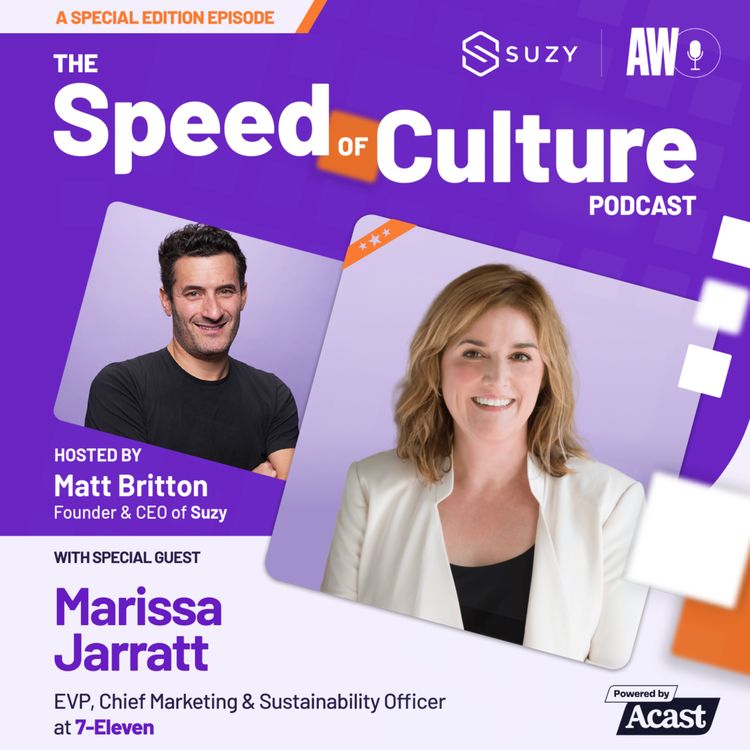
Host: Matt Britton, Founder and CEO of Suzy, the AI-powered consumer intelligence platform
Guest: Marissa Jarratt, EVP, Chief Marketing and Sustainability Officer at 7-Eleven
Introduction: Keeping an Iconic Brand Culturally Relevant
In an era where consumer preferences shift faster than ever, iconic brands face a critical challenge: remaining relevant to new generations while honoring their legacy. Few companies have mastered this delicate balance, but 7-Eleven's transformation of its legendary Slurpee brand offers a masterclass in modern marketing innovation.
In this episode of The Speed of Culture Podcast, Matt Britton sits down with Marissa Jarratt, EVP and Chief Marketing and Sustainability Officer at 7-Eleven, to explore how the convenience retail giant is reimagining one of its most iconic products for today's consumers.
Jarratt brings decades of experience in brand transformation, marketing strategy, and understanding the nuances of consumer behavior across diverse demographics. Her insights reveal how 7-Eleven is leveraging data-driven strategies, cultural insights, and innovative marketing to position Slurpee not just as a nostalgic throwback, but as a relevant, culturally dynamic beverage choice for Gen Z and millennials.
The conversation delves into the strategic decisions behind Slurpee's rebrand, the role of consumer intelligence in shaping marketing campaigns, and how convenience retail brands can innovate while maintaining brand equity. Whether you're a CMO navigating brand evolution, a retail executive seeking competitive advantage, or a marketer interested in understanding how legacy brands stay ahead of the curve, this episode offers actionable insights grounded in real market data and consumer psychology.
The Legacy of Slurpee and the Challenge of Relevance
Slurpee has enjoyed an iconic status in American culture since its introduction in 1965. The frozen beverage became synonymous with 7-Eleven, creating a powerful brand association that has endured for decades. However, iconic status and cultural relevance are not the same thing.
A product can have deep historical roots while simultaneously feeling disconnected from contemporary consumer interests. When Marissa Jarratt and her team assessed Slurpee's position in the market, they faced a fundamental question: How do we honor a legacy while speaking to consumers whose reference points are entirely different?
Gen Z consumers, born roughly between 1997 and 2012, have grown up in a world of social media, influencer marketing, and rapid-fire cultural moments. They value authenticity, sustainability, and brands that align with their values. Meanwhile, millennials have shown an appetite for nostalgic products—but only when those products are reimagined with a contemporary twist.
The research conducted by Suzy's AI-powered consumer intelligence platform revealed critical insights into consumer perception of Slurpee. While the brand maintained strong awareness and positive sentiment among older consumers, younger demographics viewed Slurpee as a relic—a product their parents enjoyed, not something they actively sought.
This generational perception gap presented both a challenge and an opportunity.
Understanding Consumer Intelligence in the Age of AI
At the heart of 7-Eleven's Slurpee transformation lies a sophisticated approach to consumer intelligence. Jarratt emphasizes that successful brand transformation requires more than intuition or historical data; it demands real-time understanding of evolving consumer preferences, cultural moments, and emerging trends.
Suzy uses advanced AI and machine learning to synthesize data from multiple sources—social listening, survey research, behavioral analytics, and cultural trend analysis—to create a comprehensive picture of consumer sentiment and preference. This approach allows brands to move beyond demographic stereotypes and understand the psychological drivers behind consumer decisions.
For the Slurpee project, this meant answering questions like: What cultural moments resonate with Gen Z? How do younger consumers think about indulgence, sustainability, and food choices? What flavor profiles and brand messaging would feel authentic rather than pandering?
The answers to these questions required looking beyond traditional focus groups and diving into the actual conversations consumers were having online, the visual aesthetics they responded to, and the values they publicly expressed.
You have to understand not just what consumers want, but why they want it.
This philosophical approach shaped every decision 7-Eleven made regarding Slurpee's rebrand.
Strategic Pillars of the Slurpee Transformation
The Slurpee rebrand strategy centered on four key pillars, each grounded in consumer intelligence and cultural positioning:
1. Flavor Innovation and Variety
Consumer research revealed that younger consumers are significantly more adventurous with flavors than previous generations. They're inspired by global cuisines, craft beverage trends, and Instagram-worthy aesthetics.
Rather than sticking to classic cherry and blue raspberry, 7-Eleven introduced limited-edition flavors and regional variations that generated buzz and encouraged repeat visits.
These new flavors weren't arbitrary; they were selected based on trend analysis and cultural insight. Mango, passion fruit, and other tropical flavors aligned with emerging global food trends, while seasonal offerings created a sense of urgency and exclusivity.
The strategy transformed Slurpee from a static product into a dynamic, ever-evolving offering that gave consumers reasons to engage throughout the year.
2. Sustainability and Values Alignment
This generation of consumers increasingly votes with their wallets, supporting brands that align with their environmental and social values. 7-Eleven recognized that simply offering new flavors would be insufficient.
The company made substantive commitments to sustainable practices—from cup materials to supply chain transparency. These weren't mere marketing claims; they represented genuine operational changes.
Jarratt emphasizes that consumers are sophisticated enough to detect greenwashing, so authenticity is paramount. When brands make sustainability claims, they must be able to back them up with real action.
3. Digital-First Marketing and Cultural Integration
Traditional advertising would never resonate with the demographic 7-Eleven was trying to reach. Instead, the company adopted a digital-first marketing strategy that met consumers where they actually are: on social media, streaming platforms, and through influencer partnerships.
The marketing campaign integrated Slurpee into cultural moments—from music releases to viral trends—in ways that felt organic rather than forced. Collaborations with relevant influencers and content creators ensured that Slurpee messaging reached target audiences through trusted voices.
User-generated content campaigns encouraged consumers to create and share their own Slurpee experiences, amplifying reach while building community.
4. In-Store Experience and Convenience Innovation
The physical retail experience remained critical. 7-Eleven recognized that the Slurpee fountain machine itself was part of the brand identity, but the in-store experience needed modernization.
Improved dispensing technology, cleaner equipment, and more inviting retail environments made the act of getting a Slurpee feel less utilitarian and more deliberate.
The company also leveraged its convenience advantage, introducing Slurpee through delivery apps and mobile ordering. This omnichannel approach acknowledged that today's consumers don't distinguish between "online" and "offline"—they expect seamless integration across all touchpoints.
The Role of Sustainability in Modern Retail Marketing
One of the most interesting aspects of Jarratt's discussion centers on the intersection of sustainability and retail marketing. For decades, convenience retail has been viewed as fundamentally at odds with environmental consciousness.
However, Jarratt argues that this framing is outdated. Modern consumers expect all businesses, regardless of category, to demonstrate environmental responsibility.
For 7-Eleven, sustainability became not a marketing afterthought but a central pillar of brand positioning. This meant investing in recycled and compostable cup materials, reducing plastic in packaging, and creating take-back programs for Slurpee cups.
These initiatives added costs and complexity, but they were essential to making the brand relevant to sustainability-conscious consumers.
Jarratt emphasizes that transparency is crucial. Consumers will forgive brands that fall short if those brands are honest about their progress and committed to continuous improvement. Conversely, brands that claim sustainability leadership without substantive backing face swift and public backlash on social media.
Navigating Generational Marketing: From Millennials to Gen Z
One of the most nuanced aspects of the Slurpee transformation is how 7-Eleven approached different generational cohorts. Millennials, who grew up with Slurpee, represent a significant market segment.
For millennials, tapping into nostalgia required adding contemporary sophistication—premium flavors, sustainability credentials, and alignment with their adult identities.
Gen Z, meanwhile, has no inherent emotional connection to Slurpee. Therefore, the marketing strategy needed to create new reasons for Gen Z to engage with the brand.
This meant positioning Slurpee as trendy, culturally relevant, and aligned with their values—not as a throwback, but as a genuine choice within their lifestyle.
Jarratt discusses how consumer intelligence platforms like Suzy help brands understand these generational differences at a granular level. Rather than treating millennials and Gen Z as undifferentiated "younger consumers," sophisticated marketers recognize the distinct motivations, media consumption habits, and value systems of each cohort.
Key Takeaways: Lessons for CMOs and Brand Leaders
- Consumer Intelligence is Table Stakes: In today's competitive landscape, understanding consumer psychology at a deep level isn't optional—it's fundamental. AI-powered consumer intelligence platforms enable brands to move faster and with higher confidence.
- Legacy Brands Must Evolve, Not Just Survive: Maintaining historical equity while making a brand relevant to new generations requires deliberate strategy rooted in brand essence.
- Authenticity Cannot Be Faked: Consumers detect inauthenticity quickly, especially on social media. Marketing messages must reflect genuine operational commitments.
- Omnichannel Isn't Optional: Consumers expect seamless experiences across physical stores, digital platforms, delivery apps, and social media.
- Generational Precision Matters: One-size-fits-all marketing is increasingly ineffective. Precision targeting builds authentic connections.
- Sustainability is a Value Proposition, Not a Marketing Stunt: For younger consumers, sustainability is a prerequisite for consideration, not a bonus feature.
- Speed of Culture Requires Organizational Agility: Brands that can quickly identify trends, test strategies, and pivot based on feedback gain competitive advantage.
Frequently Asked Questions
How does consumer intelligence differ from traditional market research?
Traditional market research—focus groups, surveys, and demographic analysis—provides valuable baseline understanding but often lags behind real-time cultural shifts.
Consumer intelligence platforms like Suzy combine real-time social listening, behavioral data, and AI-powered analysis to capture how consumer sentiment and preferences are actually evolving. This enables brands to spot emerging trends early and test strategies quickly.
Why is sustainability so important to younger consumers, and how should brands address it?
Younger consumers have grown up with visible environmental challenges and climate change discussions. For them, supporting unsustainable businesses feels complicit.
Brands should address this by making genuine operational changes, being transparent about progress and shortcomings, and recognizing that sustainability is no longer a differentiator but a baseline expectation.
How can legacy brands compete with new, digitally-native brands?
Legacy brands have significant advantages in distribution, brand recognition, and customer loyalty. The key is using these advantages to move faster than smaller competitors while investing in digital marketing, consumer intelligence, and innovation.
Rather than trying to become a startup, legacy brands should leverage their scale and infrastructure while adopting startup-like agility in decision-making and experimentation.
What's the most important metric for measuring a brand transformation's success?
While traditional metrics like sales and market share matter, Jarratt emphasizes the importance of measuring sentiment shifts and cultural relevance.
Are younger consumers now seeing your brand as relevant and desirable? Are conversation patterns on social media changing? Are the right influencers talking about your brand? These leading indicators often predict long-term business success.
Looking Ahead: The Future of Convenience Retail and Brand Marketing
The Slurpee transformation offers insights that extend far beyond one product or one company. As consumer expectations evolve and cultural moments move at increasing speed, successful brands will be those that combine rigorous consumer intelligence with operational agility and authentic values alignment.
For the convenience retail sector specifically, the lesson is clear: convenience is no longer enough. Consumers expect retail brands to also be cultural participants, offering products that align with their values and reflecting their evolving preferences.
To explore these themes in greater depth and hear directly from Marissa Jarratt, listen to the full episode on The Speed of Culture Podcast.
For more insights on Gen Z marketing, AI-powered consumer intelligence, and brand transformation strategies, explore Generation AI and visit Speaker HQ for keynote opportunities on these critical marketing topics.
Additional Resources
About the Host
Matt Britton is the Founder and CEO of Suzy, the AI-powered consumer intelligence platform trusted by the world's leading brands and agencies. With a career spanning brand strategy, consumer behavior analysis, and digital innovation, Matt has advised Fortune 500 companies and built multiple successful ventures.
Through The Speed of Culture Podcast, Matt explores how brands navigate rapid cultural change, leverage emerging technologies, and build marketing strategies grounded in genuine consumer insight.
Episode Date: June 12, 2023
Podcast: The Speed of Culture
Host: Matt Britton, CEO of Suzy
Duration: Full episode available on all major podcast platforms
Meta Information
Meta Title: Transforming Slurpee for a New Generation: 7-Eleven's Marketing Strategy | Speed of Culture Podcast
Meta Description: Marissa Jarratt, 7-Eleven's CMO, discusses how the brand transformed Slurpee for Gen Z using consumer intelligence, sustainability, and cultural marketing strategy. Listen to episode 53 of The Speed of Culture Podcast.
Focus Keywords: Slurpee rebrand, 7-Eleven marketing strategy, Gen Z marketing, consumer intelligence, brand transformation, convenience retail innovation, sustainability marketing, CMO strategy, cultural marketing
Long-Tail Keywords: How legacy brands stay relevant to Gen Z, AI-powered consumer intelligence for retail, 7-Eleven innovation strategy, sustainable convenience retail marketing, generational marketing strategy, digital-first retail marketing
OG Image Alt Text: Marissa Jarratt, EVP and Chief Marketing Officer at 7-Eleven, discusses transforming the Slurpee brand for a new generation on The Speed of Culture Podcast hosted by Matt Britton.
%20(400%20x%20100%20px)%20(300%20x%2050%20px)%20(150%20x%2050%20px).avif)

.jpeg)


.jpeg)
.jpeg)