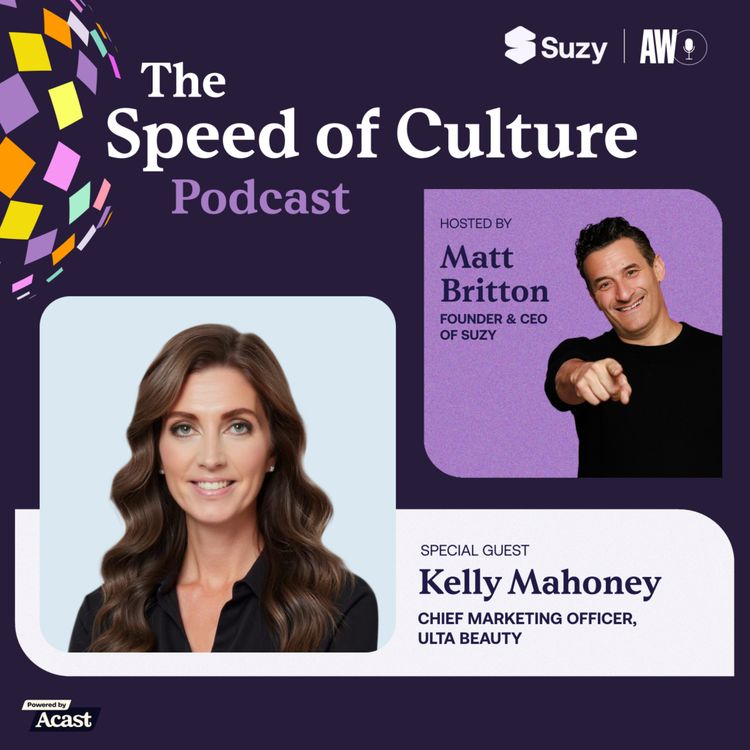
Opening: The Evolution of Sports Marketing in the Data-Driven Era
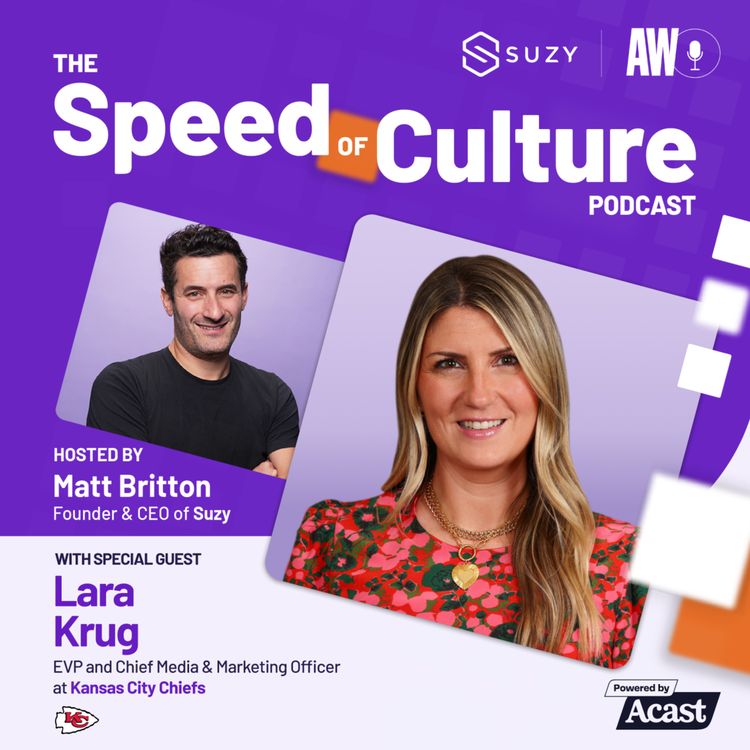
The Kansas City Chiefs are not just a professional football team; they are a cultural movement. In an era where sports franchises compete for fan loyalty across countless digital channels and global markets, Lara Krug, the first-ever Chief Marketing Officer of the Kansas City Chiefs, has positioned the franchise at the forefront of modern sports brand building.
In a recent episode of The Speed of Culture Podcast, Krug sat down with host Matt Britton, founder and CEO of Suzy, the AI-powered consumer intelligence platform, to discuss how the Chiefs are leveraging data-driven marketing, authentic storytelling, and innovative community partnerships to transform the organization into a cultural powerhouse that transcends the gridiron.
With over 15 years of experience leading consumer engagement strategies at global brands like L'Oreal and AB InBev, Lara brings a sophisticated, insights-driven approach to sports marketing. Her tenure at the Chiefs demonstrates a critical shift in how modern franchise management operates: successful sports organizations are no longer defined solely by on-field performance, but by their ability to create meaningful, data-informed connections with fans across every touchpoint.
The Chiefs' trajectory under Krug's leadership—from Super Bowl victories to becoming the NFL's dominant social media force—offers valuable lessons for marketing executives across industries seeking to build brands that resonate with today's digitally-native, culturally-aware consumers. This episode serves as a masterclass in modern sports marketing strategy, revealing how franchises can harness consumer insights, emerging platforms, and authentic partnerships to achieve both commercial success and cultural relevance.
Building Chiefs Kingdom: Community as the Core of Modern Sports Marketing
Key Timestamp: [00:05:39] Sports as the Ultimate Community Builder
One of the most compelling insights Lara Krug shares in her discussion with Matt Britton is that Chiefs Kingdom is fundamentally different from traditional sports fan bases. It is not merely a congregation of football enthusiasts who gather on Sunday afternoons; rather, it represents a multigenerational community bonded by shared values, rituals, and a deeply embedded sense of belonging.
This reframing of fan engagement—moving away from transaction-based relationships and toward community-building—represents a paradigm shift in how forward-thinking sports organizations approach their marketing strategy.
The data supports this approach. According to contemporary sports marketing research, fan loyalty in the modern era is increasingly driven by emotional connection and community identity rather than pure athletic performance.
The Chiefs have capitalized on this insight by cultivating and amplifying the existing traditions that define Chiefs Kingdom. Red Fridays, for instance, have evolved from a casual fan practice into an organizational ritual that permeates Kansas City culture.
Grocery stores closing early on game days, local businesses adorning their windows in red and gold, and entire neighborhoods coming to a halt to celebrate the team—these are not organic phenomena that can be manufactured through advertising spending. Instead, they represent the authentic expression of a community identity that the Chiefs organization actively nurtures, protects, and elevates.
The legendary tailgates that begin the night before kickoff exemplify how the Chiefs have transformed their stadium into a social hub that generates value far beyond the three-hour game window. By recognizing that fans derive tremendous value from the pre-game experience—the camaraderie, the food, the anticipation, the shared ritual—the Chiefs organization has strategically invested in infrastructure, programming, and cultural messaging that celebrates and enhances these moments.
For CMOs and brand leaders across industries, this offers a critical lesson: communities are built by identifying and amplifying what fans already love, then creating the conditions—operational, cultural, and narrative—that allow these organic expressions of loyalty to flourish and proliferate.
Lara emphasizes that this community-first approach transcends demographics. Chiefs Kingdom welcomes fans of all ages, backgrounds, and socioeconomic statuses. The inclusive culture cultivates loyalty that spans generations, transforming one-time game attendees into lifelong brand ambassadors.
This approach to community building directly addresses a fundamental challenge in modern sports marketing: the declining engagement of younger audiences with traditional sports broadcasts. By creating an inclusive community identity that extends beyond the stadium, the Chiefs have successfully built a brand that attracts and retains fans across every demographic segment.
The Multifaceted Role of a Modern Sports CMO: Innovation Meets Tradition
Key Timestamp: [00:13:06] The Multifaceted Role of a CMO in the NFL
When Lara Krug assumed the role of CMO for the Kansas City Chiefs, she inherited an organization with a legendary on-field legacy and a passionate, engaged fan base. However, the modern NFL CMO operates in an entirely different landscape than sports marketers of previous generations.
Today's Chief Marketing Officer of a professional sports franchise must simultaneously serve as a content strategist, technology innovator, community advocate, talent manager, global brand architect, and cultural ambassador—a portfolio of responsibilities that demands expertise across a staggering range of disciplines.
The Chiefs' strategy under Krug's leadership exemplifies this multifaceted approach. On one end of the spectrum, the organization produces premium long-form content through The Franchise, a YouTube series that provides behind-the-scenes access to the team's operations, player development, and organizational culture.
These longer-form narratives appeal to deeply engaged fans seeking comprehensive insight into the franchise's strategic decisions and human stories. At the opposite end, the organization maintains a relentless cadence of short-form, snackable content optimized for TikTok, Instagram Reels, and YouTube Shorts—platforms where the algorithm rewards authenticity, humor, and unexpected moments over polished production value.
Beyond digital content, Krug's role extends into year-round brand experience design. The holiday pop-up "Kingdom's Greetings" demonstrates how the organization translates its brand identity into experiential marketing moments that exist outside the traditional football season.
Rather than allowing brand engagement to decline during the offseason, the Chiefs create touchpoints that maintain community connection, generate media coverage, and differentiate the franchise from competitors in a crowded sports entertainment landscape.
The organization has also positioned itself as a premier venue for cultural moments that transcend football entirely. Partnerships with global musical icons like Beyoncé and Taylor Swift for Arrowhead Stadium concerts have transformed the facility into a destination venue that attracts audiences far beyond the traditional football demographic.
These partnerships serve multiple strategic objectives: they enhance the Chiefs' brand prestige, generate significant media coverage, deepen emotional connection with the community, create new revenue streams, and position Kansas City and Arrowhead as important cultural landmarks in the global entertainment ecosystem.
This 365-day engagement strategy reflects a critical insight in modern sports marketing: football season is finite, but community building and brand development are perpetual endeavors.
The CMO who succeeds in today's environment must architect a marketing calendar that maintains momentum year-round, balancing the intensity of the competitive season with strategic initiatives that build long-term brand equity and community connection. For Lara and the Chiefs organization, this translates into an integrated approach that weaves together content, experiences, partnerships, and community initiatives into a cohesive narrative about what it means to be part of Chiefs Kingdom.
TikTok Dominance: How Authenticity and Algorithm Alignment Create Social Velocity
Key Timestamp: [00:18:45] TikTok Triumph: Engaging Fans Through Authenticity
The Kansas City Chiefs are the National Football League's top team on TikTok—a distinction that would have seemed improbable just five years ago, when many sports organizations viewed the platform with skepticism or relegated it to experimental marketing initiatives.
The Chiefs' TikTok dominance, however, is not a product of accident or resource allocation advantage. Rather, it represents a deliberate strategic commitment to understanding platform algorithms, audience preferences, and the emerging aesthetics that drive viral engagement among younger, digitally-native audiences.
The platform's rewards mechanism systematically favors content that contradicts the traditional sports media playbook. While legacy sports media organizations produce highly polished highlight packages with professional cinematography, color-corrected graphics, and authoritative voice-over narration, TikTok's algorithm—and its user base—gravitates toward the opposite: unscripted moments, behind-the-scenes authenticity, unfiltered athlete personalities, and user-generated format participation.
The Chiefs' content strategy has successfully aligned with these algorithmic incentives and audience preferences, recognizing that fans crave unvarnished access to their heroes.
Locker room banter captures the irreverent, unscripted humor that defines player relationships and team culture. Mini-mic interviews allow athletes to communicate directly with fans without journalistic mediation. Game highlights remix trending audio and participate in platform culture rather than simply broadcasting historical footage.
This approach to content generation demands a fundamentally different organizational mindset than traditional broadcast sports. It requires granting players and content creators considerable agency and creative freedom, accepting a level of messiness and unpredictability that conflicts with corporate control imperatives, and trusting that authentic moments will outperform manufactured brand messaging.
The data supports this strategy. Contemporary research indicates that organic, athlete-generated content consistently outperforms highly produced brand content in terms of engagement metrics, reach, and conversion.
TikTok's algorithm delivers more value per post than any other social platform; the Chiefs' content accounted for significant shares of the NFL's total social media value in 2024, with average engagement rates substantially exceeding benchmarks. The platform's success has also created a feedback loop: as the Chiefs become known for authentic, entertaining TikTok content, platforms prioritize their uploads, fans anticipate their posts, and the organization benefits from sustained viral reach.
However, the Chiefs' TikTok strategy extends beyond mere platform participation. The organization strategically balances rapid-turnover short-form content with longer-form narratives through YouTube's The Franchise series.
This complementary approach recognizes that different audience segments have varying content consumption preferences. Some fans engage primarily through quick, entertaining clips, while others seek deeper narrative exploration and behind-the-scenes context.
By maintaining this portfolio of content formats, the Chiefs maximize reach across audience segments while building a comprehensive brand narrative that operates at multiple levels of depth and engagement.
The TikTok triumph also reflects a broader trend in sports marketing: the rise of the social athlete. Modern athletes are increasingly content creators themselves, not merely subjects of media coverage.
Players like Travis Kelce have leveraged their platform prominence and personal brands to create business ventures, launch product lines, and engage directly with fan communities. The Chiefs organization recognizes that empowering players to authentically express themselves on social platforms—while maintaining alignment with organizational values—strengthens both individual player brands and the collective franchise brand.
Strategic Partnerships and Player Collaboration: Aligning Individual Aspirations with Organizational Identity
Key Timestamp: [00:25:10] Elevating the Chiefs Brand Through Player Collaboration
In a striking contrast to earlier eras of sports management, where franchises maintained rigid control over player public personas and branding activities, the modern sports organization recognizes that authentic player partnerships—where individual athlete goals align with team identity and community values—generate substantially more brand value and fan loyalty than top-down control mechanisms.
Travis Kelce's Tru Kolors clothing line exemplifies this collaborative approach. Rather than viewing Kelce's personal brand ventures as competitive threats to franchise branding authority, the Chiefs organization strategically amplified his initiative, particularly through limited-edition playoff merchandise.
This partnership generated multiple benefits: Kelce felt empowered and supported in his entrepreneurial endeavors; the organization benefited from the halo effect of an emerging fashion brand associated with a championship-caliber athlete; fans gained access to exclusive merchandise that functionally expressed their fandom while supporting a player they admired; and the collaboration generated significant media coverage and social media engagement.
Similarly, Trent McDuffie's partnership with Ronald McDonald House Charities of Kansas City demonstrates how athlete-led philanthropic initiatives can authentically align with organizational brand positioning while generating meaningful community impact.
By supporting McDuffie's personal commitment to charitable work, the Chiefs positioned themselves as an organization that honors player values and contributes meaningfully to community wellbeing—a positioning that strengthens fan loyalty among audiences who increasingly evaluate corporate and organizational behavior through an ethical lens.
The strategic power of these collaborations extends beyond immediate public relations benefits. As modern consumers—particularly younger demographics—increasingly consider brand values and social responsibility in their purchasing decisions, sports franchises that authentically champion player-led initiatives position themselves as values-aligned organizations rather than purely commercial entities.
This positioning generates deeper emotional connection, differentiation in a crowded marketplace, and sustained loyalty that transcends on-field performance fluctuations.
From a data-driven perspective, Lara Krug has likely implemented measurement frameworks that assess how player collaborations impact various brand equity metrics: awareness, affinity, purchase intent, word-of-mouth engagement, and community sentiment.
By demonstrating to organizational leadership that authentic player partnerships drive quantifiable business outcomes, Krug has secured ongoing resource allocation and strategic priority for these initiatives, transforming them from occasional public relations activities into core organizational strategy.
Data-Driven Consumer Insights: The Architecture Beneath the Cultural Narrative
While Lara Krug's visible accomplishments—TikTok dominance, innovative content, memorable partnerships—represent the creative and cultural face of the Chiefs marketing operation, the underlying architecture consists of sophisticated data infrastructure and consumer insights capabilities.
As founder of Suzy, Matt Britton has built a business model predicated on the insight that modern marketing success requires real-time access to consumer preferences, behavioral data, and emerging cultural trends.
This intelligence imperative is particularly acute in sports marketing, where audience preferences evolve rapidly, competitive dynamics shift constantly, and missteps in brand positioning can quickly alienate engaged communities.
The Chiefs' data-driven approach likely encompasses several critical dimensions:
For contemporary sports CMOs, this integration of creative excellence with data-informed decision-making represents the new competitive baseline.
Organizations that maintain separate functions—creative teams operating independently from analytics capabilities, or conversely, data teams generating insights that creative professionals ignore—will inevitably underperform compared to organizations that tightly integrate creative and analytical capabilities.
The Chiefs' success suggests that Krug has successfully architected this integration, using consumer insights to inform content strategy, validate creative direction, and allocate resources toward highest-impact initiatives.
Looking Forward: The Global Sports Brand Opportunity
As the Kansas City Chiefs prepare for Super Bowl appearances, international tour expansions, and continued global brand development, the organization's competitive advantage resides not merely in on-field talent or historical legacy, but in Lara Krug's ability to consistently generate authentic, insights-informed marketing strategies that deepen community connection and expand global reach.
In an era where sports franchises increasingly generate revenue from global audiences, streaming partnerships, merchandise licensing, and experiential events, the CMO role has evolved into perhaps the second-most critical position in franchise management after the General Manager.
The Chiefs' trajectory under Krug's leadership—achieving NFL dominance on emerging platforms, building a genuinely inclusive community, fostering authentic player partnerships, and positioning the franchise as a cultural institution beyond football—offers a template that sports organizations globally are studying and attempting to replicate.
However, sustained success will require continuous innovation, deeper integration of artificial intelligence and advanced analytics capabilities, and the organizational discipline to balance authentic community-building with commercial objectives.
Key Takeaways
Frequently Asked Questions
How can sports franchises build community identity beyond on-field performance?
Sports organizations build sustained community identity by identifying, amplifying, and protecting existing traditions and rituals that fans already value. The Chiefs exemplify this through celebrations of Red Fridays, pre-game tailgates, and inclusive stadium experiences.
CMOs should conduct ethnographic research to identify authentic community expressions, then strategically invest in infrastructure, programming, and cultural messaging that enhance rather than commercialize these organic expressions of loyalty. This approach builds multigenerational community bonds that transcend competitive results.
What makes short-form social content successful in sports marketing?
Short-form social content succeeds when it prioritizes authenticity, humor, and platform-native formatting over production quality. TikTok's algorithm systematically rewards unscripted moments, unfiltered athlete personalities, and user-generated format participation.
Successful sports organizations grant content creators and players considerable creative agency, accept a level of messiness and unpredictability, and trust that authentic moments will outperform manufactured brand messaging. This requires organizational culture shifts that empower rather than control creative expression.
How should sports CMOs measure the success of player partnership initiatives?
CMOs should implement comprehensive measurement frameworks that assess player partnership impact across multiple brand equity dimensions: awareness, affinity, purchase intent, word-of-mouth engagement, and community sentiment.
By demonstrating quantifiable business outcomes—increased merchandise sales, social media engagement, fan loyalty metrics, and positive media coverage—CMOs can secure ongoing resource allocation for collaborative initiatives, transforming them from occasional public relations activities into core organizational strategy.
What role does consumer data play in modern sports marketing strategy?
Contemporary sports marketing success requires real-time access to consumer preferences, behavioral data, and emerging cultural trends. Sports organizations should implement audience segmentation analysis, content performance analytics, competitive benchmarking, and emerging trend monitoring.
Critically, data capabilities must be tightly integrated with creative teams—organizations that maintain separate functions will underperform compared to those that seamlessly merge creative excellence with data-informed decision-making. The CMO role increasingly requires both creative visionary and analytical capabilities.
Looking Ahead
For sports marketing executives, entertainment brand leaders, and C-suite professionals seeking to understand how modern organizations build global cultural movements while maintaining authentic community connection, Lara Krug's approach offers invaluable strategic insight.
The Speed of Culture Podcast episode featuring the Kansas City Chiefs CMO demonstrates that sustained competitive advantage in today's fragmented media landscape requires integration of community building, platform-native content creation, data-driven consumer insights, and authentic player empowerment.
To explore additional resources on consumer intelligence, AI-powered marketing strategy, and building culturally-resonant brands, visit Suzy, the platform powering real-time consumer insights for forward-thinking organizations.
For more episodes exploring how contemporary brands navigate the intersection of commerce, culture, and community, explore The Speed of Culture Podcast. For deeper exploration of generational consumer behavior and emerging cultural trends, discover Generation AI: The Book by Matt Britton.
Organizations seeking keynote speaking on AI, consumer behavior, and cultural transformation can explore AI keynote speaker services. For comprehensive speaker management and event coordination, visit Speaker HQ.

%20(400%20x%20100%20px)%20(300%20x%2050%20px)%20(150%20x%2050%20px).avif)

.jpeg)


.jpeg)
.jpeg)