Opening: The Cultural Paradox of Heritage Brand Leadership
In an era where consumer attention spans shrink daily and brand loyalty feels increasingly transactional, Levi Strauss & Co. has cracked a code that eludes most legacy brands: how to stay simultaneously rooted in 170 years of history while moving at the velocity of modern culture.
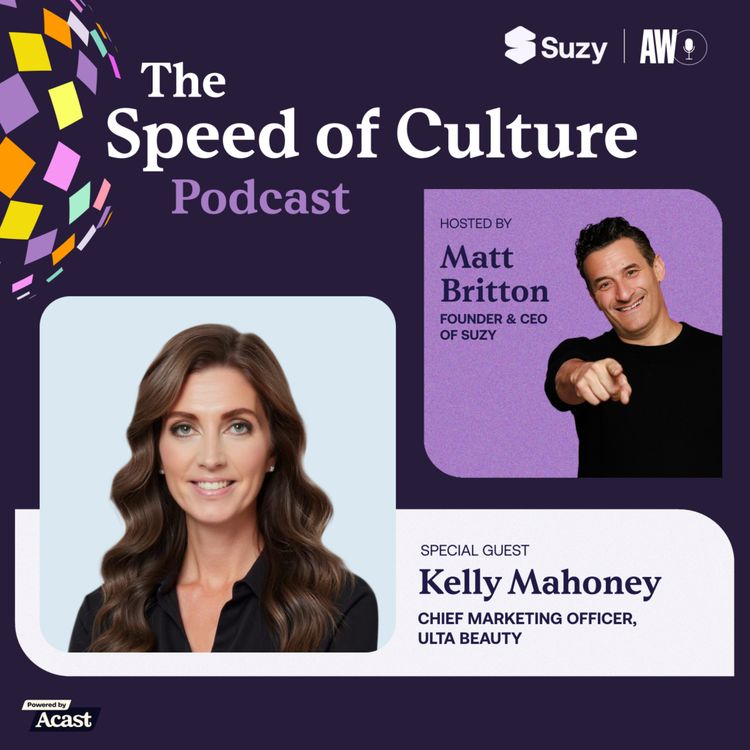
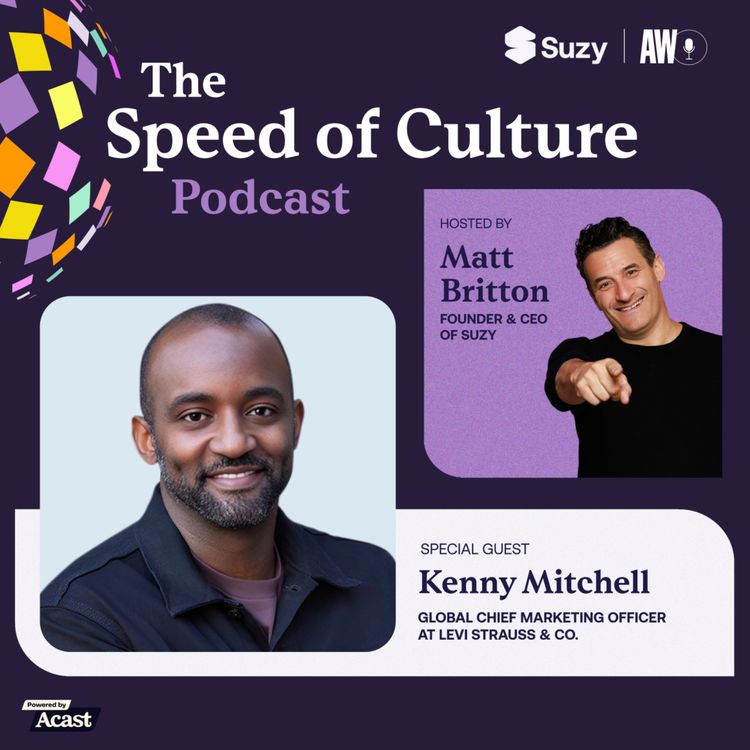
This paradox formed the centerpiece of a candid conversation on the latest episode of The Speed of Culture Podcast, where host and consumer intelligence expert Matt Britton, founder and CEO of Suzy, the AI-powered consumer intelligence platform, sat down with Kenny Mitchell, Global Chief Marketing Officer at Levi's, to explore how an iconic American brand balances heritage authenticity with contemporary relevance.
The episode, published on December 2, 2025, titled "True Blue: How Levi's Remains an American Original with Contemporary Cachet," delves into the strategic imperatives that define modern brand leadership. Mitchell brings over 20 years of marketing experience—including tenures at McDonald's, Gatorade, NASCAR, and most recently Snap Inc.—to his role as the steward of one of the world's most recognizable brands.
His insights reveal a leadership philosophy grounded in cultural intelligence, data-driven decision-making, and a willingness to move quickly on low-risk opportunities while exercising disciplined deliberation on transformational bets.
The conversation underscores a critical truth for enterprise leaders: heritage and innovation are not opposing forces. Instead, they represent complementary imperatives that, when properly balanced, create competitive advantages that newer, digitally-native brands struggle to replicate.
Levi's approach to this balance—articulated through cultural partnerships, AI-powered personalization, and what Mitchell calls "culture-led brand growth"—offers a masterclass in how to remain relevant without sacrificing authenticity. For marketing executives, CMOs, and brand strategists navigating the intersection of legacy and disruption, this episode provides a roadmap for sustainable cultural relevance in an unpredictable market.
The Heritage Paradox: Why Authenticity Becomes More Valuable in Digital Culture
Authenticity has become marketing's most valuable currency, yet it remains remarkably difficult to manufacture. Levi's confronts a unique challenge: preserving the cultural capital accumulated over 170 years while remaining undeniably contemporary.
Kenny Mitchell frames this not as a constraint but as a fundamental source of competitive advantage.
"Levi's is a brand with real heritage that's not fabricated. It's the brand Steve Jobs wore when he introduced the iPod, and it's the same brand Lauryn Hill has worn in concert."
This statement encapsulates the essence of Levi's positioning: the brand transcends functional clothing to become a vehicle for self-expression and cultural identity. Unlike manufactured heritage or invented traditions, Levi's legacy lives in the actual biographies of cultural icons who chose the brand because it authentically reflected their identity.
This distinction matters tremendously in an era of sophisticated consumer skepticism. Consumers—particularly younger demographics—can detect performative authenticity instantly. They identify when brands adopt cultural aesthetics without genuine engagement, when they co-opt movements for commercial advantage, or when their heritage narratives contradict their present actions.
Levi's avoids these pitfalls because its history is not merely marketing narrative; it is documented, verifiable, and continuously inhabited by cultural figures who shape contemporary discourse.
The brand's positioning as "an unofficial uniform for progress" becomes strategic genius when examined closely. This framing acknowledges that Levi's didn't invent progress or culture—it simply shows up consistently in spaces where cultural progress happens.
The brand serves as witness and participant rather than author, which paradoxically makes it feel more culturally centered than brands that attempt to lead cultural conversation.
Mitchell's approach involves rigorous consumer research to understand how heritage resonates across demographics and geographies. This represents a departure from legacy brand management practices that often treat heritage as static museum pieces.
Instead, Levi's activates heritage through contemporary cultural moments, ensuring that brand history remains alive and relevant rather than nostalgic and decorative.
Moving at the Speed of Culture: Agility Without Recklessness
The episode's title references the central tension Mitchell navigates: how to execute marketing decisions with the velocity required by digital culture while maintaining strategic discipline. This balance defines the difference between brands that feel opportunistic and brands that feel inevitable.
Fashion and cultural trends move with stunning velocity. Denim trends shift from baggy to skinny to bootcut within single seasons. Musical movements emerge and saturate social consciousness within weeks.
For a global brand operating across multiple product categories and geographic markets, this velocity creates paralyzing complexity.
"We save long deliberation processes for bigger, riskier moves. We move quickly for low-risk decisions."
This framework, while seemingly simple, represents a fundamental philosophy about where control and speed matter.
The Beyoncé REIMAGINE campaign provides the most striking illustration of this principle. When Beyoncé released her album "COWBOY CARTER" in 2024, the track "LEVII'S JEANS" became an unexpected cultural moment.
Rather than initiate a lengthy approval process, Levi's moved decisively to develop a comprehensive creative partnership. The result: a globally integrated campaign that reinterprets iconic Levi's advertisements through a contemporary lens, fronted by one of the world's most influential cultural figures.
The campaign's scale proved remarkable. Within 48 hours, it generated $5 million in Media Impact Value. It produced 2.4 billion press impressions and 107 million social impressions.
Foot traffic to Levi's approximately 1,200 stores increased 20% in the week following the album's release. These metrics transcend typical advertising performance—they indicate genuine cultural resonance.
Yet the campaign's success extended beyond viral velocity. The REIMAGINE campaign fundamentally reframed how Levi's iconic denim has been portrayed.
Historic Levi's advertisements centered primarily male protagonists, often reinforcing particular demographic narratives. Beyoncé's involvement invited a recalibration: these reinterpreted ads center female perspectives and more expansive representations of American identity.
Similar agility appears in Levi's response to workplace evolution. As corporate dress codes have relaxed and casual workplace attire has become normalized, Levi's recognized that denim now occupies space previously reserved for professional suiting.
Rather than cede this positioning to competitors, the brand developed marketing that celebrates denim as appropriate professional self-expression.
This speed-with-discipline approach also characterizes the Shaboozey Men's Icons campaign, which aligned Levi's with rising cultural talent during a moment of cultural momentum.
Data-Driven Culture: AI and Personalization at Scale
For many legacy brands, technology adoption feels like capitulation—a necessary evil required to remain competitive with digital-native companies. Mitchell positions data and artificial intelligence not as substitutes for creative excellence but as enablers of it.
"We use data and AI to create individualized customer experiences without sacrificing humanity. Technology frees teams to focus on creative and cultural work that genuinely matters."
The Red Tab loyalty program illustrates this principle in practice. As of April 2025, the program had enrolled over 38 million members worldwide.
This data becomes the foundation for understanding how consumers interact with Levi's across geographies, demographics, product categories, and temporal patterns.
Direct-to-consumer strategy amplifies this data advantage. In Q1 2025, DTC net revenues rose 9% on a reported basis and 12% organically, demonstrating that Levi's "DTC-First" strategy is yielding measurable commercial results.
When customers purchase directly from Levi's rather than through wholesale partners, the company gains unmediated access to purchasing behavior and preference patterns.
Suzy's consumer intelligence platform—founded by Matt Britton—represents exactly the type of research infrastructure that modern brands require. Real-time consumer research enables brands to test creative approaches, validate cultural moments, and understand sentiment shifts before committing significant resources.
Mitchell's approach also recognizes that data without human insight becomes sterile. The "CASE" framework—Creative, Authentic, Strategic, and Emotional—represents leadership standards that cannot be reduced to algorithm.
Strategic Partnerships and Brand Architecture: Collaboration as Evolution
Levi's has embraced collaboration not as a marketing tactic but as a philosophical approach to brand evolution.
The groundbreaking Levi's x Nike sportswear collaboration brings together two brands with equally powerful heritages.
Levi Strauss invented the first blue jeans reinforced with copper rivets; Nike pioneered air-cushioning technology that transformed athletic footwear.
Rather than allowing these brand spheres to remain separate, the collaboration explicitly acknowledges that American streetwear culture now demands intersection between denim and sneaker culture.
The partnership positions this not as a momentary collaboration but as an intersection of ongoing heritage narratives.
Young consumers increasingly inhabit cultural spaces where denim and sneaker culture represent equally important identity expressions.
By bringing these together, Levi's acknowledges a cultural reality while expanding the total addressable market for both product categories.
The collaboration benefits from what Mitchell calls "clarity, conviction, and fit"—each partnership must strengthen cultural relevance, feel authentic to brand identity, and support business objectives.
The brand architecture also extends to product innovation and category expansion.
Contemporary strategy positions Levi's as a "denim lifestyle destination—rooted in product, led by fashion and elevated through premium expression."
Sustainability also features prominently in partnership strategy, integrated into the brand's central narrative about progress and culture-shaping.
Lessons for Enterprise Leaders: The CMO's Mandate in an Unpredictable World
Kenny Mitchell's leadership offers several strategic lessons that extend beyond the apparel and fashion industries.
- Heritage requires active curation rather than passive preservation. Heritage is not constraint but foundation upon which bold contemporary strategies build.
- Organizational agility requires governance discipline. Not every decision merits lengthy deliberation, but not every decision permits shortcuts.
- Data becomes more valuable, not less, as culture becomes increasingly important to brand identity. Data should serve creativity rather than consume it.
- Partnership strategy requires articulate philosophy. Strategic partnerships grounded in clarity about brand values, conviction about cultural relevance, and fit with business objectives create disproportionate value.
- Consumer understanding must be continuous, not episodic. Real-time consumer research infrastructure becomes a prerequisite for competitive performance.
Leadership credibility increasingly depends on cultural literacy. CMOs and brand leaders must understand cultural movements deeply enough to identify authentic partnership opportunities and recognize where the brand can participate meaningfully.
Key Takeaways
- Heritage is a competitive asset, not a constraint. Levi's treats 170 years of documented brand history as a foundation for contemporary strategy.
- Organizational agility requires decision-making discipline. Enterprises distinguish between rapid deployment and deeper deliberation.
- Data amplifies creativity rather than replacing it. AI-powered consumer intelligence platforms eliminate uncertainty from routine decisions.
- Partnership strategy must reflect clear philosophy. Strategic collaborations grounded in clarity, conviction, and fit create disproportionate value.
- Consumer understanding must be continuous and real-time. Legacy enterprises require ongoing, data-driven understanding of consumer sentiment.
Frequently Asked Questions
What makes Levi's positioning as "an unofficial uniform for progress" strategically powerful?
This framing acknowledges that Levi's did not invent cultural progress but shows up consistently in spaces where cultural evolution happens. The brand positions itself as witness and participant rather than author, avoiding the inauthenticity that emerges when brands try to co-opt movements.
How does Kenny Mitchell balance rapid decision-making with organizational risk management?
Mitchell distinguishes between decisions requiring rapid deployment and decisions requiring deeper deliberation. Low-risk decisions proceed with velocity, while higher-risk decisions receive appropriate strategic review.
What role does the Red Tab loyalty program play in Levi's competitive strategy?
The program, with 38+ million members as of April 2025, functions as a data collection and personalization engine. It also strengthens direct-to-consumer transactions, which increased 12% organically in Q1 2025.
How do partnerships like the Beyoncé REIMAGINE campaign strengthen brand equity?
The campaign generated 2.4 billion press impressions, 107 million social impressions, and a 20% increase in store traffic. It reframed iconic advertising, expanded cultural footprint, and demonstrated organizational agility.
Looking Ahead: The Future of Heritage Brands in Real-Time Culture
The Speed of Culture Podcast episode featuring Kenny Mitchell arrives at a moment when cultural velocity continues accelerating while consumer attention fragments across platforms and experiences.
Mitchell's leadership at Levi's provides a compelling answer: when heritage is actively curated and continuously reactivated, it becomes a competitive advantage that purely digital-native brands struggle to replicate.
The convergence of consumer intelligence platforms, AI-powered personalization, and real-time marketing infrastructure creates conditions where legacy brands can move with unprecedented speed while maintaining strategic discipline.
For marketing leaders seeking to deepen their understanding of these dynamics, the episode provides invaluable insights.
For those interested in exploring consumer intelligence methodology and real-time research infrastructure, Suzy offers the type of platform that enables brands to access consumer insights at the velocity culture demands.
- The Speed of Culture Podcast – Weekly interviews with leading brand CMOs on evolving consumer behaviors and competitive adaptation
- Suzy – AI-powered consumer intelligence platform providing real-time insights for brand innovation and product development
- Generation AI: The Book – Comprehensive exploration of artificial intelligence's impact on consumer behavior and organizational strategy
- AI Keynote Speaker – Thought leadership on artificial intelligence and generational consumer dynamics
- Speaker HQ – Executive speaking engagements on culture, AI, and consumer innovation
The brands that will thrive in this moment are those that refuse to choose between heritage and innovation, between data and creativity, between speed and discipline.
True competitive advantage emerges from integrating seemingly opposing imperatives into coherent strategic practice.

%20(400%20x%20100%20px)%20(300%20x%2050%20px)%20(150%20x%2050%20px).avif)


.jpeg)




.jpeg)
.jpeg)