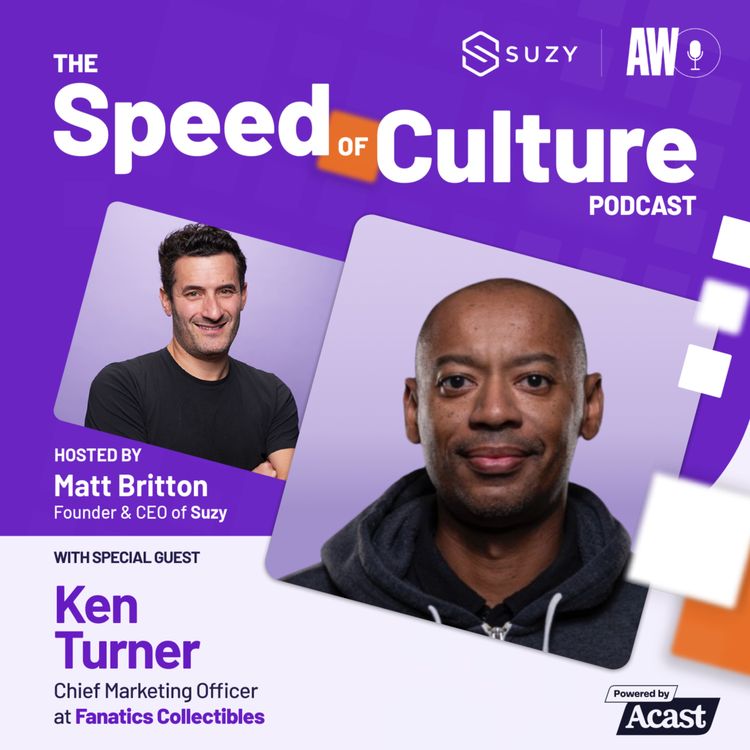
The New Era of Sports Fandom: How Fanatics Collectibles is Transforming the Global Collectibles Market
In a rapidly evolving landscape where digital innovation meets nostalgic consumer desires, the sports collectibles industry has experienced unprecedented growth. On this episode of The Speed of Culture podcast, Matt Britton, founder and CEO of Suzy, the AI-powered consumer intelligence platform, sits down with Ken Turner, Chief Marketing Officer at Fanatics Collectibles, to explore how marketing strategy, authentic storytelling, and cultural relevance are reshaping the $100 billion global sports memorabilia market.
Episode Overview: Sports Collectibles in the Modern Era
The collectibles market has undergone a seismic shift over the past three years. What was once a niche hobby dominated by serious collectors has evolved into a mainstream cultural phenomenon, driven by pandemic-induced consumer behavior changes, viral documentary releases, and innovative business models that democratize access to sports memorabilia.
Ken Turner’s appointment as Fanatics Collectibles’ first Chief Marketing Officer signals the company’s commitment to positioning this market not just as commerce, but as a celebration of cultural moments and shared fan experiences.
Turner brings nearly two decades of marketing expertise to this role, including a transformative decade at SC Johnson and a high-profile tenure at Red Bull, where he served as Executive Vice President and CMO. His career trajectory reflects a deep understanding of how brands build emotional connections with consumers while maintaining operational excellence and cultural authenticity.
At Fanatics, Turner is tasked with orchestrating a marketing vision that connects millions of fans with the sports moments and athletes they love—but through collectibles rather than traditional merchandise or content alone.
This conversation explores the intersection of consumer psychology, sports marketing, product innovation, and brand strategy in one of today’s most dynamic consumer sectors. As Fanatics solidifies its position as the dominant player in sports collectibles, Turner’s leadership demonstrates how purpose-driven marketing and consumer-first thinking can reshape entire industries.
The Foundation of Success: Lessons from a Career Built on Process and Consumer Insights
Ken Turner’s marketing philosophy is anchored in principles developed across his career trajectory. His decade at SC Johnson—one of the world’s largest family-owned consumer goods companies—taught him three critical lessons that continue to inform his work at Fanatics: process is key, consumer-first thinking drives decisions, and discovering one’s passion transforms professional impact.
At SC Johnson, Turner learned that consistent, efficient processes create organizational longevity and success. In the sprawling world of consumer packaged goods, where margins are tight and competition fierce, operational excellence becomes the foundation upon which marketing innovation can flourish.
This principle proved invaluable when Turner later joined Red Bull in 2015, where the energy drink brand was at an inflection point in its corporate evolution.
When Turner arrived at Red Bull, the company had built an iconic brand primarily around extreme sports—skydiving, cliff diving, motocross, and other adrenaline-fueled activities. His challenge was to expand Red Bull’s marketing footprint into mainstream athletics while introducing systematic marketing approaches that could scale the brand’s reach.
Turner spearheaded initiatives that brought Red Bull into soccer, basketball, and other traditional sports while simultaneously implementing diversity and inclusion programs that reflected changing American demographics and values.
His work at Red Bull earned him recognition from Savoy Magazine in 2022 as one of the Most Influential Black Executives in Corporate America—a testament to his impact not just on brand performance, but on organizational culture and leadership development.
These experiences positioned Turner perfectly for the challenge of building Fanatics Collectibles into a consumer-centric powerhouse that blends sports, culture, fashion, content, and technology into an integrated ecosystem.
The Pandemic Pivot: How Market Dynamics Created an Unprecedented Opportunity
The COVID-19 pandemic accelerated consumer behavior trends that might have taken a decade to materialize under normal circumstances. As millions of people sheltered at home, consumer discretionary spending shifted toward experiences that provided comfort, nostalgia, and connection.
One beneficiary of this shift was the sports collectibles market, which experienced explosive growth driven by several interconnected factors.
The release of ESPN’s “The Last Dance” documentary in April 2020—a 10-part series chronicling Michael Jordan’s final championship season with the Chicago Bulls—became a cultural catalyst for the entire sports collectibles industry.
The documentary introduced a new generation of viewers to Michael Jordan’s greatness while rekindling passion among longtime fans. Simultaneously, it triggered a surge in demand for Jordan-era trading cards, sports memorabilia, and collectibles of all kinds.
Trading card prices skyrocketed as consumers sought tangible connections to their sporting heroes.
This pandemic-driven acceleration of the collectibles market revealed something profound about consumer motivation: collecting transcends pure commerce. As Ken Turner explains, collecting is fundamentally about celebrating moments that represent something greater—it’s about memory, identity, and community.
A rookie card isn’t just a piece of cardboard; it’s a capture of a player’s entry into professional sports, a moment frozen in time that allows fans to participate in cultural history.
Fanatics recognized this opportunity and moved aggressively to establish dominance in the collectibles space. The company understood that the market wasn’t just experiencing temporary pandemic-driven demand; it was undergoing a structural shift in how consumers relate to sports, culture, and community identity.
By positioning collectibles as celebrations of shared experiences rather than as speculative investments or hoarding opportunities, Fanatics could appeal to both serious collectors and casual fans entering the market for the first time.
Fanatics’ Strategic Expansion: Building an Integrated Collectibles Ecosystem
Fanatics’ path to dominance in sports collectibles represents a masterclass in strategic acquisition and market consolidation. The company made several pivotal moves that positioned it as the industry leader, fundamentally reshaping the competitive landscape.
In 2023, Fanatics acquired Topps Trading Cards—one of the most iconic brands in sports memorabilia history—for approximately $500 million. This acquisition wasn’t merely about owning a brand; it represented control of critical MLB licensing rights, as well as partnerships with MLS, UEFA, Bundesliga, and Formula 1.
Topps has been producing baseball cards since 1951, making it deeply embedded in American sports culture and collector consciousness.
Beyond trading cards, Fanatics had previously secured exclusive rights to produce NFL and NBA cards beginning in 2026—an unprecedented coup that signals the complete transformation of the sports card industry.
These exclusive partnerships with professional sports leagues represent hundreds of millions of dollars in potential revenue while simultaneously preventing competitors from accessing the athletes and official league intellectual property that collectors crave.
To complement its trading card acquisition, Fanatics acquired PWCC Marketplace, a specialized auction house with 125 employees focused on sports collectibles.
This acquisition provided Fanatics with infrastructure, expertise, and customer relationships in the secondary market for collectibles—an essential component of a comprehensive ecosystem that serves collectors across all price points and experience levels.
Turner’s role in orchestrating the marketing strategy for these acquisitions has been to position them not as corporate consolidation, but as expansion of a consumer-centric platform designed to serve the global fan community.
Rather than emphasizing Fanatics’ market dominance, Turner’s messaging highlights the company’s commitment to democratizing access to collectibles, enhancing the collector experience, and creating new ways for fans to celebrate the sports and athletes they love.
Product Innovation as Storytelling: The Rookie Debut Card Strategy
One of the most revealing aspects of Ken Turner’s marketing leadership at Fanatics is how he approaches product innovation. Rather than simply manufacturing cards and memorabilia, Fanatics develops products that tell stories and deepen emotional connections between collectors and the cultural moments they’re celebrating.
A prime example is the rookie debut card innovation—cards specifically designed to celebrate players’ first major league games.
While baseball cards have existed since the 1800s and every player’s rookie card has long been treasured by collectors, Fanatics’ approach adds layers of meaning and storytelling to this tradition.
By focusing on the specific game in which a player made their major league debut—capturing not just the player’s image, but the context, statistics, and narrative of their first professional game—Fanatics deepens the collector community’s emotional investment.
Collectors aren’t simply acquiring a card with a player’s image; they’re capturing a specific moment when that athlete entered professional sports, the beginning of their professional journey.
This approach reflects a sophisticated understanding of consumer psychology: people don’t collect because of the physical object itself, but because of what that object represents.
The emotional narrative embedded in a rookie debut card—the promise of a career beginning, the potential for greatness, the memory of when you first learned about a player—makes it more valuable than a mere photograph on cardboard.
This strategy also differentiates Fanatics from historical competitors. While other trading card manufacturers focused on producing cards in bulk and allowing market forces to determine which cards became valuable, Fanatics actively curates the narrative value of each product release.
By emphasizing storytelling and cultural significance, Turner’s marketing elevates the positioning of collectibles from commodity status to cultural artifact status.
The Streaming Commerce Revolution: How Fanatics is Creating New Fan Engagement Channels
Beyond physical products and traditional sales channels, Fanatics recognized an opportunity to combine collectibles with live entertainment and e-commerce.
In July 2023, Fanatics launched Fanatics Live, a live commerce platform that fundamentally reimagines how collectibles are bought and sold.
Fanatics Live features curated content including trading card “breaks”—live events where unopened trading card packs are purchased by collectors in real-time, with the host opening them live and revealing what’s inside—along with limited edition merchandise drops and creator-driven content.
This innovation combines several powerful consumer trends: live streaming entertainment, social commerce, gambling-like excitement, and creator culture.
The live commerce model creates engagement that traditional retail cannot match. When collectors tune in to watch trading card breaks, they’re not simply making a transactional purchase; they’re experiencing entertainment, community interaction, and the thrill of revelation.
The format taps into the same psychological mechanisms that make unboxing videos so popular on YouTube and gambling so compelling—the element of surprise combined with the possibility of landing a valuable card.
This channel also allows Fanatics to capture data on collector preferences, which cards drive the most excitement and viewership, and which creators are most effective at engaging audiences.
This consumer intelligence feeds back into product development and marketing strategy, creating a virtuous cycle where viewer engagement data directly informs which products to develop and how to position them.
Building Authentic Brand Connections in Sports Marketing
A recurring theme in Ken Turner’s marketing philosophy is the importance of authenticity in brand building, particularly in sports and culture-driven categories.
Unlike consumer packaged goods where functional benefits can be clearly communicated, collectibles marketing requires building genuine emotional connections and credibility within passionate fan communities.
Turner has emphasized that Fanatics’ credibility in collectibles comes not from corporate pedigree but from deep understanding of collector culture and athlete relationships.
Fanatics’ broader business—fantasy sports platforms, merchandise, ticketing, and sports media—gives the company unprecedented access to athletes, leagues, and fan communities.
This integrated ecosystem allows Fanatics to position itself not as a corporation manufacturing collectibles, but as a platform that connects fans with the sports and athletes they’re passionate about.
This authenticity is particularly important in collectibles because the community is sophisticated and skeptical.
Collectors who have invested thousands or hundreds of thousands of dollars in their collections can quickly detect inauthentic marketing or corporate motives that don’t align with collector interests.
Turner’s approach—emphasizing storytelling, cultural celebration, and genuine innovation—resonates because it demonstrates that Fanatics understands what motivates collectors beyond pure profit extraction.
Turner’s background at Red Bull and SC Johnson informs this approach. At both companies, marketing success came from deeply understanding consumer culture and building brands that consumers felt genuinely reflected their values and identities.
At Fanatics, the challenge is similar: authentically connect with collector communities while expanding the market to include casual fans.
The Global Market Opportunity: Scaling Beyond North America
While much of the discussion around sports collectibles focuses on North American trading cards—baseball, basketball, football—the global opportunity is substantially larger.
Fanatics’ acquisition of Topps included rights to produce UEFA cards, Bundesliga cards, and Formula 1 cards, reflecting the company’s vision to dominate sports collectibles globally.
Soccer (football) represents a massive global opportunity that dwarfs the North American sports card market in terms of population and cultural significance.
With billions of fans globally, soccer collectibles represent a market opportunity that could exceed the current trading card market by multiple orders of magnitude.
Formula 1, while smaller, has experienced explosive growth in popularity, particularly among younger audiences, following the Netflix series “Drive to Survive.”
Fanatics’ licensing agreements position the company to expand collectibles beyond traditional trading cards into a more diverse portfolio of products.
Memorabilia, autographed items, vintage pieces, and limited edition collectibles tied to specific cultural moments create multiple revenue streams and appeal to different collector segments.
Turner’s role in this global expansion involves translating Fanatics’ North American marketing strategies into culturally relevant approaches for international markets.
However, the core principle—celebrating cultural moments through collectibles and creating authentic connections between fans and athletes—should transcend geography.
Key Takeaways: Leadership Insights from Ken Turner on Modern Marketing
- Process Creates Possibility – Turner’s emphasis on systematic, efficient processes reveals that marketing excellence is built on operational foundations. Without consistent processes, scaling innovation and maintaining quality becomes impossible.
- Consumer-First Thinking Drives Long-Term Value – Rather than focusing purely on profit extraction, Turner prioritizes understanding what consumers genuinely value and building products and experiences around those insights.
- Storytelling Transcends Categories – From beverages to sports collectibles, emotional narratives and authentic storytelling resonate across diverse consumer categories.
- Authenticity Cannot Be Manufactured – In communities with passionate, knowledgeable consumers, inauthentic marketing fails.
- Integration Creates Competitive Moats – Fanatics’ advantage stems partly from integration across merchandise, fantasy sports, ticketing, and media.
- Market Acceleration Reveals Structural Trends – The pandemic accelerated collectibles growth but revealed permanent shifts in consumer behavior.
- Innovation Is About Experience – Fanatics Live and rookie debut cards represent innovation in experience design and narrative framing.
The Psychology of Modern Sports Fandom
The collectibles boom reveals profound insights about modern sports fandom and consumer psychology.
In an era when anyone can watch any game online at any time, collectibles represent tangible anchors to the digital sports experiences that dominate modern fandom.
They create physical manifestations of emotional connections to athletes and teams.
Furthermore, collectibles tap into fundamental human psychological drives: collecting as a form of control and meaning-making, nostalgia as identity anchoring, and community participation through shared interests.
In an increasingly digital world, collectibles provide tactile experiences that resonate emotionally.
Ken Turner’s marketing leadership at Fanatics demonstrates sophisticated understanding of these psychological drivers.
Rather than marketing collectibles as investment vehicles or speculative commodities, Turner emphasizes emotional significance, community connection, and cultural celebration.
FAQ: Sports Collectibles, Fan Culture, and Fanatics’ Market Leadership
Why did the sports collectibles market experience such explosive growth during the pandemic?
Several factors converged: consumers sheltering at home had more leisure time and disposable income; “The Last Dance” reignited passion for sports; social isolation made community-based hobbies more appealing; and younger generations entered the market as first-time collectors. The pandemic accelerated structural market trends rather than creating temporary demand.
How is Fanatics’ approach different from traditional trading card companies?
Fanatics emphasizes storytelling, cultural significance, and consumer experience rather than bulk production. Through rookie debut cards, Fanatics Live, and integrated fan experiences, the company positions collectibles as celebrations of cultural moments rather than mere commodities.
What is the global market opportunity beyond North American trading cards?
The global opportunity is substantially larger. Soccer collectibles alone represent a multi-billion dollar opportunity given billions of fans worldwide. Fanatics’ rights to UEFA, Bundesliga, and Formula 1 position the company to dominate internationally.
How do trading cards create value beyond the physical object?
Trading cards derive value from the emotional and cultural narratives they represent. A rookie debut card captures the moment a player entered professional sports—a culturally significant event that connects memory, identity, and community.
What role does livestreamed commerce play in the future of collectibles retail?
Fanatics Live shows that livestreamed commerce creates engagement experiences traditional retail cannot match. By combining entertainment, community interaction, and commerce, livestreamed platforms tap into powerful psychological drivers while generating valuable consumer data.
Conclusion: The Convergence of Culture, Marketing, and Consumer Connection
Ken Turner’s leadership at Fanatics Collectibles illustrates a broader principle in modern marketing: sustainable competitive advantage comes not from controlling scarce products, but from authentically understanding and serving consumer communities.
In sports collectibles, this means recognizing that fans buy more than physical objects—they buy stories, memories, identity anchors, and community participation.
Turner’s career trajectory from SC Johnson to Red Bull to Fanatics demonstrates how marketing leaders develop by serving diverse consumer categories while maintaining core principles: process-driven excellence, consumer-first thinking, and authentic engagement.
As the global sports collectibles market matures and competition intensifies, Fanatics’ integrated ecosystem, exclusive partnerships, and innovative storytelling position the company well for continued dominance.
The episode of The Speed of Culture with Ken Turner offers valuable insights not just for sports marketing professionals or collectibles enthusiasts, but for any marketer seeking to build authentic connections with passionate consumer communities in the modern era.
Explore More Resources

%20(400%20x%20100%20px)%20(300%20x%2050%20px)%20(150%20x%2050%20px).avif)

.jpeg)


.jpeg)
.jpeg)