All Things Beauty All in One Place: Omnichannel Strategy and Retail Media Innovation at Ulta Beauty
In today's hyper-fragmented retail landscape, few brands have mastered the integration of physical and digital experiences quite like Ulta Beauty. The beauty category has undergone a seismic shift over the past half decade, moving from a purely transactional model to an experience-driven ecosystem where data, personalization, and customer connection are paramount.
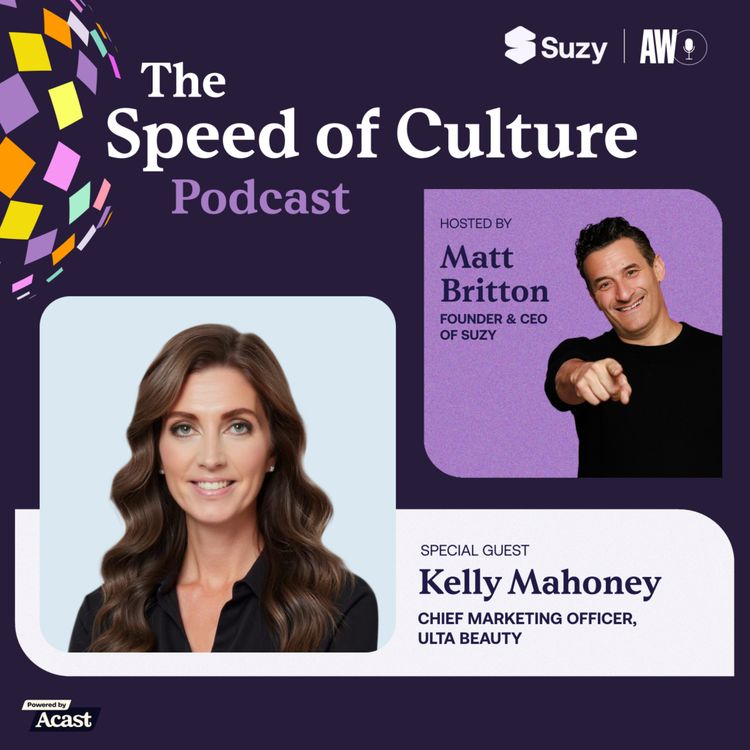
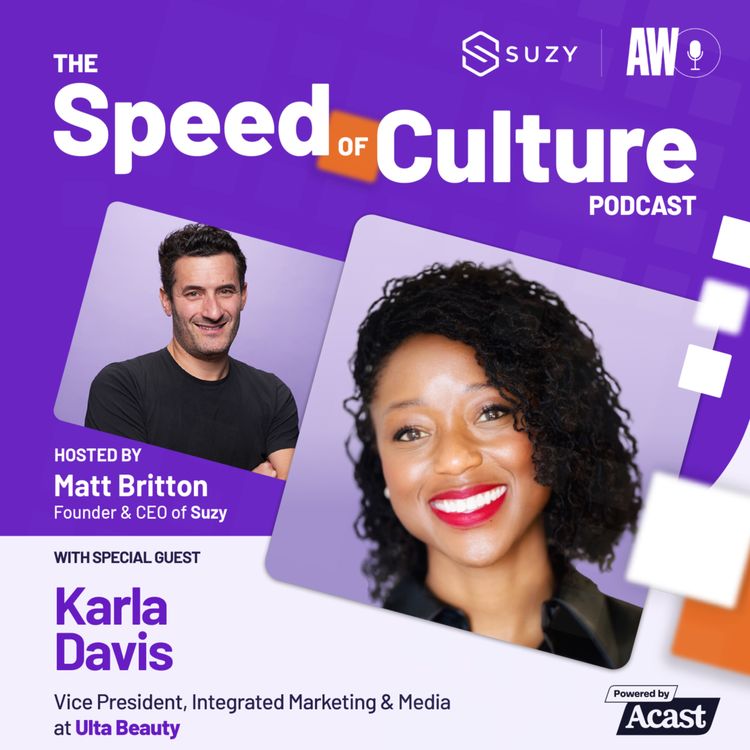
Matt Britton, founder and CEO of Suzy, the AI-powered consumer intelligence platform, recently sat down with Ulta Beauty's Vice President of Integrated Marketing and Media to unpack exactly how the brand is executing this transformation at scale.
The conversation reveals a company rethinking every element of modern retail: from how loyalty programs drive nearly all sales to why motivation-based marketing segmentation has replaced traditional demographics, and how retail media networks represent the future of retail monetization. For marketing executives, brand strategists, and retail leaders seeking to understand how to compete in an increasingly consumer-centric world, this episode of The Speed of Culture podcast offers both strategic insight and tactical execution lessons.
Ulta Beauty's journey represents more than a single brand's success story. It serves as a blueprint for omnichannel beauty retail strategy in an era where consumer expectations around personalization, convenience, and discovery have fundamentally changed. This episode explores those changes, the technology enabling them, and the marketing mindset shifts required to stay ahead.
The Architecture of Modern Loyalty: Building a Competitive Moat Through Data and Scale
Loyalty has become the operational heartbeat of Ulta Beauty's business. With more than 46 million members in its rewards program driving approximately 95% of total sales, the brand has built what amounts to a competitive moat that extends far beyond traditional customer retention metrics.
This level of loyalty program penetration is noteworthy—it suggests that Ulta Beauty hasn't simply created a loyalty program. Instead, the brand has engineered the program to become the primary lever through which the business operates, makes decisions, and personalizes the experience.
The strategic advantage here is profound. When a loyalty program touches 95% of sales, the data flowing through it becomes a first-party asset of extraordinary value. Unlike the increasingly fragile third-party cookie ecosystem, this first-party loyalty data is owned, consented, and continuously updated with behavioral signals that reveal customer intent, preference, and lifecycle stage.
From a marketing operations perspective, this architecture allows Ulta Beauty to move beyond audience segmentation based on static demographics toward dynamic segmentation rooted in actual behavior. The brand knows not just who its customers are, but what they do, how often they shop, what products they replenish, which categories they explore, and how their beauty and wellness needs evolve over time.
Furthermore, the loyalty program creates a virtuous feedback loop. As customers engage, spend, and receive personalized experiences, the quality of data improves. Ulta Beauty can then refine recommendations, optimize merchandising, and enhance the guest experience continuously.
This is loyalty as a competitive strategy, not a discount mechanism.
Competitors without this scale of loyalty integration cannot match the personalization and speed at which Ulta Beauty can respond to changing customer needs.
From Demographics to Motivation-Based Marketing: The Psychology of Beauty Retail
One of the most telling insights from this episode concerns Ulta Beauty's shift away from traditional demographic segmentation toward what the brand calls motivation-based marketing. Rather than marketing to women aged 25–34 with household incomes above $75,000, Ulta Beauty now markets to customers based on why they shop, how they discover products, what triggers replenishment behavior, and where their interests align within the broader beauty and wellness ecosystem.
This shift reflects a broader evolution in consumer marketing. Demographic targeting, while easy to execute, has become increasingly ineffective because it assumes homogeneity within age cohorts and income brackets that simply doesn't exist.
Motivation-based segmentation requires deeper behavioral data and a willingness to update models frequently. It also demands more sophisticated marketing execution because messages must align with actual intent rather than presumed needs.
For Ulta Beauty, this approach scales across its omnichannel customer journey. Whether a customer is browsing in a physical store, exploring the website, receiving email recommendations, or engaging on social media, the motivation-based segmentation informs the experience.
This level of sophistication also improves the economics of marketing spend. Over time, this creates compounding competitive advantage: better ROI enables more testing, more testing generates better insights, and better insights drive more effective personalization.
Retail Media Networks as the Next Frontier: Beauty, Commerce, and Supply-Side Platforms
Ulta Beauty's retail media network represents one of the most underrated competitive advantages in modern retail. As traditional advertising channels become saturated and consumer attention fragments further, retailers with first-party audience data and engaged customer bases are building proprietary media platforms.
For context, a retail media network is essentially a media platform operated by a retailer where brands can advertise directly to the retailer's customer base. The retailer benefits from incremental advertising revenue while maintaining control over which brands appear, how prominently they're featured, and what data is used to target audiences.
Ulta Beauty's retail media network operates within an ecosystem where customers are actively shopping for beauty and wellness products. In a beauty-specific environment, audience intent is more concentrated, behavioral signals are more relevant, and advertiser ROI is typically higher.
The strategic implications extend beyond revenue generation. By controlling which brands appear prominently in search, on category pages, and in recommendation feeds, Ulta Beauty shapes customer discovery in ways that benefit its own exclusive brands while maintaining advertiser relationships with major beauty companies.
For marketing executives, the retail media network represents a new playbook. Rather than relying exclusively on paid channels owned by Google, Meta, and Amazon, brands can now reach engaged customers through retailer-controlled platforms.
Omnichannel Integration: Seamless Experiences Across Social, Digital, and Physical Retail
The beauty industry has become genuinely omnichannel. Customers discover products on social media, research reviews and ingredients online, try products in physical stores, and make purchases across multiple touchpoints.
Omnichannel isn't simply about being present on multiple channels. It's about creating a seamless experience where a customer's journey across channels feels continuous rather than fragmented.
Ulta Beauty has invested in this integration in ways that most competitors have not. When a customer sees a product recommendation on social media, that recommendation is informed by their loyalty program data, browsing history, purchase patterns, and current lifecycle stage.
When they visit a physical store, staff have visibility into that customer's profile and recent online activity. When they browse the website, the experience is personalized based on in-store visits and loyalty tier.
For retail organizations looking to build omnichannel capabilities, the key lesson is that integration is not primarily a technology challenge—it's an organizational one. It requires alignment between merchants, marketers, operations, and technology teams around a shared vision of the customer journey.
AI-Powered Personalization and Creative Automation: Scaling Marketing Without Sacrificing Quality
As personalization has become a baseline expectation rather than a differentiator, the question for marketing teams has evolved. Ulta Beauty's approach leverages AI-powered personalization both as an engine for recommendation and as an accelerator for content production.
On the personalization side, AI powers recommendation algorithms that surface products relevant to each customer's demonstrated interests, lifecycle stage, and behavioral patterns. What distinguishes Ulta Beauty's approach is the integration of this AI-driven personalization with loyalty tier, purchase history, inventory levels, promotional calendars, and real-time sales data.
On the content production side, AI-powered creative tools allow marketing teams to generate variations of creative assets, copy, and campaigns faster than traditional production workflows allow. Human creativity establishes the strategic direction and brand voice, while AI handles execution and variation generation.
For organizations scaling personalization, the lesson is clear: AI is not magic. It requires clean data, well-defined objectives, and clear metrics for optimization.
Key Takeaways: Strategic and Tactical Lessons for Retail Marketers
- Loyalty Programs as Business Architecture, Not Marketing Tactics: When loyalty reaches 95% of sales, it's no longer a tactic—it's the business model. Invest in loyalty as a strategic priority across marketing, merchandising, and operations.
- Behavioral Segmentation Outperforms Demographics: Behavior is a stronger predictor of future behavior than static characteristics, leading to higher conversion and stronger lifetime value.
- Retail Media Networks Represent Structural Competitive Advantage: Retailers with large, engaged audiences can monetize attention while maintaining control over the customer experience.
- Omnichannel Requires Organizational Alignment: Shared KPIs and cross-functional collaboration matter more than standalone technology investments.
- AI Personalization Scales Relevance; Human Creativity Scales Strategy: Humans define direction and voice. AI scales execution and optimization.
FAQ: Common Questions About Beauty Retail Strategy, Omnichannel Integration, and Personalization
How do beauty retailers compete with Amazon and other mega-retailers in an omnichannel world?
Specialty retailers like Ulta Beauty compete not on logistics or selection breadth but on expertise, curation, and community. Physical stores serve as touchpoints for interaction and guidance, while loyalty programs create switching costs that broader retailers struggle to replicate.
What percentage of retail marketing budgets should be allocated to loyalty program development versus paid advertising?
This varies based on the maturity of the loyalty program and market position. As loyalty programs mature and member profitability increases, organizations can gradually shift budget from acquisition to retention, personalization, and member experience.
How does motivation-based segmentation differ from psychographic segmentation, and which is more effective?
Psychographic segmentation is often based on stated preferences. Motivation-based segmentation is grounded in demonstrated behavior and purchase patterns, making it typically more effective because it reflects revealed preference rather than survey responses.
What are the most important metrics for evaluating omnichannel marketing effectiveness?
True omnichannel metrics focus on customer outcomes: customer lifetime value, retention rates across channels, average customer journey length, and incremental lift beyond single-channel baselines.
How should brands approach data privacy and consent within personalization-driven strategies?
Brands should implement clear consent frameworks and provide transparency about how data is used. When customers see direct benefits such as relevant recommendations and personalized experiences, they are more likely to grant consent.
Looking Ahead: The Future of Beauty Retail and Omnichannel Personalization
The beauty industry is on the cusp of further evolution, including augmented reality tools for virtual try-ons, expansion into wellness, and increasingly sophisticated use of AI for discovery and personalization.
For retailers like Ulta Beauty, the opportunity is clear. As expectations around personalization and convenience increase, retailers with sophisticated data infrastructure, loyal customer bases, and omnichannel capabilities will capture disproportionate value.
For marketing executives, the lessons from this episode extend beyond beauty retail. The principles—building loyalty as a strategic moat, moving from demographic to behavioral segmentation, leveraging retail media networks, integrating omnichannel experiences, and scaling personalization with AI—apply across industries.
To dive deeper into this episode and hear directly from Ulta Beauty's marketing leadership, visit the Speed of Culture podcast or explore more consumer insights at Suzy. For additional insights on the future of AI in marketing and consumer behavior trends, check out Matt Britton's book Generation AI. To book Matt for speaking engagements on these topics, visit Speaker HQ or his AI keynote speaker page.
%20(400%20x%20100%20px)%20(300%20x%2050%20px)%20(150%20x%2050%20px).avif)

.jpeg)


.jpeg)
.jpeg)