How the Consumerization of Healthcare Is Transforming Brand Strategy
The healthcare industry is undergoing its most significant transformation in decades—and it is being driven not by regulators or providers but by consumers. The same forces that disrupted retail, banking, and travel are now reshaping how people discover, evaluate, and access healthcare services.
Direct-to-consumer models, digital-first patient experiences, and consumer empowerment movements are fundamentally altering the relationship between healthcare brands and the people they serve.
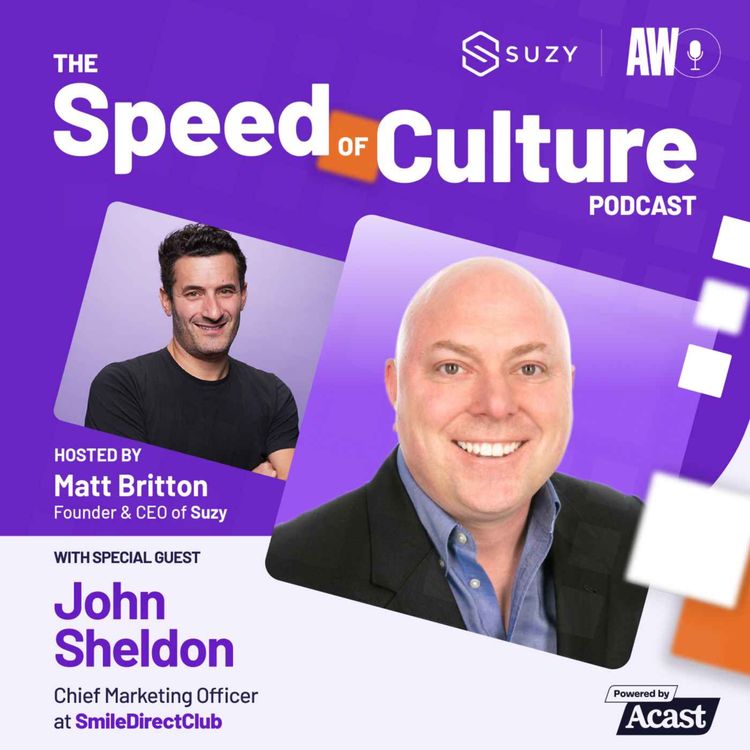
Matt Britton, founder and CEO of Suzy, the AI-powered consumer intelligence platform, has tracked how consumer expectations shaped in industries like technology and retail are cascading into healthcare with transformative force. On The Speed of Culture podcast, Britton spoke with John Sheldon, Chief Marketing Officer at SmileDirectClub, about how customer experience innovation is driving growth in healthcare and what the consumerization of medical services means for brands across every industry.
Sheldon, who brings 25 years of marketing leadership across eBay, Mastercard, Ally Bank, and agencies including Ogilvy and BBH, shared how SmileDirectClub's obsessive customer-centricity—including weekly practices of watching customer videos and listening to phone calls—has created a growth engine that transcends traditional healthcare marketing. His insights carry implications that extend far beyond dental care: every industry serving consumers is subject to the same rising expectation for personalized, transparent, and empowering brand experiences.
The Direct-to-Consumer Revolution in Healthcare
The consumerization of healthcare represents a fundamental power shift from providers to patients. Consumers are no longer passive recipients of medical recommendations—they are active researchers, comparison shoppers, and decision-makers who bring expectations shaped by their experiences with Amazon, Netflix, and other consumer-first brands into healthcare interactions.
Sheldon described this shift as the direct-to-consumer world infiltrating healthcare in every aspect. Patients are not waiting for doctors to recommend treatments—they are bringing specific product and service requests to their providers, armed with research gathered from digital platforms, social media, and peer communities.
This behavior mirrors patterns that Britton has documented across consumer categories: once consumers experience the transparency, convenience, and personalization of digitally native brands, they expect every subsequent interaction to meet those standards.
SmileDirectClub capitalized on this shift by creating a model that delivers orthodontic care with the convenience and transparency that consumers expect from the best direct-to-consumer brands. With over 100 physical SmileShop locations offering free appointments and a digital platform for remote monitoring, the company straddles the physical-digital divide that defines modern consumer expectations.
For healthcare leaders and marketers, this trend is accelerating. AI-powered diagnostic tools, telehealth platforms, and consumer health wearables are expanding the surface area of consumer-driven healthcare decisions.
The brands that meet these informed, empowered consumers with transparent, personalized experiences will capture market share. Those that cling to provider-centric models will find their consumers migrating to alternatives that respect their agency.
The Customer Listening Practice That Changes Everything
Perhaps the most distinctive element of Sheldon's approach is his commitment to systematic customer listening. SmileDirectClub implements two weekly one-hour sessions that are open to all team members across the organization.
The first session involves watching edited video clips of actual customers in SmileShop locations—observing their reactions, analyzing their objections, and identifying pain points in the customer journey. The second session involves monitoring live customer phone calls to understand the emotional motivations and barriers that influence purchasing decisions.
This practice serves multiple strategic purposes simultaneously. It provides qualitative consumer intelligence that surveys and analytics cannot capture—the emotional texture of customer experiences, the specific language consumers use to describe their needs and concerns, and the moments in the journey where confidence builds or erodes.
It also creates organizational alignment by ensuring that every team member, regardless of function, maintains direct connection to the consumer experience.
Sheldon also requires team members to personally experience the SmileDirectClub journey quarterly—scheduling scans, ordering impression kits, and sharing findings with colleagues across advertising, CRM, and product teams. This experiential requirement prevents the organizational distance from consumers that Britton has identified as one of the primary failure modes in large consumer-facing organizations.
For marketing leaders in any industry, systematic customer listening—not as a research project but as a permanent organizational practice—represents one of the highest-leverage investments available. Consumer intelligence gathered through platforms like Suzy complements these qualitative practices with quantitative validation at scale.
Omnichannel Strategy: Meeting Consumers at Every Stage
Sheldon's approach to channel strategy reflects a sophisticated understanding of the consumer journey that extends beyond traditional marketing funnel thinking. Rather than optimizing individual channels in isolation, SmileDirectClub maps specific media investments to specific stages of the customer journey.
Linear television and connected TV drive awareness among broad audiences. Facebook and paid social handle consideration through retargeting strategies that re-engage consumers who have shown initial interest.
Paid search captures consumers at the conversion stage when they are actively seeking solutions. And CRM automation manages the post-purchase relationship, nurturing customers through their treatment journey and driving retention.
This stage-mapped approach produces significantly better results than the channel-centric strategies that many marketing organizations still employ. When channels are optimized in isolation—each with its own KPIs, budgets, and teams—the consumer experience becomes fragmented and the marketing investment becomes inefficient.
When channels are orchestrated around the consumer journey, each investment reinforces the others, creating a compounding effect that improves both acquisition efficiency and customer lifetime value.
Sheldon described CRM as the "circulatory system of marketing"—the infrastructure that ensures no customer gets lost during their journey.
This metaphor captures an important truth: the most sophisticated awareness and consideration strategies produce diminishing returns if the post-engagement experience fails to maintain momentum and build confidence.
Product Innovation Driven by Marketing Insight
One of the most valuable patterns in Sheldon's approach is the integration of marketing intelligence into product development. Rather than treating marketing and product as separate functions, SmileDirectClub uses customer feedback gathered through marketing channels to identify product and service innovations that improve the customer experience.
The example Sheldon shared is instructive: marketing teams heard from customers that receiving aligner shipments felt overwhelming—too much information, too many decisions, too little guidance. Rather than creating better marketing communications to address the confusion, the team developed orientation calls that guided new customers through their treatment plan.
The result was improved treatment completion rates and reduced support inquiries—outcomes that benefited both the customer experience and the business economics.
This pattern—where marketing intelligence reveals customer experience gaps that drive product innovation rather than just campaign optimization—represents a maturation of the marketing function that many organizations have not yet achieved.
Marketing teams that limit their mandate to demand generation and brand building leave enormous value on the table. Teams that extend their mandate to customer experience improvement and product innovation influence become strategic drivers of business growth.
As Britton emphasizes in his keynotes to business leaders, the convergence of marketing, product, and customer experience is one of the defining trends in modern enterprise strategy. Organizations that maintain artificial boundaries between these functions will increasingly find themselves unable to compete with those that have integrated them.
Emotional Resonance as a Growth Strategy
Beyond operational excellence, Sheldon emphasized the role of emotional connection in driving healthcare brand growth. SmileDirectClub's weekly "Inspired by Why" newsletter showcases customer transformation stories—moments where dental health improvement catalyzed broader life changes in confidence, career advancement, and personal relationships.
These stories serve a dual purpose. Externally, they create shareable content that generates organic reach and builds brand affinity among prospective customers who see themselves in the transformation narratives.
Internally, they maintain organizational motivation and purpose alignment by connecting daily operational work to meaningful human outcomes.
The strategic insight is that healthcare brands—and by extension, any brand whose product or service creates meaningful life impact—possess a narrative advantage that purely transactional brands cannot match.
When the product genuinely improves lives, the marketing challenge shifts from persuasion to amplification: helping potential customers see the transformation possibilities that existing customers have already experienced.
For brand leaders across industries, the lesson is to identify and amplify the genuine emotional impact of their products or services. As Britton's research on consumer behavior consistently demonstrates, consumers increasingly seek brands that deliver meaning alongside utility.
Companies that can authentically demonstrate life improvement—rather than merely claiming it—build loyalty that transcends price competition.
Key Takeaways for Business Leaders
- Embrace the consumerization of healthcare as a model for how consumer expectations are cascading across every industry, requiring transparent, personalized, and empowering brand experiences.
- Implement systematic customer listening practices—including direct observation of customer interactions and personal experience of the customer journey—as permanent organizational capabilities rather than periodic research initiatives.
- Map media investments to specific consumer journey stages rather than optimizing channels in isolation, treating CRM as the circulatory system that maintains customer momentum through the full lifecycle.
- Integrate marketing intelligence into product development, using customer feedback to drive service innovation that improves both customer experience and business economics.
- Leverage authentic customer transformation stories as a growth strategy, amplifying genuine life impact rather than manufactured brand narratives.
Frequently Asked Questions
What is the consumerization of healthcare and why does it matter?
The consumerization of healthcare is the shift of healthcare purchasing behavior toward patterns established by consumer technology and retail industries. Patients increasingly research treatments independently, compare providers online, and expect the convenience, transparency, and personalization they experience from consumer brands.
This matters because healthcare organizations that fail to meet these expectations will lose market share to direct-to-consumer alternatives.
How does systematic customer listening improve marketing effectiveness?
Systematic customer listening—through regular observation of customer interactions, monitoring of service calls, and personal experience of the customer journey—provides qualitative intelligence that surveys and analytics cannot capture.
It reveals emotional motivations, specific language patterns, and journey friction points that inform more effective marketing strategies and identify product improvements that reduce customer acquisition costs.
Why is CRM called the circulatory system of marketing?
CRM functions as marketing's circulatory system because it ensures that no customer is lost during their journey from awareness through purchase and post-purchase engagement.
Without effective CRM, investments in awareness and consideration channels produce diminishing returns as potential customers lose momentum, forget to take next steps, or encounter unaddressed concerns that prevent conversion.
How can marketing intelligence drive product innovation?
Marketing teams that gather and analyze customer feedback systematically often identify product and service gaps before product teams do, because they interact with customer frustrations at the point of highest emotional intensity.
By sharing these insights across functions—and empowering marketing teams to advocate for product changes—organizations can close customer experience gaps faster and more effectively.
Looking Ahead
John Sheldon's approach at SmileDirectClub demonstrates that the consumerization of healthcare is not a future trend—it is a present reality with implications for every consumer-facing industry.
Organizations that invest in customer listening, journey-mapped channel strategies, and integrated marketing-product innovation will build sustainable growth engines.
Hear the full conversation on The Speed of Culture podcast. To explore how consumer transformation is reshaping business strategy, connect with Matt Britton through his speaking platform or dive into his bestselling book Generation AI.

%20(400%20x%20100%20px)%20(300%20x%2050%20px)%20(150%20x%2050%20px).avif)

.jpeg)


.jpeg)
.jpeg)