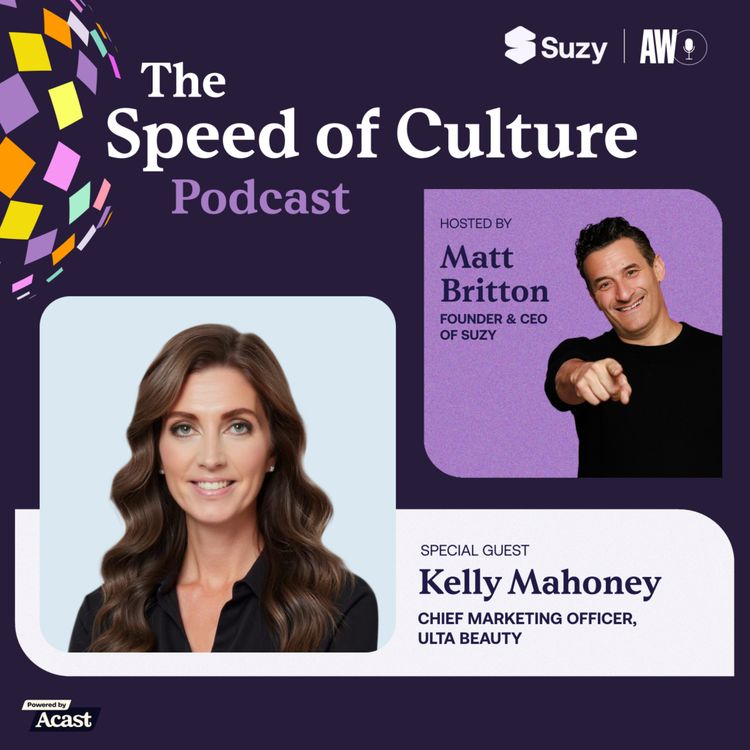
From Boutique Bootcamp to Fitness Powerhouse: Joey Gonzalez's Blueprint for Premium Brand Expansion
In an era where fitness brands compete fiercely for consumer attention and market share, understanding what separates a successful boutique fitness operation from a global powerhouse requires looking at both strategy and passion. This insight emerged clearly during a recent episode of The Speed of Culture Podcast, where Matt Britton, founder and CEO of Suzy, the AI-powered consumer intelligence platform, sat down with Joey Gonzalez, Global CEO of Barry's, to discuss the extraordinary transformation of a boutique fitness concept into a globally recognized brand spanning 84 studios across 14 countries—with ambitious plans to reach 200 locations by 2030.
The conversation between Britton and Gonzalez reveals something profound about contemporary brand building: success in premium markets isn't solely about product quality, though that matters. It's about understanding consumer behavior at a granular level, leveraging authentic storytelling, and making calculated risks based on deep conviction. For brands seeking to scale in competitive verticals, the lessons from Barry's trajectory offer a masterclass in strategic growth, organic marketing, and maintaining brand integrity during rapid expansion.
The Journey from Client to CEO: Authentic Leadership in Premium Markets
Joey Gonzalez's path to becoming Global CEO of Barry's wasn't predefined or carefully planned. His story begins as a first-time attendee at Barry's with initial hesitation and limited experience in the fitness industry. What transformed his trajectory was something far more powerful than credentials: an authentic love for the product and the community it created.
This personal journey matters enormously in the context of brand strategy and consumer intelligence. When consumers—especially affluent, discerning customers who represent the premium fitness market—interact with brand leadership, they're assessing authenticity. They want to know if executives truly believe in what they're selling.
Gonzalez's progression from client to trainer to investor to Global CEO creates a narrative that resonates because it's genuine. He didn't design the Barry's experience; he lived it first as a customer.
In today's market, where consumers increasingly demand transparency and authenticity from brand leaders, this origin story is invaluable. It communicates something that no marketing campaign could effectively convey: this leader understands the customer experience because he lived it. For organizations leveraging consumer intelligence platforms like Suzy, this type of authentic positioning appears consistently in high-sentiment consumer feedback for premium brands. Authenticity, when validated by actual product quality and consistent delivery, becomes a competitive moat.
Gonzalez's journey also illustrates an essential leadership principle that brands often overlook: don't wait for permission or external validation to pursue strategic opportunities. When Gonzalez identified the potential to expand Barry's beyond its original West Coast footprint, particularly into the New York market, he made the bold decision to invest personally in that expansion.
He didn't request approval from multiple stakeholders or conduct endless feasibility studies. He understood the market opportunity, embraced the inherent challenges, and took calculated risks. This decisiveness accelerated Barry's geographic expansion and established the brand as a pioneering name in the boutique fitness market during a critical growth phase.
Understanding the Post-Pandemic Consumer: Data-Driven Fitness Strategy
The fitness industry experienced seismic shifts following the COVID-19 pandemic, and understanding these consumer behavior changes provides essential context for Barry's strategic positioning. When gyms and fitness studios reopened, industry observers expected a slow, painful recovery. Instead, data revealed something surprising: in many markets, in-person fitness class attendance surpassed 2019 levels.
However, this aggregate recovery masks critical segmentation patterns that become visible through consumer intelligence analysis. Cardio-only studios faced considerably more negative headwinds, as consumers adapted to home-based cardio workouts. The pandemic accelerated normalization of at-home fitness options—particularly for lower-intensity activities—creating permanent channel shifts.
Meanwhile, high-intensity interval training (HIIT) workouts experienced a strong resurgence as consumers returned to in-person classes, suggesting that the community aspect and intensity of the experience drove foot traffic more than convenience.
This data point carries strategic weight for premium fitness brands. Barry's success in the post-pandemic environment reflects a sophisticated understanding of where consumers perceived genuine value: immersive, community-driven experiences that couldn't be replicated at home.
The lesson extends beyond fitness. In any premium vertical, brands that understand which elements of their offering deliver unique, irreplaceable value—and which are vulnerable to home-based or digital substitutes—can allocate resources more effectively and build more defensible market positions.
For Barry's specifically, the strategy involved several coordinated moves. First, the brand continued emphasizing the quality and sophistication of its equipment and studio design. These tangible elements create a clear quality differential compared to home workout options.
Second, Barry's intentionally cultivated a sophisticated, design-forward aesthetic in its physical locations—luxury finishes, carefully curated studio designs reflective of local markets, and elevated post-workout experiences through Fuel Bars. These design choices weren't merely decorative; they created psychological and experiential differentiation.
Third, and most critically, Barry's invested heavily in creating a community environment. The boutique fitness model thrives on community, belonging, and social connection—elements fundamentally impossible to replicate through digital-only offerings. Gonzalez's discussions during the podcast episode underscore how Barry's deliberately engineered its studio experience to foster these connection points.
The Premium Brand Architecture: Maintaining Positioning During Rapid Growth
As Barry's expanded from boutique status to global powerhouse, the organization faced a classic premium brand challenge: how to scale without diluting the exclusivity, quality perception, and distinctive experience that created the premium positioning initially. This challenge becomes increasingly complex as a brand approaches national and international distribution.
Gonzalez addressed this challenge through a rebranding initiative in 2014 that reflected deeper strategic thinking. When the company dropped "Bootcamp" from its name, shifting to simply "Barry's," the change signaled important positioning evolution.
The original bootcamp framing—emphasizing military-style intensity and hard-edged positioning—appealed to a specific demographic but potentially limited the brand's addressable market. By shedding the bootcamp militarism, Barry's expanded its narrative to encompass inclusion and accessibility for diverse fitness levels while maintaining the core intensity.
Simultaneously, Barry's diversified its class offerings beyond treadmill-focused HIIT workouts. The addition of strength-training-only classes and indoor cycling modalities combined with strength training expanded the brand's appeal without diluting its core positioning. These weren't gimmicks; they were strategic extensions that maintained the premium, results-oriented philosophy while accommodating different fitness preferences and abilities.
For consumer intelligence purposes, this represents sophisticated market segmentation strategy. Rather than maintaining a narrow positioning and reaching a smaller total addressable market, Barry's identified adjacent segments with similar quality expectations and values—affluent consumers seeking results-driven, community-focused fitness experiences—and extended offerings to serve these segments without confusing the core brand narrative.
Organic Growth and "Friends with Benefits": The Antidote to Paid Advertising
Perhaps the most striking insight from Gonzalez's discussion on The Speed of Culture Podcast concerns marketing strategy. In an industry typically characterized by aggressive paid digital advertising, Barry's has strategically prioritized organic growth mechanisms, finding them substantially more effective than paid advertising for driving conversion.
The specific program discussed—"Friends with Benefits"—represents elegant marketing simplicity with profound strategic depth. The premise is straightforward: existing clients bring a friend to receive a free class. The mechanics, however, unlock several powerful dynamics simultaneously.
First, the program leverages the most credible endorsement vector available: peer recommendation from someone the prospective customer knows and trusts. In an era of eroded trust in traditional advertising, personal recommendation from friends remains the most persuasive marketing message.
Second, the program creates a superior onboarding experience compared to paid advertising. A friend accompanying an existing customer receives an introduction facilitated by someone who can authentically contextualize the Barry's experience, manage expectations appropriately, and provide social comfort during what might otherwise feel like an intimidating first class in an unfamiliar environment. This guided introduction drives superior first-class experiences, retention, and conversion compared to cold acquisition from paid advertising.
Third, the program generates valuable network effects. When existing customers bring friends, they're investing their own social capital in the referral. This creates incentive alignment—the referring customer wants the experience to be positive because they're partially responsible for the friend's experience.
The referred customer is more committed because they're supporting an existing community member. These social dynamics create retention characteristics far superior to purchased traffic.
Quantitatively, Gonzalez's assertion that "Friends with Benefits" generates significantly higher conversion rates than paid acquisition proves robust across research. Marketing economists consistently find that referral-based acquisition delivers 3–4x higher lifetime value customers compared to equivalent-cost paid acquisition. Barry's strategic emphasis on organic growth mechanisms reflects deep understanding of these customer economics.
The strategic implications extend far beyond fitness brands. In any market where conversion requires trust, community validation, or understanding subtle product differentiation, paid advertising efficiency erodes while organic, peer-driven acquisition mechanisms gain leverage. Brands that successfully migrate acquisition spending from paid channels to organic mechanisms improve unit economics while simultaneously strengthening community bonds and brand loyalty.
Social Media Strategy and Platform Specialization
Barry's approach to social media—prioritizing Instagram as the primary engagement platform rather than pursuing omnipresent distribution across every available channel—reflects another strategic principle often overlooked in contemporary marketing: platform specialization. Rather than maintaining mediocre presence across numerous platforms, Barry's concentrated resources on the platform most aligned with its audience and brand positioning.
Instagram's visual-first, community-oriented architecture aligns naturally with Barry's brand identity. The platform enables showcasing of beautiful studio design, authentic community moments, fitness transformation narratives, and high-quality content that reinforces premium positioning.
The visual nature of Instagram also allows Barry's to communicate the experiential differentiation—the energy, the design aesthetics, the community—more effectively than text-heavy platforms.
This strategic focus on channel-platform alignment becomes increasingly important as consumer platforms fragment and platform algorithms deteriorate. Brands that concentrate resources on platforms where their target customer actually engages, and where their content naturally resonates, achieve substantially better returns compared to brands attempting universal presence. For premium brands especially, where audience selectivity and messaging precision matter enormously, platform specialization makes particular strategic sense.
Ambitious Expansion: The 200-Studio Vision by 2030
Barry's current scale—84 studios across 14 countries—represents substantial achievement. The ambition to reach 200 studios by 2030 signals confidence in the business model's sustainability and global scalability.
This expansion trajectory raises important questions about what enables such aggressive growth in a boutique fitness market historically characterized by regional consolidation and limited global replication.
Several factors support Barry's expansion ambition. First, the post-pandemic consumer preference for premium, community-driven experiences remains strong. Second, the brand's diversified offerings—beyond treadmill HIIT—expand addressable market.
Third, the organizational infrastructure and management systems developed during previous growth phases provide operational foundation for further expansion. Fourth, Barry's strong brand equity in key markets creates platform for geographic expansion.
However, the 200-studio ambition also represents risk management challenges. Rapid expansion in boutique fitness has historically challenged brand consistency. Maintaining the carefully curated, locally relevant studio experiences while scaling production and operational efficiency requires disciplined execution.
Gonzalez's leadership background—built on authentic consumer connection, strategic thinking, and risk-taking capability—suggests confidence in navigating these scaling challenges.
Key Takeaways for Brand Leaders and Strategic Marketers
- Authenticity as Competitive Moat: Genuine founder/leader connection to the customer experience creates marketing advantage impossible to replicate through paid messaging. Gonzalez's journey from client to CEO validates Barry's value proposition in ways no campaign could achieve. For brands seeking premium positioning, biographical authenticity matters.
- Data-Driven Segmentation Reveals Hidden Opportunities: Post-pandemic fitness trends revealed critical segmentation patterns—HIIT resurgence, cardio challenges, community importance. Brands using consumer intelligence platforms gain speed and clarity in identifying these shifts, enabling faster strategic adaptation.
- Organic Growth Outperforms Paid in Trust-Dependent Markets: "Friends with Benefits" referral program consistently outperforms paid acquisition in fitness. Where product experience requires trust and community validation, peer-driven acquisition unlocks superior economics and loyalty.
- Platform Specialization Beats Omnipresence: Instagram-focused strategy concentrates resources where Barry's audience engages naturally. Brands pursuing universal platform presence often underperform compared to concentrated specialization.
- Product Evolution Maintains Positioning While Expanding Market: Adding strength training and cycling modalities expanded addressable market without confusing core positioning. Strategic extensions serve adjacent segments without diluting brand identity.
- Premium Design and Experience Drive Defensibility: Luxury finishes, locally relevant aesthetics, and elevated post-workout experiences create meaningful differentiation from home alternatives. Premium brands justify positioning through tangible experience excellence.
FAQ: Understanding Barry's Strategy and Boutique Fitness Dynamics
How has Barry's maintained premium positioning while expanding to 84 studios globally?
Through disciplined brand architecture decisions, including the 2014 rebranding that modernized positioning while maintaining intensity focus, diversified product offerings that serve adjacent premium segments, and careful studio design that reflects local markets while maintaining consistent quality standards. Each expansion decision reinforced rather than diluted brand positioning.
What makes organic growth strategies more effective than paid advertising for boutique fitness?
Organic mechanisms like "Friends with Benefits" leverage peer credibility, create superior onboarding experiences through social introduction, generate network effects, and drive higher-value customer acquisition. Paid advertising lacks these credibility and community-building advantages. In trust-dependent markets, peer recommendation outperforms paid messaging.
Why is Instagram the primary social platform for Barry's rather than a multi-platform approach?
Instagram's visual-first, community-oriented architecture aligns naturally with Barry's brand identity and value proposition. The platform enables showcasing of design, community, and experience elements more effectively than text-heavy alternatives. Platform specialization concentrates resources where they generate highest returns with target audience.
What consumer behavior shifts make the 200-studio by 2030 goal realistic?
Post-pandemic data shows in-person fitness attendance surpassing 2019 levels, with particular strength in HIIT and community-driven experiences. This suggests sustained consumer preference for premium, immersive fitness experiences that can't be replicated at home, creating expansion runway for scaled boutique fitness brands.
Looking Ahead: Consumer Intelligence in Premium Brand Strategy
Joey Gonzalez's journey from Barry's client to Global CEO, and The Speed of Culture Podcast episode exploring his strategic thinking, offers insights extending far beyond fitness. The episode illustrates how data-driven consumer intelligence, authentic brand leadership, organic growth mechanisms, and disciplined strategic evolution enable premium brands to scale while maintaining positioning and community integrity.
For brand leaders seeking to understand contemporary consumer behavior, the insights from Barry's experience provide valuable framework. In markets where consumers demand authenticity, community, and genuine value delivery, brands that combine consumer intelligence sophistication with authentic leadership advantage create defensible competitive positions.
To explore more insights on brand strategy, consumer intelligence, and contemporary marketing dynamics, visit Speed of Culture for additional podcast episodes featuring industry leaders. For those seeking deeper understanding of consumer behavior analysis and AI-powered insights, explore resources at Suzy.
For speaking engagements on consumer intelligence, brand strategy, and AI-driven insights, Matt Britton is available as an AI keynote speaker. For comprehensive resources on AI and future-forward thinking, explore Generation AI. Additional speaking and engagement resources are available through Speaker HQ.

%20(400%20x%20100%20px)%20(300%20x%2050%20px)%20(150%20x%2050%20px).avif)

.jpeg)


.jpeg)
.jpeg)