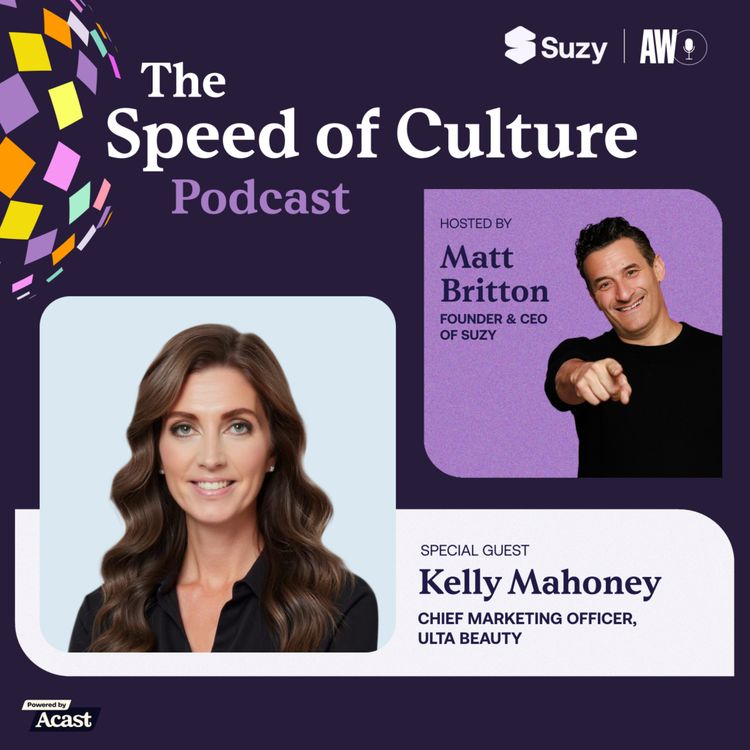
How Bose CMO Jim Mollica is Revolutionizing Marketing with AI and Innovation
Episode 149 of The Speed of Culture Podcast | December 19, 2024
Opening: The Future of Marketing Leadership in an AI-Driven World
The marketing landscape is undergoing a fundamental transformation, and few leaders exemplify this evolution as compellingly as Jim Mollica, Bose's first-ever Chief Marketing Officer. On December 19, 2024, Mollica joined Matt Britton, founder and CEO of Suzy, the AI-powered consumer intelligence platform, on episode 149 of The Speed of Culture Podcast to discuss how he's reshaping the iconic audio brand for the AI era.
With over two decades of experience at Disney, Viacom, and Under Armour, Mollica brings a unique perspective on brand building, cultural relevance, and the strategic deployment of artificial intelligence in modern marketing. His tenure at Bose represents a pivotal moment for the brand—not as an incremental refresh, but as a comprehensive reimagining of how premium audio companies connect with consumers in an increasingly algorithm-driven world.
The conversation between Britton and Mollica delves into critical questions that CMOs across industries are grappling with: How do you maintain authentic brand identity while embracing AI-driven personalization at scale? How do you compete against technology giants with larger ecosystems when you operate in a niche audio market? And perhaps most importantly, how do you ensure that marketing investments directly translate to business outcomes rather than vanity metrics?
This episode captures a pivotal moment in modern marketing leadership. Matt Britton, whose Suzy platform enables enterprises to leverage first-party data for consumer intelligence, provides the perfect counterpart to Mollica's narrative about data-driven brand building.
Together, they explore the intersection of creativity, technology, and business acumen that defines next-generation CMO leadership—a discussion that reverberates across industries seeking to understand how to thrive in the age of AI-powered consumer engagement.
From Founder's Dream to Cultural Icon: Jim Mollica's Journey to Bose's First CMO Role
Jim Mollica's path to becoming Bose's inaugural Chief Marketing Officer represents more than a career advancement; it reflects the evolving role of CMOs in technology-driven enterprises. When Mollica accepted the position, Bose already enjoyed a storied reputation built on sonic excellence and innovative engineering dating back to its founding at MIT.
However, the brand faced a critical challenge: how to remain relevant and culturally resonant in an audio landscape increasingly dominated by technology giants like Apple, Google, and Samsung.
Mollica's background across Disney, Viacom, and Under Armour equipped him with a rare combination of skills. At Disney, he learned how to build emotionally compelling narratives that transcend demographics. At Viacom, he developed expertise in understanding youth culture and media consumption trends.
At Under Armour, he honed his ability to position premium consumer brands in competitive athletic and lifestyle markets. These experiences coalesced into a clear vision for Bose: anchor the brand's identity in authenticity, cultural relevance, and the genuine passion of music enthusiasts.
The appointment of a dedicated CMO at Bose signified something profound. Historically, many hardware and audio companies treated marketing as secondary to engineering and product innovation.
Mollica's hiring represented a strategic bet that in the digital age, how a brand is perceived and communicated is as crucial as the quality of the products themselves. His mandate was to transform Bose from a brand known primarily for superior sound engineering into a cultural institution—a company that music lovers, not just audiophiles, would gravitate toward.
This transition required Mollica to articulate a new brand philosophy that honored Bose's heritage while speaking directly to modern consumers. The key insight: demographics no longer drive consumer decisions in the way they once did.
"Demographics do not matter to me. It's behavioral. It's psychographic."
Instead, psychographics and behavioral patterns determine how individuals engage with brands. A teenager interested in hip-hop production might connect with Bose through the same passion points as a 45-year-old classical music enthusiast—shared cultural engagement around music itself, rather than age, income, or education level.
Mollica's strategic positioning of Bose as "a brand created by music lovers for music lovers" represents a fundamental repositioning strategy. Rather than competing on ecosystem breadth or technological features against Apple or Google, Bose distinguished itself through cultural authenticity and a laser focus on the core consumer passion: exceptional sound quality paired with genuine music appreciation.
AI as a Marketing Multiplier: How Bose Generates 5,000+ Content Pieces Monthly
The integration of artificial intelligence into Bose's marketing operations illustrates how forward-thinking CMOs are leveraging technology not to replace creativity, but to amplify it exponentially. Under Mollica's leadership, Bose employs AI to produce 5,000+ customized content pieces each month—a scale that would be logistically impossible through traditional content creation workflows.
This approach addresses a fundamental challenge in modern digital marketing: platform proliferation. A decade ago, brands primarily focused on Facebook, YouTube, and perhaps Twitter.
Today, successful brands must maintain presence across TikTok, Instagram, YouTube Shorts, LinkedIn, Pinterest, Snapchat, and numerous other platforms, each with distinct content requirements, audience expectations, and algorithmic preferences.
Bose's AI-powered content strategy solves this challenge through intelligent automation. Rather than using AI to generate crude, uniform content, Mollica's team has implemented a sophisticated system that produces hyper-localized product descriptions, platform-specific content formats, and audience-tailored messaging—all while maintaining Bose's creative standards and emotional resonance.
On TikTok, Bose content emphasizes short-form video creativity, trend participation, and music-centric storytelling. On YouTube, the brand leverages longer-form content to demonstrate audio technology and create immersive product experiences.
On Instagram, content balances lifestyle photography, product showcases, and behind-the-scenes brand narratives. This platform-specific approach, powered by AI, ensures that Bose maintains cultural relevance across diverse audience segments while conserving creative resources for strategic, high-impact initiatives.
Critically, Mollica emphasizes that AI functions as a force multiplier, not a replacement for human creativity. The strategic direction, brand voice, emotional intelligence, and cultural insight remain fundamentally human responsibilities.
AI handles the scale and the optimization; human marketers handle the strategy and the soul. This philosophy directly challenges the anxiety many marketing professionals express about AI displacement.
In Mollica's vision, AI elevates the work of talented marketers by freeing them from repetitive, low-value tasks and enabling them to focus on strategic thinking, creative conception, and business alignment.
The financial implications are equally compelling. Bose's ability to produce thousands of content pieces monthly while maintaining quality standards increases operational efficiency and content ROI.
Each piece of content performs marketing work—whether through organic social reach, search engine optimization, or paid amplification—generating returns on every marketing investment. This approach transforms content from a cost center into a compound asset that builds over time, creating network effects that strengthen brand visibility and consumer connection.
Beyond Demographics: Psychographic and Behavioral Targeting in the Age of First-Party Data
One of the most provocative statements Mollica makes—and one that challenges decades of marketing orthodoxy—is his insistence on prioritizing behavioral and psychographic data over demographic categories.
For most of marketing history, segmentation relied on age, gender, income, education, and geography. However, demographic segmentation increasingly fails to explain actual consumer behavior.
Consider a hypothetical example: two 35-year-old professionals with similar incomes might have radically different audio equipment preferences. One might be a dedicated music producer investing thousands annually in audio technology, while the other is a casual listener streaming playlists during workouts.
These consumers occupy the same demographic cell, yet their motivations and purchasing patterns diverge dramatically.
Mollica's approach prioritizes questions like: What music does a consumer engage with? Do they participate in music production communities? Are they sports enthusiasts using audio for performance optimization? Are they cultural trendsetters influencing peer purchasing decisions?
These psychographic and behavioral dimensions create a far more accurate picture of consumer motivation and purchase propensity than demographic categories alone.
This shift has profound implications for Bose's marketing operations. Rather than targeting all men aged 25–34, Bose identifies individuals across demographic cohorts who exhibit behavioral patterns suggesting high affinity for premium audio products.
This dramatically improves marketing efficiency—spending reaches consumers most likely to respond, rather than spraying budget across uninterested prospects.
The tactical manifestation of this strategy appears in Bose's partnerships with cultural figures who embody authentic engagement with music. The collaboration with NFL quarterback Joe Burrow represents a psychographic assertion around peak performance and excellence.
The partnership with musician Kid Cudi speaks directly to music enthusiasts and cultural innovators. These collaborations function as public signals about which consumer passions and communities Bose authentically serves.
This approach also aligns with privacy-centric marketing trends. As third-party cookies depreciate and regulations like GDPR and CCPA reshape data availability, first-party data becomes increasingly valuable.
Mollica emphasizes leveraging Bose's registered user base—over 35 million registered users—to build rich behavioral and psychographic profiles. These first-party data assets enable continued personalization and targeting precision even as the broader digital marketing infrastructure evolves.
Linking Marketing to Business Outcomes: The CMO's Challenge in Proving ROI
A recurring theme in Mollica's discussion centers on a defining challenge of contemporary CMO leadership: proving that marketing investments generate measurable business impact.
Traditionally, marketing focused on awareness metrics such as reach, impressions, and engagement. While valuable, these metrics did not directly demonstrate revenue growth, market share gains, or customer lifetime value improvements.
Mollica advocates for translating marketing initiatives directly to commercial outcomes. What revenue was generated from specific campaigns? What is the customer acquisition cost relative to customer lifetime value?
How do marketing-influenced customers differ in lifetime value compared to those acquired through other channels? By what percentage did a specific initiative expand the addressable market?
This orientation reflects the influence of platforms like Suzy, which enable brands to connect marketing activities to actual consumer behavior and purchase outcomes.
Mollica's emphasis on business alignment builds organizational credibility and secures executive support for strategic marketing investments. Brand building becomes a business capability with direct financial impact—not a discretionary expense.
The direct-to-consumer (DTC) channel represents a critical operational lever in this framework. Unlike wholesale models, DTC provides complete visibility into customer behavior, purchase patterns, and lifetime value metrics.
This transparency enables unprecedented insight into how marketing investments influence business outcomes. Mollica's role in accelerating Bose's DTC strategy reflects recognition that direct customer relationships provide the data infrastructure required for modern marketing leadership.
The Cultural Authenticity Imperative: Building Brands for Music Lovers
Perhaps the most distinctive aspect of Mollica's strategic vision is his emphasis on cultural authenticity and genuine engagement with music culture.
Consumers increasingly recognize and reject inauthentic brand participation in cultural moments. A brand positioning itself around a cultural community must genuinely understand and respect that community.
For Bose, this means authentic engagement with music producers, musicians, and serious listeners—not superficial celebrity endorsements.
The collaboration with Kid Cudi works because of genuine alignment between artistic production detail and Bose's commitment to sonic excellence. The partnership with Joe Burrow extends beyond sponsorship into a narrative about peak performance and the role superior audio technology plays in preparation and focus.
This authenticity provides competitive advantage against larger technology platforms. While Apple, Google, and Samsung can outspend Bose in paid media, they cannot credibly position themselves as brands built exclusively for music lovers.
By narrowing its focus to music and audio excellence, Bose occupies a distinctive cultural position. This alignment between stated values and demonstrated marketing behavior generates durable brand affinity that translates into customer loyalty and influence.
Key Takeaways
- AI as Force Multiplier, Not Replacement: Bose generates thousands of customized content pieces monthly using AI, freeing human marketers to focus on strategy, creativity, and cultural insight.
- Psychographic Over Demographics: Behavioral and psychographic data enable more precise targeting and deeper understanding of consumer motivation.
- Direct-to-Consumer as Competitive Advantage: DTC relationships provide visibility into lifetime value and marketing influence that wholesale models cannot match.
- Marketing ROI Requires Business Alignment: CMOs must demonstrate how marketing drives measurable outcomes such as revenue growth and market expansion.
- Authenticity as Strategic Differentiator: Genuine cultural engagement creates sustainable competitive advantage in crowded markets.
Frequently Asked Questions
What is The Speed of Culture Podcast, and why is episode 149 significant?
The Speed of Culture Podcast, hosted by Matt Britton, explores how consumer culture, technology trends, and emerging behaviors reshape business strategy. Episode 149, featuring Bose CMO Jim Mollica, serves as a case study in how legacy brands integrate AI-driven marketing while maintaining cultural relevance and growth.
How does Bose differentiate its marketing approach from technology giants like Apple and Google?
Rather than competing on ecosystem breadth, Bose positions itself through cultural authenticity and specialization. By anchoring its identity in genuine commitment to music excellence, Bose occupies a distinctive cultural position technology platforms cannot replicate.
What specific challenges does a premium audio brand face in modern digital marketing?
Premium audio brands must navigate platform proliferation, privacy-driven data shifts, and competition from larger technology companies with greater budgets. Mollica's strategy addresses these through AI-powered content creation, first-party data leverage, and authentic cultural positioning.
How does psychographic targeting improve marketing efficiency compared to demographic targeting?
Psychographic targeting focuses on motivations, passions, and behaviors rather than age or income. A 25-year-old and a 55-year-old music producer may share identical preferences—something demographic targeting would miss—resulting in higher engagement and improved conversion efficiency.
Looking Ahead: Resources for Marketing Leaders and Audio Enthusiasts
This article represents a comprehensive analysis of The Speed of Culture Podcast episode 149, featuring guest Jim Mollica, Chief Marketing Officer at Bose. The conversation explores how legacy brands successfully integrate artificial intelligence, data-driven strategy, and cultural authenticity to maintain competitive advantage in increasingly digital markets.

%20(400%20x%20100%20px)%20(300%20x%2050%20px)%20(150%20x%2050%20px).avif)

.jpeg)


.jpeg)
.jpeg)