Beyond April 15: Transforming an Industry Beyond the Seasonal Squeeze
For decades, H&R Block operated within the constraints of a predictable calendar. The company built its reputation during tax season—the frenetic months between January and April when millions of Americans rushed to file their returns. But the financial services landscape has fundamentally shifted, and so has consumer expectation.
Today, the most forward-thinking financial technology companies recognize that their customers need support throughout the entire year, not just when tax deadlines loom.
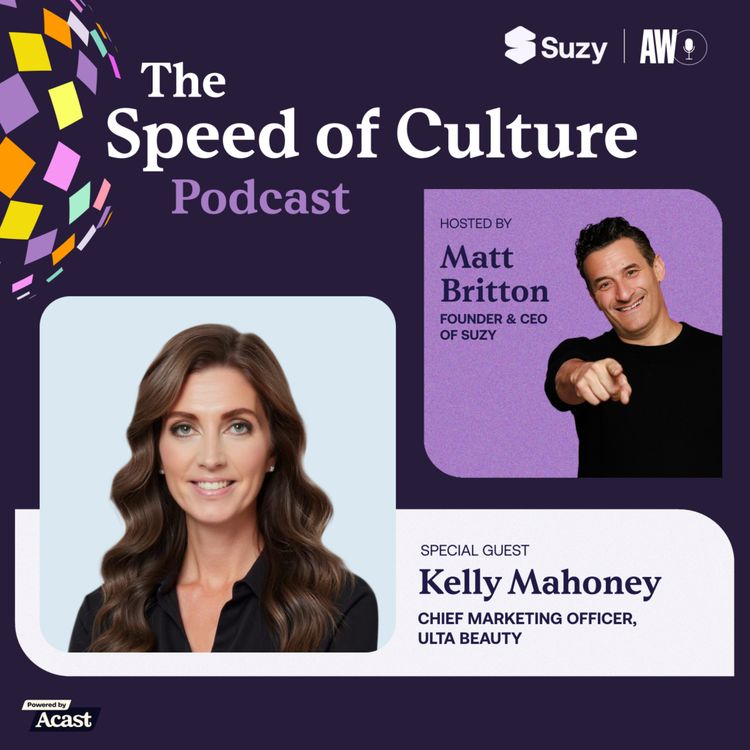
On Episode 175 of the Speed of Culture Podcast, Matt Britton, founder and CEO of Suzy, the AI-powered consumer intelligence platform, sat down with Jill Cress, Chief Marketing & Experience Officer at H&R Block, to explore how the company is dismantling the seasonal business model and reimagining itself as a year-round financial partner.
This conversation reveals far more than operational strategy—it demonstrates how legacy brands can evolve, how consumer insights drive innovation, and why AI is becoming the great equalizer in financial services accessibility.
Cress brings more than 30 years of experience transforming consumer-facing organizations, having previously held senior leadership positions at Mastercard, PayPal (where she oversaw Venmo marketing), and National Geographic Partners. Her background in financial services, digital marketing, and consumer psychology positions H&R Block at a critical inflection point where technology meets human-centered design.
The episode dives into the strategic initiatives reshaping H&R Block's brand perception, the role of generative AI in democratizing tax expertise, and why understanding Gen Z financial behavior has become essential to long-term growth. As consumer behavior continues to evolve at the speed of culture, the insights shared reveal how traditional companies can remain relevant, competitive, and genuinely valuable.
The transformation underway isn’t simply about adding new products or shifting marketing channels. It represents a fundamental reorientation of customer relationships, data utilization, and the role of technology in simplifying one of the most stressful financial moments in an American’s year.
The April 15 Problem: Why Tax Season Constraints Are Outdated
Traditional tax preparation businesses have operated under a fundamental constraint—the April 15 deadline creates artificial urgency that concentrates customer interaction, revenue, and operational stress into a narrow window. This model has defined the industry for generations, but it masks a deeper strategic vulnerability: customers need help throughout the year.
Jill Cress and her team recognized that the seasonal model leaves enormous value on the table. Customers spend most of the year earning income, managing finances, and making decisions that directly impact their tax situation. Yet they only engage with tax preparation companies during a compressed, high-stress period.
The year-round strategy positions H&R Block as a continuous financial companion rather than an emergency service. The MyBlock app exemplifies this philosophy—it allows users to store tax documents securely, jumpstart returns, chat with tax professionals, book appointments, track refunds, and increasingly manage broader financial decisions.
This shift reflects a crucial consumer insight: people don’t think about taxes only in April. They think about tax implications when they receive a bonus, start a side hustle, buy a home, or pay student loan interest. Complexity exists every month—and customers reward companies that provide support when they need it.
Operationally, a year-round approach creates efficiency. Instead of massive staffing surges during tax season followed by skeleton crews, work can be distributed across the calendar. This smoothing of demand enables more sustainable operations and consistent technology investment.
From a marketing perspective, success metrics fundamentally change. Rather than measuring April transactions alone, H&R Block can evaluate customer lifetime value through continuous engagement. That shift drives different investment decisions, technology priorities, and brand messaging.
AI Tax Assist: Democratizing Expert-Level Tax Guidance
The introduction of AI Tax Assist represents a watershed moment in H&R Block’s evolution. Historically, sophisticated tax guidance required live professionals—and that expertise came at a cost. AI Tax Assist changes the equation.
Powered by Microsoft Azure OpenAI and informed by nearly 70 years of H&R Block expertise, the tool provides 24/7 assistance to DIY filers across online and desktop platforms. It delivers real-time responses to tax questions without additional fees.
Its sophistication stems from training through H&R Block’s own Tax Institute. The system was refined using patterns from millions of returns, expert interpretations of tax code, and real taxpayer questions. It’s not just a generic large language model—it’s AI informed by decades of professional practice.
When users ask about cryptocurrency gains, filing status, gig income, or education credits, responses draw from both AI capabilities and the real-world lens of how tax professionals answer those questions.
This accessibility democratizes expertise. A college student filing for the first time can get clarity. A gig worker juggling multiple income streams can understand reporting requirements. A parent can learn about education tax credits—without navigating complexity or paying premium consultation rates.
Tax stress doesn’t follow business hours. AI Tax Assist’s around-the-clock availability addresses a real behavioral pain point, meeting customers in the moments they need help most.
The system also improves continuously. Each interaction refines accuracy and relevance, creating a feedback loop that makes the product increasingly valuable over time.
Understanding Gen Z: A Fundamentally Different Customer Base
H&R Block’s transformation places particular emphasis on Gen Z, the first generation of digital natives to come of age during significant economic uncertainty.
This generation carries unprecedented financial burdens. The U.S. student loan crisis exceeds $1.8 trillion, directly shaping how Gen Z approaches taxes and financial planning. Student loan interest deductions, forgiveness programs, and income-driven repayment plans all carry tax implications that many young borrowers don’t fully understand.
Income complexity further compounds the challenge. A Gen Z taxpayer may combine traditional employment with freelance income, reselling businesses, gig work, cryptocurrency investments, and buy-now-pay-later obligations. This multi-stream reality requires sophisticated guidance.
Research reveals significant emotional distress around tax filing. 40% of Gen Z experience crying or emotional stress when filing taxes, and 25% say tax stress could drive them to therapy. This isn’t just about complexity—it’s about feeling overwhelmed and unprepared.
H&R Block’s year-round model with AI support addresses that anxiety earlier, helping taxpayers understand their position before April panic sets in.
At the same time, Gen Z is highly receptive to digital and AI-powered solutions. Having grown up with algorithmic recommendations on TikTok and YouTube, they view AI as a tool—not a threat. For them, AI Tax Assist is expected functionality.
Marketing efforts reflect this insight. Campaigns like “Responsibility Island,” inspired by Love Island, and partnerships within platforms like Minecraft embed financial education into entertainment environments where Gen Z already engages.
Economic uncertainty also shapes behavior. Nearly 62% of Gen Z expecting a refund plan to spend most or all of it to cope with economic pressure. Understanding that psychology allows H&R Block to position refunds not as windfalls, but as recovery tools for a financially burdened generation.
From Seasonal to Strategic: Marketing Innovation Powered by Consumer Intelligence
Under Cress’s leadership, H&R Block has fundamentally shifted its marketing philosophy. The traditional heavy January-to-March ad blitz no longer reflects a year-round business strategy.
The new model leverages what consumer intelligence experts call cultural velocity—the speed at which behaviors and expectations evolve. Real-time consumer signals inform messaging, allowing for continuous adaptation rather than static annual planning.
Platforms like TikTok are now year-round engagement channels for financial education and brand presence. Content emphasizes humor, relatability, and cultural relevance instead of traditional financial services tropes.
Initiatives such as “Second Look,” which reviews prior returns to uncover missed deductions, tap into real pain points. Americans leave nearly $1 billion unclaimed annually in eligible deductions. Addressing that gap reinforces value.
The “Price Match” initiative similarly signals trust and fairness rather than a race to the bottom on price.
Partnerships with platforms like Suzy provide real-time consumer intelligence. Instead of relying on outdated research cycles, H&R Block can identify emerging topics—like cryptocurrency tax implications—and respond immediately.
This test-and-learn mindset enables creative experimentation, rapid iteration, and scalable success in a landscape where consumer expectations evolve at the speed of culture.
Building Trust in an AI-Powered Future
The integration of AI and human expertise sits at the center of H&R Block’s transformation. Technology is designed to augment—not replace—professional capability.
Customers can begin with AI Tax Assist, complete their return independently, or hand it off to a human professional for review and optimization. Others can opt for fully human services. This optionality respects varying comfort levels.
The hybrid model reframes AI from a potential risk into a productivity tool that enhances accessibility and affordability.
Transparency builds trust. H&R Block clearly communicates that AI Tax Assist draws on the company’s Tax Institute and decades of professional insight. Customers understand the system is backed by real expertise.
Research consistently shows that trust grows when companies explain how technology and human oversight work together. H&R Block’s approach reflects that reality.
Key Takeaways
- AI Tax Assist democratizes expert-level guidance by providing 24/7 support informed by H&R Block’s Tax Institute, closing the gap between DIY filers and professional-grade planning.
- Year-round engagement through the MyBlock app transforms H&R Block from a seasonal provider into a continuous financial partner.
- Gen Z presents both challenge and opportunity—complex income streams and high anxiety coexist with digital sophistication and AI receptivity.
- Real-time consumer intelligence enables agile marketing, faster trend identification, and culturally relevant messaging.
- Technology integrated with human expertise builds trust by making professional oversight more accessible and transparent.
FAQ: Common Questions About H&R Block's Year-Round Strategy
How does H&R Block's AI Tax Assist compare to other tax software options?
AI Tax Assist is trained by H&R Block’s Tax Institute, drawing from nearly 70 years of real-world expertise and millions of returns. Unlike generic AI assistants, it reflects actual professional tax preparation knowledge and is available 24/7 without additional fees.
Why is targeting Gen Z important for future growth?
Gen Z faces unprecedented student debt, complex income streams, and high anxiety around taxes. They are also digitally native and receptive to AI-powered solutions. Building loyalty now establishes relationships that can last decades.
What does a year-round tax strategy mean for everyday taxpayers?
It means access to tax guidance throughout the year via tools like the MyBlock app. Taxpayers can understand implications of bonuses, side hustles, or major financial decisions immediately, reducing April stress and enabling smarter planning.
How does H&R Block use consumer intelligence to inform strategy?
By leveraging real-time data from platforms like Suzy, H&R Block tracks emerging behaviors and concerns, allowing faster, more relevant marketing responses compared to traditional annual planning cycles.
Looking Ahead: Personal, Intelligent, Always Available
The Episode 175 conversation on the Speed of Culture Podcast highlights a broader transformation across financial services. Seasonal demand, expensive expertise, and information asymmetry are eroding.
H&R Block’s strategy demonstrates how legacy brands can evolve without abandoning core strengths. Rather than becoming a startup, the company is scaling its most valuable asset—deep tax expertise—through modern AI.
The April 15 deadline will always matter. But it no longer defines the entire customer relationship.
For business leaders, the lessons are clear: leverage real-time consumer intelligence, integrate AI with human oversight, understand generational nuance, and be willing to reinvent longstanding business models.
Explore more insights on AI, consumer behavior, and business transformation:

%20(400%20x%20100%20px)%20(300%20x%2050%20px)%20(150%20x%2050%20px).avif)

.jpeg)


.jpeg)
.jpeg)