Opening
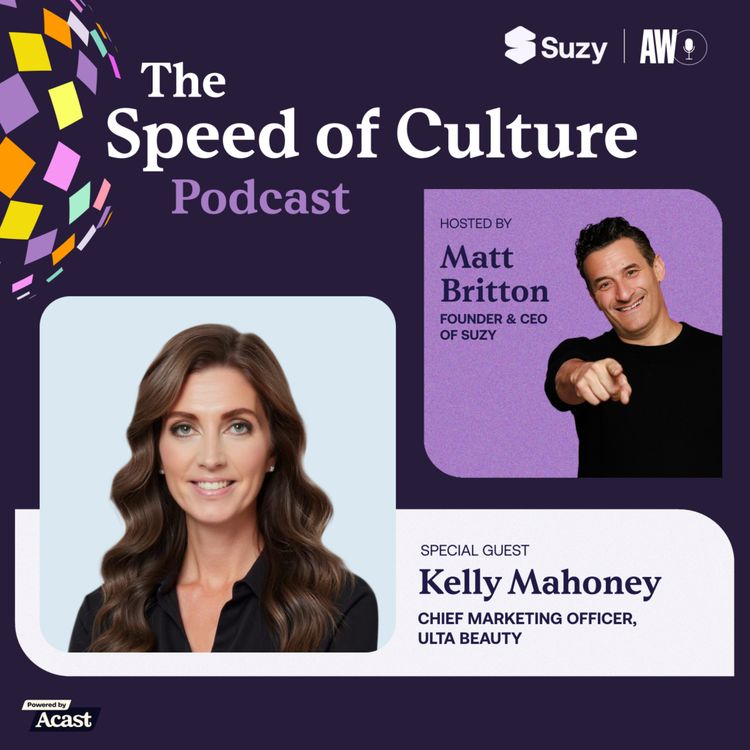
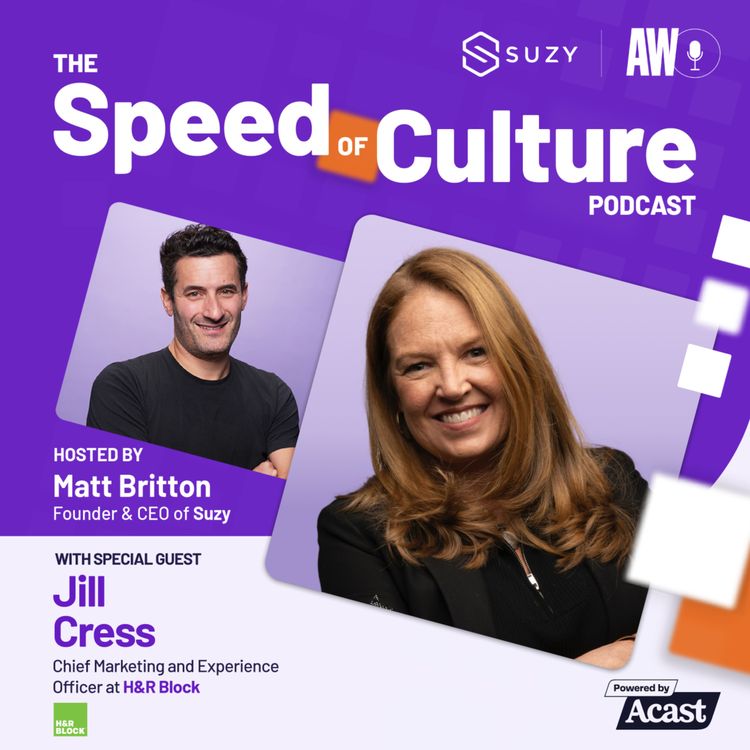
The tax preparation industry has long been defined by seasonal engagement—customers show up once a year, file their taxes, and disappear until the next filing season. But that era is ending. In Episode 111 of The Speed of Culture Podcast, Matt Britton, founder and CEO of Suzy, the AI-powered consumer intelligence platform, sat down with Jill Cress, Chief Marketing and Experience Officer at H&R Block, to discuss how the iconic tax brand is dismantling the seasonal cycle and transforming itself into a year-round financial services powerhouse.
For over 75 years, H&R Block built its reputation on one simple promise: making tax preparation accessible and stress-free. But in today's digital-first, consumer-centric marketplace, accessibility means more than office locations and paper forms. It means mobile apps, artificial intelligence, seamless digital experiences, and financial services that meet consumers where they are—literally and figuratively.
Under Cress's leadership, H&R Block isn't just modernizing; it's fundamentally reimagining what a tax company can be. This conversation reveals critical insights about legacy brand transformation, the intersection of AI and customer experience, and how companies can honor their heritage while embracing radical change.
Cress's strategic vision—developed through decades of experience at Fortune 500 companies like MasterCard and PayPal—offers a masterclass in modern marketing leadership. Her focus on what she calls the "Four Es" (expertise, expectations, ease, and empathy) provides a framework that extends far beyond taxation into broader organizational transformation across industries.
The episode demonstrates that the most successful digital transformations aren't about abandoning what made a company great; they're about amplifying those strengths through modern channels and technologies. For CMOs, marketing leaders, and executives navigating their own digital pivots, Cress's approach offers both inspiration and practical roadmap. This episode aired on May 23, 2024, and has since become essential listening for anyone leading transformation in mature industries.
The Legacy Brand Conundrum: Balancing Heritage with Innovation
H&R Block's position in the marketplace presents both extraordinary advantage and extraordinary challenge. The company has spent generations building unshakeable brand trust—consumers think of H&R Block when they think of tax preparation. Yet that same strength creates gravitational pull toward the past.
How do you evolve when customers know exactly what to expect from you? How do you innovate without alienating the core audience that has made you successful?
Jill Cress tackles this paradox head-on. Rather than viewing heritage and innovation as opposing forces, she frames them as complementary.
H&R Block, she explains, "built the tax category," and the company's responsibility is to "continue to energize it and revitalize our brand."
This distinction is critical. Revitalization doesn't mean obliteration. It means taking what made H&R Block legendary—expertise, trustworthiness, and consumer focus—and translating those values into contemporary mediums.
Cress's background uniquely positions her for this challenge. Her two-decade tenure at MasterCard, followed by leadership roles at PayPal and National Geographic, taught her that great brands live at the intersection of consistency and evolution. Each of these companies mastered the art of remaining relevant across generations of technological change.
The legacy brand challenge manifests in multiple dimensions. First, there's the perception problem: many consumers still view H&R Block through a traditional lens, associating it with in-person appointments and paper-based processes.
Second, there's the organizational challenge of shifting internal mindsets when you're asking teams to operate in radically different ways. Third, there's the customer expectation challenge—existing customers who love H&R Block's current model might resist change, while new, digitally-native consumers might never consider a tax service they perceive as outdated.
What Cress recognized is that addressing these challenges requires more than cosmetic updates. It requires fundamental rethinking of the business model, the customer journey, and the company's reason for existing.
Instead of asking “How do we bring H&R Block into the digital age?” she asks, “What does H&R Block's mission look like in a digital-first world?” That reframing unlocks different solutions, different strategies, and different possibilities.
From Seasonal Engagement to Year-Round Relevance: Expanding the H&R Block Opportunity
For generations, H&R Block's business has operated on an annual cycle. Customers engage heavily during tax season (January through April), then disappear. This seasonality limits revenue, constrains growth, and prevents the kind of ongoing relationships that generate customer loyalty and lifetime value.
Cress's strategic imperative is audacious: transform H&R Block from a seasonal brand into a constant presence in consumers' financial lives.
This pivot requires expanding beyond tax preparation into broader financial services. H&R Block's "Block Horizons" strategy includes three core pillars:
- Small business services
- Financial products
- The Block experience itself
The most consumer-facing element is the development of a mobile banking app designed to deliver comprehensive financial solutions at lower costs than traditional banking institutions.
This strategy directly addresses a significant market opportunity. Approximately one-third of H&R Block's 20 million tax customers are under-banked or unbanked—they lack access to affordable, trustworthy financial services. These customers already have a relationship with H&R Block; they trust the brand.
Now H&R Block can deepen and expand that relationship by serving needs that exist the other eleven months of the year. The mobile banking app builds on the success of H&R Block's Emerald Debit Card, a financial product that has been refined over years of serving customers.
The app transforms that point product into a comprehensive financial platform—a digital hub where customers can manage accounts, access credit, pay bills, and build financial confidence throughout the year.
This year-round relevance strategy addresses a fundamental business truth: companies with engaged customers year-round generate stronger retention, higher lifetime value, and more opportunities for cross-sell. By expanding beyond tax preparation, H&R Block isn't abandoning its core business; it's ensuring that business remains viable and profitable in an increasingly digital, increasingly competitive marketplace.
The competitive advantage is substantial. Tax preparation is becoming commodified; software like TurboTax has democratized the process, and IRS initiatives have increased free-file options.
Financial services, by contrast, requires the trust, expertise, and customer relationships that H&R Block has spent decades building. By leveraging its existing customer base to offer financial services, H&R Block creates defensibility and growth that pure tax preparation can no longer provide.
Artificial Intelligence as the Great Enabler: Technology Meets Human Expertise
Perhaps no topic received more attention in the episode than artificial intelligence. H&R Block, like virtually every enterprise organization, is navigating the profound implications of generative AI.
Unlike some industries where AI adoption remains theoretical, tax preparation is one where AI's practical applications are immediately apparent and increasingly essential.
H&R Block developed AI Tax Assist, the industry's first generative AI-powered tax solution for consumers. This isn't a gimmick or a marginal feature; it's a core product innovation designed to make tax preparation simultaneously more accurate and more accessible.
The system leverages large language models to understand complex tax situations, explain requirements in plain language, and guide customers through the filing process with the expertise that typically requires a human tax professional.
Cress emphasizes that this AI implementation isn't about replacing human expertise—it's about augmenting it. The company's "Four Es" framework guides this integration: expertise, expectations, ease, and empathy.
AI serves each of these dimensions. It brings expertise to conversations that might otherwise lack it, enables ease through natural language interaction, and demonstrates empathy through personalized guidance.
The implementation of AI across H&R Block's operations has been aggressive. Cress notes that her teams have increased their use of AI-powered marketing tools by 24%.
This isn't limited to customer-facing AI; it's embedded throughout the organization—in marketing, customer service, product development, and business operations. This enterprise-wide adoption creates competitive advantage because it enables faster iteration, more personalized customer experiences, and higher operational efficiency.
However, Cress is careful to note that AI adoption without strategic guardrails can become counterproductive. The technology is most powerful when deployed in service of clear strategic objectives—in H&R Block's case, making tax preparation and financial services more accessible, more accurate, and more empowering for consumers.
Without that north star, organizations risk deploying AI for its own sake, creating solutions in search of problems.
The broader insight here applies to any industry grappling with AI transformation. The companies that succeed are those that see AI not as a replacement technology but as an enabler—a tool that allows organizations to deliver on their core mission more effectively.
Engaging Gen Z Through Cultural Relevance: The Responsibility Island Campaign
One of the most interesting dimensions of Cress's strategy is her commitment to engaging younger audiences—particularly Gen Z consumers who didn't grow up with H&R Block and might never have considered the brand if the company relied on traditional marketing approaches.
This challenge led to an unconventional campaign: Responsibility Island, a fake reality show concept inspired by Love Island.
The campaign positions financial responsibility as entertainment, creating content that educates young consumers about financial literacy while entertaining them in formats they consume naturally.
Rather than creating a formal, serious advertisement about tax preparation, H&R Block created something that feels native to Gen Z culture—irreverent, entertaining, and accessible.
This campaign illustrates a critical truth about modern brand marketing: CMOs can no longer rely on traditional advertising to engage younger audiences. Gen Z doesn't watch commercial television; they consume TikTok, Instagram, YouTube, and podcasts.
They're skeptical of direct advertising and respond to authentic, entertaining content. By meeting this audience in their native media and using cultural formats they recognize and enjoy, H&R Block builds awareness and affinity without feeling like marketing.
The campaign also addresses an educational gap. Financial literacy among Gen Z is concerningly low—many young adults lack basic understanding of taxes, debt, and financial responsibility.
H&R Block's Responsibility Island doesn't just promote the brand; it addresses a genuine societal need by making financial education entertaining. This is a manifestation of what modern consumers increasingly expect from brands: that they contribute positively to society, not just sell products.
Cress's willingness to take creative risks with unconventional campaigns reflects deeper strategic thinking about brand relevance. For legacy brands trying to engage new audiences, traditional approaches often fail because they reinforce the brand's outdated identity.
By creating culturally resonant, entertaining content, H&R Block signals that the company understands contemporary consumer culture and isn't stuck in the past.
Leadership and Organizational Transformation: The Cress Philosophy
Beyond the specific strategies H&R Block is pursuing, the episode offers valuable insights into leadership philosophy during transformation. Cress herself represents a particular leadership archetype: the experienced executive from prestigious companies brought in to modernize an organization.
This role carries specific challenges—you're simultaneously an insider (responsible for honoring the organization's legacy) and an outsider (brought in to disrupt the status quo).
Cress's background—30+ years in marketing at Fortune 500 companies—provides credibility and institutional knowledge. But it's her approach to organizational change that truly distinguishes her leadership.
Rather than appearing as an external disruptor, she frames her role as revitalization. She emphasizes that H&R Block's core strengths remain valid and valuable; the company simply needs to translate those strengths into modern contexts.
Her experience at MasterCard, where she spent over 20 years, taught her that institutional knowledge and career longevity create organizational advantages.
When you spend decades in an industry, you develop deep understanding of how markets evolve, how consumer behavior shifts, and how technology transforms possibility. You've seen trends emerge and fade, watched competitors rise and fall, and developed intuition about what endures versus what's temporary.
This perspective is increasingly rare in modern business culture, where executive mobility and frequent job changes are normalized.
Cress's message is subtle but important: there's significant value in deep expertise and long-term commitment. Organizations that retain talented people across multiple roles and geographies build adaptability and institutional wisdom that shorter-tenure leaders cannot match.
At H&R Block, this philosophy manifests in empowering teams to evolve their roles, creating space for innovation without abandoning established expertise, and building organizational culture that honors what made the company great while embracing necessary change.
It's a balance that's easier to describe than execute, which is why Cress's leadership has been so consequential for the company's transformation.
Key Takeaways
- Legacy brands can successfully transform by amplifying heritage values through modern channels, rather than abandoning what made them distinctive. H&R Block's focus on expertise, expectations, ease, and empathy applies equally to digital products and traditional services.
- Year-round relevance and expanded services create sustainable growth for seasonal businesses, moving from annual customer engagement cycles to ongoing relationships that generate consistent revenue and lifetime value.
- AI is most powerful when deployed as an enabler of human expertise, not a replacement for it. H&R Block's approach demonstrates that the future of work involves human and artificial intelligence working in concert, each enhancing the other.
- Engaging younger audiences requires meeting them in cultural contexts they inhabit naturally, using formats and entertainment styles that feel native rather than corporate. Unconventional campaigns like Responsibility Island can build brand affinity more effectively than traditional advertising.
- Deep industry expertise and long-term organizational commitment create advantages in navigating transformation, particularly when leaders understand both the historical context of their industry and the emerging technologies reshaping it.
FAQ
How is H&R Block using artificial intelligence to transform tax preparation?
H&R Block developed AI Tax Assist, powered by large language models, to enhance both accuracy and accessibility in tax preparation. The system guides customers through complex tax situations, explains requirements in plain language, and provides expertise equivalent to consulting with a tax professional. Rather than replacing human expertise, the AI augments it, allowing H&R Block to serve more customers more efficiently while maintaining the quality of advice.
What is the "Four Es" framework that guides H&R Block's customer experience strategy?
The Four Es—expertise, expectations, ease, and empathy—represent H&R Block's core pillars for customer experience. Expertise means drawing on decades of tax knowledge and professional training. Expectations means delivering what customers anticipate from the brand. Ease means creating frictionless, seamless customer journeys. Empathy means treating customers with respect and understanding their financial anxieties. These principles guide product decisions, feature development, and customer service approaches.
How is H&R Block transitioning from a seasonal business model to year-round engagement?
H&R Block is expanding beyond tax preparation into broader financial services through its Block Horizons strategy, which includes small business services, financial products, and enhanced Block experience. The company is developing a mobile banking app that leverages its existing relationship with 20 million customers—particularly the one-third who are under-banked—to provide financial services throughout the year, not just during tax season.
Why did H&R Block create the Responsibility Island campaign, and what does it say about modern marketing?
Responsibility Island is an unconventional, entertainment-focused campaign inspired by Love Island, designed to engage Gen Z audiences through culturally native formats. The campaign demonstrates that modern brands must meet younger consumers where they actually consume content—not through traditional advertising. It positions financial responsibility as entertainment, addressing educational gaps while building brand affinity through authentic, entertaining content rather than direct marketing.
Looking Ahead
The Speed of Culture episode with Jill Cress represents a masterclass in digital transformation, legacy brand evolution, and modern marketing leadership. As industries across the economy grapple with AI adoption, digital disruption, and shifting consumer expectations, the approaches H&R Block is pioneering offer a valuable roadmap.
For CMOs and marketing leaders, the key insight is that transformation isn't binary—you don't have to choose between honoring your legacy and embracing innovation. Instead, the most successful organizations identify the core values that made them great and find new ways to deliver on those values through modern channels and technologies.
Learn more about consumer intelligence and business strategy at Suzy, the platform that powers The Speed of Culture Podcast. Explore more episodes and deep dives into modern marketing at The Speed of Culture Podcast.
For insights on AI and generational trends, discover Generation AI by Matt Britton. If you're interested in keynote speaking or expert consultation on these topics, explore AI keynote speaker options and Speaker HQ.

%20(400%20x%20100%20px)%20(300%20x%2050%20px)%20(150%20x%2050%20px).avif)

.jpeg)


.jpeg)
.jpeg)