Opening
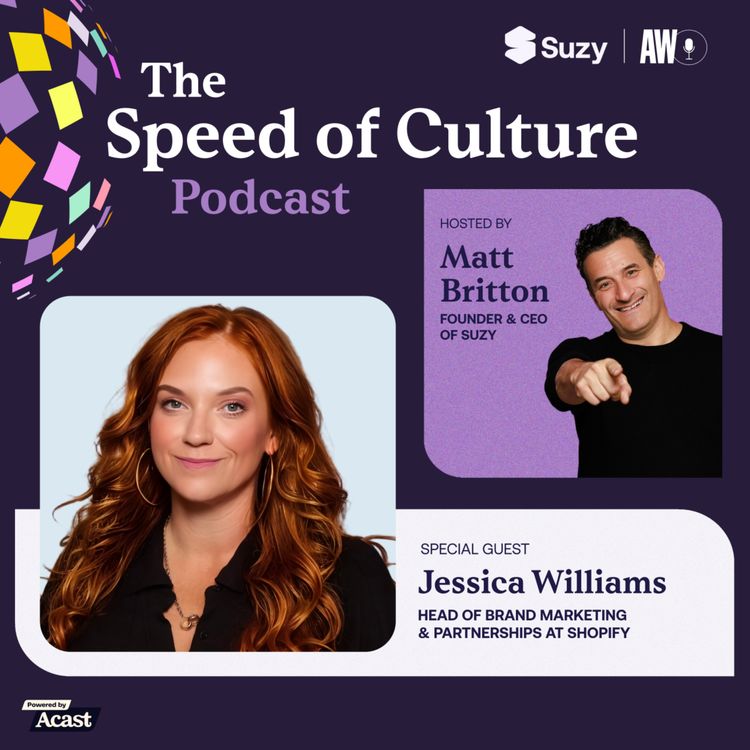
In a rapidly evolving digital landscape, the convergence of social media and e-commerce has become impossible to ignore. On June 24, 2025, the Speed of Culture Podcast explored this transformative intersection with Jessica Williams, Head of Brand Marketing & Partnerships at Shopify. Hosted by Matt Britton, founder and CEO of Suzy, the AI-powered consumer intelligence platform, the episode delved into the critical trends reshaping how businesses connect with consumers, build authenticity, and drive revenue through innovative social shopping experiences.
The discussion arrived at a pivotal moment in retail history. Global social commerce sales reached $87.02 billion in 2025—a 21.5% year-over-year increase—with projections suggesting the market will surpass $100 billion by 2026. TikTok Shop alone captured nearly 20% of U.S. social commerce, generating $15.82 billion in annual sales with a staggering 407% growth rate from the previous year.
Meanwhile, 70% of global consumers now expect to shop primarily through social media by 2030, fundamentally reshaping how brands must operate.
Williams articulated why this moment matters: Shopify serves as more than a platform—it functions as an operating system for modern entrepreneurship. The company has moved beyond facilitating transactions to enabling authentic relationships between brands and consumers.
Research shows that 86% of consumers make at least one purchase influenced by creators annually, with nano-influencers (representing 75.9% of Instagram's influencer base) achieving engagement rates 50% higher than traditional marketing channels.
The episode covered five critical dimensions of this transformation: how Shopify operates as a strategic partner for entrepreneurs, why AI has become a baseline rather than a luxury feature, how creator partnerships drive measurable commerce outcomes, why authenticity trumps pure product promotion, and what the emergence of platforms like TikTok Shop means for the entire e-commerce landscape.
“Shopify is a relationship business. We are helping you with the tools, but also with the people.”
This philosophy represents a fundamental shift in how successful e-commerce companies must think about their role in the entrepreneurial ecosystem. For decision-makers at Fortune 500 companies and emerging DTC brands alike, understanding these dynamics has become critical to competitive survival in 2025 and beyond.
Shopify as an Operating System: Beyond the Platform Model
Shopify's evolution from an e-commerce platform to a comprehensive operating system for entrepreneurs represents one of the most significant shifts in digital commerce infrastructure. Jessica Williams explained that Shopify now handles the complete infrastructure entrepreneurs need—from storefront customization and payment processing to supply chain logistics and customer relationship management.
This integrated approach allows creators and business owners to focus on what they do best: building authentic brands and creating compelling content.
The traditional platform model positioned e-commerce providers as transactional intermediaries. Shopify’s evolved approach treats the platform as a full-stack business partner, integrating multiple sales channels—including TikTok Shop, Roblox, Instagram, and Facebook—while synchronizing inventory, fulfillment, accounting, and analytics.
Shopify works with over 250 YouTube creators, helping them establish sustainable businesses built on audience trust rather than viral moments. One notable example: MrBeast joined Shopify's creator program when he had just 3 million followers. Through integrated tools and strategic support, he leveraged his audience into a successful merchandise business.
The creator economy reached $32.55 billion globally in 2025, with creators earning 70% of their income from brand partnerships. By positioning itself as a comprehensive operating system, Shopify addresses operational complexity and enables authentic creator-to-consumer relationships at scale.
AI as Baseline Infrastructure: Embedding Intelligence Across Operations
One of the most striking themes from the episode was that artificial intelligence has moved from optional enhancement to essential baseline functionality. Shopify embeds AI throughout its platform and requires team-wide experimentation with tools like ChatGPT and Perplexity.
For merchants, AI powers product description generation, image enhancement, and personalization engines that recommend products based on individual behavior.
Among U.S. retailers, 42% now leverage AI technologies to boost performance and reduce time-to-market. 89% of businesses in retail and CPG are either actively using or experimenting with AI tools. Businesses that tailor recommendations through AI generate up to 40% more revenue than traditional approaches.
Shopify democratizes these capabilities, making them accessible to merchants of all sizes. Meanwhile, 70% of global shoppers want AI-powered features such as virtual try-ons and AI shopping assistants, and 78% expect personalized e-commerce experiences.
Creator Partnerships That Convert: Building Authentic Commerce at Scale
Shopify’s creator strategy prioritizes long-term relationships and measurable outcomes over viral reach. Its partnership with MrBeast began early in his growth journey, recognizing that audience trust would translate into sustainable commercial opportunity.
Nano-influencers (fewer than 10,000 followers) now achieve 2.71% engagement rates—approximately 50% higher than micro-influencers. Audience depth often outperforms audience breadth.
In 2025, global influencer marketing spending reached $32.55 billion, with brands achieving an average $5.78 return for every dollar spent. Top campaigns generated $11–$18 ROI per dollar, particularly through micro and mid-tier creator partnerships.
Research shows that 49% of consumers rely on customer reviews with images when making purchase decisions. Authentic creator partnerships naturally generate the kind of social proof consumers increasingly demand.
Authenticity as Commercial Strategy: Moving Beyond Transactional Relationships
The central thesis of the episode: authenticity is now the primary competitive advantage in commerce. Brands must shift from acquisition-only metrics to relationship metrics like repeat purchase rate, customer lifetime value, and brand affinity.
Live shopping events on TikTok, Facebook, and Instagram drive conversion because they create real-time, unfiltered interaction between brands and consumers.
Williams cited partnerships with brands such as Fenty, Serena Williams’ WYN, and Eastside Golf as examples of authentic alignment between creator identity and brand mission.
86% of consumers make at least one creator-influenced purchase annually, and 49% make influenced purchases daily, weekly, or monthly. Consumers reward authenticity—and quickly punish inauthenticity.
- Higher repeat purchase rates: Genuine connection increases purchase frequency and average order value.
- Organic word-of-mouth: Authentic brands inspire voluntary consumer advocacy.
- Pricing power: Consumers pay premiums for brands they trust.
- Crisis resilience: Authentic communities offer brands the benefit of the doubt.
- Creator attraction: Values-aligned brands attract higher-quality partnerships.
TikTok Shop and the New Social Commerce Landscape
TikTok Shop reached $15.82 billion in U.S. sales in 2025, growing 108% year-over-year and capturing 18.2% of total U.S. social commerce. During Black Friday and Cyber Monday 2025, the platform generated $500 million in sales, with a 50% increase in shopper participation.
The platform reaches 71.4 million U.S. social shoppers, and 45.5% of U.S. TikTok users have made at least one social commerce purchase.
However, Shopify emphasizes a critical distinction: integration versus replacement. Merchants must leverage TikTok Shop for discovery while maintaining owned customer relationships and data.
By centralizing inventory, orders, and analytics across TikTok Shop, Roblox, Instagram, and Facebook, Shopify enables multi-channel selling without sacrificing long-term customer ownership.
Key Takeaways
- AI has evolved from innovation to infrastructure: Embedded intelligence across workflows democratizes competitive advantage.
- Creator partnerships drive sustainable growth: Long-term relationships outperform transactional influencer campaigns.
- Authenticity is the primary competitive edge: Transparent, values-driven brands win consumer trust.
- Merchants must own customer relationships: Social platforms drive discovery, but owned data drives lifetime value.
- Social commerce is now market reality: With projections exceeding $100 billion, strategic integration is mandatory.
Frequently Asked Questions
What makes Shopify's approach to AI different from competitors?
Shopify treats AI as baseline infrastructure rather than a premium feature. It embeds AI across merchant workflows and emphasizes practical experimentation, enabling businesses of all sizes to access advanced capabilities.
How can brands effectively use TikTok Shop without sacrificing customer relationship data?
Brands should integrate TikTok Shop as a discovery channel while maintaining owned channels such as websites and email lists. Shopify’s integration approach centralizes operations while preserving merchant control of customer relationships.
Why do nano-influencers outperform traditional influencer partnerships?
Nano-influencers achieve 2.71% engagement rates because they cultivate deeper trust with smaller audiences. Their authenticity often drives higher ROI at lower cost.
What percentage of consumers expect to shop through social media?
70% of global consumers expect to shop primarily through social media by 2030. In 2025 alone, 114.3 million Americans are social media shoppers.
Looking Ahead
The convergence of social media, the creator economy, and artificial intelligence has fundamentally restructured e-commerce in 2025. Success now belongs to companies that enable authentic creator-to-consumer relationships at scale while providing operational independence.
To deepen your understanding of consumer trends driving these changes, explore Suzy’s AI-powered consumer intelligence platform. For the complete episode and more insights, visit The Speed of Culture Podcast.
For deeper exploration of how AI shapes consumer behavior and business strategy, review Generation AI: The Book by Matt Britton. Organizations seeking expert guidance can learn more about AI keynote speaking or visit Speaker HQ for strategic consultation.

%20(400%20x%20100%20px)%20(300%20x%2050%20px)%20(150%20x%2050%20px).avif)

.jpeg)


.jpeg)
.jpeg)