Opening Section
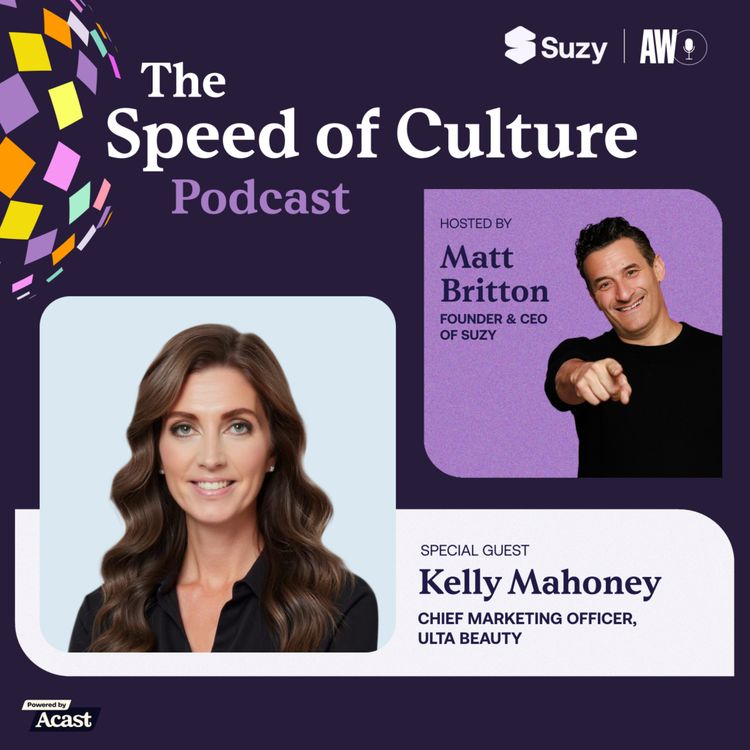
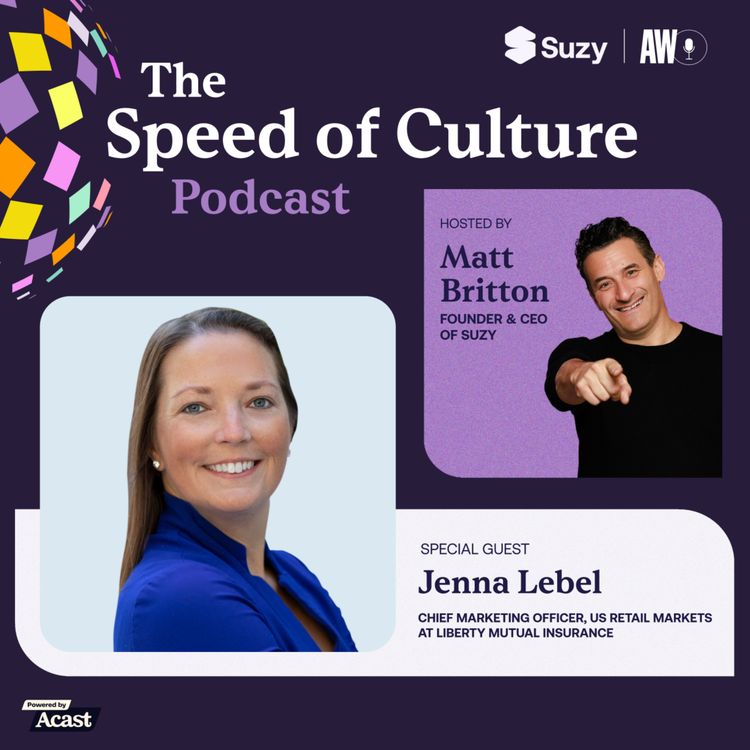
In the sprawling landscape of consumer brand interactions, few marketing elements create as immediate—or as lasting—an impression as a well-crafted jingle. Yet most brands treat audio branding as an afterthought, a supplementary element to visual campaigns rather than a cornerstone of brand identity. The Speed of Culture Podcast's Episode 206, featuring Jenna Lebel, Chief Marketing Officer of US Retail Markets at Liberty Mutual Insurance, presents a compelling counter-narrative: the jingle, when engineered with precision and tested rigorously, becomes far more than a catchy tune.
It becomes a cognitive anchor that drives measurable brand recall, consumer preference, and competitive differentiation in commoditized markets.
Liberty Mutual's iconic "Liberty, Liberty, Liberty…Liberty" jingle represents a masterclass in audio branding strategy. Rather than relying on intuition or creative instinct alone, the company implemented a data-driven methodology that tested over a dozen potential audio signatures for recall, resonance, playback, memorability, and brand fit. The results speak volumes: the jingle ranks third in Veritonic's latest audio logo index, demonstrating measurable impact in a crowded insurance marketplace where emotional connection traditionally proves elusive.
What makes this achievement particularly relevant is its broader business implication—at a time when brands struggle to differentiate in increasingly commoditized categories, Liberty Mutual discovered that distinctive sensory branding, when combined with consistent deployment and integration into broader cultural narratives, can generate significant competitive advantage.
This episode brings particular relevance to marketing leaders and brand strategists grappling with questions that define 2025 and beyond: How do you build emotional connections in low-engagement categories? What role does artificial intelligence play in modern creative development? How do you design platform-native content that resonates with Gen Z audiences consuming an equivalent of 300 feet of content daily?
Matt Britton, founder and CEO of Suzy, the AI-powered consumer intelligence platform, explores these questions with Lebel in a conversation that touches on everything from quantitative audio testing methodologies to the psychology of brand recall, from the unexpected cultural penetration of the Limu Emu and Doug mascot duo to the future of AI-augmented creative development.
The conversation reveals an essential truth for modern marketing executives: in an era where consumer attention fragments across dozens of platforms and messaging clutter reaches unprecedented levels, the smallest, most distinctive elements of brand communication—a memorable four-note sequence, a humorous character pairing, a repeated verbal cue—can become disproportionately powerful drivers of business outcomes.
Lebel's insights demonstrate that building such elements requires neither guesswork nor genius. It requires methodology, measurement, and the courage to embrace what might initially seem like unconventional creative choices.
The Science of Sonic Branding: How Liberty Mutual Built an Audio Identity Through Rigorous Testing
The development of Liberty Mutual's jingle represents a departure from traditional advertising creative processes. Rather than assembling a creative team, brainstorming intuitively, and selecting the most aesthetically pleasing option, Liberty implemented a rigorous quantitative testing methodology more commonly associated with pharmaceutical trials or engineering specifications.
This approach reflects a broader marketing evolution: the increasing sophistication of measurement tools, the availability of consumer research methodologies, and the growing recognition that creative decisions can—and should—be grounded in empirical evidence.
Liberty Mutual's process began with a fundamental question: what acoustic properties drive brand recall and consumer preference in the insurance category? To answer this, the company commissioned over a dozen unique musical compositions from Elias Art Music House, each representing different tonal qualities, melodic structures, rhythmic patterns, and overall sonic personalities.
Rather than present these options to a small group of creative executives for subjective evaluation, Liberty tested them across a large, quantitative study designed to measure specific psychological and behavioral outcomes.
The testing framework evaluated multiple dimensions that research has shown correlate with long-term brand memory and consumer preference:
- Recall — the ability of consumers to remember the jingle when prompted with the brand name.
- Playback — whether consumers could actively reproduce the jingle.
- Memorability — whether casual exposure created lasting impressions.
- Likability — emotional resonance and aesthetic appeal.
- Brand fit — whether the sonic personality aligned with Liberty's desired market positioning and brand values.
This multidimensional approach reflects the neuroscience of memory: effective branding doesn't rely on a single psychological mechanism but rather creates multiple pathways to consumer remembrance.
The winning composition—the jingle that ultimately became synonymous with Liberty Mutual's brand identity—demonstrates the power of strategic simplicity. By repeating the brand name no fewer than four times within a concise, memorable melodic phrase, the jingle leverages what psychologists call "fluency encoding."
This principle suggests that repeated exposure to a specific stimulus, particularly when that exposure occurs in a consistent, predictable pattern, creates neural pathways that facilitate faster, more automatic brand recognition. When consumers encounter the brand in a decision-making moment, the jingle activates almost instantaneously, preceding conscious deliberation.
The jingle's performance in independent industry benchmarks validates Liberty's testing methodology. Veritonic, a leading authority on audio logo effectiveness, ranks audio signatures based on consumer testing data evaluating memorability, brand linkage, and emotional resonance across diverse demographic cohorts.
Liberty Mutual's jingle achieved a top-three placement in Veritonic's latest audio logo index. In the US market specifically, Liberty's jingle ranked second in brand identification, surpassed only by Nationwide's long-established audio signature.
Additional research reinforces the business case for audio branding. A comprehensive analysis of consistent jingle implementation across all consumer touchpoints revealed that companies deploying jingles systematically experienced 34% higher brand recall scores compared to those using them inconsistently.
Further research examining specific melodic properties discovered that jingles incorporating particular musical intervals achieve 73% higher recall rates compared to randomly composed melodies.
These findings suggest that Liberty's rigorous testing process, rather than representing an unnecessary expense, actually functions as an investment in measurable brand equity.
Platform-Native Content Strategy: Translating Audio Branding Into Generational Relevance
Developing a memorable jingle represents only the first phase of a comprehensive audio branding strategy. The subsequent challenge involves integrating that audio signature into content ecosystems aligned with how modern consumers—particularly younger demographics—actually consume information and entertainment.
Research indicates that Gen Z audiences consume the equivalent of roughly 300 feet of digital content daily. Traditional thirty-second television commercials, when simply repackaged as social media content, typically underperform because they violate platform-specific aesthetic and pacing conventions.
Liberty responded by designing content specifically for platforms like TikTok, Instagram Reels, and YouTube Shorts. The company translated the jingle and Limu Emu/Doug characters into iPhone-style TikTok videos that leverage the informal, behind-the-scenes aesthetic that defines generational platform culture.
Rather than presenting highly polished, professionally produced content, Liberty created videos that mimicked the rough-hewn, authentic quality of user-generated content. This aesthetic choice signals authenticity, reduces cognitive friction, and allows the jingle to function as a conversational element rather than a manufactured audio logo.
Beyond internal content creation, Liberty Mutual partnered with digital creators and influencers to extend reach and cultural relevance. These partnerships functioned as collaborative creative endeavors, where brand, creator, and audience co-created meaning around shared cultural references.
This pivot from “being on platforms” to “designing for platforms” represents a critical evolution in marketing sophistication. By consistently appearing in spaces where Gen Z audiences spend time—in forms that respect platform norms—Liberty builds familiarity and positive brand associations among younger demographics.
As Gen Z ages and develops independent insurance purchasing power, brands that have already established positive associations through culturally appropriate marketing will benefit from both higher brand recall and more favorable brand sentiment.
The Limu Emu and Doug Effect: Mascot Strategy as Cultural Currency
The introduction of Limu Emu and Doug in 2019 represented a calculated risk in brand strategy. The idea of introducing an animated emu in partnership with a whimsical human character seemed to violate traditional insurance marketing norms.
Yet the mascot duo became not only culturally relevant but culturally ubiquitous.
The strategic logic reveals insight into category dynamics and consumer psychology. In a commoditized market where most competitors offer similar coverage at similar price points, emotional differentiation becomes critical.
Liberty solved this paradox by introducing characters that made insurance entertaining and slightly absurd. The duo created social permission for discussing insurance in informal, humorous contexts.
The evidence of cultural penetration proved remarkable. The characters achieved Saturday Night Live parody status, appeared as clues in The New York Times crossword puzzle, and became annual Halloween costume staples.
Liberty's research demonstrated that the characters drove measurable business outcomes: strong brand recognition, comprehension of the “only pay for what you need” value proposition, and increased consumer trust.
This finding contradicts traditional marketing wisdom suggesting serious categories require serious presentations. Liberty's evidence suggests that humor and authenticity can actually increase trust.
By virtue of being culturally interesting, the characters transformed Liberty Mutual from an advertiser into a content source—one that consumers voluntarily engage with and share.
Artificial Intelligence and the Future of Integrated Marketing Strategy
The conversation between Jenna Lebel and Matt Britton addresses how artificial intelligence integrates into modern marketing. Lebel identifies a four-part framework for AI's role:
- Creative development
- Media buying
- Operational efficiency
- Consumer behavior insights
In creative development, AI assists with ideation and rapid prototyping. It can generate visual variations, compose musical options, and produce copy variations for testing—supporting the kind of rigorous experimentation that defined Liberty's jingle process.
Media buying has seen transformative AI impact through programmatic platforms that optimize budget allocation and targeting in real time.
Operational efficiency gains come from automating administrative and analytical tasks, freeing human teams for higher-value strategic work.
Most strategically significant is AI-powered consumer insight. Platforms like Suzy enable rapid, cost-effective consumer testing at scale, fundamentally changing how brands approach product development and messaging refinement.
Lebel emphasizes maintaining ethical guardrails while experimenting boldly with emerging technologies. The most sophisticated approach involves rapid experimentation within clear boundaries, continuously evaluating whether new tools improve outcomes.
Measurement, Attribution, and Connecting Marketing to Business Outcomes
Throughout the conversation, Lebel emphasizes connecting marketing metrics to actual business KPIs. Many organizations optimize for intermediate metrics like impressions and clicks while remaining ambiguous about business impact.
Liberty Mutual measures how the jingle correlates with brand recall, brand preference, and insurance purchase behavior. The company monitors industry benchmarks, conducts custom brand research, and tracks awareness and preference over time.
This discipline reflects a broader evolution in marketing sophistication. Digital platforms enable precise measurement, yet attribution and long-term impact remain challenges.
Lebel frames marketing initiatives not as creative achievements but as business drivers—articulating revenue impact, customer acquisition cost, and lifetime value implications.
This translation into business language positions marketing as a driver of strategic value rather than a creative service function.
Key Takeaways
- Audio branding, when engineered through rigorous quantitative testing and deployed consistently, drives measurable improvements in brand recall and consumer preference.
- Platform-native content strategy requires designing specifically for each channel’s unique characteristics rather than adapting broadcast creative.
- Humor and cultural relevance can increase consumer trust even in serious categories when executed authentically.
- Artificial intelligence amplifies marketing capabilities but works best when integrated with human strategy and clear ethical guardrails.
- Connecting marketing initiatives to actual business outcomes separates sophisticated marketing organizations from those that struggle to justify investment.
Frequently Asked Questions
What makes Liberty Mutual's jingle so effective compared to other brand audio signatures?
Liberty's jingle succeeds through deliberate design informed by quantitative testing and consistent deployment. Repeating the brand name four times leverages fluency encoding, while pre-deployment testing ensured alignment with consumer preferences.
Its top-tier performance on Veritonic's audio logo index reflects the combination of precision engineering, validation, and cross-channel consistency.
How can insurance companies and other commoditized categories build emotional brand differentiation?
Liberty Mutual introduced culturally relevant characters and integrated the brand into entertainment-driven formats. By making the brand interesting, rather than the category itself, Liberty created emotional permission for engagement.
What measurement approach should marketers use to evaluate audio branding and creative initiatives?
Effective measurement connects creative initiatives to business outcomes. Liberty combined quantitative testing, benchmark monitoring, and custom research to correlate branding efforts with awareness, preference, and purchase behavior.
How should established brands approach platform-native content strategy?
Brands should rethink the relationship between core concepts and channel-specific execution. A strong concept may translate across platforms, but execution must respect each platform’s unique norms and audience expectations.
Looking Ahead
The Speed of Culture Podcast Episode 206 provides valuable perspective for marketing leaders navigating complex decisions about brand differentiation and organizational capability development.
Jenna Lebel's leadership at Liberty Mutual demonstrates that combining quantitative discipline with cultural intuition—and connecting creative initiatives directly to business outcomes—drives competitive advantage that transcends any single tactic or channel.

%20(400%20x%20100%20px)%20(300%20x%2050%20px)%20(150%20x%2050%20px).avif)

.jpeg)


.jpeg)
.jpeg)