Opening
When the Vegas Golden Knights first took to the ice in 2017, few expected them to become one of sports' most remarkable expansion success stories. Yet within their first season, the team had captivated a city, filled an arena night after night, and created a fanbase from scratch.
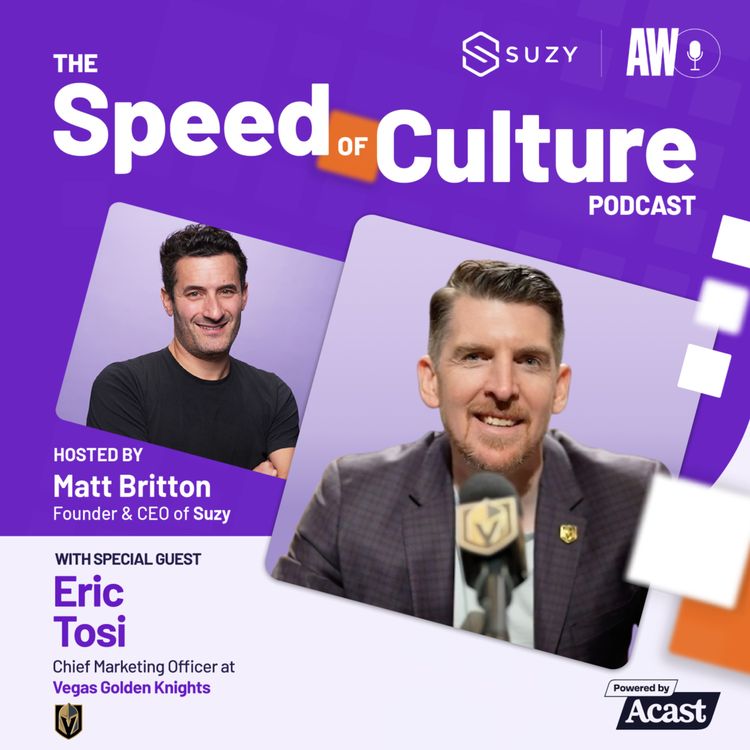
Behind this unprecedented achievement lies strategic, innovative marketing orchestrated by Chief Marketing Officer Eric Tosi. In Episode 112 of the Speed of Culture Podcast, Matt Britton, founder and CEO of Suzy, the AI-powered consumer intelligence platform, sat down with Tosi to explore how sports marketing, cultural strategy, and authentic brand building transformed Las Vegas's relationship with professional hockey.
The Vegas Golden Knights' marketing story is not merely about selling tickets or merchandise. It represents a masterclass in understanding consumer psychology, leveraging local pride, and building an emotional connection to a brand that didn't exist just years earlier.
As Matt Britton discusses with Eric Tosi, the intersection of sports, culture, and data-driven marketing reveals powerful insights applicable to any organization seeking to build brand loyalty and cultural relevance in competitive markets.
The role of sports in revitalizing Las Vegas cannot be overstated. For decades, Las Vegas marketed itself primarily around gambling, entertainment, and nightlife. While these industries remain cornerstones of the city's economy, the arrival of professional sports franchises—particularly the Golden Knights—added a new dimension to Vegas's identity.
Sports teams create tribal allegiances, generate community gatherings, and inspire genuine emotional investment from fans. The Golden Knights arrived at a moment when Las Vegas was ready to evolve, when residents wanted something uniquely theirs—a team to rally behind year-round, not just during vacation weekends.
Eric Tosi recognized this opportunity from day one. His marketing strategy wasn't designed to sell hockey to a city that had never prioritized the sport. Instead, Tosi's approach focused on selling the Golden Knights as Las Vegas's team—a symbol of the city's ambition, resilience, and cultural evolution.
This distinction proved pivotal. Rather than asking Vegans to adopt hockey, the marketing narrative invited them to adopt a team that represented their own identity and aspirations. From the beginning, Tosi understood that the Golden Knights' success depended on becoming woven into the fabric of Las Vegas culture, not standing apart from it.
The strategic marketing behind building an NHL expansion franchise from scratch demands a fundamentally different approach than marketing an established sports brand. Traditional sports teams inherited legacies, historic rivalries, and multi-generational fan bases. The Golden Knights had none of these advantages.
They were new, untested, and playing in a market where hockey had never established deep roots. Yet within this challenge lay an extraordinary opportunity: the ability to define the team's identity and culture from inception, free from historical constraints or legacy expectations.
The Challenge of Starting From Zero: Building a Hockey Brand in Las Vegas
Creating a fan base from scratch represents one of marketing's greatest challenges. The Vegas Golden Knights didn't inherit passionate hockey fans; they had to create them.
When the team was announced, many analysts questioned whether Las Vegas residents would embrace professional hockey. The city's culture seemed misaligned with the sport—Vegas was known for entertainment spectacle, quick thrills, and transient visitors, not the patient fandom typically associated with hockey.
Eric Tosi's first strategic decision involved reframing this perceived disadvantage as an opportunity. Rather than fighting against Vegas's entertainment culture, he leaned into it.
The Golden Knights' marketing embraced the pageantry, drama, and entertainment value that Vegas audiences expect. Game nights at T-Mobile Arena became events that transcended traditional sports entertainment.
The team invested heavily in pre-game shows, fan experiences, and theatrical elements that made attending a game feel like experiencing a Vegas production rather than simply watching a hockey match.
This approach differentiated the Golden Knights from traditional NHL franchises and aligned the team with Vegas's core identity. Fans didn't need to understand hockey's intricate rules or appreciate the sport's technical dimensions to be entertained by a Golden Knights game.
The complete experience—from entrance to exit—was designed to deliver the excitement, spectacle, and engagement that Las Vegas audiences craved.
Simultaneously, Tosi recognized the necessity of building genuine sports credibility. Entertainment alone couldn't sustain long-term fan loyalty.
The team needed to win, develop compelling players, and create authentic sports narratives that gave fans something to genuinely invest in. This dual strategy—combining Vegas entertainment values with legitimate sports excellence—proved remarkably effective.
Embracing Cultural Narratives: How the Golden Knights Became Vegas's Team
The Vegas Golden Knights' marketing success rested significantly on understanding and leveraging cultural narratives. The team's name itself—Golden Knights—connected to Vegas's glamorous heritage while invoking imagery of strength, valor, and nobility.
The logo, uniforms, and brand identity were designed with meticulous attention to aesthetic appeal and cultural resonance.
Beyond visual branding, Tosi focused on narratives that helped Las Vegas residents see themselves reflected in the team. The Golden Knights became a symbol of resilience during challenging times.
When tragedy struck Las Vegas in October 2017—just before the team's inaugural season—the Golden Knights stepped into a unique cultural position. The team became more than a sports franchise; it became a source of community healing and unity.
This moment illustrated something essential about sports marketing that data and algorithms alone cannot capture: the genuine, emotional role that sports teams can play in the life of a community.
Tosi understood that marketing the Golden Knights effectively meant recognizing and honoring these deeper cultural currents. The team's marketing didn't exploit the tragedy; rather, it authentically acknowledged the community's grief while positioning the Golden Knights as something hopeful and unifying.
The player acquisition strategy also played a crucial marketing role. Tosi and the hockey operations team worked together to build a roster that Vegas fans could authentically support.
Key players became cultural ambassadors, engaging with the community beyond the rink. The marketing department ensured that fans knew not just the players' statistics, but their stories—where they came from, why they loved playing for Vegas, and how they connected with the city and its residents.
Data-Driven Marketing: Understanding the Vegas Consumer
While cultural narratives form the emotional foundation of effective sports marketing, data and consumer intelligence drive strategic decision-making. This is where Suzy's approach to consumer intelligence becomes particularly relevant.
Understanding who the Vegas Golden Knights' potential fans were, what motivated their engagement, and how different audience segments responded to marketing messages proved essential to the team's success.
Eric Tosi's marketing strategy leveraged sophisticated audience segmentation. The team recognized that Vegas residents, tourists, casual sports fans, and committed hockey enthusiasts all represented different audience segments requiring tailored messaging.
A multi-generational family visiting Vegas from out of state needed different marketing messages than a local resident deciding whether to invest in season tickets.
The Golden Knights' marketing team used data to test messaging, optimize creative elements, and identify which channels reached different audience segments most effectively.
This data-driven approach allowed them to allocate marketing resources efficiently while personalizing communications in ways that increased relevance and response rates.
Furthermore, data-driven insights revealed surprising findings about Vegas consumers' sports preferences. Contrary to assumptions, many Las Vegas residents craved local sports franchises precisely because the city had been defined primarily through transient entertainment.
A permanent team that stayed in Vegas year-round, that represented the city's identity, and that local residents could support over multiple seasons filled a genuine consumer need that existed in the market.
The team's ability to mine consumer data, understand sentiment, and adapt marketing strategies based on audience response gave the Golden Knights a significant advantage over traditional sports franchises that operated from historical playbooks.
Building Authentic Fan Communities: Beyond Transactions
The most sophisticated sports marketing transcends transactional relationships between teams and fans. Eric Tosi's strategy focused on building authentic communities where fans felt genuine connection not just to the team, but to each other.
The Golden Knights' marketing created spaces—both physical and digital—where fans could gather, celebrate, and share their passion. Fan clubs, social media communities, and fan-centered events became central to the team's marketing ecosystem.
Rather than broadcasting messaging at fans, the team facilitated fan-to-fan connections and enabled fan-created content.
This community-building approach proved particularly valuable for expanding the fan base beyond initial hardcore sports enthusiasts. Casual fans who attended one game might be drawn into deeper engagement through fan communities.
Families attending games for entertainment value might develop genuine hockey interest through exposure to passionate fan communities. The marketing facilitated these organic progressions from casual consumer to committed fan.
The team also recognized the multiplier effect of authentic fan engagement. A satisfied fan who feels genuinely connected to the team becomes an unpaid marketer, recommending games to friends and family, sharing content on social media, and investing time and money in team-related products and experiences.
The marketing department's focus on building genuine community meant that the team's most effective marketing increasingly came from organic fan advocacy rather than paid channels.
Lessons for Marketing Leaders: The Vegas Golden Knights Model
- First, understand your market's deeper aspirations. The Golden Knights succeeded not by imposing hockey on Las Vegas, but by understanding what Las Vegas residents actually wanted from a sports team and positioning the franchise accordingly. Effective marketing requires deep consumer insight into what motivates your target audience, not assumptions about what they should want.
- Second, balance entertainment value with authentic substance. The Golden Knights blend Vegas's entertainment culture with genuine sports excellence. This dual approach prevents brand hollowness; the entertainment attracts initial attention, but the substance generates lasting loyalty.
- Third, recognize the emotional power of community and belonging. Humans fundamentally crave connection to communities and shared identities. The Golden Knights succeeded partly by understanding this deep psychological need and creating a brand that fulfilled it.
- Fourth, integrate data-driven insights with human-centered strategy. Consumer intelligence and data analytics inform effective marketing decisions, but they cannot replace human insight into culture, emotion, and narrative.
- Fifth, evolve your strategy based on cultural moments and community needs. The Golden Knights' marketing recognized an opportunity to position itself as a source of community unity and healing, demonstrating the importance of cultural responsiveness.
The Role of Leadership in Execution
Behind the Vegas Golden Knights' marketing success stands Eric Tosi, a leader who understood that marketing's highest calling extends beyond driving revenue or maximizing impressions.
Effective marketing, particularly at the franchise level of a sports organization, requires leaders who genuinely care about the communities they serve and the experiences they create.
Tosi's leadership meant hiring talented marketing professionals who shared this mission-driven orientation. It meant fostering a culture where marketing teams collaborated directly with hockey operations, sales, and community relations.
It meant making decisions that prioritized long-term brand building over short-term metrics. These leadership choices required conviction and courage, particularly in an industry where quarterly revenue targets and attendance numbers exert constant pressure to optimize for immediate results.
Key Takeaways
- Sport as Cultural Catalyst: Sports franchises can serve as powerful cultural catalysts, creating community identity and belonging in ways that traditional commercial products rarely achieve.
- Narrative-Driven Marketing: Compelling narratives about teams, players, and shared identity drive engagement more powerfully than functional product benefits.
- Consumer Segmentation and Personalization: Different audience segments require tailored messaging and experiences enabled by data-driven insights.
- Authenticity and Emotional Connection: Marketing that feels authentic and addresses genuine consumer needs generates superior long-term results.
- Community Building as Marketing Strategy: Facilitating genuine community connections among customers or fans creates multiplier effects where satisfied customers become unpaid advocates.
- Integration Across Functions: Marketing effectiveness requires collaboration with other organizational functions.
- Cultural Responsiveness: Marketing leaders who demonstrate awareness of cultural moments and respond authentically to community needs build brand trust and goodwill.
FAQ
What specific marketing challenges did the Vegas Golden Knights face that other NHL franchises did not?
The Vegas Golden Knights faced the unprecedented challenge of building a fan base in a market with minimal hockey tradition. Unlike established franchises that inherited multi-generational fan bases and historical rivalries, the Golden Knights had to create emotional investment and sports fandom from scratch.
Additionally, Las Vegas's culture and demographic composition differed significantly from traditional NHL markets, requiring marketing approaches that transcended typical sports marketing playbooks.
How did the Golden Knights balance entertainment spectacle with authentic sports credibility?
The team recognized that Las Vegas audiences expected entertainment and spectacle, but that genuine fan loyalty required authentic sports excellence and compelling player narratives.
The marketing emphasized both elements: the gameday experience was designed as Vegas entertainment, with theatrical production values and pageantry that exceeded typical NHL arenas. Simultaneously, the team invested in winning, player development, and compelling sports narratives.
What role did data and consumer intelligence play in the Golden Knights' marketing strategy?
Consumer intelligence enabled sophisticated audience segmentation, allowing the team to tailor messaging and experiences to different fan segments.
Data insights revealed which marketing channels reached different audiences most effectively, which messaging resonated with various demographic groups, and how audience sentiment evolved over time.
How did the October 2017 tragedy influence the Golden Knights' marketing positioning?
Rather than treating the tragedy as an obstacle to overcome, the Golden Knights' marketing recognized an opportunity to position the team as a source of community unity and healing.
The team's marketing authentically acknowledged Las Vegas's grief while positioning the Golden Knights as something hopeful. This cultural responsiveness transformed the team's positioning and deepened emotional connections with Las Vegas residents during a vulnerable moment.
Looking Ahead
The Speed of Culture Podcast's conversation between Matt Britton and Eric Tosi reveals essential truths about modern marketing: that the most powerful brands create genuine human connections; that understanding your community's deeper aspirations proves more valuable than demographic spreadsheets alone; and that marketing leaders have the opportunity to build something that extends far beyond quarterly revenue targets.
The Vegas Golden Knights' marketing success offers a template not just for sports marketing, but for any organization seeking to build genuine brand loyalty, community belonging, and cultural relevance.
In an era when consumers increasingly crave authenticity and meaning, the Golden Knights demonstrate what becomes possible when marketing ambition aligns with genuine service to community.
For deeper insights into consumer behavior, cultural trends, and data-driven marketing strategy, explore the resources available through Suzy, the Speed of Culture Podcast, Generation AI, Matt Britton's work as an AI keynote speaker, and Speaker HQ for information about speaking engagements and marketing leadership development.

%20(400%20x%20100%20px)%20(300%20x%2050%20px)%20(150%20x%2050%20px).avif)

.jpeg)


.jpeg)
.jpeg)