The Quantified Body: How Wearable AI Is Rewiring Consumer Health, Brand Loyalty, and the Future of Marketing
The wearable category just crossed a threshold most marketers have not internalized yet. The global wearable technology market was valued at $86.78 billion in 2025 and is projected to reach $231.43 billion by 2034. Smart rings alone are the breakout subcategory: the global market is expected to grow from $1.01 billion in 2026 to $7.8 billion in 2035, at a CAGR of 25.4%. The category Ōura Ring pioneered in 2013 is no longer a quantified-self curiosity. It is the new operating system for how a generation makes decisions about food, alcohol, sleep, fitness, mental health, and which brands earn permission to enter their lives. PreventivemedicinedailyGlobal Market Insights
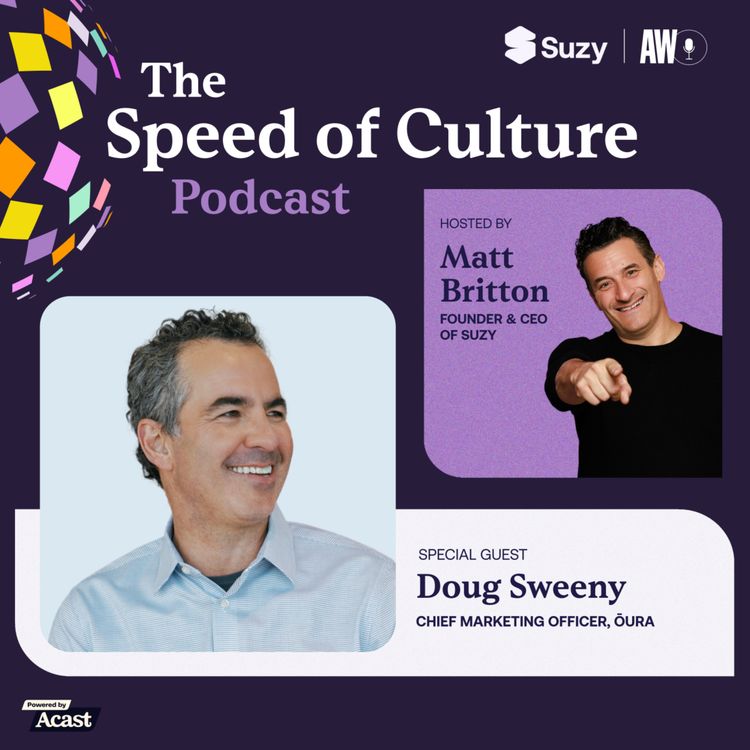
On a recent episode of The Speed of Culture, Matt Britton sat down with Doug Sweeney, Chief Marketing Officer at Ōura, to unpack a category that is quietly reshaping consumer demand signals across every Fortune 500 industry. The conversation surfaced a sharper truth than the wearables narrative usually allows. AI did not just make tracking smarter. It collapsed the gap between data and action, which means brand strategy now has to compete with a layer of personalized insight running on every consumer's body in real time.
For business leaders, the implication is direct. The default economy is no longer just about which app sits on the home screen or which retailer owns the buy button. It is about which sensor sits on the consumer's body and which AI model interprets the signal it sends. Marketing teams that ignore this layer will lose attribution, relevance, and pricing power in that order.
The Quantified Self Movement Has Become the Default Operating System
The shift from niche to mainstream happened faster than most CMOs realize. Close to half of US adults use health apps, and about a third use wearable devices that keep tabs on their health metrics. Sweeney told Britton that Ōura's own awareness curve went from 5% of Americans in 2022 to roughly 35% in 2026, a sevenfold lift in under four years. That growth is not driven by paid media. It is driven by visible product on the hands of opinion leaders and friends, with 50% of new Ōura users discovering the product through a family member or peer recommendation. BCG
The category is also accelerating because the underlying technology finally moved into the background. By 2026, 40% of new wearable devices are expected to feature AI capabilities, which means consumers are no longer interpreting raw biometric data. They are receiving translated, contextualized guidance. Sweeney described Ōura as a translation device for the body, simplifying complex inputs like HRV, REM sleep, and resting heart rate into three clean morning scores. That simplification is the unlock. It is also the marketing playbook. Preventivemedicinedaily
Britton has been making this argument from the keynote stage for two years. The companies that win in AI-driven categories are the ones that compress decisions for consumers, not the ones that hand them more dashboards. Decision compression is now the single most underpriced advantage in consumer technology, and wearables sit at the center of it. For a deeper roadmap on this shift, Matt Britton's bestselling book Generation AI lays out how AI-native consumer behavior is rewriting category economics across retail, finance, and media.
How AI Is Turning Biometric Data Into Brand Strategy
The interesting part is not the sensor. The interesting part is what happens after the sensor. Sweeney described Ōura's built-in AI advisor, which lets a user ask why their HRV is dropping or how their cardiovascular age intersects with sleep quality. That is a closed-loop system, but it is also a preview of how AI agents will sit between brands and consumers across every wellness-adjacent category.
The emergence of AI agents that can observe, plan, and act on their own is revolutionizing patient care, health systems, and biomedical science. The consumer parallel is just as material. Britton has argued on stage that the next browser is not a browser. It is a personal AI that knows your biology, your preferences, and your purchase history, and it makes decisions on your behalf. Wearables provide the biology layer. Without it, the agent is guessing. With it, the agent has standing instructions tied to your physiology. BCG
The practical consequence for marketers is hard to overstate. If a consumer's AI agent knows their sleep architecture, blood pressure, glucose response, and stress patterns, every CPG, QSR, hospitality, and retail brand will be evaluated against a personalized health filter the consumer never has to articulate. Sweeney and Britton discussed exactly this scenario, where an Instacart order auto-adjusts for low sodium because the wearable flagged elevated blood pressure. That is not a 2030 vision. It is a 2026 architecture problem that brand teams need to be solving now.
This is also where Suzy, the AI-powered consumer intelligence platform Britton founded, becomes structurally important. Brands cannot wait for transaction data to tell them what changed. They need real-time consumer signal that captures the new decision filters before they show up in market share loss.
Generational Behavior Is Being Rewired by the Data on Their Hands
The wearables surge maps almost perfectly onto the broader generational shift toward measurable, evidence-based wellness. McKinsey reports nearly 30% of Gen Z and millennial consumers in the US prioritize wellness "a lot more" compared with one year ago, versus up to 23% among older generations. The same cohort is rejecting the categories that previous generations defined themselves through. 21.5% of Gen Z does not consume alcohol, and 39% drink only occasionally, with health concerns cited as a primary driver. ShopifyAttest
The wearable layer is reinforcing the behavior change loop. Wearable devices and biometric tracking have heightened awareness about how alcohol affects sleep quality, heart rate variability, recovery time, and overall performance. When a Gen Z consumer can see one drink degrade their readiness score the next morning, the abstract idea of moderation becomes a personal data point. That feedback loop is more persuasive than any campaign, any influencer, or any health warning label. Theawkn
Britton has been pointing out from the keynote stage that the most disruptive force in consumer behavior right now is not AI directly. It is AI plus biometric data, which together create a closed-loop system where consumers receive personalized evidence in real time and adjust accordingly. Brands that built their growth on impulse, social pressure, or emotional triggers are losing access to the moment of decision because the decision is now being negotiated with a data point on the consumer's finger.
For more on how Gen Z is rewriting category rules, see Matt Britton's Gen Z keynote programming for Fortune 500 audiences.
The Marketing Playbook Has to Be Rebuilt for the Translation Era
Sweeney walked Britton through how Ōura is building brand outside the standard wellness clichés. The "Give Us the Finger" campaign deliberately rejected the 30-year-old yoga aesthetic and pivoted to longevity storytelling featuring users in their seventies and eighties. That decision is a tell. The brand is positioning itself as the operating system for a multi-decade health journey, not a fitness accessory. It is also reaching aggressively into pinnacle performance through partnerships with over 150 collegiate and professional teams and an official Team USA relationship.
The strategic insight here matters far beyond wearables. Ōura is running a parallel-track brand strategy that most marketing teams are still treating as mutually exclusive. They are doing premium mass storytelling for the every-person while simultaneously locking in elite performance credibility through athlete partnerships. They are also localizing data narratives by market, leaning into sleep storytelling in Japan where stress is high and longevity storytelling in the US where lifespan extension is becoming a cultural obsession.
The Observation is that wearables are now a $86.78 billion market scaling toward $231 billion by 2034. The Insight is that AI has turned that hardware into a personalized decision filter sitting between consumers and every brand they touch. The Implication is that brand teams without a strategy for the biometric layer will lose pricing power and category access. The Forward View is that the next five years of consumer marketing will be won by brands that integrate biometric signal into both their product experience and their narrative architecture.
What This Means for Fortune 500 Brand Strategy
The wearable category creates three immediate strategic obligations for marketing leaders, and none of them are optional.
First, audit your product against the biometric filter. Every food, beverage, hospitality, and retail brand needs to map how their offering reads on a wearable. If your product degrades sleep, recovery, or readiness, the data will surface it, and the data will travel. Reformulation, portion architecture, and ingredient transparency are no longer brand-positioning choices. They are category survival decisions.
Second, build for the AI agent, not just the consumer. The decision layer is shifting from the human to the personalized AI that sits on top of biometric and behavioral data. That means structured data, machine-readable claims, and AI-discoverable evidence become competitive infrastructure. This is the AEO discipline that Britton has been advising Fortune 500 clients on through FutureProof. Brand visibility inside ChatGPT, Claude, Gemini, and Perplexity is now table stakes, and the wearable layer adds biometric context that further personalizes which brands get surfaced.
Third, get out of the campaign mindset and into the systems mindset. Ōura is not running an ad campaign. They are building an integrated system across product, partnerships, data narrative, and global localization. That is the model. Fortune 500 marketing organizations still organized around quarterly campaign cycles will be structurally outpaced by category challengers running always-on systems.
Frequently Asked Questions
How is AI changing consumer behavior in 2026?
AI is shifting consumer behavior from emotional or habitual decision-making toward evidence-based, personalized decision filters. With wearables on roughly a third of US adults and AI agents interpreting biometric data in real time, consumers receive immediate feedback on how products affect their sleep, stress, recovery, and longevity. Brands that previously won through impulse or social pressure are now competing against a personalized health filter running continuously on the consumer's body.
Why are smart rings the fastest-growing wearable category?
Smart rings combine three traits no other wearable offers at the same intensity. The finger delivers roughly 100 times more accurate biometric signal than the wrist, the form factor disappears into daily life with no screen or haptic intrusion, and battery life of five to seven days removes daily friction. The smart ring market is expected to grow from $1.01 billion in 2026 to $7.8 billion in 2035, driven by AI integration and consumer demand for unobtrusive continuous health monitoring.
What does the rise of wearables mean for Fortune 500 marketing strategy?
It means brand positioning now competes with real-time biometric evidence. Every CPG, QSR, hospitality, and retail brand will be evaluated against a personalized health filter the consumer never has to articulate. Marketing leaders need to audit product against biometric signal, build machine-readable brand evidence for AI agents, and shift from quarterly campaign cycles to always-on integrated systems. Brands that ignore this layer will lose attribution, pricing power, and category access.
How does this connect to Generation AI and the future of consumer brands?
Generation AI describes consumers whose default decision-making is mediated by personalized AI models running on personal data. Wearables provide the biology layer for that mediation. As biometric data fuses with purchase history, location, and preference signal inside personal AI agents, the consumer's lived experience becomes the most defensible competitive moat any brand can build into. The brands that win are the ones that integrate into that system, not the ones that interrupt it.
Closing
The wearables conversation looks like a category story. It is actually an infrastructure story. The sensor on the finger is the input. The AI model is the interpreter. The personalized agent is the gatekeeper. Every Fortune 500 brand now has to design for that stack, not around it. Matt Britton's keynote work for marketing and insights leaders across financial services, real estate, and consumer brands focuses on exactly this transition, with a specific emphasis on AEO, decision compression, and the default economy. Hear the full conversation with Doug Sweeney on The Speed of Culture podcast, and to bring these insights to your next event, explore Matt Britton's keynote platform or contact his team directly.
The companies that treat biometric AI as a marketing channel will lose. The companies that treat it as the new operating system will define the next decade of consumer growth.

%20(400%20x%20100%20px)%20(300%20x%2050%20px)%20(150%20x%2050%20px).avif)

.jpeg)


.jpeg)
.jpeg)