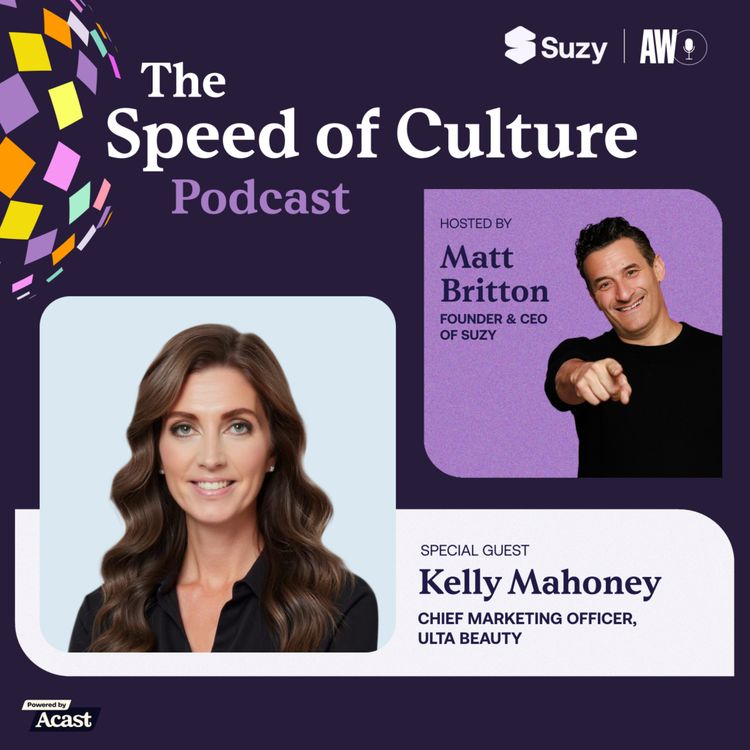
Revolutionizing Real Estate: How Opendoor is Simplifying Life's Biggest Transitions with CMO David Corns
Episode 131 Deep Dive: Understanding the Future of Home Buying and Selling
In a rapidly evolving real estate landscape, the traditional home buying and selling process has remained largely unchanged for decades. Buyers and sellers navigate complex paperwork, uncertain timelines, and emotional transactions with limited transparency. However, companies like Opendoor are fundamentally transforming how consumers experience one of life's most significant decisions.
On Episode 131 of The Speed of Culture Podcast, host Matt Britton, founder and CEO of Suzy—an AI-powered consumer intelligence platform—sits down with David Corns, Chief Marketing Officer of Opendoor, to explore how technology, consumer expectations, and strategic marketing are reshaping the real estate industry.
This episode marks a pivotal conversation about the intersection of consumer behavior, technological innovation, and marketing excellence. David Corns brings invaluable insights into how Opendoor has positioned itself as a disruptor in the real estate technology space, not just through its operational model but through a sophisticated understanding of what consumers actually want from the home transaction process.
The discussion illuminates the broader shift in consumer expectations that demands simplicity, speed, and transparency—values that extend far beyond real estate into nearly every industry experiencing digital transformation.
The Speed of Culture Podcast, presented in collaboration with Suzy and Adweek, has established itself as essential listening for marketing leaders, brand executives, and business strategists who need to stay ahead of cultural trends and consumer behavior shifts. Recorded on September 24, 2024, this episode provides timely insights into how companies can adapt their marketing strategies and business models to meet evolving consumer demands.
As markets become increasingly competitive and consumer preferences shift toward convenience and digital-first experiences, understanding Opendoor's approach offers a masterclass in modern marketing strategy and consumer-centric business transformation.
Why Real Estate Transformation Matters Now
The real estate industry represents approximately $1.8 trillion in annual transactions in the United States alone, making it one of the most significant consumer spending categories. Yet for most consumers, buying or selling a home remains one of the most stressful experiences of their lifetime.
Traditional real estate processes involve coordinating multiple parties—agents, lenders, inspectors, appraisers, title companies—across unpredictable timelines. For sellers, the uncertainty of receiving competitive offers and managing showings creates anxiety. For buyers, the complexity of financing, contingencies, and competitive bidding wars creates decision-making paralysis.
Opendoor's emergence as a leading instant home buyer represents more than just operational innovation; it signals a fundamental recalibration of customer expectations. When consumers choose Opendoor's platform, they're choosing certainty over uncertainty, speed over delays, and transparency over opacity.
This shift reflects broader cultural changes in how consumers evaluate and interact with major service providers. The willingness to embrace new models in real estate demonstrates that even highly traditional industries can be reimagined when companies genuinely prioritize consumer pain points and build solutions around solving them rather than perpetuating legacy processes.
Understanding Opendoor's Business Model and Market Position
Opendoor's fundamental innovation lies in inverting the traditional real estate transaction. Rather than waiting for buyers to emerge in the open market, Opendoor purchases homes directly from sellers, offering certainty and speed. This model—known as instant buying or iBuying—transforms the seller's experience from a months-long ordeal into a process that can be completed in days.
The business model operates through artificial intelligence and algorithmic pricing, which assesses property values based on comprehensive market data, comparable sales, property condition, and predictive analytics. By leveraging technology to make faster, data-informed decisions than traditional appraisers, Opendoor can provide sellers with immediate offers while maintaining acceptable profit margins.
This approach demonstrates how technology democratizes information and creates competitive advantages not through withholding information but through processing it more effectively than competitors.
David Corns, as Chief Marketing Officer, recognizes that the real opportunity for Opendoor extends beyond operational efficiency. It lies in fundamentally changing how consumers perceive and experience real estate transactions.
The marketing strategy emphasizes not just the speed or convenience of Opendoor's platform but the emotional relief of certainty. Consumers dealing with life transitions—job relocations, divorces, family changes, financial pressures—don't simply want faster transactions; they want to regain agency and control over major life decisions.
Opendoor's market position has evolved dramatically since its founding in 2014. Market dynamics between 2021 and 2024, including interest rate increases and housing market volatility, created challenges across the industry.
Rather than retreat, Opendoor doubled down on technology improvement, expanded geographic coverage, and refined its marketing messaging to emphasize durability and long-term value creation rather than rapid growth-at-all-costs.
Competitive Dynamics in the iBuying Space
While Opendoor pioneered the instant home buying category, competitors emerged including Zillow Offers, Redfin Now, and regional players. Some, like Zillow Offers, withdrew from the market after significant losses.
This consolidation reinforced Opendoor's strategic positioning. The company that survived the downturn and continued investing in technology and consumer experience established itself as the category leader.
Opendoor's marketing strategy emphasizes durability and market leadership. Rather than focusing solely on acquisition, the brand messaging highlights trustworthiness, stability, and long-term commitment to improving the home transaction experience.
This positioning appeals to risk-averse consumers who need assurance that the company completing their real estate transaction will remain in business and stand behind its commitments.
The Evolution of Consumer Expectations in Real Estate and Beyond
Consumer expectations have fundamentally shifted over the past decade, driven by positive experiences with digital-first companies like Amazon, Uber, and DoorDash. Consumers now expect to manage major transactions entirely through their smartphones, receive instant confirmations and updates, and interact with support teams through multiple channels.
These expectations increasingly apply to real estate.
David Corns and the team at Opendoor recognized that traditional real estate marketing missed the core consumer insight: buyers and sellers care less about marketing materials and more about reducing friction and uncertainty.
Marketing that emphasizes speed, transparency, and consumer control resonates far more powerfully than traditional approaches.
The evolution of consumer expectations also reflects demographic shifts. Younger homebuyers, including millennials and Gen Z consumers, prioritize convenience, digital interaction, and transparent pricing over relationships with individual agents.
They expect to access information instantly and make decisions based on comprehensive data rather than trust in an agent's recommendations. Opendoor's platform directly addresses these expectations.
The Rise of Preference for Instant Certainty
Research indicates that across numerous consumer categories, the preference for instant gratification and certainty has increased substantially. In real estate, this manifests as a willingness to accept slightly lower sale prices in exchange for certainty, speed, and elimination of emotional exhaustion.
Opendoor's pricing model—typically 4–7% lower than estimated fair market value—reflects this consumer willingness to trade maximum financial returns for certainty and speed.
The marketing strategy communicates this value exchange transparently, helping consumers understand that the discount represents the true cost of convenience and reduced uncertainty. This transparency builds trust and differentiates Opendoor from agents who emphasize aggressive pricing while delivering uncertain outcomes.
This evolution reflects broader cultural shifts toward valuing time, emotional wellbeing, and peace of mind above pure financial optimization—an insight that extends far beyond real estate.
Opendoor's Marketing Strategy and Brand Positioning
Opendoor's marketing approach reflects a sophisticated understanding of consumer psychology and competitive positioning. Rather than focusing exclusively on performance metrics like speed and price, the brand emphasizes the emotional dimensions of real estate transactions.
Marketing messages highlight how Opendoor helps consumers move forward with their lives—relocating for a new job, upsizing for a growing family, or downsizing for retirement.
This consumer-centric positioning contrasts with traditional real estate marketing, which often emphasizes property features or agent credentials. Opendoor's marketing asks what consumers actually want to accomplish rather than what features should be highlighted.
David Corns has steered Opendoor's brand strategy toward emphasizing trust, transparency, and long-term commitment to consumer wellbeing.
Campaign messaging highlights real customer stories that provide specific, relatable narratives about how Opendoor simplified complex processes during challenging times.
Multichannel Marketing and Consumer Touchpoints
Opendoor's marketing operates across multiple channels, recognizing that consumers research major purchases through diverse sources.
- Digital marketing, including search engine marketing and social media advertising, reaches consumers actively seeking home-buying solutions.
- Broadcast and streaming advertising builds brand awareness and establishes Opendoor as a major player in real estate.
- Content marketing, including blog posts, market analyses, and consumer guides, positions Opendoor as a thought leader while providing genuine consumer value.
The integration across these channels creates consistent messaging around simplicity, certainty, and speed. Rather than overwhelming consumers with promotional messages, Opendoor emphasizes education and authority to build trust that ultimately drives conversion.
Opendoor also extends its marketing through partnerships with mortgage lenders, real estate attorneys, moving companies, and related service providers—creating an ecosystem that reinforces its positioning while offering integrated solutions.
Brand Positioning in Competitive Context
Within the competitive landscape, Opendoor positions itself as "the trusted alternative to traditional real estate." This framing acknowledges the traditional model while presenting Opendoor as a fundamentally better option.
The brand avoids attacking agents directly and instead emphasizes transparency in pricing, speed in execution, and certainty in outcomes.
This approach resonates particularly with consumers frustrated by uncertainty and complexity, positioning Opendoor as the solution they are implicitly searching for.
The Role of AI and Technology in Real Estate Transformation
Artificial intelligence forms the technological foundation of Opendoor's business model. AI algorithms analyze property characteristics, neighborhood data, comparable sales, market trends, and predictive signals to generate accurate valuations instantly.
This capability converts what was once an art form into a data-driven science, eliminating bias and inefficiency.
Beyond valuation, AI supports renovation optimization, predictive resale forecasting, natural language customer communication, and computer vision analysis of property condition.
For consumers, this translates into instant valuations, transparent pricing, faster processing, and increasingly personalized recommendations—without needing to understand the underlying algorithms.
The Marketing Implications of AI-Powered Operations
AI-powered operations allow Opendoor to make promises that traditional agents cannot—instant offers, transparent pricing, and guaranteed timelines.
At the same time, algorithmic decision-making creates potential concerns about replacing human judgment.
Effective marketing addresses these concerns by explaining how AI-driven analysis provides greater consistency and removes bias. Opendoor educates consumers about its technology in accessible terms, reinforcing that technology serves their interests rather than obscuring information.
Adapting Strategy Through Market Cycles and Consumer Insights
Real estate markets are cyclical. During rapid appreciation in 2020–2021, Opendoor could emphasize financial opportunity. During corrections between 2022–2024, messaging shifted toward certainty and stability.
This adaptability reflects deep consumer insight. Platforms like Suzy, founded by Matt Britton, enable companies to understand how priorities shift across market conditions.
During uncertain markets, consumers value certainty more highly. During booming markets, they prioritize upside potential. Effective marketing aligns with these changing motivations.
As Opendoor accumulated data about successful transactions, it refined its geographic focus and service offerings—allowing for more precise targeting and personalized campaigns.
The Integration of Consumer Research and Marketing Strategy
Close collaboration between consumer research and marketing ensures strategies remain grounded in real preferences rather than outdated playbooks.
Insights reveal that messaging around simplicity, emotional relief, and life progression resonates more deeply than financial metrics alone.
As a result, Opendoor's content strategy emphasizes stories of families relocating, professionals pursuing opportunity, and seniors transitioning to manageable homes—engaging consumers emotionally while demonstrating value.
Key Takeaways
- Consumer Preferences Have Fundamentally Shifted: Buyers and sellers increasingly prioritize certainty, speed, and transparency over maximized returns, reflecting broader cultural values around convenience and peace of mind.
- Technology Enables Competitive Differentiation: AI-powered valuations and data-driven decision-making create tangible benefits traditional agents cannot replicate.
- Marketing Must Address Pain Points: The most effective messaging directly targets consumer frustrations—uncertainty, delays, emotional exhaustion—rather than pushing product features.
- Brand Trust Is Built Through Transparency: Clear communication around pricing, timelines, and trade-offs builds long-term confidence.
- Successful Marketing Adapts: Strategies must evolve with market cycles and economic conditions to remain relevant.
Frequently Asked Questions
How does Opendoor determine home valuations?
Opendoor uses AI algorithms analyzing property characteristics, neighborhood data, comparable sales, and predictive signals to generate instant valuations. Offers typically run 4–7% below estimated fair market value, reflecting the value of certainty and speed. The model removes human bias and provides transparent trade-offs for consumers.
What types of homes and neighborhoods does Opendoor serve?
Opendoor operates across numerous U.S. markets, particularly major metropolitan areas with sufficient transaction volume to support algorithmic pricing. Geographic focus evolves based on demand and market analysis, and consumers should confirm availability in their location via the company website.
How does Opendoor's approach compare to traditional real estate agents?
Traditional agents offer personalized service and relationship-based expertise but typically require weeks or months and charge commissions. Opendoor offers speed, certainty, and transparent pricing, generally below potential maximum market value. The optimal choice depends on whether certainty or price maximization matters most to the consumer.
What consumer insights does David Corns emphasize?
On Episode 131 of The Speed of Culture Podcast, Corns emphasizes that modern buyers and sellers prioritize simplicity, digital-first interactions, and transparent processes. These insights shape Opendoor's strategic focus on technology, consumer control, and frictionless experiences.
Looking Ahead
The future of real estate is increasingly technology-enabled and consumer-centric. Companies like Opendoor continue refining capabilities and expanding reach to better serve evolving consumer needs.
For marketing leaders and strategists, Opendoor's journey offers lessons in anticipating preference shifts and building models that prioritize consumer interests over legacy approaches.
To deepen your understanding of consumer intelligence, marketing strategy, and AI-driven transformation, explore these resources:
- Suzy — The AI-powered consumer intelligence platform founded by Matt Britton.
- The Speed of Culture Podcast — Insights for marketing leaders and executives navigating cultural change.
- Generation AI — Matt Britton's guide to generational shifts and AI's impact on consumer behavior.
- AI Keynote Speaker — Learn how Matt Britton helps organizations navigate AI-driven change.
- Speaker HQ — Connect for keynotes and strategic sessions on the future of marketing and business.
Episode 131 of The Speed of Culture Podcast aired on September 24, 2024, featuring David Corns, Chief Marketing Officer of Opendoor, and host Matt Britton, Founder and CEO of Suzy. This article summarizes key insights from the episode and extends the conversation about real estate transformation, consumer expectations, and marketing strategy in the digital age.


%20(400%20x%20100%20px)%20(300%20x%2050%20px)%20(150%20x%2050%20px).avif)


.jpeg)






.jpeg)
.jpeg)