Opening Section
In today's media environment, where billions of content pieces compete for attention every second, most beverage brands play it safe with traditional product-focused messaging. Liquid Death's approach is radically different. The company has built one of the most recognizable brands of the 2020s not by selling water, but by creating entertainment—comedy sketches, viral content collaborations, and boundary-pushing campaigns that dominate social feeds.
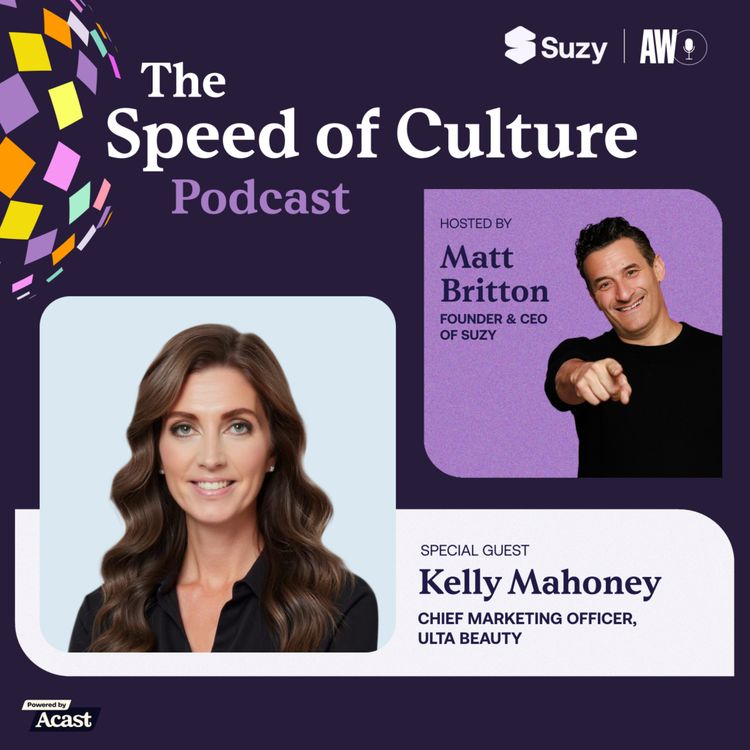
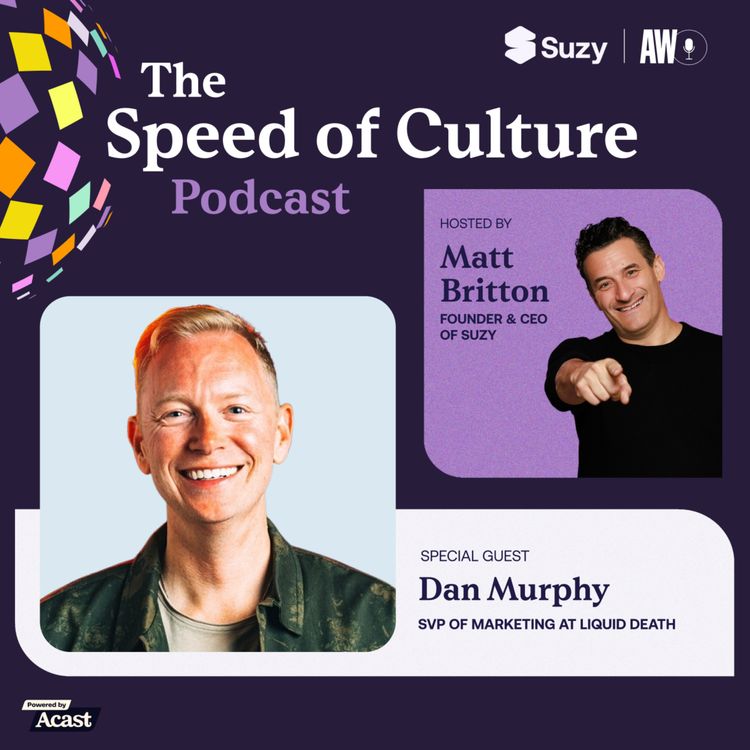
On Episode 203 of The Speed of Culture Podcast, Matt Britton, founder and CEO of Suzy, the AI-powered consumer intelligence platform, sat down with Dan Murphy, Senior Vice President of Marketing at Liquid Death, to explore how a brand can shatter the scroll with entertainment-first branding and build a media company within a beverage business.
Dan Murphy leads brand strategy, creative campaigns, and content production at Liquid Death, transforming what could be a commodity category into a cultural phenomenon. The conversation reveals how brands can transcend traditional marketing frameworks and operate as entertainment entities first, product companies second. This distinction has become critical for capturing attention in a world where consumers have learned to ignore conventional advertising and only engage with content that genuinely entertains, surprises, or makes them laugh.
The insights shared during this episode offer a masterclass in building brands that don't just communicate product benefits—they generate conversation, drive organic shares, and become part of internet culture itself. For marketing executives, brand leaders, and creative strategists seeking to understand how to differentiate in saturated markets, this episode provides a blueprint for entertainment-first thinking that extends far beyond the beverage industry.
Entertainment-First Branding: The Core Philosophy Behind Viral Growth
The foundation of Liquid Death's success rests on a single strategic insight: in an attention economy, entertainment is the only sustainable competitive advantage. Dan Murphy articulates this philosophy with precision:
We want to be the funniest thing you see on your feed.
This isn't aspirational marketing language—it's the actual north star driving all creative decisions at the organization.
This entertainment-first positioning fundamentally inverts how brands traditionally approach marketing. Rather than beginning with product benefits and then wrapping them in entertainment to make them palatable, Liquid Death starts with the question: Is this entertaining? Would people choose to watch, share, or engage with this content even if they had no commercial interest in water?
The genius of this approach lies in its psychological truth about how modern audiences consume content. Users scroll through feeds making micro-decisions about whether to engage, scroll past, or stop. They've developed sophisticated filters for detecting advertising. An entertainment-first approach bypasses these filters because the content satisfies a genuine human need—the desire to be entertained, to laugh, to feel connected to others through shared humor.
Murphy emphasizes that this strategy requires treating the brand like a comedy studio or media company, not a traditional beverage manufacturer. This operational shift changes everything from hiring (recruiting comedy writers and content producers rather than traditional marketing managers) to budgeting (investing heavily in content production quality) to metrics (optimizing for shares rather than impressions).
The evidence of this philosophy's effectiveness appears across every channel where Liquid Death maintains a presence. Their social media content consistently achieves organic reach that traditional brands struggle to purchase with media budgets. Their campaigns become memes, and people wear their merchandise not out of brand loyalty alone, but because the designs are genuinely culturally interesting.
This is what happens when a brand stops trying to sell and starts creating content so good that audiences want to share it with their networks.
The Visual Strategy: Packaging That Stops the Scroll
While entertainment forms the conceptual core of Liquid Death's brand, the visual execution—particularly the iconic can design—serves as the brand's physical embodiment of its cultural positioning. These beer-like, rebellious cans with their metal aesthetic and aggressive typography aren't merely beautiful product design. They represent a deliberate strategy to interrupt the standard visual patterns customers expect from beverage aisles.
Traditional beverage packaging follows established templates: bright colors, happy faces, clarity about ingredients, family-friendly imagery. Liquid Death inverts these conventions entirely. The dark aesthetic, the death-metal inspired design language, and the unapologetic tone in naming and copy create what Murphy identifies as “packaging that breaks the aisle scroll.”
Walking through a grocery store, the eye is trained to skip past thousands of products. Liquid Death's cans command attention through visual disruption.
This design strategy serves multiple strategic functions simultaneously:
- Brand differentiation at the point of purchase—crucial for a product competing in an extremely crowded natural beverage category.
- Inherent social media shareability, as the can photographs as a cultural statement rather than a commodity beverage.
- Built-in word-of-mouth marketing, creating conversation about the brand's irreverent positioning before any discussion of health benefits begins.
The visual package also functions as a filtering mechanism, self-selecting for audiences that value authenticity and cultural edge over conventional safety. This targeting mechanism allows Liquid Death to concentrate its marketing efforts and messaging toward demographics already predisposed to appreciate its comedic sensibility.
Murphy's insights reveal that this design strategy evolved through continuous testing and real-time feedback from audiences. Before concepts scale to broader marketing campaigns or major retail placements, Liquid Death tests them within its social media community first—transforming customers into co-creators and quality assurance teams.
Comedy as the Content North Star: Building a Media Studio Within a Beverage Brand
Liquid Death's most distinctive competitive advantage lies in its decision to build and maintain a comedy studio within the beverage company. Rather than contracting with external agencies or purchasing advertising inventory, Liquid Death employs comedy writers, content directors, and content producers directly. This operational model allows the brand to maintain consistent creative control and voice while producing content at velocity that competitors cannot match.
Murphy explains that comedy isn't simply the vehicle for selling water—comedy is the product itself. This fundamental shift in perception changes how the organization allocates resources and measures success.
This philosophy extends to brand collaborations, which function as performance art rather than transactional partnerships. Liquid Death doesn't simply slap logos on co-branded merchandise or create limited-edition products for the sake of novelty. Instead, the brand approaches collaborations as opportunities to create new comedic universes and content that delights audiences.
The comedy-first approach solves several persistent marketing challenges simultaneously:
- It enables authentic connection with audiences skeptical of traditional advertising.
- It creates an asymmetric advantage in a category where most competitors rely on celebrity endorsements or traditional media buying.
- It builds a sustainable content engine capable of producing consistently engaging material.
Murphy also emphasizes that this approach requires hiring differently than traditional beverage companies. At Liquid Death, comedy sensibility and cultural awareness often take precedence over traditional marketing credentials—attracting creative talent that might never have considered working for a beverage company.
Shareability as the New ROI: How Liquid Death Redefined Marketing Metrics
Perhaps the most striking insight from Murphy's conversation with Matt Britton concerns how Liquid Death measures marketing success. Rather than optimizing for impressions, reach, or traditional engagement metrics like likes and comments, Liquid Death identifies shares as the “God metric” for social media success.
Likes indicate passive approval. Shares indicate active endorsement. When someone shares Liquid Death content, they're effectively running an unpaid advertising campaign to their entire network—and that recommendation carries implicit trust that paid advertising cannot purchase.
This metrics shift has cascading implications for content strategy. Rather than creating content designed to maximize algorithmic signals, Liquid Death creates content designed to make people laugh hard enough that they feel compelled to share.
Optimizing for shareability also aligns marketing incentives with long-term brand building. Shares drive word-of-mouth, create network effects, and build organic reach that sustains itself over time—whereas paid reach often disappears the moment spending stops.
Murphy's emphasis on shareability reflects a deeper understanding of how media consumption has shifted in the age of social platforms. Modern audiences are active gatekeepers who curate what their networks see. A brand that respects this dynamic and creates content worthy of that curation will naturally achieve sustainable growth.
Strategic Collaboration as Performance Art: From Red Bull Inspiration to Comedy Innovation
While Liquid Death didn't invent the entertainment-first branding approach—Red Bull pioneered much of this thinking for the energy drink category—the brand has extended and evolved these principles specifically for the comedy and social media era.
Red Bull built its brand primarily through extreme sports sponsorships and event marketing. Liquid Death inherits that foundational insight but applies it to comedy, internet culture, and viral content rather than physical performance.
The difference reflects changing audience demographics and media consumption patterns. Gen Z and younger millennial audiences discover brands through social media rather than television or sporting events. Comedy resonates more deeply with these demographics, and platforms like TikTok, Instagram Reels, and YouTube Shorts favor short-form, highly shareable content.
Liquid Death's collaboration strategy treats partnerships as opportunities to create new cultural moments. Rather than simply paying an influencer to promote the brand, the company invests in collaborations where both parties create something genuinely new together.
This philosophy enables Liquid Death to punch above its weight in a competitive landscape dominated by companies with far larger traditional marketing budgets—turning resourcefulness into a creative advantage.
Real-Time Testing: From Social Media to Mainstream Media
A final strategic insight from Murphy's discussion concerns how Liquid Death approaches media investment and campaign scaling. Rather than developing campaigns internally and then scaling them through traditional paid media channels, Liquid Death conducts real-time testing with its social media audience first.
Only content that generates genuine excitement and engagement from this initial audience is escalated to broader media buys, including CTV and even Super Bowl advertising.
This approach flips the traditional media planning sequence. Paid media amplification can extend reach, but it cannot create resonance where it doesn't exist organically. By starting with organic testing, Liquid Death ensures that media investment goes toward amplifying content that's already proven its cultural appeal.
The practical impact becomes clear in campaign economics. Traditional brands often waste significant media budget promoting campaigns that don't resonate. Liquid Death's testing-first approach reduces this waste and channels investment toward amplifying genuine cultural moments rather than manufacturing them artificially.
Key Takeaways
- Entertainment-first positioning eliminates the need for traditional advertising by creating content audiences actively want to share and engage with.
- Visual distinctiveness at retail breaks through clutter, drives social shareability, and self-selects for culturally aligned audiences.
- Building an internal comedy studio enables consistent, high-velocity content creation that external agencies cannot easily replicate.
- Optimizing for shares rather than likes prioritizes word-of-mouth endorsement and network effects over vanity metrics.
- Real-time social media testing before paid amplification dramatically improves return on marketing investment.
FAQ
How can traditional beverage brands adopt Liquid Death's entertainment-first strategy without abandoning their established brand identity?
The entertainment-first approach doesn't require a complete rebrand. The most effective application involves identifying aspects of the brand's culture, values, or story that are authentically entertaining and building content around those truths. This requires deep audience research and testing before committing to large-scale creative investment.
What organizational changes does a brand need to make to successfully operate as a media company?
Brands must hire comedy writers and content producers alongside traditional marketers, establish rapid testing and iteration processes, and build in-house production capabilities. Budget allocation often shifts from media buying to production, and leadership structures must empower creative decision-making rather than traditional marketing hierarchies.
How does a brand measure success when optimizing for shareability rather than traditional marketing metrics?
While shares serve as the primary “God metric,” effective measurement requires tracking share velocity across platforms, understanding who is sharing content, and correlating share performance with sales impact, brand awareness, and customer acquisition. This requires more sophisticated attribution modeling but delivers a more accurate view of what drives business results.
Looking Ahead
The conversation between Matt Britton and Dan Murphy reveals a fundamental shift in how the most innovative brands compete in a saturated media landscape. As audiences develop increasingly sophisticated filters for detecting and ignoring traditional advertising, entertainment capability becomes the primary competitive advantage.
This principle extends far beyond beverages. Brands across categories must recognize that audiences don't want to be sold to—they want to be entertained, surprised, and delighted.
To explore more insights on consumer culture and emerging brand strategies, visit Suzy, the AI-powered consumer intelligence platform founded by Matt Britton. For more conversations with industry leaders shaping the future of marketing and culture, subscribe to The Speed of Culture Podcast.
Interested in how AI is reshaping consumer behavior and marketing strategy? Learn more from Matt Britton's latest thinking in Generation AI, explore his approach to AI keynotes, or connect with his full ecosystem of resources at Speaker HQ.

%20(400%20x%20100%20px)%20(300%20x%2050%20px)%20(150%20x%2050%20px).avif)

.jpeg)


.jpeg)
.jpeg)