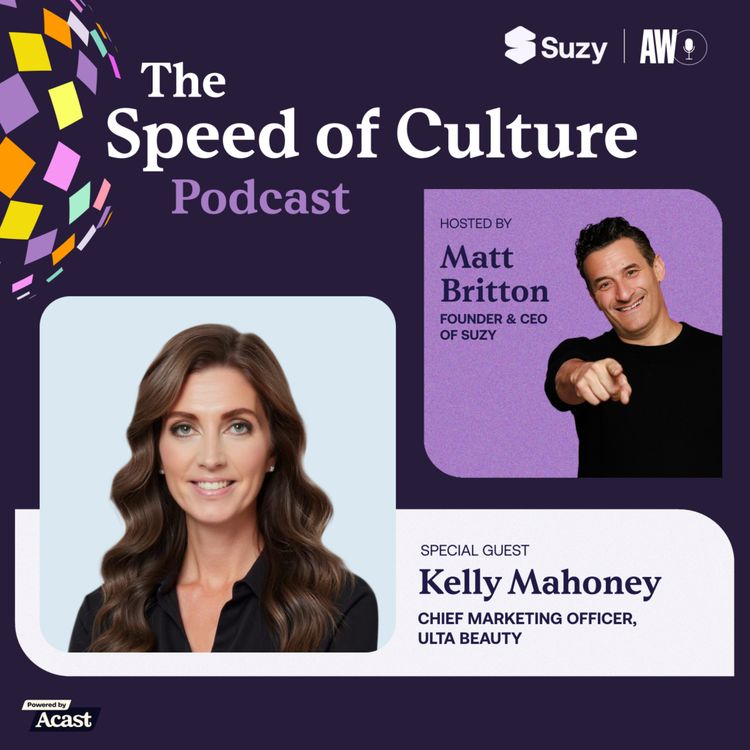
In an era where artificial intelligence is reshaping industries and redefining workplace dynamics at unprecedented speed, one fundamental truth has emerged with striking clarity: the most competitive advantage an organization can cultivate is distinctly human. This episode of The Speed of Culture Podcast features a compelling conversation between host Matt Britton, founder and CEO of Suzy, the AI-powered consumer intelligence platform, and Christine Buscarino, Global Chief Operating Officer and Chief Marketing Officer at Dale Carnegie.
The discussion explores how timeless human skills are becoming the defining differentiator in an AI-driven business landscape.
The conversation cuts to the heart of a paradox facing modern leaders: while artificial intelligence accelerates the pace of work and automates routine tasks, the skills that machines cannot replicate—empathy, emotional intelligence, authentic connection, and trusted communication—have never been more valuable.
Christine Buscarino shares how Dale Carnegie, an organization built over a century ago on these very principles, is helping leaders and organizations navigate this transformation. Rather than viewing AI as a threat to human skill development, Dale Carnegie reframes it as an opportunity to double down on the distinctly human capabilities that amplify both technological tools and team performance.
The episode dives deep into why soft skills have shifted from “nice-to-have” to essential competitive necessity, how leaders can build cross-generational bridges in increasingly diverse workplaces, and why the future belongs to those who master the intersection of human empathy and technological capability.
For executives seeking to future-proof their organizations and build resilient teams, this conversation offers both strategic insights and actionable pathways forward. From the Human by Design program reshaping leadership approaches to the evolving definition of what it means to lead effectively, Buscarino and Britton explore the fundamental truth that drives organizational success: people remain at the center of every business transformation.
The AI Acceleration and the Empathy Imperative
Artificial intelligence is fundamentally reshaping how work gets done. It’s automating knowledge work, rewriting job descriptions, shifting organizational structures, and forcing organizations to reconsider which skills truly matter in a technology-enabled future.
But amidst this disruption, a clear pattern has emerged that defies the common narrative about AI replacing human workers: organizations that thrive are those that recognize AI as a tool to enhance human capability, not eliminate it.
“To future-proof yourself in an AI-driven world, you must strengthen the one thing machines can't replicate—human empathy.”
This isn’t merely philosophical positioning; it reflects the strategic reality that as routine cognitive work gets automated, the premium shifts decisively toward uniquely human skills.
Emotional intelligence, the ability to read and respond to complex human dynamics, authentic communication that builds trust across organizational boundaries, and the capacity to inspire and motivate teams—these become the true sources of competitive advantage.
The challenge, however, is that many organizations continue operating under old paradigms about leadership development. Traditional management training often emphasizes hierarchy, process compliance, and technical competency.
But the workplaces of 2025 and beyond require something fundamentally different: leaders who can navigate ambiguity with grace, who understand how to maintain psychological safety in teams facing rapid change, and who recognize that technology adoption succeeds or fails based on the human experience surrounding it.
Dale Carnegie’s research and decades of organizational work reveal that leaders who invest in their emotional intelligence and communication capabilities drive higher engagement, lower turnover, and better business outcomes.
In an AI-accelerated world, this insight becomes even more critical. Organizations are discovering that the chatbots and algorithms that promise efficiency gains fail without strong human leadership that helps teams adapt, find meaning in changing roles, and maintain motivation through disruption.
Cross-Generational Leadership and the Multiplicity of Workplace Values
One of the most complex challenges facing contemporary leaders is managing workplaces that span unprecedented generational diversity.
From Baby Boomers who may remember pre-internet work environments to Gen Z natives who have never known a world without smartphones, today’s organizations must find ways to create shared purpose and culture across fundamentally different value systems, communication styles, and work preferences.
Buscarino emphasizes that soft skills are the bridge across these generational divides. A leader skilled in empathy can understand why a 55-year-old manager prefers face-to-face collaboration while a 28-year-old individual contributor thrives with asynchronous remote work.
A leader with strong emotional intelligence can navigate the tension between institutional knowledge and disruptive innovation. The ability to listen without judgment, to understand unstated needs, and to build psychological safety—these capacities transcend generational boundaries.
The rise of distributed and hybrid work models has intensified this challenge. Physical proximity once provided natural forums for relationship building and cultural transmission.
Now, leaders must be intentional about creating connection in virtual spaces. They must communicate with greater clarity because misunderstandings multiply in written text. They must be more attentive to team dynamics because the informal signals of workplace stress are harder to detect through screens.
Dale Carnegie’s research indicates that organizations with stronger communication and trust-building cultures experience measurably better outcomes in hybrid environments.
Teams led by managers who have invested in emotional intelligence report higher engagement scores, better knowledge sharing, and greater resilience through periods of organizational change. In a world where talent competition is fierce and employee agency is high, the ability to create cultures where people feel valued and understood becomes a strategic imperative.
The Human by Design Program: Balancing AI and Human Skills
Recognizing that most traditional leadership development programs haven’t kept pace with the AI revolution, Dale Carnegie developed the Human by Design program—a comprehensive approach to leadership development that explicitly addresses how to thrive at the intersection of advanced technology and distinctly human capability.
The program is built on a foundational premise that warrants careful examination: as organizations deploy AI and automation, they shouldn’t default to asking “What can machines do?” but rather “What uniquely human capabilities do we need to develop so that our technology investments deliver real value?”
This reframing is subtle but consequential. It prevents the common trap of letting technology adoption drive culture change, instead making conscious choices about what human capabilities should be reinforced and developed.
Human by Design focuses on six core soft skills that research identifies as essential for 21st-century leadership:
- Communication
- Empathy
- Trust
- Emotional resilience
- Influence
- Adaptability
Each is explored not in the abstract but in concrete organizational contexts. Leaders learn how to communicate more effectively across diverse audiences and communication channels.
They develop genuine empathy through practices that help them understand perspectives different from their own. They build trust through consistency, transparency, and reliability. They cultivate resilience so they can model composure and purpose during inevitable disruptions.
The program’s design reflects decades of psychological research about how adult learning happens. It emphasizes experiential learning, peer coaching, and accountability structures that support behavior change—not just intellectual understanding.
Because developing genuine soft skills requires more than a one-time workshop; it requires sustained practice, feedback, and environmental reinforcement. Organizations that deploy Human by Design effectively structure their broader culture to reward and reinforce the skills being developed.
The connection to AI capability is explicit and practical. Leaders completing the program understand how to use AI tools to amplify their reach and impact.
They learn how to delegate routine analytical work to AI systems while preserving the human touchpoints that drive engagement and meaning. They discover how to lead through periods of technological change by maintaining focus on human needs alongside technological capability.
And they practice the difficult conversations that arise when organizational restructuring due to automation threatens people’s sense of security and purpose.
Creating People-Centric Cultures in the Age of Disruption
Beyond individual leadership development, the conversation between Britton and Buscarino explores how organizations build cultures that remain resilient and human-centered as disruption accelerates.
This is perhaps the most strategically important dimension of soft skills investment: creating organizational environments where people engage fully despite rapid change.
Research cited in the episode reveals that organizations with strong cultures of trust, clear communication, and demonstrated empathy from leadership experience measurably better outcomes during periods of significant disruption.
When employees understand not just what is changing but why, when they feel heard about concerns and feel that leadership genuinely considers their wellbeing in change decisions, they adapt faster and contribute more creatively to solving new problems.
Consider the challenge of AI-driven automation. When organizations announce layoffs or significant role changes because of AI adoption, the typical employee response combines job insecurity, resentment about leadership’s apparent indifference to human impact, and reduced willingness to help the organization navigate the transition successfully.
Leaders who lead this change with genuine empathy, transparent communication, and concrete support for affected employees get very different results: people understand the business necessity, they contribute ideas for how to redeploy affected talent, and they maintain institutional knowledge critical for successful implementation.
Dale Carnegie’s century of organizational experience demonstrates a fundamental truth that technology doesn’t change: people perform best when they feel valued, understood, and purposeful.
This isn’t sentimental; it’s functional. Organizations that invest in creating psychologically safe environments, that communicate frequently and transparently, that demonstrate genuine care for employee development—these organizations retain talent better, attract higher-quality candidates, solve problems more creatively, and adapt to disruption more effectively.
Building people-centric cultures also requires attention to how technology is implemented.
The most sophisticated AI system fails if teams don’t trust the organization to use it appropriately or if they feel the technology is being deployed to replace rather than augment their work.
Leaders skilled in soft skills help teams understand technology in context, invite input about implementation challenges, and maintain focus on the human experience of change. They recognize that culture change happens through thousands of small interactions and decisions, not through mission statements and town halls.
Why Soft Skills Matter Now More Than Ever
The temptation in an AI era is to assume that technical skills and technological capability matter most. In reality, data suggests the opposite.
Studies on organizational performance consistently show that the gap between high-performing and underperforming teams has less to do with technical capability and more to do with communication, trust, psychological safety, and effective leadership.
These gaps only widen when an organization is in the throes of significant change.
Consider a specific example: two organizations both implement an advanced AI system to augment their analytical capabilities.
Organization A treats the implementation as primarily a technical project. They install the software, provide minimal training, and expect adoption to happen naturally.
Teams feel anxious about whether the AI will make their roles obsolete. They don’t trust that leadership has their interests in mind. Adoption is slow, the system is underutilized, and the projected ROI doesn’t materialize.
Organization B approaches the same implementation differently. Leaders communicate clearly about why the organization is adopting the technology and what it means for different roles.
They explain honestly what will change and what won’t. They provide training not just in how to use the system but in how to think about it—as a tool that handles routine analysis so humans can focus on strategy and creativity.
They create forums for teams to ask questions and raise concerns. They demonstrate through concrete actions that the organization remains committed to existing team members.
The result: faster adoption, better utilization, stronger ROI, and importantly, higher employee engagement.
The difference isn’t the technology; it’s the leadership approach. And the leadership approach is fundamentally a soft skills challenge: communication, empathy, authenticity, and the ability to inspire confidence through clarity and care.
For executives and leaders, the strategic implication is clear.
The organizations that thrive over the next five to ten years won’t be those with the fanciest technology. They’ll be organizations that master the intersection of technological capability and human capability.
They’ll be led by leaders who understand that automation and AI are tools to be deployed in service of human flourishing, not replacements for human judgment and connection.
They’ll build cultures where people feel valued, understood, and purposeful—even as the nature of work fundamentally shifts.
Key Takeaways
- Human empathy is the ultimate competitive advantage: As AI automates routine cognitive work, the skills machines cannot replicate—emotional intelligence, authentic communication, and the ability to build trust—become the primary sources of organizational competitive advantage and individual career resilience.
- Cross-generational leadership requires intentional soft skills development: Managing diverse teams spanning multiple generations demands leaders who invest in empathy, clear communication, and psychological safety—capabilities that bridge different values, communication styles, and work preferences across age groups.
- Leadership development must address the AI-human intersection: Effective modern leadership programs teach leaders how to deploy AI tools strategically while preserving and amplifying distinctly human capabilities that drive engagement, meaning, and resilience in increasingly distributed and technology-enabled environments.
- Organizational culture remains the competitive differentiator during disruption: Companies that build cultures emphasizing trust, transparent communication, and genuine concern for employee wellbeing adapt faster to change, retain talent more effectively, and execute transformation initiatives with greater success than those treating organizational change as purely technical problems.
- People-centric practices drive better business outcomes: Research consistently demonstrates that organizations investing in soft skills development, psychological safety, and authentic leadership communication achieve higher engagement, lower turnover, faster innovation, and greater organizational resilience than competitors prioritizing technical capability alone.
FAQ
How should leaders balance AI adoption with maintaining human-centered cultures?
The most effective approach treats AI adoption as fundamentally a change management challenge, not just a technical implementation.
Leaders should communicate clearly about why the organization is adopting new technologies, how specific roles will evolve (not disappear), and what support the organization will provide for employees adapting to new ways of working.
Creating forums for questions and concerns, providing robust training, and demonstrating through consistent actions that the organization remains committed to its people builds the trust necessary for successful AI adoption.
The human skills of clear communication, empathy, and authentic care for employee wellbeing make the difference between AI implementations that enhance organizational capability and those that damage culture and talent retention.
What specific soft skills should organizations prioritize developing in their leaders?
Research and organizational practice suggest six core skills merit focused development: communication (both clarity and active listening), empathy (the ability to understand and respond to others’ perspectives and emotions), trust-building (demonstrated through consistency, transparency, and reliability), emotional resilience (maintaining composure and purpose during uncertainty), influence (inspiring others without relying on formal authority), and adaptability (managing personal learning and growth through disruption).
Programs like Dale Carnegie’s Human by Design approach each skill through experiential learning, peer coaching, and accountability structures that support sustained behavior change rather than one-time training.
How does emotional intelligence in leadership connect to AI-driven organizational change?
Emotional intelligence enables leaders to recognize and respond appropriately to the anxiety, resistance, and hope that inevitably accompany technological disruption.
Leaders with strong emotional intelligence understand that people don’t resist change because they’re obstinate; they resist because change threatens their sense of competence, security, or purpose.
These leaders create psychological safety that allows honest conversations about fears and concerns. They provide the clarity and reassurance that helps people regain a sense of agency even as their environment transforms.
They model the adaptability and learning mindset they’re asking others to develop. The research is clear: organizations led by emotionally intelligent leaders execute transformation initiatives faster and more successfully than those led purely by technical expertise.
Can soft skills be effectively developed, or are they fixed personality traits?
Soft skills are absolutely learnable and developable.
While people certainly have different baseline temperaments and innate capabilities, research on adult learning and behavioral change demonstrates that people can develop greater emotional awareness, improve communication effectiveness, build stronger relationships, and increase resilience through intentional practice, feedback, and environmental support.
The challenge is that effective development requires more than a single training workshop. It requires sustained practice, peer accountability, clear feedback about impact, and organizational reinforcement of desired behaviors.
Leaders committed to developing soft skills need to approach it the way athletes approach skill development—as ongoing practice rather than one-time learning.
Looking Ahead
The conversation between Matt Britton and Christine Buscarino points toward an organizational future that is simultaneously more technological and more human.
As artificial intelligence becomes increasingly sophisticated and integrated into business processes, the leaders and organizations that thrive will be those that intentionally cultivate distinctly human capabilities alongside technical capability.
For leaders and executives seeking to stay ahead of this curve, the pathway forward combines several elements:
- Invest in authentic leadership development that addresses the AI-human intersection, not just traditional business skills.
- Build organizational cultures explicitly designed around trust, psychological safety, and transparent communication, recognizing these as competitive advantages rather than nice-to-have cultural attributes.
- Create deliberate practices for cross-generational communication and understanding, treating the diversity of your workforce as a strength requiring intentional cultivation.
- Approach technological change as primarily a human and culture challenge, recognizing that technical implementation succeeds or fails based on the organizational and human foundation supporting it.
To dive deeper into these insights and hear the full conversation, tune in to The Speed of Culture Podcast, where Matt Britton explores the intersection of culture, technology, and human behavior with leaders shaping the future of work.
For more resources on AI-powered consumer intelligence and organizational strategy, visit Suzy. For deeper exploration of leadership, AI, and generational dynamics, explore Generation AI by Matt Britton.
If you're seeking thought leadership on navigating AI and culture change, explore Matt’s AI keynote speaker topics or visit Speaker HQ for expert insights for your organization. To inquire about booking or collaboration, visit the contact page.

%20(400%20x%20100%20px)%20(300%20x%2050%20px)%20(150%20x%2050%20px).avif)

.jpeg)


.jpeg)
.jpeg)