Opening: The Intersection of Brand and Culture
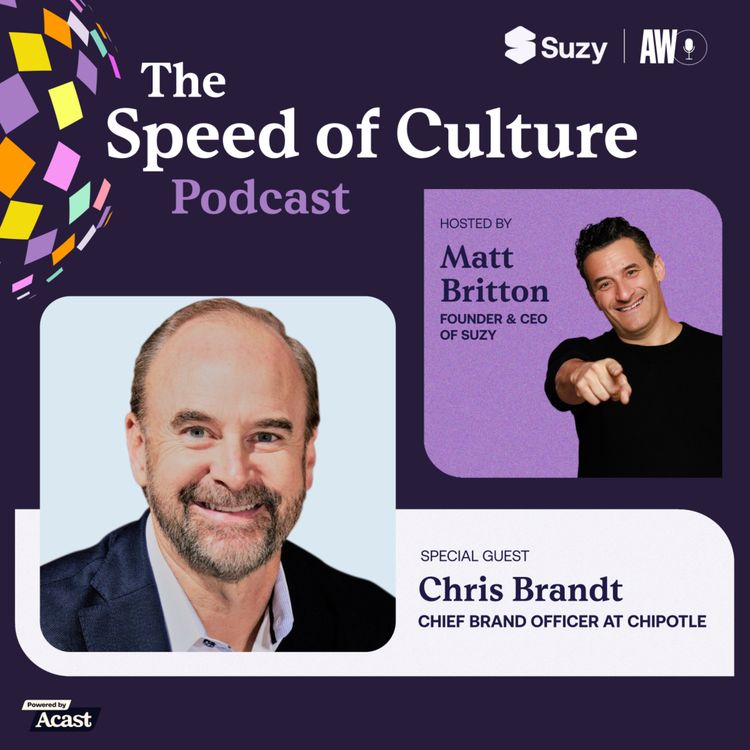
In today's hypercompetitive quick-service restaurant landscape, success demands far more than operational efficiency and menu innovation. It requires a leader who understands how to authentically embed brand purpose into every customer touchpoint while simultaneously scaling technological innovation. This is precisely what Chris Brandt, Chief Brand Officer at Chipotle Mexican Grill, has accomplished since joining the company in 2018.
On Episode 177 of The Speed of Culture Podcast, Matt Britton, founder and CEO of Suzy, the AI-powered consumer intelligence platform, sits down with Brandt to explore how Chipotle is redefining what it means to be a purpose-driven lifestyle brand. The conversation reveals the strategic thinking behind transforming a fast-casual restaurant into a cultural force—one that speaks to evolving consumer values while maintaining operational excellence and continuous digital innovation.
Brandt's journey at Chipotle demonstrates a fundamental principle increasingly vital for modern brand leaders: purpose and profitability are not opposing forces. Rather, when authentic, consumer-centric brand purpose is woven into the DNA of operations, marketing, and innovation strategy, it becomes a competitive moat that drives both loyalty and growth.
With over two decades of experience at powerhouse brands including General Mills, Coca-Cola, Taco Bell, and Bloomin' Brands, Brandt brings a proven playbook for building brands that matter culturally while scaling the business to unprecedented heights.
The episode explores how Chipotle challenges the fast-food status quo by prioritizing values over shortcuts—a philosophy exemplified when leadership rejected cost-cutting measures that would have compromised the brand's commitment to organic ingredients. Instead, the team asked a different question: how could they scale to 100% organic certification while maintaining growth?
As consumer preferences continue to shift toward authenticity, sustainability, and cultural relevance, Brandt's approach offers a masterclass in brand leadership. The conversation with Matt Britton provides essential insights for CMOs, brand strategists, and executives seeking to build organizations that resonate with next-generation consumers while achieving business objectives that matter to shareholders.
The Architecture of Purpose-Driven Brand Leadership
Chris Brandt's leadership philosophy rests on a deceptively simple but profoundly challenging foundation: brand purpose must be authentic, measurable, and embedded into decision-making at every organizational level. For Chipotle, this manifests through “Cultivating a Better World”—a north star that informs everything from ingredient sourcing decisions to marketing campaigns to venture capital investments.
The episode emphasizes how this purpose acts as a decision-making filter. When cost pressures mount or market challenges emerge, authentic purpose provides clarity. Rather than defaulting to what's easiest or cheapest, leadership asks:
“Does this decision align with our commitment to cultivating a better world?”
This framework has led to counterintuitive choices that strengthen brand equity in the long term.
One exemplary moment involves the cilantro sourcing decision. Facing margin pressure, Chipotle's leadership received a proposal to switch to non-organic cilantro—a minor ingredient that most consumers would never notice. Instead of accepting the cost savings, Brandt and his team asked:
“How do we scale to 100% organic?”
This question reframed the challenge from cost-cutting to innovation opportunity. The result reinforces consumer trust and deepens the brand promise, ultimately creating pricing power and customer lifetime value that far exceeds the incremental costs of organic sourcing.
This approach distinguishes Chipotle from competitors who treat sustainability as a marketing add-on rather than a core organizing principle. Brandt’s “conference room test”—assessing whether team members bring innovation, storytelling capability, and collaborative spirit—ensures that culture and chemistry drive decision-making alongside technical competency.
In an era of rampant greenwashing, authenticity commands premium pricing and loyalty. Consumers increasingly distinguish between brands that authentically live their stated values and those employing superficial sustainability messaging. Chipotle's genuine commitment to ingredient integrity and regenerative agriculture positions it as a category leader in purpose-driven consumer trust.
Digital Innovation as a Cultural Statement
While many restaurant brands approach digital transformation as a purely operational or revenue optimization exercise, Brandt frames Chipotle's digital strategy as an extension of brand purpose and cultural relevance. The Chipotlane—Chipotle's proprietary drive-thru-style mobile pickup lane—solves a genuine consumer problem while embodying the brand's commitment to respecting customer time and dignity.
When Brandt joined in 2018, Chipotle lacked mobile pickup infrastructure and had no digital drive-thrus. Within months, innovations like the Chipotlane began transforming operations. By 2022, digital business generated $3.5 billion in revenue—magnitudes larger than the $100–200 million baseline from before sophisticated digital ordering systems were implemented.
This explosive digital growth stems from a fundamentally different approach to digital customer experience. Rather than treating digital ordering as a transaction channel, Chipotle's strategy—powered by partnerships with Adobe and advanced analytics platforms—enables personalization at scale. Customer profiles are matched to individualized experiences, ensuring that each interaction reflects preferences, history, and values alignment.
The mobile app redesign released in 2017 illustrates this philosophy in practice. By prioritizing user experience design alongside transactional capability, Chipotle saw mobile traffic double and mobile orders surge by 50%. Between 2019 and 2020, mobile revenue doubled again.
From an organizational perspective, digital innovation requires cross-functional collaboration between marketing, operations, and technology teams. The Digital Makeline—a dedicated assembly line for online orders—preserves in-store customer experience while scaling digital volume.
Automation technologies, including the Autocado robot that processes avocados in 26 seconds, represent the next frontier. These innovations free team members to focus on quality control, customer service, and the human elements that make the brand experience memorable.
Building Cultural Relevance Through Authenticity and Contribution
Rather than pursuing viral marketing moments or forcing brand integration into trending topics, Chipotle targets what Brandt calls “big niches”—authentic cultural intersections where the brand can meaningfully contribute to consumer values and community.
Instead of asking “How can we become part of this trend?”, the framework asks whether the trend reflects genuine consumer values aligned with brand purpose. This methodology rejects spectacle-first marketing in favor of authentic engagement grounded in real fan behavior.
Sports marketing illustrates this philosophy. Rather than spreading resources across dozens of sponsorships, Chipotle has developed deeper relationships with sports leagues and individual athletes whose values align with the brand.
The regenerative agriculture campaign, highlighted through the animated short “Unfolded” (premiered February 2025 via Roblox), demonstrates sophisticated cultural contribution. Featuring Halsey's cover of “She's a Rainbow,” the initiative extended beyond content to include a $2 million donation to agricultural research universities and venture investments in sustainability-focused food technology firms including Plantible Foods, CH4 Global, and Greenfield Robotics.
This multi-layered approach—content, capital, and education—establishes Chipotle as a category leader in sustainable food systems. By prioritizing contribution over reach and relevance over spectacle, Chipotle builds brand affinity that proves resilient through market cycles and competitive pressures.
Scaling Purpose Without Losing Authenticity
The ultimate test of purpose-driven brand leadership emerges at scale. Brandt explains how Chipotle sustains purpose integrity as it expands nationally and internationally.
The mechanism rests on what Brandt calls “the north star.” When “Cultivating a Better World” serves as the primary decision-making framework, local variability becomes less problematic. Restaurant managers, regional teams, and corporate leadership all reference the same foundational purpose.
Digital orders accounted for approximately 35.5% of total sales, with continued growth trajectory. The loyalty program has emerged as a powerful vehicle for deepening customer relationships at scale.
Technology infrastructure—including data analytics platforms, customer intelligence tools, and operational management systems—ensures consistency across hundreds of locations. The Digital Makeline and standardized operational innovations protect both customer experience and employee satisfaction.
The Future of Purpose-Driven Leadership in Fast Casual
Brandt’s tenure at Chipotle signals broader trends reshaping brand leadership. Consumers increasingly evaluate brands through multiple lenses—functionality, sustainability, cultural values, workplace ethics, and community impact.
Strategic venture investments in sustainable food technology position Chipotle as a category leader in food system innovation rather than merely a QSR operator. The $2 million donation to agricultural research universities further demonstrates this commitment.
Automation and technology adoption will accelerate, but Brandt’s approach suggests these tools should enhance rather than replace human judgment and creativity. The Autocado and Digital Makeline solve operational constraints without eliminating the artisanal, human-centered preparation that distinguishes Chipotle.
Key Takeaways
- Purpose-Driven Decision Making: Authentic brand purpose serves as a north star for decision-making, creating competitive moat through trust and loyalty.
- Digital Innovation as Brand Extension: Technology should deepen customer relationships and solve genuine consumer problems, driving revenue growth while strengthening brand equity.
- Cultural Relevance Through Contribution: Authentic relevance emerges from meaningful contribution rather than superficial trend participation.
- Scaling Authenticity Requires Cultural Alignment: Hiring mission-aligned talent and investing in enabling infrastructure preserves purpose at scale.
- Purpose as Business Imperative: Authentic purpose strengthens pricing power, reduces acquisition costs, improves retention, and creates long-term value.
Frequently Asked Questions
How does Chipotle maintain “Food with Integrity” as it scales to thousands of locations?
Chipotle maintains ingredient and sourcing standards through supply chain oversight, technology-enabled quality monitoring, and cultural alignment around brand values. Rather than compromising standards to reduce costs, leadership innovates toward scaling commitment. The 100% organic cilantro decision exemplifies this approach.
What is the relationship between purpose-driven brand leadership and financial performance?
Evidence suggests these variables are positively correlated. Chipotle's digital business growth from $100–200 million to $3.5 billion demonstrates how authentic customer focus and purpose-aligned innovation drive expansion. The loyalty program deepens lifetime customer value.
How does Chipotle's technology strategy differ from competitors?
Chipotle frames digital and automation investments as vehicles for enhancing customer and employee experience. The Chipotlane, Digital Makeline, and Autocado remove friction points while preserving the artisanal, quality-focused identity that differentiates the brand.
What role does venture capital investment play in Chipotle's brand strategy?
Strategic investments in Plantible Foods, CH4 Global, and Greenfield Robotics signal commitment to regenerative agriculture and food system innovation. These moves attract talent, generate authentic storytelling, and position Chipotle as a leader in sustainable food production.
Looking Ahead
The Speed of Culture Podcast episode with Chris Brandt provides essential insights for leaders navigating rising consumer expectations around authenticity and sustainability.
To explore these insights deeper, subscribe to The Speed of Culture Podcast available on all major platforms. For additional consumer intelligence and AI-powered brand strategy resources, visit Suzy.
Matt Britton has also authored Generation AI, which explores how organizations can harness artificial intelligence to understand and engage consumers in the modern era. For organizations seeking expert guidance on brand strategy, consumer behavior, and AI-driven marketing innovation, explore his AI keynote speaker services or visit Speaker HQ for more information.
Ready to elevate your organization’s brand strategy? Contact Matt Britton to book a keynote or strategic advisory session.

%20(400%20x%20100%20px)%20(300%20x%2050%20px)%20(150%20x%2050%20px).avif)

.jpeg)


.jpeg)
.jpeg)