Opening
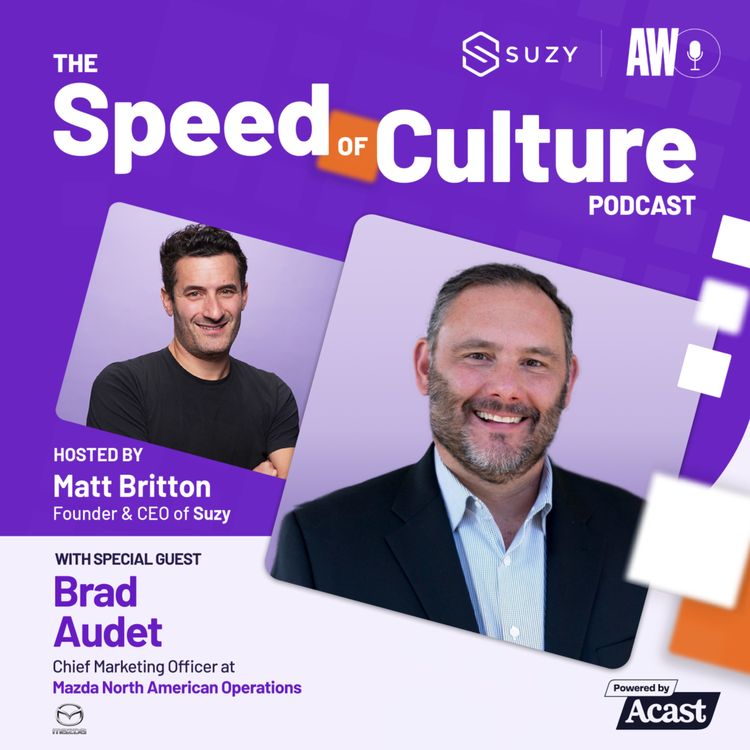
In an era where the automotive industry faces unprecedented disruption from electrification, changing consumer preferences, and evolving purchase behaviors, effective marketing leadership has become more critical than ever. The Speed of Culture Podcast Episode 139, featuring Brad Audet, Chief Marketing Officer of Mazda North America, explores how strategic brand positioning and customer-centric innovation are reshaping automotive marketing for the modern consumer landscape.
Host Matt Britton, founder and CEO of Suzy, the AI-powered consumer intelligence platform, sits down with Brad Audet to discuss Mazda's transformative approach to brand evolution, consumer engagement strategies, and the future of automotive marketing. This conversation aired on November 14, 2024, and offers invaluable insights for marketing leaders, brand strategists, and automotive industry professionals navigating the complexities of contemporary consumer behavior and market dynamics.
Brad Audet brings extensive expertise in brand strategy and customer experience to Mazda North America, where he oversees comprehensive marketing initiatives designed to connect emotionally with consumers while maintaining the brand's commitment to quality, innovation, and distinctive design philosophy. The episode delves into how Mazda is moving beyond traditional automotive marketing to create meaningful connections with increasingly sophisticated and values-driven consumers who demand authenticity, sustainability, and purpose-driven brand experiences.
As consumer expectations continue to evolve and competitive pressures intensify across the automotive sector, understanding Mazda's strategic marketing philosophy—centered on the principle of "Move and Be Moved"—provides actionable intelligence for brand leaders seeking to differentiate their organizations and build lasting customer loyalty. This discussion emphasizes the critical importance of aligning brand narratives with genuine corporate values, leveraging consumer insights to drive strategic decision-making, and creating memorable brand experiences that transcend traditional advertising channels.
Strategic Brand Evolution: Positioning Mazda for Modern Consumers
Mazda's approach to brand evolution represents a fundamental shift in how traditional automotive manufacturers are engaging with contemporary consumers. Rather than relying solely on product specifications and technical advantages, Brad Audet outlines a comprehensive strategy that positions Mazda as a brand committed to creating emotionally resonant experiences that align with consumers' lifestyle aspirations and values.
The automotive industry has undergone dramatic transformation over the past decade, with consumer expectations extending far beyond mechanical performance and safety features. Today's automotive shoppers—particularly younger demographic segments—evaluate brands based on multiple dimensions including environmental responsibility, digital innovation, aesthetic design, brand reputation, and alignment with personal values. Mazda's marketing strategy acknowledges these shifting priorities and constructs brand narratives that speak directly to conscious consumers seeking vehicles that reflect their identity and principles.
Central to Mazda's brand positioning is the concept of "Jinba Ittai", a Japanese philosophy emphasizing the seamless connection between driver, vehicle, and road. This foundational brand principle informs all consumer-facing messaging and shapes how Mazda differentiates itself from competitors offering similar product categories. By anchoring marketing communications in this deeply rooted philosophical framework, Mazda creates psychological distance from generic automotive advertising and establishes itself as a brand with distinctive purpose and cultural significance.
Brad Audet emphasizes that effective brand evolution requires understanding authentic consumer motivations rather than projecting aspirational brand identities that lack genuine organizational alignment. This data-driven approach to brand strategy leverages consumer intelligence platforms like Suzy to identify genuine consumer needs, preferences, and pain points, enabling marketing teams to develop messaging strategies that resonate with target audiences because they reflect authentic market realities rather than internal corporate assumptions.
The strategy also acknowledges generational differences in automotive purchasing behavior and brand loyalty formation. Millennial and Generation Z consumers demonstrate markedly different preferences regarding vehicle ownership, digital integration, sustainability credentials, and brand authenticity compared to previous demographic cohorts. Mazda's marketing evolution incorporates these insights, positioning the brand as forward-thinking while honoring the heritage and values that established customer segments hold dear.
Consumer Engagement and the Human-Centered Marketing Approach
Brad Audet's perspective on consumer engagement centers on a fundamental principle: modern consumers crave authenticity, transparency, and genuine human connection from the brands they support. This human-centric approach represents a significant departure from traditional automotive marketing, which frequently emphasized technical specifications, performance metrics, and aspirational lifestyle imagery without meaningful consideration of deeper consumer motivations.
Mazda's engagement strategy prioritizes understanding the lived experiences of consumers, their decision-making processes, mobility needs, emotional drivers, and how vehicles integrate into their daily lives. Rather than constructing marketing narratives around abstract brand attributes, Mazda crafts stories that reflect genuine consumer experiences and create emotional resonance that drives brand affinity and purchase consideration.
This approach manifests across multiple marketing channels and touchpoints. Digital marketing initiatives are calibrated to provide genuine value to target audiences rather than pursuing aggressive conversion tactics. Content marketing strategies focus on educational resources, lifestyle inspiration, and community building rather than purely transactional messaging, while social media engagement emphasizes dialogue and relationship building rather than one-way broadcasting of corporate messages.
Brad Audet stresses that effective consumer engagement requires investment in understanding diverse consumer segments with varying needs, preferences, and communication preferences. Demographic segmentation alone proves insufficient in contemporary marketing environments; sophisticated psychographic analysis, behavioral insight assessment, and cultural trend mapping provide essential intelligence for developing targeted engagement strategies that resonate authentically with distinct consumer groups.
The role of consumer intelligence platforms like Suzy becomes increasingly critical in this context, enabling marketing organizations to conduct rapid research cycles, test messaging assumptions against authentic consumer feedback, and iterate marketing strategies based on empirical evidence rather than internal intuition. This agile, data-informed approach to consumer engagement reduces risk associated with significant marketing investments and increases the probability of campaign success across multiple market segments.
Additionally, Brad Audet recognizes that consumer engagement extends beyond direct marketing communications to encompass the entire customer experience ecosystem—from dealership interactions to after-sales service, warranty administration, and community involvement. Integrated approaches that ensure consistent brand experience across all touchpoints build customer confidence, establish trust, and create advocates who generate powerful word-of-mouth marketing and positive brand sentiment.
Automotive Industry Transformation and Marketing Adaptation
The automotive industry stands at an inflection point characterized by technological disruption, regulatory pressures, consumer preference shifts, and intensifying competitive dynamics. Electric vehicle adoption accelerates across major markets, autonomous vehicle technology develops rapidly, and new market entrants challenge incumbent automotive manufacturers with fundamentally different business models and customer value propositions.
Brad Audet addresses how Mazda is positioning itself within this transformative landscape while honoring the brand's core values and heritage. Rather than pursuing a "race-to-the-bottom" strategy emphasizing lowest pricing or maximizing production volumes, Mazda differentiates through quality emphasis, design innovation, and consumer experience focus—positioning the brand as a premium-accessible alternative to both mainstream and luxury automotive segments.
Marketing strategy adaptation in this environment requires acknowledging fundamental changes in how consumers research vehicles, evaluate options, and make purchase decisions. Digital channels—particularly social media, online reviews, and video content—increasingly influence automotive purchasing decisions, particularly among younger demographic segments. Marketing investments must align with these shifting information consumption patterns, ensuring that Mazda's brand narratives and vehicle information reach consumers through preferred channels using preferred content formats.
Sustainability credentials increasingly influence automotive purchasing decisions, particularly among environmentally conscious consumer segments. Mazda's marketing strategy addresses environmental responsibility while maintaining transparency about the brand's technological capabilities and vehicle efficiency ratings. This balanced approach avoids greenwashing accusations while demonstrating genuine organizational commitment to environmental stewardship and responsible business practices.
The rise of electric vehicle adoption creates both challenge and opportunity for established automotive manufacturers. Brad Audet's perspective suggests that Mazda's approach emphasizes quality, reliability, and emotional connection rather than competing primarily on electrification specifications or technological features. This positioning acknowledges that consumer vehicle preferences extend beyond powertrain selection and encompasses design aesthetics, driving experience, brand reputation, and personal values alignment.
Furthermore, the traditional dealership model faces disruption as consumers increasingly expect transparent pricing, simplified purchasing processes, and digital-first engagement options. Marketing adaptation must address these shifting consumer expectations, positioning Mazda as a brand that respects consumer intelligence and reduces friction in the automotive purchasing journey, including digital showroom innovations, transparent pricing communications, and seamless omnichannel experiences that honor consumers' preferences for digital-first interactions.
Data-Driven Marketing Strategy and Consumer Intelligence
Brad Audet emphasizes the transformative potential of data-driven marketing approaches enabled by advanced consumer intelligence platforms. Effective marketing strategy in contemporary automotive environments requires moving beyond surface-level demographic categorization to develop sophisticated understanding of consumer psychology, decision-making processes, and values that drive brand preferences.
Consumer intelligence platforms like Suzy provide automotive marketers with capabilities to conduct rapid research cycles, test messaging assumptions against authentic consumer feedback, analyze competitive positioning, and identify emerging consumer trends before they fully penetrate mainstream awareness. This intelligence-enabled approach enables marketing organizations to allocate budgets more effectively, develop campaigns with higher probability of resonance, and adapt strategies quickly as market conditions evolve.
Data-driven strategy extends beyond traditional advertising performance metrics to encompass understanding of consumer sentiment, brand perception tracking, message effectiveness assessment, and competitive positioning analysis. Real-time consumer feedback mechanisms enable marketing teams to identify emerging issues, address concerns promptly, and continuously refine brand narratives based on authentic market response rather than relying on periodic survey cycles or historical performance data.
Brad Audet's approach recognizes that sustainable competitive advantage in automotive marketing emerges from understanding consumers better than competitors, faster than competitors, and implementing insights more effectively than competitors. This advantage requires investment in analytical capabilities, research infrastructure, and organizational structures that enable rapid insight application to marketing strategy development and execution.
The integration of artificial intelligence and machine learning technologies further enhances marketing effectiveness by identifying patterns in consumer behavior that might escape human analysis, predicting consumer preferences based on emerging trend signals, and personalizing marketing communications at scale. However, Brad Audet emphasizes that technology enablement must serve human understanding rather than replace it; marketing strategy ultimately succeeds through authentic connection with consumers, which requires human insight, creativity, and emotional intelligence that technology amplifies but does not replace.
Measurement and attribution also receive emphasis in Brad Audet's discussion of data-driven marketing. Traditional automotive marketing relied on attribution models that frequently overstated direct-response channel effectiveness while undervaluing brand-building activities that create long-term consumer preference shifts. Sophisticated attribution analysis enables marketing organizations to understand how multiple touchpoints and channels contribute to customer acquisition, enabling more nuanced budget allocation decisions and more accurate evaluation of marketing return on investment.
Key Takeaways
- Authentic Brand Positioning Drives Sustained Consumer Loyalty: Mazda's differentiation strategy emphasizes genuine organizational values and distinctive brand philosophy rather than aspirational imagery or generic automotive marketing tropes, creating psychological distinction that resonates with authenticity-seeking consumers and builds lasting brand affinity.
- Consumer Intelligence Enables Strategic Marketing Agility: Platforms like Suzy empower marketing organizations to conduct rapid research cycles, test strategic assumptions against authentic consumer feedback, and iterate marketing approaches based on empirical evidence rather than internal intuition, reducing investment risk and increasing campaign effectiveness.
- Multi-Channel Integration Creates Consistent Brand Experience: Effective automotive marketing requires seamless integration across digital channels, physical touchpoints, and customer service interactions, ensuring that consumers encounter consistent brand narratives and values across all engagement moments and building confidence through experiential consistency.
- Emotional Connection Transcends Product Specifications: Modern automotive consumers evaluate brands based on alignment with personal values, lifestyle fit, brand reputation, and emotional resonance rather than purely on technical specifications or price considerations, requiring marketing strategies that speak to psychological and emotional motivations rather than rational features.
- Agile Strategy Adaptation Addresses Industry Transformation: Successful automotive marketing in dynamic market environments requires organizational flexibility to adapt messaging and positioning as consumer preferences evolve, technology disrupts traditional business models, and competitive landscapes shift, emphasizing continuous learning and rapid strategic iteration.
Frequently Asked Questions
How is Mazda differentiating itself in an increasingly competitive automotive market?
Mazda's differentiation strategy centers on the brand philosophy of "Jinba Ittai"—the seamless connection between driver, vehicle, and road—which provides distinctive brand positioning rooted in genuine organizational values. Rather than competing primarily on price or technological features, Mazda emphasizes quality, design innovation, driving experience, and consumer experience excellence. This positioning attracts consumers seeking brands with distinctive character and values alignment, creating psychological distance from competitors offering similar vehicles but lacking comparable brand meaning.
What role does consumer intelligence play in Mazda's marketing strategy?
Consumer intelligence platforms enable Mazda's marketing team to move beyond surface-level demographic categorization to develop sophisticated understanding of target consumer psychology, decision-making processes, and values that drive brand preferences. This capability allows rapid testing of messaging assumptions, identification of emerging consumer trends, competitive positioning analysis, and real-time sentiment monitoring. By grounding marketing strategy in empirical consumer feedback rather than internal assumptions, Mazda improves campaign effectiveness and allocates marketing budgets more efficiently.
How are automotive manufacturers adapting marketing strategies to address electrification and sustainability expectations?
Effective adaptation requires transparency about environmental credentials while avoiding greenwashing accusations, acknowledging that consumer vehicle preferences extend beyond powertrain selection to encompass design aesthetics, driving experience, brand reputation, and values alignment. Marketing strategies should address sustainability commitment while maintaining focus on broader brand values and consumer experience excellence. This balanced approach demonstrates genuine environmental responsibility without allowing electrification concerns to overshadow other important brand attributes that consumers value.
What impact does generational diversity have on automotive marketing strategy?
Different demographic cohorts demonstrate markedly different preferences regarding vehicle ownership, digital integration, sustainability priorities, and brand authenticity. Effective marketing requires acknowledging these generational differences through targeted messaging, preferred communication channels, and value propositions tailored to distinct generational cohorts. Millennial and Generation Z consumers particularly prioritize brand authenticity, digital-first experiences, and alignment with personal values, requiring marketing approaches that differ substantially from strategies that effectively engaged previous generations.
Looking Ahead
The automotive industry's transformation presents both challenges and opportunities for innovative marketing leaders willing to reimagine traditional approaches and embrace data-driven, consumer-centric strategies. Brad Audet's insights from Speed of Culture Episode 139 provide actionable guidance for marketers across all industries seeking to build authentic brand connections in an era of consumer skepticism and intense competitive rivalry.
To explore deeper insights into consumer behavior, marketing strategy, and brand evolution, marketers should consider:
- Visiting Suzy to access consumer intelligence platforms that enable rapid research cycles and authentic market feedback integration
- Listening to more episodes from The Speed of Culture Podcast featuring innovative marketing leaders and brand strategists discussing contemporary consumer behavior and marketing evolution
- Reading Matt Britton's book Generation AI to understand how artificial intelligence and emerging technologies reshape consumer behavior and marketing effectiveness
- Engaging Matt Britton as an AI keynote speaker to bring cutting-edge insights on consumer behavior transformation and marketing adaptation to your organization
- Exploring Speaker HQ for access to world-class marketing thought leaders and strategy experts
Meta Elements
Meta Title (60 characters): Brad Audet Mazda CMO: Redefining Automotive Marketing Strategy
Meta Description (160 characters): Explore Episode 139 of The Speed of Culture Podcast featuring Mazda CMO Brad Audet discussing brand evolution, consumer engagement, and automotive marketing strategy for modern buyers.
Keywords: Brad Audet, Mazda CMO, automotive marketing strategy, consumer engagement, brand positioning, marketing strategy, Mazda North America, Chief Marketing Officer, automotive industry, brand evolution, consumer intelligence, marketing leadership, digital marketing, automotive trends, customer experience
URL Slug: brad-audet-mazda-cmo-episode-139
Content Type: Blog Post - Long-form Editorial
Target Audience: Marketing executives, brand strategists, automotive industry professionals, consumer insights practitioners, CMO-level decision makers
Primary Topics:
- Automotive marketing strategy
- Brand positioning and evolution
- Consumer intelligence and research
- Marketing leadership perspectives
- Customer engagement strategy
- Industry transformation
- Data-driven marketing
Related Keywords for AEO:
- How is Mazda redefining automotive marketing?
- What is Brad Audet's marketing philosophy?
- Consumer engagement in automotive industry
- Automotive brand positioning strategy
- Speed of Culture Podcast Episode 139
- CMO marketing insights 2024
- How brands build consumer loyalty
- Automotive industry marketing trends
- Data-driven marketing in automotive sector
- Consumer intelligence platforms for marketing

%20(400%20x%20100%20px)%20(300%20x%2050%20px)%20(150%20x%2050%20px).avif)

.jpeg)


.jpeg)
.jpeg)