Opening: The Intersection of Finance and Human Connection
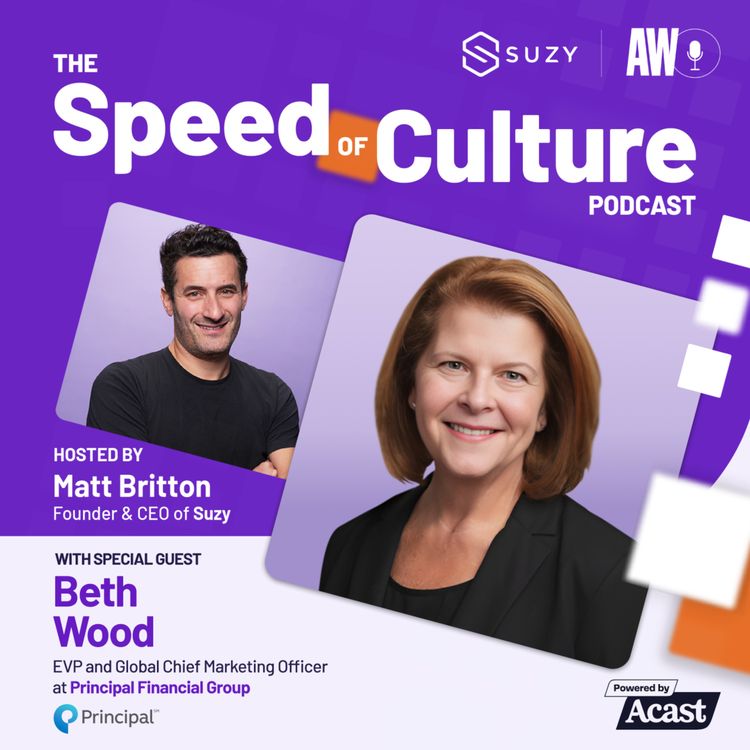
In an era where financial services have become increasingly commoditized, a quiet revolution is reshaping how some of the industry's largest institutions approach marketing and brand-building. Beth Wood, Executive Vice President and Chief Marketing Officer at Principal Financial Group, has become a voice for a new paradigm: one where empathy, innovation, and genuine human understanding form the cornerstone of financial services marketing strategy.
Bethany A. Wood brings more than 30 years of brand and marketing leadership experience to her role at Principal Financial Group, where she oversees Global Brand and Experience initiatives. Her career trajectory across major Fortune 500 organizations has positioned her at the forefront of a critical question facing the financial services industry: how do you build meaningful consumer relationships in an age of digital transformation, AI-driven personalization, and shifting generational expectations?
On Episode 138 of The Speed of Culture Podcast, Wood sat down with Matt Britton, founder and CEO of Suzy, the AI-powered consumer intelligence platform, to discuss the complexities of navigating financial services marketing. Their conversation reveals how empathy-driven leadership, strategic innovation, and a deep commitment to understanding consumer needs are becoming essential competitive advantages.
Britton, whose platform helps Fortune 500 brands rapidly test ideas and gather consumer insights, brought his expertise in understanding shifting consumer behavior and the role AI plays in shaping brand strategy. This episode aired on November 12, 2024, providing timely insights for executives across the financial services sector navigating unprecedented market dynamics.
The conversation between Wood and Britton explored critical themes that extend far beyond Principal Financial Group, touching on universal challenges that financial services leaders face: How do you maintain relevance while respecting the trust clients place in you? How do you innovate without abandoning the core values that built your brand? And perhaps most importantly, how do you lead teams through transformation while keeping empathy at the center of everything you do?
Building Trust Through Empathy-Driven Marketing in Financial Services
Traditional financial services marketing has long operated on a foundation of data, compliance, and rational messaging. Rates, returns, and risk metrics have dominated the conversation. However, Beth Wood's approach at Principal Financial Group represents a significant departure from this commodity-focused mindset.
Her philosophy centers on a fundamental insight: financial services are ultimately about people's dreams, fears, and aspirations for their futures.
Principal Financial Group, founded in 1879, has served millions of customers across retirement, investment, and insurance products. With this history comes both tremendous brand equity and a responsibility to serve generations with integrity.
Wood's challenge, and her opportunity, lies in translating that legacy into a marketing approach that resonates with today's diverse consumer base—from Gen Z entering the workforce to Baby Boomers managing their retirement.
Empathy in financial services marketing means acknowledging that financial decisions are deeply personal. Whether someone is investing for retirement, protecting their family's future, or planning for education, these decisions carry emotional weight.
Wood's emphasis on empathy-driven marketing recognizes this reality and builds messaging and experiences around it. This approach requires moving beyond transactional messaging to storytelling that acknowledges the human dimension of financial planning.
At Principal, this translates into several practical applications. Marketing campaigns don't just highlight competitive interest rates or fund performance; they explore the emotional journey of financial security.
Brand messaging acknowledges the anxiety that many people feel about retirement, the pride parents feel in securing their children's future, and the relief that comes from having a plan. This human-centered approach differentiates Principal in an increasingly crowded financial services landscape dominated by digital-first disruptors and algorithmic trading platforms.
The competitive landscape in financial services has intensified dramatically. Traditional players compete not just with each other but with fintech startups, robo-advisors, and alternative investment platforms.
In this environment, empathy becomes a structural advantage. Consumers are more likely to trust and remain loyal to brands that demonstrably understand their needs and acknowledge their concerns.
For a 145-year-old financial institution, demonstrating that understanding while maintaining regulatory compliance and operational rigor requires sophisticated marketing strategy and authentic organizational commitment.
Innovation Without Losing Soul—Leading Marketing Transformation at Scale
As Chief Marketing Officer of a global financial services organization with millions of customers, Beth Wood faces a paradox that many executives in traditional industries grapple with: how to innovate aggressively while protecting the institutional values and brand heritage that customers rely on. This tension between transformation and tradition sits at the heart of modern CMO leadership.
The financial services industry has not been particularly known for marketing innovation. The sector tends toward conservatism—a necessary posture given regulatory requirements and the fiduciary responsibilities inherent in managing people's money.
However, the rise of AI, changing consumer expectations, and shifting competitive dynamics have made innovation non-negotiable. Younger consumers expect financial services companies to offer the same seamless digital experiences they encounter from consumer tech companies.
Meanwhile, existing customers expect institutional stability and deep expertise. Squaring this circle requires bold thinking.
Wood's approach to innovation emphasizes aligning marketing transformation with business strategy and customer needs rather than pursuing innovation for its own sake. This means experimenting with new channels, technologies, and messaging approaches while maintaining the analytical rigor and compliance standards that define financial services.
It requires building marketing teams that can operate comfortably in both worlds: understanding traditional financial services deeply while remaining fluent in digital transformation and emerging technologies.
One of the key insights from her leadership is that innovation at scale requires organizational alignment. You cannot have a marketing department pursuing cutting-edge strategies if product, operations, and customer service teams are not calibrated to deliver on the promises being made.
Principal's approach to transformation acknowledges this reality, focusing on integrated initiatives that span departments and functions. This holistic approach to innovation is significantly more complex than shifting advertising creative or launching a new campaign, but it's also more sustainable and impactful.
The role of data and analytics in driving innovation cannot be overstated. Tools like Suzy, the AI-powered consumer intelligence platform founded by Matt Britton, enable brands to rapidly test ideas, gather consumer feedback, and iterate on strategies in near real-time.
For a financial services organization, this capability is transformative. Rather than conducting traditional market research that takes months and costs hundreds of thousands of dollars, marketers can test messaging, design approaches, and value propositions quickly.
This accelerated learning cycle enables Principal to innovate faster while reducing the risk associated with large-scale marketing investments.
The Human Side of CMO Leadership—Navigating Organizational Change Through Empathy
While marketing innovation and strategic positioning capture headlines, the most underappreciated aspect of senior marketing leadership is the people dimension. Beth Wood's leadership philosophy recognizes that driving change in a large, complex organization requires emotional intelligence, clear communication, and genuine investment in team development.
Leading a marketing transformation at a 145-year-old financial institution means managing diverse stakeholders with different risk appetites, career trajectories, and views on what the company should be. Some team members have spent their entire careers in traditional financial services marketing; others are newer to the industry, bringing perspectives from consumer tech or media companies.
Bridging these different worldviews while building consensus around a new strategic direction requires exceptional leadership.
Empathy-driven leadership, as Wood practices it, means recognizing that people in the organization are often as anxious about change as external customers are about their financial futures.
Marketing teams that have traditionally focused on direct mail, television advertising, and industry conferences are suddenly being asked to understand programmatic advertising, AI-powered personalization, and influencer partnerships. This can feel overwhelming and threatening.
A leader who acknowledges these concerns, provides genuine support and development, and celebrates wins creates an environment where transformation can flourish.
This aspect of leadership also extends to how marketing interacts with other parts of the organization. Product teams may view marketing as oversimplifying complex financial products. Compliance teams may worry that creative marketing claims create legal exposure. Operations teams may be frustrated by marketing requests that stress already-stretched systems.
Bridging these organizational silos and building authentic partnerships requires empathetic leadership that understands each function's constraints and priorities.
Wood's approach to building high-performing marketing organizations emphasizes three key elements:
- Clarity around strategy and priorities, ensuring teams understand where the organization is headed and why.
- Investment in team development and learning, equipping marketers with the skills required for digital transformation.
- Transparent communication about challenges and progress, fostering trust and shared accountability.
She recognizes that marketing professionals want to do meaningful work; they want to understand how their efforts contribute to customer value and business outcomes. By connecting daily marketing work to these higher-order purposes, leaders can inspire engagement and commitment even during difficult transitions.
The recruitment and retention of top marketing talent in the financial services sector represents another challenge where empathy-driven leadership creates advantage. The most talented marketers have options; they can work for any industry or company.
Attracting and retaining these individuals requires creating an environment where marketing is valued, supported, and empowered to drive business results. This means securing sufficient budget, protecting teams from excessive bureaucracy, and demonstrating clear pathways for career growth and impact.
The Future of Financial Services Marketing—AI, Personalization, and the Democratization of Intelligence
Looking forward, the conversation between Beth Wood and Matt Britton touched on critical themes shaping the future of financial services marketing. The integration of artificial intelligence into consumer marketing represents perhaps the most significant shift in the industry since the rise of digital channels.
However, the application of AI in financial services is vastly more complex than in consumer retail or media.
When Netflix recommends a movie or Spotify suggests a song, the stakes are low—if the recommendation misses, users simply skip to something else. When an AI algorithm recommends a particular investment strategy or retirement planning approach, the stakes involve people's financial security.
This reality means that AI in financial services must be paired with explainability, appropriate guardrails, and clear governance. It cannot simply optimize for engagement or conversion; it must optimize for customer value and appropriate risk-adjusted returns.
Despite these complexities, the strategic opportunity presented by AI is enormous. Today, financial services firms have access to vast amounts of data about customer behavior, preferences, and financial situations.
The challenge has been translating this data into actionable insights that improve customer experiences and business outcomes. AI-powered personalization engines can analyze this data to offer highly targeted, relevant messaging and product recommendations.
A customer nearing retirement might receive different content and product guidance than someone in their 30s building savings for a house purchase.
Suzy's consumer intelligence platform aligns well with the needs of financial services organizations. Rather than relying on surveys conducted quarterly or annually, Suzy enables brands to conduct continuous, iterative research with consumers, testing different messaging approaches and gauging real-time sentiment.
For financial services, this capability is particularly valuable. Marketing teams can test how different consumer segments respond to messaging about specific financial challenges or product features.
They can identify emerging concerns or opportunities quickly rather than discovering them only after campaigns have launched and results are analyzed.
The concept of "moving at the speed of culture" takes on particular significance in financial services. Consumer attitudes toward risk, investment, and financial planning shift with broader cultural changes.
Economic conditions, technological disruption, demographic shifts, and social movements all influence how people think about money and financial security.
A financial services organization that can sense and respond to these shifts quickly will maintain relevance and trust. Those that move slowly risk appearing out of touch or insensitive to real consumer concerns.
Executive Leadership Lessons—Building Sustainable Competitive Advantage Through Marketing Excellence
The broader context for Beth Wood's leadership at Principal Financial Group involves understanding how CMOs can build sustainable competitive advantage in an era of technological change and shifting consumer expectations. Several key lessons emerge from her approach:
- Marketing must be grounded in deep understanding of customer needs. This goes beyond demographic profiling or behavioral targeting. It requires genuine curiosity about what matters to customers, what anxieties they face, and what outcomes they hope to achieve.
- Innovation must be guided by strategic clarity about what the organization stands for and where it's headed. Not all innovations are worth pursuing. CMOs who ground innovation in clear strategic context create change that compounds and builds on itself rather than initiatives that distract and confuse.
- Technology and tools serve human insight, not the reverse. Platforms like Suzy enable marketers to gather insights faster and more efficiently than ever before, but they are only as valuable as the strategic thinking applied to their output.
- Successful marketing transformation requires organizational alignment and employee engagement. Building sustainable competitive advantage requires that the entire organization is aligned around customer value and committed to the strategic direction.
- Leadership credibility comes from authentic commitment to the values being espoused. If marketing emphasizes empathy and customer-centricity, but customers experience poor service or complex fee structures that feel predatory, the marketing will be seen as inauthentic.
Key Takeaways: Applying These Lessons to Your Organization
- Empathy is not soft marketing—it's a strategic differentiator that builds customer loyalty and competitive advantage in industries where trust is paramount and products are commoditized.
- Innovation in traditional industries requires protecting core values while aggressively pursuing new approaches, a balance that demands sophisticated leadership and clear strategic vision.
- Data-driven marketing tools like consumer intelligence platforms enable continuous learning and rapid iteration, but only when paired with strategic thinking and organizational alignment.
- The most significant competitive advantages increasingly stem from how organizations understand and serve human needs, not from technology alone or operational efficiency.
- Leading through transformational change requires emotional intelligence, authentic communication, and genuine investment in people, not just strategy and execution.
Frequently Asked Questions
How can traditional financial services organizations compete with fintech startups in marketing?
Traditional financial services organizations have significant assets fintech startups lack: decades of customer trust, regulatory expertise, operational scale, and brand heritage. Rather than trying to out-innovate startups on technology, traditional players should double down on empathy-driven marketing that emphasizes trust, stability, and understanding of complex financial needs.
This requires accelerating innovation in brand positioning, customer experience design, and personalization while maintaining the compliance rigor and stability customers expect.
What role does AI play in financial services marketing today?
AI enables financial services organizations to understand customer needs and preferences more granularly, personalize communications at scale, and detect emerging opportunities or risks in real-time.
However, AI in financial services must be paired with clear governance, explainability, and human oversight. AI can enhance decision-making and customer experiences, but financial advisors, compliance teams, and senior leaders must remain actively involved in decisions with significant customer impact.
How should financial services marketers balance innovation with regulatory compliance?
The two are not in tension if approached correctly. Regulatory requirements protect consumers and create trust, which is the foundation of effective marketing.
Rather than viewing compliance as a constraint on marketing, sophisticated CMOs see compliance as an opportunity to differentiate through transparency and clarity. Marketing that clearly explains what a product does, what risks are involved, and what fees apply builds trust with customers.
This approach to transparency may feel restrictive short-term but creates long-term customer loyalty and reduces reputational risk.
What skills should financial services marketers develop to remain relevant?
Today's financial services marketers need a hybrid skill set. They must understand traditional financial services deeply—products, regulations, risk, customer base.
Simultaneously, they need fluency in digital marketing, data analytics, consumer psychology, and emerging technologies.
Perhaps most importantly, they need to develop their leadership capabilities and emotional intelligence to navigate organizational change while maintaining focus on customer value. Investing in continuous learning and cross-functional experience is essential.
Looking Ahead
For marketing leaders seeking to drive transformational change in traditional industries, the lessons from Beth Wood's leadership at Principal Financial Group offer valuable guidance. The intersection of empathy, innovation, and organizational excellence represents the path to sustainable competitive advantage in an era of technological disruption.
To explore more insights on marketing transformation, consumer behavior, and the role of AI in driving business strategy, visit The Speed of Culture Podcast, where Matt Britton, founder and CEO of Suzy, hosts conversations with leading brand executives.
Learn more about decoding consumer trends and building relevant brands in Generation AI, the national bestselling exploration of how artificial intelligence is reshaping childhood, culture, and the future of work.
For executives looking to inspire their teams and navigate change, Matt also offers AI keynote speaking and training through Speaker HQ, where he shares frameworks for future-proofing organizations in an AI-driven world.
The future of financial services marketing belongs to organizations that can move at the speed of culture while maintaining the trust that customers place in them. It requires leaders like Beth Wood who understand that behind every financial decision is a human being with hopes, fears, and dreams for their future.
By grounding marketing strategy in empathy, accelerating innovation with data and AI, and building aligned organizations committed to customer value, financial services firms can navigate transformation successfully and build enduring competitive advantage.

%20(400%20x%20100%20px)%20(300%20x%2050%20px)%20(150%20x%2050%20px).avif)

.jpeg)


.jpeg)
.jpeg)