Opening
In a travel economy fueled by experiences and expectations, the lines between marketing, technology, and hospitality are becoming increasingly blurred. Marriott International, with its portfolio of more than 30 brands and 240 million Bonvoy members worldwide, sits squarely at the intersection of this evolution. The stakes are high, the competition is fierce, and the only way to win is through purposeful, human-centered innovation.
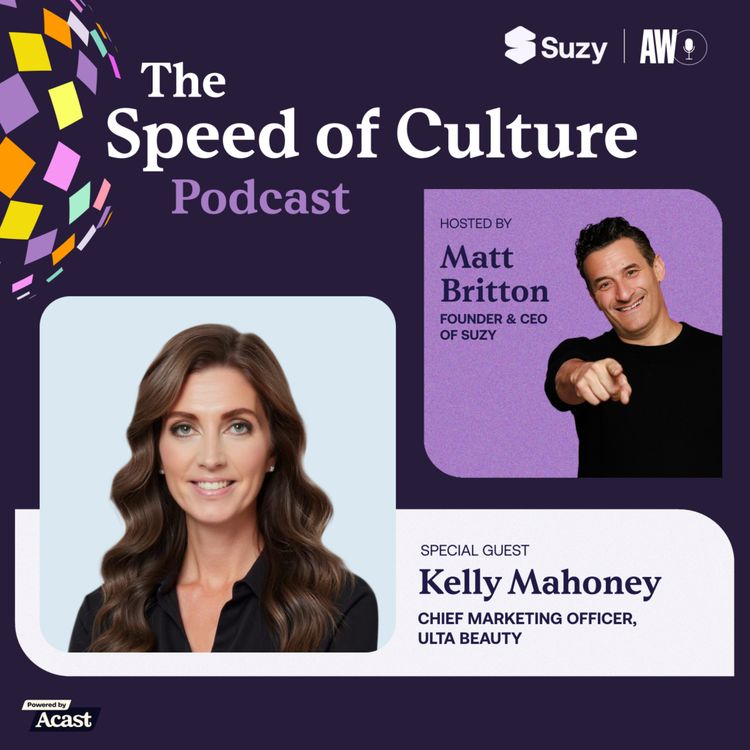
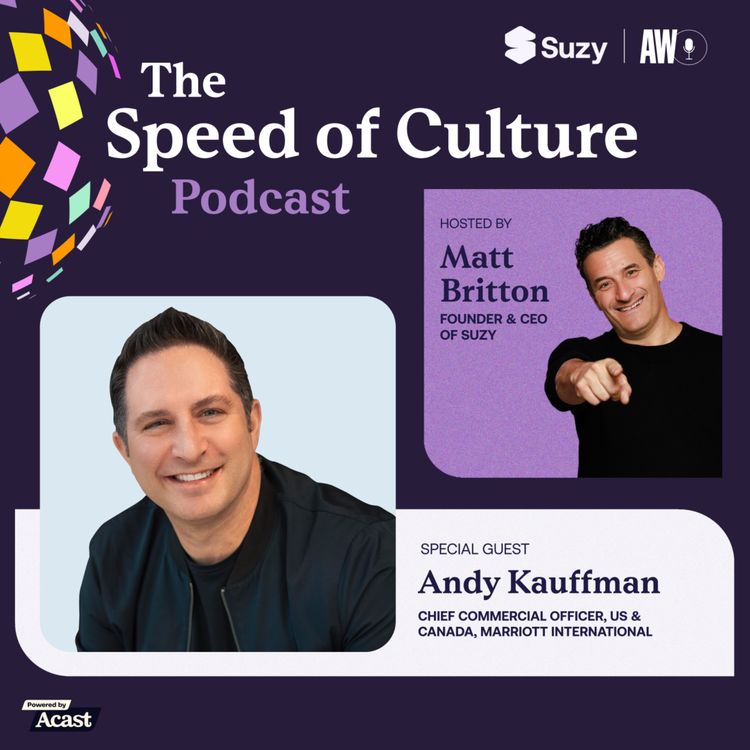
Enter Andy Kauffman, Chief Commercial Officer for U.S. and Canada at Marriott International. In Episode 197 of The Speed of Culture Podcast, Matt Britton, founder and CEO of Suzy, the AI-powered consumer intelligence platform, sits down with Andy to explore how Marriott is balancing the demands of modern hospitality with the imperative to remain fundamentally people-first in everything it does.
Andy leads commercial strategy for over 6,000 hotels, driving growth across marketing, sales, pricing, and revenue management. His journey back to Marriott after a five-year stint at the NFL—where he served as Chief Marketing Officer—gives him a unique vantage point on the intersection of culture, loyalty, and brand.
The conversation reveals a company wrestling with existential questions about the future of marketing, the role of AI in creating authentic experiences, and what it means to stay true to a legacy of service in a world increasingly mediated by algorithms.
As hospitality brands navigate the data-driven landscape of 2025, Kauffman's insights offer a blueprint for how legacy businesses can embrace personalization and AI without losing the human touch that made them great in the first place. His philosophy: put the guest first, understand their intent, and use technology to amplify—not replace—the exceptional service experience.
The Evolving Role of the Chief Commercial Officer
The title Chief Commercial Officer barely existed a decade ago. Yet Andy questions whether CMOs, as traditionally defined, will even exist in the same form five years from now. The role has undergone a seismic shift, particularly at a company like Marriott, where commercial strategy now encompasses data science, loyalty programs, AI implementation, and cultural relevance in equal measure.
"It's amazing when you rattle off the roll, it's like a pinch-me moment."
Andy reflects on his expanded responsibilities, which span marketing, sales, pricing, and revenue optimization across thousands of properties. The modern CCO must be part marketer, part technologist, part data scientist, and part cultural interpreter. This evolution reflects a fundamental change in how hospitality brands compete.
Historically, CMOs focused on brand awareness, creative campaigns, and above-the-line advertising. Today's commercial leaders face a different mandate: they must drive revenue while building loyalty, leverage AI while maintaining human connection, and respect brand heritage while moving at the speed of culture.
At Marriott, this means balancing the aspirational appeal of the Ritz-Carlton with the accessibility of Marriott Bonvoy, the casual comfort of Moxy, and the outdoor authenticity of Postcard Cabins.
Andy's experience at the NFL—where he optimized viewership, engagement, and sponsorship revenue—proved invaluable. Professional sports taught him that the most loyal audiences aren't always the most transactional. Fans follow because of belonging, identity, and a feeling that the organization understands them. That lesson translates directly to hospitality.
The implication is clear: the CCO role is expanding precisely because the definition of commerce has expanded. It's about orchestrating every touchpoint—digital, physical, human, and algorithmic—to create experiences guests want to return to repeatedly.
Purpose-Driven Personalization: Starting With Why a Guest Is Traveling
One of the most counterintuitive insights from Andy's approach is this: Marriott doesn't start with the brand. Instead, it starts with the guest's travel intent.
"Instead of pushing brand-first messages, Marriott starts with why a guest is traveling—business, leisure, a celebration, a once-in-a-lifetime trip."
This simple reframing changes everything. A business traveler staying at a Marriott in downtown Chicago has entirely different needs than a couple celebrating an anniversary at the St. Regis Maldives. Yet both are Bonvoy members; both represent lifetime value opportunity.
Traditional marketing pushes a single brand narrative. Purpose-driven personalization inverts this logic. It asks: What is this guest trying to accomplish? What do they need in this moment? How can we be the solution?
With 30 brands spanning budget to ultra-luxury, each brand becomes a "swim lane" designed to fulfill specific guest needs in specific contexts. Marriott learned through data analysis that certain guest needs don't manifest equally across all brands.
By understanding the "why"—the intent behind the trip—Marriott can ensure that each guest encounters the brand and the experience most relevant to their needs. This isn't one-size-fits-all hospitality. It's orchestrated, intentional, and designed around guest intent rather than brand messaging.
The beauty of this framework is that it elevates the guest relationship beyond transactional. That personalization, powered by data but grounded in human understanding, is what drives loyalty.
Marketing as a Service: Ritz-Carlton Training and AI-Driven Service Excellence
Marriott's heritage is built on a service philosophy that predates digital marketing by generations. The Ritz-Carlton, with its legendary training program emphasizing intuitive, anticipatory service, represents the gold standard.
"Ladies and gentlemen serving ladies and gentlemen" isn't just a slogan—it's a mandate that shapes every decision.
Here's where AI enters the picture—not as a replacement for human service, but as an amplifier of it. Andy describes how Marriott is training front-line teams on AI tools that free them from administrative burden and enable them to focus on genuine guest interaction.
"Marketing as a Service" is Andy's framing. Operations and marketing work in concert. The Ritz-Carlton training program is being enhanced by AI agents that handle routine inquiries, process requests, and provide predictive recommendations.
This is the opposite of dehumanized automation. AI handles the predictable, freeing human beings to handle the unpredictable—the moments that require judgment, emotion, and creativity.
Andy emphasizes that this shift requires training and trust. Staff must understand that AI isn't there to replace them or monitor them; it's there to make them better at what makes hospitality special: genuine human connection.
Marriott also uses what Andy calls "small AI agents"—internal tools that synthesize disparate data sources, generate business recommendations, and handle repetitive tasks. Sales teams and marketing teams can now operate with greater speed and relevance without sacrificing authenticity.
AI as Internal Superpower: Operational Excellence at Scale
While industry conversations often focus on customer-facing AI, Andy is equally bullish on internal applications. Marriott has built AI tools that fundamentally change how the company operates, making thousands of commercial decisions faster and with more data than human teams could process alone.
"We're taking disparate data sources, putting them in a box, and getting business recommendations."
This is AI as internal infrastructure—not flashy, not guest-facing, but transformative in how it enables the organization to move at scale.
Consider the complexity: over 6,000 properties, each with unique local market dynamics and demand patterns. AI elevates analysts by handling computational work and flagging outliers, opportunities, and risks.
"If you're scared of it, then you've already lost."
But fear shouldn't mean recklessness. Marriott is conducting pilots, testing use cases, and building safeguards. The approach is methodical: pilot, measure, refine, scale.
This internal deployment of AI also addresses a skills gap. Operators don't need to understand neural networks; they need actionable insights that drive revenue, optimize room allocation, and increase F&B performance.
The result? Teams that previously spent days building reports now get answers in minutes. That freed-up time is reinvested into strategy, relationship-building, and innovation.
Loyalty That Feels Like Fandom: Learning From the NFL
Andy's background in the NFL shines through most brightly when he discusses loyalty. The NFL built its audience through culture, identity, and belonging. That's fandom.
Marriott has 240 million Bonvoy members. The question is: how many feel like fans? How many would advocate without incentive?
Younger demographics travel for experiences, status, and belonging. They book hotels based on Instagram aesthetics and user reviews, not loyalty point values. They're influenced more by creators than by official brand campaigns.
Marriott's response has been to enter this space authentically—partnering with travel creators and acquiring brands like Postcard Cabins that speak to younger travelers' desire for authenticity.
Andy reflects that many of his own recent family trips were recommended by TikTok or user-generated content—not official Marriott marketing. The implication is clear: Marriott must win where travelers naturally congregate.
This requires shifting from "loyal customer" to "fan" or "advocate." Fans recruit new fans. Fans are willing to be surprised and delighted.
The Future of Travel, Culture, and Brand Relevance
As Marriott looks forward, the company is balancing heritage human service with automation, standardization with local differentiation, luxury positioning with accessibility, and cultural relevance with brand safety.
Technology will accelerate. AI will become more capable. The competitive set will continue to fracture. The only way to compete is to remain genuinely relevant to guests' real travel patterns and values.
That means expanding the portfolio, doubling down on data-driven personalization, empowering front-line teams with AI tools, and maintaining an obsessive focus on hospitality and service.
The transformation of hospitality isn't about replacing humans with machines. It's about augmenting humans and amplifying their effectiveness at global scale.
Key Takeaways
- CMO roles are evolving into Chief Commercial Officer positions that span marketing, data, technology, and revenue management, requiring fluency in AI and cultural trend analysis.
- Purpose-driven personalization starts with guest intent, not brand messaging. Understanding why a guest is traveling enables Marriott to match them with the right experience.
- AI amplifies human service excellence rather than replacing it. Internal AI agents free teams to focus on meaningful guest interactions.
- Marriott's 240 million Bonvoy members represent an opportunity to build fandom rather than transactional loyalty. Cultural relevance and authenticity drive advocacy.
- The future of hospitality belongs to companies that move at the speed of culture while remaining people-first.
FAQs
How is Marriott using AI to personalize guest experiences without creating surveillance concerns?
Personalization is grounded in explicit guest preferences and behavior data—not hidden monitoring. Guests opt into loyalty programs understanding their data improves their experience. AI recommendations are designed to feel like attentive service, with transparency and guest control at the center.
What's the relationship between Marriott's AI pilots and its brand promise of human-centered service?
The relationship is symbiotic. AI handles predictable tasks, freeing human employees to focus on emotional and judgment-based service moments. Ritz-Carlton's intuitive service philosophy becomes more achievable when AI removes administrative burden.
How does Marriott's approach to Gen Z travel behavior differ from traditional millennial strategies?
Gen Z prioritizes experiences over brands and discovers accommodations through social media and creators. Marriott is responding by acquiring brands in underserved categories and creating culturally relevant, shareable experiences rather than relying solely on traditional advertising.
Can hospitality companies actually move fast enough to keep pace with cultural change and AI capabilities?
According to Andy, fear of moving fast is the greater risk. Marriott's approach is disciplined speed: pilot quickly, measure obsessively, scale what works, and eliminate what doesn't.
Looking Ahead
The conversation between Matt Britton and Andy Kauffman reveals a hospitality industry at an inflection point. The winners won't simply be those with the most properties or the biggest loyalty programs, but those that orchestrate technology, culture, and service into genuinely human experiences.
For executives navigating transformation across industries, Andy's playbook is clear: embrace AI as amplification, understand customer intent before imposing brand narrative, build community and fandom, and move at the speed of culture while staying relentlessly people-first.
Explore more insights:
- Suzy — AI-powered consumer intelligence platform for real-time research and insights
- The Speed of Culture Podcast — Weekly deep dives into culture, brands, and innovation
- Generation AI — Matt Britton's guide to the AI-driven future
- AI Keynote Speaker — Speaking engagements on AI, culture, and digital transformation
- Speaker HQ — Resources and speaking opportunities

%20(400%20x%20100%20px)%20(300%20x%2050%20px)%20(150%20x%2050%20px).avif)

.jpeg)


.jpeg)
.jpeg)