Opening: A New Era of Creative Possibility
In an industry often gripped by fear of technological disruption, Andrew Robertson offers a perspective grounded in decades of creative leadership. As Chairman of BBDO Worldwide—one of the most awarded creative networks in advertising history—Robertson brings a contrarian view to the AI conversation that's reshaping how the world thinks about creativity, talent, and the future of advertising agencies.
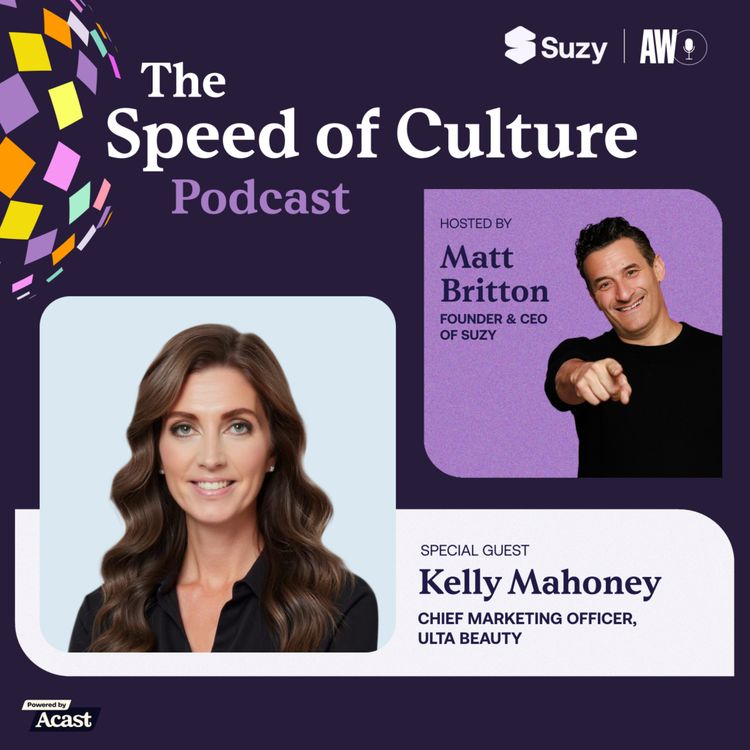
On Episode 207 of The Speed of Culture Podcast, host Matt Britton, founder and CEO of Suzy, the AI-powered consumer intelligence platform, sat down with Robertson to explore a provocative thesis: AI isn't the enemy of human creativity; it's the ultimate liberator.
In a fragmented, hyper-optimized media landscape where standing out requires conviction, emotional intelligence, and the ability to distill complexity into clarity, Robertson argues that the agencies and brands winning in 2025 and beyond will be those that reframe AI not as a replacement for human talent, but as a catalyst that closes the gap between imagination and execution.
With over 40 years in the advertising industry and two decades leading BBDO through continuous evolution, Robertson has shaped some of the world's most iconic campaigns for global brands. While competitors race to automate and optimize, Robertson advocates for a counter-intuitive strategy: invest ruthlessly in human talent, manage risk like a sophisticated investor, and let AI accelerate the barriers between a brilliant idea and bringing it to life.
This episode represents far more than a casual conversation about generative AI tools. It's a masterclass in how world-class creative organizations think about transformation, organizational psychology, and the discipline required to maintain creative integrity while embracing technological change.
Talent: The Irreplaceable Competitive Advantage
The opening premise of Robertson's philosophy is almost defiantly simple: brilliant creative minds matter more than ever. In an era where technology proliferates at breathtaking speed, where media channels splinter and consumer attention becomes increasingly fragmented, the fundamental driver of breakthrough work remains unchanged—exceptional human talent.
Robertson emphasizes the concept of securing an "unfair share" of exceptional talent. This isn't merely about hiring more people or paying higher salaries. It's about building a talent ecosystem where the organization attracts, develops, and retains creatives who possess both the technical skills to navigate modern marketing complexity and the emotional intelligence to understand what really moves human behavior.
BBDO's track record validates this philosophy. The network earned Cresta Awards 2025 Network of the Year for the third consecutive year and achieved significant honors at the Campaign India Digital Crest Awards 2025, where the India office earned Agency of the Year with 11 metals, including one Grand Prix.
These aren't coincidental achievements—they reflect systematic investment in attracting and developing the best creative talent globally. Rather than outsourcing creativity to the cheapest bidder or the vendor with the most AI capability, Robertson suggests that brands should prioritize partners who have invested in building talent ecosystems.
The agencies and marketing departments that win will be those that understand a fundamental truth: you cannot automate breakthrough thinking. You can only create the conditions where brilliant people thrive, collaborate, and push each other toward excellence.
Risk Management: The Hidden Language of Breakthrough Creativity
One of the most counterintuitive insights Robertson shares involves reframing boldness itself. Breakthrough work—whether it's a provocative TikTok campaign or a two-hour brand film—almost always carries perceived risk. The result is that organizations default to safety, incremental optimization, and campaigns that generate adequate results but rarely spark cultural moments.
Robertson's solution is elegant: reframe boldness as risk management rather than reckless gambling.
Rather than asking "Is this safe?" decision-makers ask "Have we properly managed the downside while preserving the upside?"
Through the example of a bold campaign for NAB (National Australia Bank) in Australia, Robertson demonstrates how framing an ambitious creative direction as a calculated strategy—with quantified downside risk and clear success metrics—transforms the conversation.
For sophisticated organizations, this approach aligns with how venture capitalists and investment firms evaluate opportunities. They don't seek certainty—certainty is a myth. Instead, they quantify downside scenarios and manage risk while pursuing outsized returns.
This philosophy demands marketing leaders who understand both creative strategy and financial risk. It requires agencies that can articulate not just "why this is creative" but why this makes financial sense when you properly account for risk and opportunity.
What Makes Great Work: The Timeless Principles Behind Breakthrough Creativity
Regardless of the channel—whether it's a thirty-second TikTok, a billboard, a text message, or a two-hour brand documentary—Robertson identifies a consistent principle behind work that captures attention and shifts behavior: great creativity combines tone, empathy, and timing in ways that move people emotionally and intellectually.
He illustrates this with a deceptively simple example: a well-crafted text message from American Airlines that transformed his emotional response to a frustrating flight experience. The message worked because it demonstrated empathy, arrived at the right moment, and communicated with authentic tone.
As algorithms optimize for engagement metrics and generative tools produce technically competent creative at scale, the human capacity to understand emotional context becomes more valuable, not less. Machines can recognize patterns and generate variations. But they struggle with the genuine insight that comes from understanding deeply what matters to specific audiences in specific moments.
For brands navigating 2025 and beyond, the strategic imperative is clear: invest in audience research and insight generation. Use AI to accelerate analysis and explore possibilities, but don't delegate away the human work of understanding unmet needs, anxieties, aspirations, and moments of vulnerability.
AI as the Liberator: Closing the Gap Between Imagination and Execution
Robertson rejects the notion that AI either solves creativity or destroys it. Instead, he articulates a precise functional view: AI is closing the time, cost, and technical barriers between having a brilliant idea and bringing it to life.
His distinction between "creating" (ideation) and "making" (execution) is crucial. Creating—the work of generating novel ideas and synthesizing insights—remains fundamentally human. Making—the technical execution of those ideas—has historically involved friction, cost, and time.
This is where AI creates genuine value. Generative tools allow creatives to explore more variations, test more directions, and refine work without months-long production cycles. The creative director can test fifty variations rather than five. The copywriter can explore ten tonal approaches rather than two.
However, this upside only materializes for organizations with the discipline to use AI as an enabler rather than a replacement for judgment. The leaders who thrive will understand both the capabilities and the limitations of AI systems, brief them effectively, and maintain the critical eye required to elevate good work into great work.
Those that treat AI as a tool to be mastered—neither overselling nor understating its usefulness—will find themselves with more creative runway and greater opportunity to refine ideas toward excellence.
Leadership in the Age of Creative Transformation: Run Toward the Fire
Robertson's final insight stems from his leadership journey:
Run toward the fire.
In his worldview, lasting respect and impact come not from sidestepping problems but from leaning in with intention and solving meaningful challenges. Leaders who engage directly with crises and transformational change build trust and stand out.
For creative organizations navigating the AI era, the easy path is reflexive rejection or blind adoption. The hard path—the one that requires leadership—involves asking: How do we integrate AI in ways that amplify our strengths rather than undermine them?
For brands, running toward the fire means engaging seriously with how AI changes consumer research, insights, and creative competition. It means asking hard questions about whether your current approach will remain effective when AI-generated content becomes ubiquitous—and acting on the answers.
Key Takeaways
- Talent remains the irreplaceable competitive advantage in creative work. Invest in talent ecosystems, not just tactical execution.
- Reframe boldness as risk management. Quantify downside risk while preserving upside to unlock ambitious ideas.
- Great work combines tone, empathy, and timing. Emotional intelligence becomes more valuable as AI scales technical execution.
- AI is a liberator of imagination, not a replacement for it. Distinguish between creating (human) and making (AI-accelerated).
- Leadership means running toward difficult problems. Engage honestly with integration, capability development, and cultural change.
FAQ: Andrew Robertson on AI, Creativity, and the Future of Advertising
How does AI change the relationship between creative agencies and their clients?
Robertson argues that the relationship deepens rather than transforms. Clients need partners who can articulate creative ideas and the strategic rationale behind them—including risk management. AI enables agencies to explore more possibilities and deliver more refined work.
What skills will creative professionals need to develop in the AI era?
The most important skills are those AI struggles with: understanding human emotion, recognizing cultural nuance, asking insightful questions, and maintaining creative vision while leveraging AI tools. Creatives must guide AI rather than compete with it.
How can brands differentiate when AI-generated content becomes ubiquitous?
Differentiation will come from genuine audience insights combined with emotionally resonant creative work. As technically competent content becomes abundant, authentic understanding of audience needs will stand out.
What does BBDO's investment in its "Do Big Things" philosophy mean in the context of AI transformation?
BBDO's "Do Big Things" vision, launched in 2024, emphasizes ambition and courage. In the AI era, this means using AI to amplify bold thinking and refine ambitious ideas—not to cut corners or settle for incremental gains.
Looking Ahead
The conversation between Andrew Robertson and Matt Britton on Episode 207 of The Speed of Culture Podcast offers a roadmap for creative organizations navigating transformation.
The opportunity requires discipline: build exceptional talent, think strategically about risk, invest in understanding what people care about, embrace AI as an amplifier of creativity, and lead with intention through difficult transitions.
Explore more perspectives at The Speed of Culture Podcast. For deeper insights into consumer intelligence, visit Suzy. To learn more about Matt Britton's perspective on the AI era, explore Generation AI. For speaking engagements or AI keynotes, visit AI Keynote Speaker or Speaker HQ.

%20(400%20x%20100%20px)%20(300%20x%2050%20px)%20(150%20x%2050%20px).avif)

.jpeg)


.jpeg)
.jpeg)