Opening: Redefining Beauty Standards in the Age of Consumer Intelligence
The beauty industry stands at an inflection point. As consumer expectations evolve and technology reshapes how brands engage their audiences, companies that fail to innovate authentically risk obsolescence.
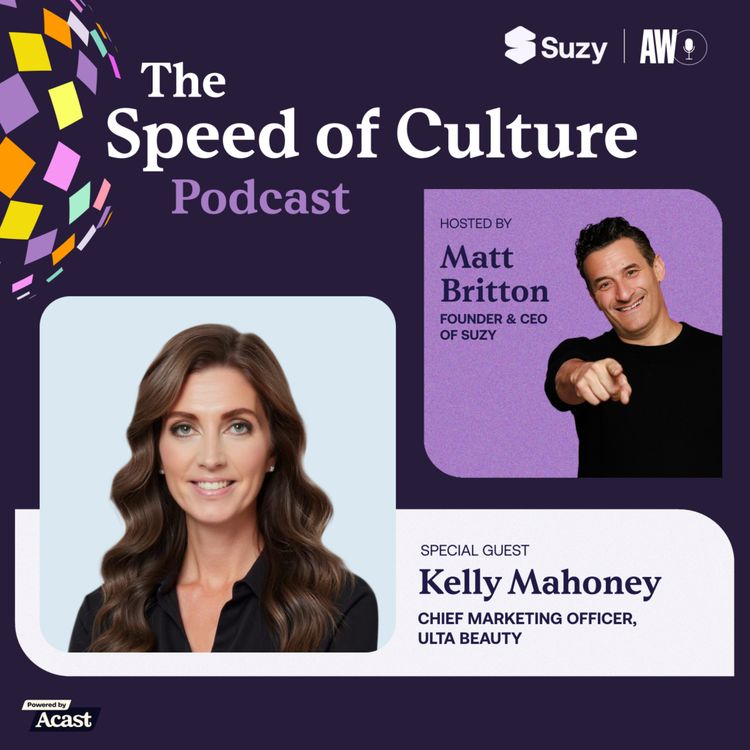
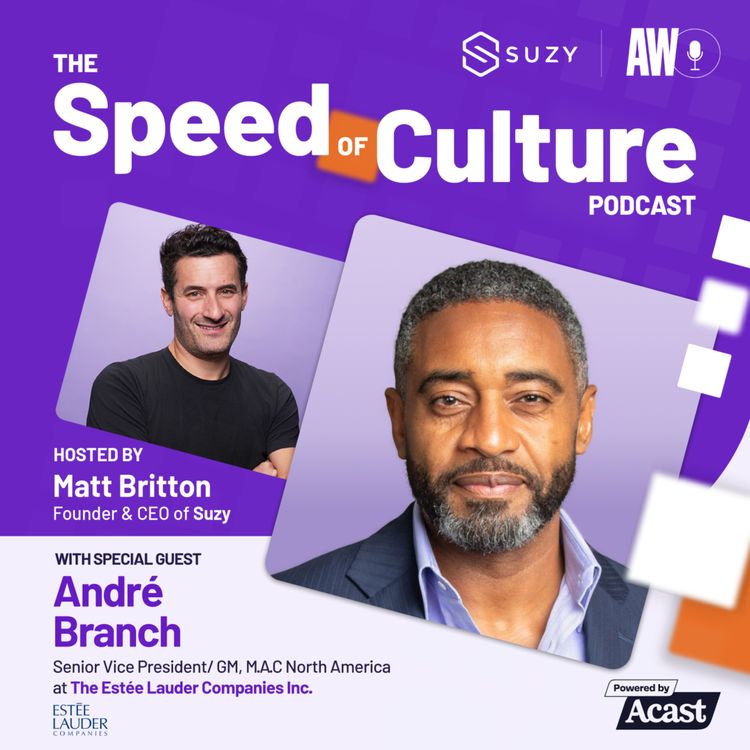
In a recent episode of The Speed of Culture Podcast, Matt Britton, founder and CEO of Suzy, the AI-powered consumer intelligence platform, sat down with Andre Branch, SVP and General Manager of MAC Cosmetics North America at The Estée Lauder Companies. Together, they explored how one of the world’s most iconic beauty brands is navigating industry transformation.
The conversation reveals critical insights into the intersection of inclusivity, technological innovation, and cultural relevance—insights that executives across industries should understand.
Andre Branch brings over two decades of experience in the beauty and personal care sectors. During the November 18, 2024 episode, he shared MAC’s strategic approach to product innovation, its commitment to inclusivity as a core business driver rather than a marketing afterthought, and the role of emerging technologies like augmented reality in redefining retail.
For executives, marketers, and strategists in competitive industries, the MAC Cosmetics case study offers actionable lessons. The brand’s success isn’t rooted in nostalgia alone. It’s built on a deliberate framework: understanding evolving consumer behaviors through data, investing in diverse product innovation, leveraging authentic partnerships, and integrating cutting-edge technology into physical and digital retail spaces.
The future of beauty—and by extension, the future of many industries—belongs to organizations that can simultaneously honor their brand heritage while embracing radical innovation. MAC Cosmetics is proving that this balance is not only possible; it’s commercially essential.
How MAC Cosmetics Redefined Its Brand DNA Around Inclusivity
When most brands discuss inclusivity, the conversation centers on marketing messaging or product shade ranges. MAC Cosmetics has taken a fundamentally different approach, embedding inclusivity into the organization’s operational DNA.
“What we stand for—inclusivity, diversity, community, sustainability—all these things matter beyond the product, and that's when you get real brand building.”
Rather than competing on ingredient innovation or price point alone, MAC has positioned inclusivity as a non-negotiable brand principle. It informs decisions across product development, influencer partnerships, retail design, and philanthropy.
The data supports the strategy. Research from 2024 indicates that inclusive beauty brands are growing 1.5 times faster than their less inclusive counterparts. Among Gen Z—the largest demographic of beauty shoppers—39.5% explicitly value a wide range of shade options across different skin tones.
MAC’s foundational principle, “All Ages, All Races, All Genders,” has been operationalized across casting, hiring, product development, and creator partnerships. The Viva Glam program, launched in 1994, has generated over $520 million for HIV and health equity causes, with projections exceeding $540 million by the end of 2024.
From an executive strategy perspective, this approach creates what economists call a “trust dividend.” In an era where consumers audit brands via social media, MAC’s decades-long commitment builds resilience, loyalty, and defensible competitive advantage.
The Art of Speed-to-Market Innovation in a Gen Z–Driven Industry
Beauty innovation once followed predictable cycles: seasonal collections and annual launches. MAC now operates with the agility of a digital-native startup while maintaining multinational scale.
One example is the relaunch of the Squirt Gloss Stick. Rather than rereleasing a 1990s relic unchanged, MAC modernized the formula and application while tapping into Gen Z’s nostalgia-driven consumption. The result appealed to longtime customers and new digital-native audiences alike.
This speed-to-market capability rests on three organizational pillars:
- Real-Time Consumer Insights: Leveraging platforms like Suzy to monitor emerging trends and sentiment shifts in real time, enabling early identification of ascending trends before saturation.
- Agile Product Development: Supporting smaller, faster launches alongside seasonal collections to test and iterate without betting the year on a single campaign.
- Omnichannel Distribution Flexibility: Maintaining presence across department stores, standalone retail, e-commerce, and social commerce to experiment with launch strategies tailored to cultural moments.
Gen Z now represents the primary driver of beauty industry growth. This demographic expects brands to respond quickly and authentically to cultural movements, collaborations, and aesthetic shifts. MAC’s agility positions it as culturally fluent rather than culturally exploitative.
Digital Innovation and the Future of In-Store Retail Experience
Many executives mistakenly frame digital commerce and physical retail as competitors. MAC demonstrates a complementary model, integrating augmented reality (AR), personalized palette builders, and digital mirrors directly into stores.
These innovations address a fundamental challenge: visualizing results before purchase. Over 60% of beauty shoppers now prefer virtual try-on tools. Retailers implementing AR see conversion rates increase by approximately 25% and return rates drop by as much as 40%.
The global virtual makeup try-on market was valued at $1.11 billion in 2024 and is projected to reach $1.86 billion by 2032, expanding at a 7.8% compound annual growth rate.
MAC’s strategy enhances human expertise rather than replacing it. Associates guide customers using AR, layering in knowledge about undertones, skin compatibility, and trends. Meanwhile, interaction data flows back into consumer intelligence systems, transforming stores into research hubs that inform future product development.
Strategic Collaborations as Cultural Positioning
MAC has elevated brand collaborations beyond transactional partnerships. Its strategy centers on authentic alignment with artists, musicians, and cultural properties.
The partnership with Disney’s Black Panther connected MAC to a broader cultural conversation around representation and artistry. Likewise, the limited-edition collection with Rosalía aligned with MAC’s innovative, visually striking aesthetic.
These collaborations signal cultural relevance. When influential artists choose MAC over competitors, it reinforces the brand’s positioning as creatively cutting-edge.
Authenticity remains critical. Gen Z consumers, highly attuned to marketing tactics, quickly identify transactional endorsements. MAC’s selective partnership strategy ensures credibility and sustained cultural resonance.
The Convergence of Consumer Intelligence and Beauty Industry Strategy
A core insight from the episode is the growing importance of real-time consumer intelligence. Traditional research cycles often lag behind fast-moving cultural and market shifts.
Platforms like Suzy allow brands to monitor sentiment, identify organic product momentum, detect demographic shifts, and anticipate risks before they escalate. This transforms decision-making from reactive to proactive.
For MAC, consumer intelligence informs decisions around product relaunches, collaborations, retail innovation, and demographic positioning. The convergence of brand heritage, operational agility, and real-time insights creates a competitive moat that is difficult to replicate.
Key Takeaways
- Inclusivity as Strategic Advantage: Embedding inclusivity into operational DNA creates defensible differentiation and builds long-term trust with Gen Z and diverse consumer segments.
- Speed-to-Market Innovation Drives Growth: Startup-like agility combined with multinational scale enables faster responses to cultural trends and emerging demand.
- Digital and Physical Retail Are Complementary: AR and omnichannel strategies reduce friction, increase conversions, and generate actionable data.
- Authentic Collaborations Strengthen Cultural Positioning: Partnerships rooted in shared values signal credibility and deepen brand equity.
- Consumer Intelligence Is Essential: Real-time insights empower faster, more accurate strategic decisions and sustained competitive advantage.
Frequently Asked Questions
What Makes MAC Cosmetics Different From Other Beauty Brands?
MAC differentiates through a blend of brand heritage, authentic inclusivity, speed-to-market innovation, and cultural relevance. Its 30+ year operational commitment to diversity—combined with philanthropic initiatives like Viva Glam—creates credibility that competitors struggle to replicate.
How Does Real-Time Consumer Intelligence Inform Beauty Brand Strategy?
Consumer intelligence platforms monitor sentiment shifts and emerging preferences across digital channels. This allows brands to allocate resources based on live consumer signals, identify trends while still niche, and mitigate risks before they escalate.
Why Is Speed-to-Market Innovation Critical for Beauty Brands?
Gen Z consumers expect brands to respond quickly to cultural moments. Traditional annual cycles risk missing trend windows, while agile development creates first-mover advantages and strengthens loyalty through responsiveness.
How Are Augmented Reality Technologies Changing In-Store Beauty Retail?
AR try-on tools allow customers to visualize products in real time, increasing purchase confidence. With 25% higher conversion rates and up to 40% lower return rates, AR transforms stores into high-performing retail and data environments.
Looking Ahead
The future of beauty belongs to organizations that balance heritage with innovation and scale with agility. Brands that harness real-time consumer intelligence while staying culturally authentic will define the next era of growth.
Learn more about transforming your organization’s consumer insights capabilities: Visit Suzy, the AI-powered consumer intelligence platform helping Fortune 1000 brands harness real-time insights.
Explore more conversations with industry leaders: Subscribe to The Speed of Culture Podcast.
Discover how AI is reshaping consumer behavior: Read Generation AI.
Bring these insights to your organization: Explore Matt Britton’s AI keynote speaker programs or design a customized executive experience through Speaker HQ.
Interested in booking or collaboration? Contact Matt Britton’s team to start the conversation.

%20(400%20x%20100%20px)%20(300%20x%2050%20px)%20(150%20x%2050%20px).avif)

.jpeg)


.jpeg)
.jpeg)