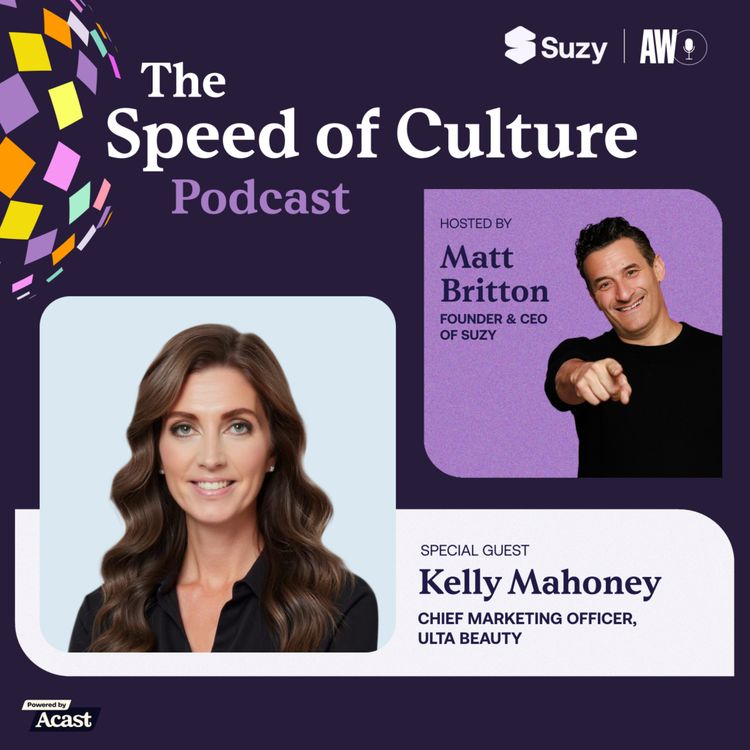
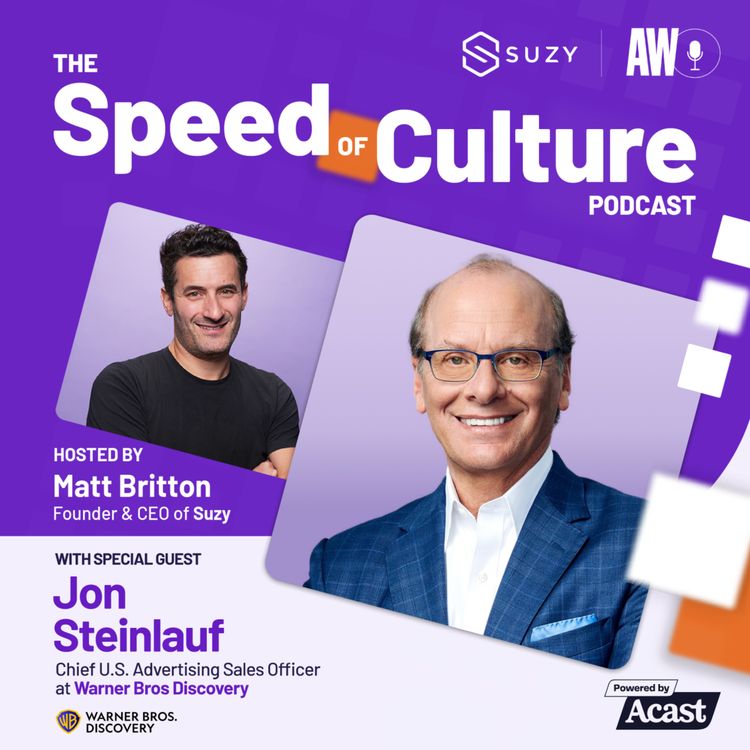
In an increasingly fragmented media landscape dominated by streaming services, traditional linear television continues to thrive—driven largely by sports fans who refuse to cut the cord. In a recent episode of The Speed of Culture Podcast, Matt Britton, founder and CEO of Suzy, the AI-powered consumer intelligence platform, sat down with Jon Steinlauf, Chief U.S. Advertising Sales Officer at Warner Bros. Discovery, to explore the evolution of TV advertising and why linear TV remains essential for connecting brands with audiences.
With nearly four decades of advertising expertise spanning from his early role as Director of Ad Sales at ESPN to his current leadership position, Steinlauf brings a unique perspective on how the media industry has transformed—and why certain foundational elements remain unchanged. This conversation illuminates the critical role that sports play in keeping linear television alive, even as platforms like Netflix, Amazon Prime Video, and Disney+ redirect billions in advertising dollars to streaming channels.
For advertisers, marketers, and media professionals navigating a rapidly shifting landscape, understanding Steinlauf's insights is essential. The conversation covers targeted advertising strategies, the enduring value of sports content, the rise of ad-supported streaming models (AVOD), and why relationships remain the backbone of the television advertising business.
The Evolution of TV Advertising: From Cable to Streaming Complexity
The television advertising landscape has undergone dramatic transformations over the past five years. Where advertisers once simply purchased 30-second spots during prime time, today's TV ecosystem presents a bewildering array of options: streaming services with varying ad-load policies, devices from smartphones to smart TVs, platforms ranging from traditional broadcast to YouTube, and audience data fragmented across dozens of sources.
Jon Steinlauf identifies the most fundamental shift driving this evolution: the importance of targeting and addressability. As he explains:
"The biggest change in the last five years has been the importance of targeting, addressability, targeting, being able to eliminate waste."
This statement encapsulates the modern advertiser's challenge. In the streaming era, marketers can no longer rely on mass-market appeal alone. They must reach specific audiences with precision, eliminate wasted impressions, and demonstrate measurable return on investment.
For advertisers, this shift has created both obstacles and opportunities. The proliferation of streaming services means fragmentation—consumers now watch content across multiple platforms, making it difficult to reach a unified audience through a single media buy. However, streaming's data capabilities enable something traditional linear TV never could: granular audience targeting and real-time performance measurement.
First-party data has emerged as a critical asset in this environment. Advertisers who can integrate their own customer data with broadcaster data gain a significant competitive advantage. They can target high-value customer segments, suppress audiences they've already reached, and optimize budgets based on actual performance metrics.
Warner Bros. Discovery and other media companies have recognized this trend, investing heavily in data infrastructure and customer identification platforms to help advertisers eliminate waste and maximize ROI. This evolution reflects a broader industry recognition: the era of spray-and-pray advertising is dead. Sophisticated brands now demand accountability, precision, and integration of audience insights into every television buy.
The Enduring Power of Sports in Keeping Linear TV Alive
Despite the rise of streaming platforms offering ad-free and ad-light viewing experiences, traditional linear television has not collapsed. The reason is surprisingly straightforward: sports fans need live sports coverage, and major sports events remain fragmented across multiple broadcast and cable networks.
"I think the big glue to the linear bundle is going to be sports. The true sports fan or the true sports family is going to need to be in the bundle for the long term."
This insight reflects a fundamental consumer reality. To watch NFL games, a household needs access to networks like CBS, Fox, and ESPN. To follow the NBA, they require ESPN, ABC, and cable sports channels. College football season demands another combination of networks. The Olympics? Yet another set of broadcast rights.
No single streaming platform has acquired exclusive rights to all of these sports, creating what Steinlauf calls the “glue” that holds the linear bundle together. While Netflix and other streaming services have captured significant viewership and advertising dollars, they have not displaced linear TV for sports fans.
In fact, the sports audience has proven remarkably resistant to cord-cutting. According to industry data and Steinlauf's perspective, affluent households with strong sports interest maintain their cable subscriptions specifically for live sports coverage—and cable providers know this.
The economics work in linear TV's favor. Major sports leagues have negotiated increasingly lucrative television rights deals, pricing their content in ways that incentivize broad distribution across traditional broadcast and cable networks. The NFL, for example, maintains rights agreements with CBS, Fox, NBC, and ESPN.
For advertisers, this means that sports events on linear TV command premium pricing and massive, guaranteed audiences. A 30-second spot during the Super Bowl has cost upward of $7 million in recent years, yet advertisers continue to bid fiercely for these placements. Why? Because sports events deliver reach and engagement that few other television moments can match.
Steinlauf predicts that linear TV will remain essential for at least another five years, sustained primarily by sports viewership. This forecast aligns with industry trends and suggests that media companies and advertisers should not write off linear television despite the seductive appeal of streaming disruption narratives.
Strategic Advertising in the Age of Brand Integration and Additive Storytelling
As traditional 30-second spots have become less effective and more expensive, sophisticated media companies have embraced a new approach: strategic brand integration and what Steinlauf calls “additive” advertising. Rather than interrupting content with commercials, brands and networks collaborate to weave branded messages into the storytelling fabric itself.
Warner Bros. Discovery's partnership with GMC for HBO's True Detective: Night Country exemplifies this approach. Rather than relying on traditional commercial breaks, GMC became a presenting sponsor, creating a custom content segment that informed viewers they would experience uninterrupted programming brought to you by GMC Sierra.
This approach achieves multiple objectives simultaneously: it enhances the viewer experience by reducing commercial interruption, it creates a branded entertainment moment that resonates with audiences, and it establishes GMC as a premium brand associated with prestige HBO content.
Similar strategies emerge in sports advertising. Brands partner with leagues to integrate into the viewing experience in ways that feel natural rather than intrusive—around halftime shows, player profiles, statistical analysis, courtside elements, or jersey patch sponsorships.
This evolution reflects deeper changes in consumer attitudes toward advertising. Modern audiences, particularly younger demographics, have developed sophisticated ad-avoidance mechanisms. They use ad blockers, skip pre-roll video ads, fast-forward through recorded content, or subscribe to ad-free tiers.
In response, savvy marketers have embraced a philosophy of additive value: advertising should contribute to the entertainment experience, not interrupt it. For media companies, this shift requires deeper collaboration between sales teams and content creators, integrating ad sales into the production process rather than bolting it on afterward.
The AVOD Revolution: Streaming's Middle Path and Future Growth
While the AVOD (ad-supported video on demand) market might seem like old news given Netflix's long-standing ad tier and Disney+'s ad-supported plan, Steinlauf identifies AVOD as potentially one of the biggest media stories of the current era.
"Streaming has been disruptive, maybe more so than anything in my career. AVOD is becoming the trend. I think this is one of the stories of this year—who's going to do well with AVOD?"
This comment reveals a crucial insight: the streaming wars are not ultimately won by whoever captures the most subscribers willing to pay premium prices for ad-free experiences. Rather, the future battleground is AVOD—the middle path where streaming services offer cheaper subscriptions supported by advertising.
This model promises higher margins for platforms, lower costs for consumers, and premium audiences for advertisers. From an advertiser's perspective, AVOD represents the best of both worlds.
Streaming platforms like Hulu have long proven that they can deliver audiences through ad-supported models while maintaining acceptable viewing experiences. Now, major platforms like Netflix and Disney+ have launched or expanded their ad tiers, signaling that the industry views AVOD not as transitional but as permanent and increasingly important.
As consumer budgets tighten and ad-free streaming subscriptions become increasingly expensive, more viewers will migrate to ad-supported tiers. Smart media companies will develop tools and strategies to reach audiences across both premium and ad-supported tiers, maximizing inventory and audience targeting capabilities.
The implications for traditional linear TV are complex. AVOD's growth might eventually cannibalize some linear TV viewership, but in the short term, linear TV—particularly for sports—remains resilient given the rights structure and audience expectations.
Building an Enduring Career in Media: The Primacy of Relationships and Listening
Steinlauf's 40-year career in advertising provides valuable lessons for anyone aspiring to success in media and marketing. Notably, his path was unconventional. He does not describe himself as a “natural salesman.”
Rather, his early success at ESPN stemmed from genuine passion for sports and the relationships he built through authentic engagement with clients and colleagues.
"It's a relationships business. You don't get to stay in power in this industry for the long term if you don't have the trust of the people in the marketplace."
This statement cuts against the grain of modern business mythology, which often emphasizes disruption and technological prowess. Yet in media and advertising, where decision-makers must commit significant budgets based on past performance and future promises, trust and relationships remain foundational.
Steinlauf also stresses the importance of listening over talking:
"Listening more than you talk is probably an interesting way to think about sales."
By genuinely understanding client needs, market conditions, and industry trends, effective sales professionals create solutions that address real problems rather than pushing products that don't fit.
He extends this philosophy to leadership, emphasizing the importance of being unflappable, earning the trust of teams and clients, and staying ahead of change. As media companies grapple with cord-cutting, streaming disruption, and audience fragmentation, leaders who demonstrate composure and credibility will be best positioned to guide their organizations through uncertainty.
Key Takeaways: Strategic Insights for the Evolving Media Landscape
- Targeting and Addressability Are Non-Negotiable: The biggest shift in television advertising over the past five years has been the emphasis on precision targeting and waste elimination. Advertisers must leverage first-party data and real-time analytics to optimize campaigns.
- Sports Remain the Glue Holding Linear TV Together: Despite streaming disruption, sports fans drive sustained demand for cable subscriptions and linear TV viewing, delivering guaranteed large audiences.
- Additive Advertising Outperforms Interruptive Models: Branded content and strategic integrations that enhance entertainment experiences are more effective than traditional commercials.
- AVOD Is the Future of Streaming Advertising: Ad-supported video on demand represents one of the most important emerging opportunities in media.
- Trust and Relationships Remain Essential: Success ultimately depends on trust, genuine relationships, and the ability to listen and understand client needs.
- Embracing Change Creates Competitive Advantage: Media professionals who adapt to industry shifts gain sustainable advantages over those who resist change.
Frequently Asked Questions
Why do sports fans still need cable if they have streaming services?
No single streaming platform has acquired exclusive rights to all major sports. To follow the NFL, NBA, college football, and other sports, fans must have access to multiple networks (CBS, Fox, ESPN, NBC, etc.), which are primarily available through cable bundles or cable-provided streaming apps.
What is AVOD, and why is it important?
AVOD stands for ad-supported video on demand—streaming services that offer cheaper subscriptions supported by advertising. Services like Netflix, Disney+, and Hulu all have AVOD tiers. AVOD represents a sustainable middle path between free ad-supported services and expensive premium subscriptions and is expected to generate significant advertising revenue as consumer budgets tighten.
How is television advertising evolving to adapt to streaming?
Television advertising is shifting from mass-market 30-second spots to precision-targeted campaigns that integrate first-party and broadcaster data. Brands are also embracing additive approaches such as branded content integrations and sponsored segments that enhance entertainment experiences rather than interrupt them.
How much longer will linear TV remain relevant?
According to Jon Steinlauf, linear TV will remain essential for at least the next five years, primarily sustained by sports viewership. While streaming will continue to capture advertising dollars, the cable bundle's ability to deliver live sports ensures continued relevance.
What's the most important skill for success in television advertising?
According to Steinlauf, listening is more important than talking. Understanding client needs, market conditions, and industry trends—and building relationships based on trust—are more valuable than aggressive sales tactics or technological expertise alone.
Looking Ahead: The Future of Media and Advertising
The conversation between Matt Britton and Jon Steinlauf reveals an industry in transition but not in collapse. While streaming services have disrupted traditional television viewership patterns, linear TV remains economically viable and culturally significant—particularly for sports fans.
The future of media will likely involve a hybrid ecosystem where linear TV, streaming services, and emerging platforms like AVOD coexist and compete for advertiser attention and audience engagement.
For Suzy's AI-powered consumer intelligence platform, insights from industry leaders like Steinlauf underscore the importance of understanding both macro media trends and micro consumer behaviors. Brands that successfully navigate this landscape will combine data-driven insights with authentic relationship-building and a genuine understanding of consumer needs.
Want to dive deeper into insights on consumer behavior, marketing strategy, and media evolution? Explore more episodes of The Speed of Culture Podcast for conversations with industry leaders reshaping how brands connect with consumers.
You can also discover Matt Britton's perspectives in Generation AI and explore his work as an AI keynote speaker. For enterprise-level strategic consulting and speaking inquiries, visit Speaker HQ or get in touch.

%20(400%20x%20100%20px)%20(300%20x%2050%20px)%20(150%20x%2050%20px).avif)

.jpeg)


.jpeg)
.jpeg)