The Evolution of CES: From Gadget Showcase to Global Business Hub
CES, once known solely as the epicenter for the latest gadgets, has transformed into a global phenomenon that transcends industries. As Melissa Harrison explains, “Every company is a technology company now.” CES is no longer just about TVs and smartphones. It is about the convergence of enterprise, media, creators, and global partnerships.
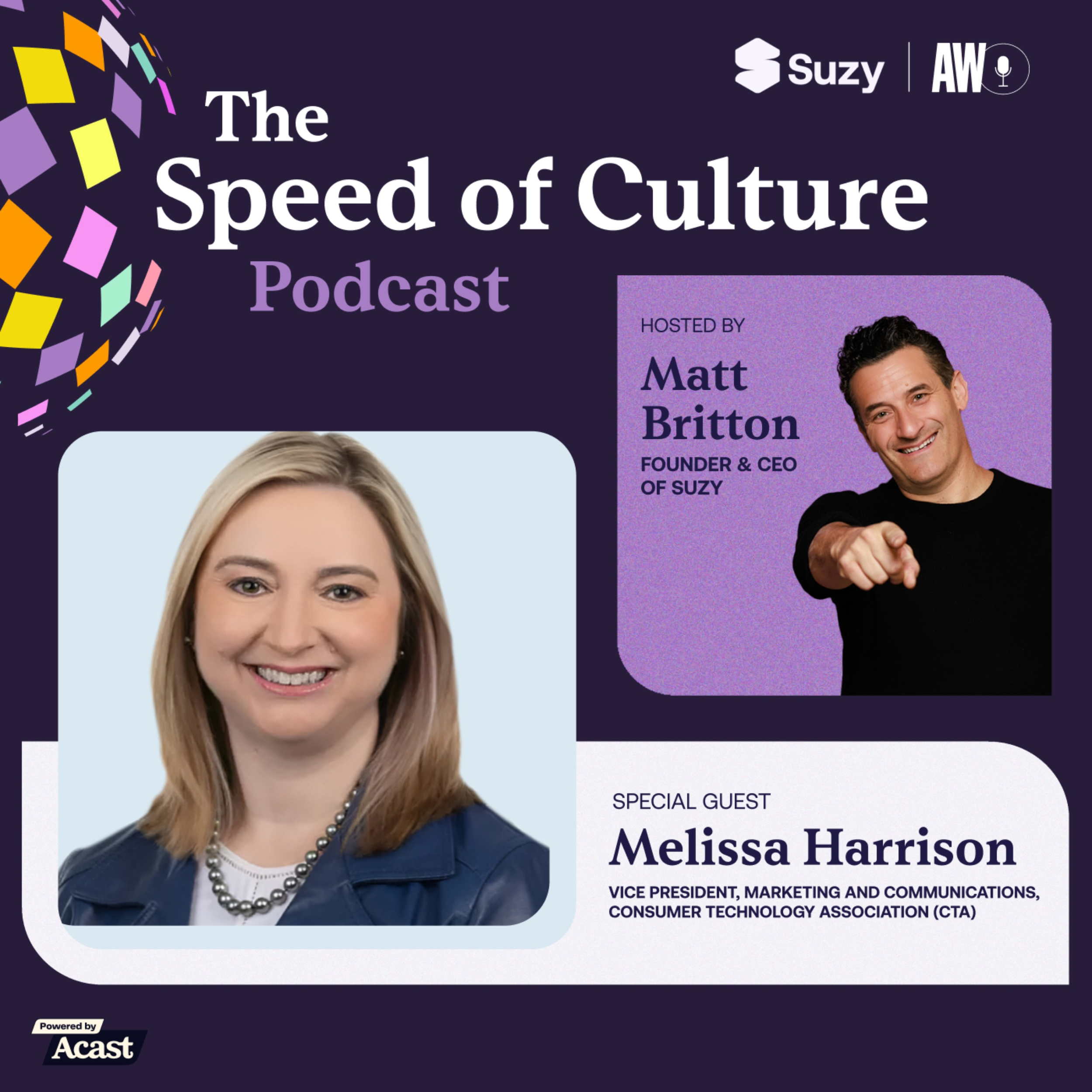
Melissa Harrison Of CTA Join The Podcast
This evolution did not happen overnight. The CTA, with its 160-strong staff, operates at the intersection of policy, research, and standards, driving not only the CES event itself but also shaping technology policy and advocacy worldwide. The show’s growth mirrors the technology sector’s own shift from siloed devices to interconnected ecosystems that now touch every aspect of life and business.
Why Las Vegas? Why January?
Las Vegas is the only city equipped to handle CES at scale, with more than 150,000 hotel rooms and enough convention space to support 13 venues. The timing, immediately after the holidays, provides a rare window of downtime that allows the city to build an event of this magnitude.
CES 2026 stretches across Las Vegas with pop-up events, satellite activations, and an energy that effectively turns the city into the global center of innovation for a full week.
Building the World’s Largest Tech Show
What does it take to build CES? Months of preparation, a multifaceted leadership team, and constant coordination across operations, marketing, sales, and logistics.
The result is an experience that feels massive yet navigable. Melissa points to the pride that comes from seeing months of planning materialize physically, from refreshed branding to iconic show-floor installations. Seeing the CES logo in 12-foot letters at the Venetian Expo is the moment when preparation becomes reality.
Marketing a Two-Sided Marketplace
CES operates as a two-sided marketplace. Exhibitors arrive ready to unveil innovation. Attendees, ranging from enterprise leaders to media and creators, come looking for insight, partnerships, and opportunity.
Marketing this ecosystem requires deep audience segmentation, personalized communications, and global reach. AI has accelerated this shift dramatically. Personalization at scale is now achievable, allowing CTA to speak directly to highly specific interests such as mobility, digital health, or smart home technology.
The Rise of the Creator Economy at CES
A defining trend at CES 2026 is the growth of the creator economy. With more than 6,500 media and content creators on-site, traditional media dynamics have shifted.
Creators want more than access. They want to be on the floor, producing content in real time. In response, CTA introduced the Creator Space, a dedicated hub designed for collaboration, content creation, and brand connection. The signal is clear: everyone is now a publisher, and every brand operates within a media ecosystem.
AI at CES 2026: From Theory to Real-World Impact
AI is the dominant theme of CES 2026. While it has been discussed for years, this is the moment where theory turns into application.
Expect to see physical AI, digital twins, and humanoids. From autonomous vehicles to healthcare and smart homes, AI is embedded across categories. The pandemic accelerated digital transformation, but CES 2026 marks the point where AI becomes tangible, practical, and ubiquitous.
CES remains the launchpad for breakthroughs that redefine entire industries.
The Power of In-Person Connection
Despite the growth of remote work and digital communication, CES reinforces the value of face-to-face interaction. Serendipity still matters. Deals are made, partnerships form, and ideas emerge through chance encounters on the show floor.
Attendees average close to 30 meetings during the week, positioning CES as a business accelerator at global scale. Community building across sectors such as digital health, mobility, and smart home continues to thrive because physical proximity enables unexpected collaboration.
CES as a Catalyst for Cross-Industry Innovation
CES is not only about showcasing technology. It is about fusing industries. CTA intentionally co-locates related sectors to encourage collaboration and idea exchange.
Digital health and smart home innovation increasingly overlap, enabling aging-in-place solutions and reducing hospital readmissions. This cross-pollination is what makes CES one of the most influential innovation platforms in the world.
Looking Ahead: The Future of CES
The future of CES is defined by expansion, adaptation, and constant reinvention. CES Foundry, launching in 2026 at the Fontainebleau, will focus on AI and quantum computing through live demos and immersive experiences.
As new sectors emerge, CES will continue to evolve. The mandate remains simple: never stand still. New ideas, formats, and industries will always have a place on the CES stage.
Key Takeaways for Marketers, Innovators, and Business Leaders
CES sits at the intersection of technology, culture, and business
AI and personalization are redefining event marketing
Creators are partners, not just press
In-person experiences still drive real business outcomes
Cross-industry collaboration is now the default path to innovation
Final Thoughts
CES 2026 reinforces its role as the world’s stage for innovation, where technology, culture, and business converge into a single global moment. For marketers, creators, and enterprise leaders alike, the message is clear: adapt quickly, invest in connection, and keep your focus on what comes next.
Subscribe to The Speed of Culture on your favorite podcast platform to stay ahead of the trends shaping tomorrow’s business.